How to Transplant Seedlings Without Shocking Roots
Move seedlings after watering the plug 1–2 hours earlier, transplant on a cloudy day with mild temperatures, and keep roots and root ball intact; move only if the soil holds together and roots are white, moist, and not circling tightly. Bad timing or rough handling can wilt seedlings, slow growth, and kill fine roots. This guide gives a step-by-step transplant sequence with stop/go checks for trays, pots, beds, and containers.
This guide is part of our Seed planting guide for beginners series.
What you’ll need
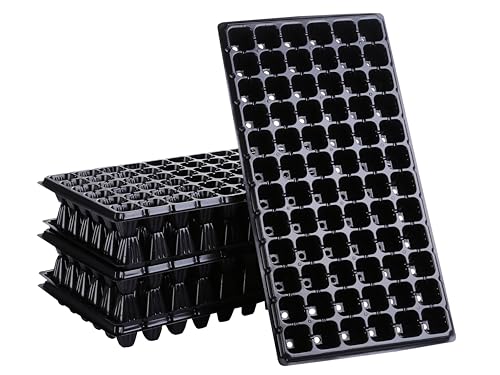


- Starter cells or pots with drainage holes
- Watering can or hose with a soft stream
- Receiving bed or container, pre-moistened
- Hand trowel or dibber
- Optional cold frame for hardening off
- Mulch or dry topsoil for a light surface finish
How do you know seedlings are ready to move?
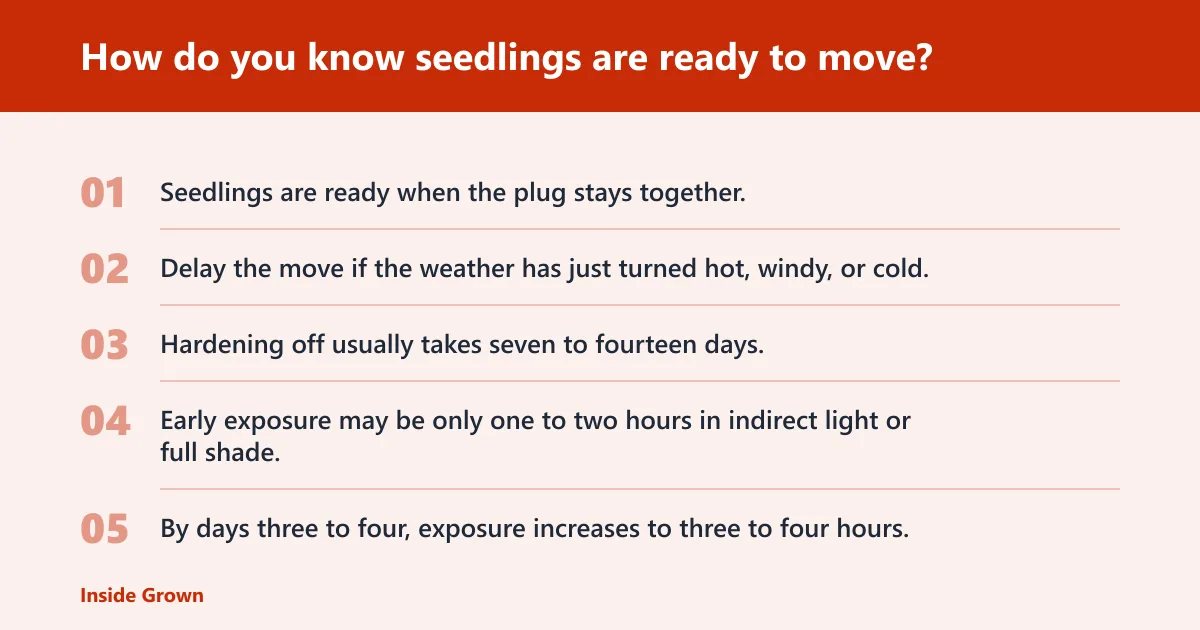
Seedlings are ready when the plug stays together, roots are visible but not tightly spiraled, and hardening off is complete. Delay the move if the weather has just turned hot, windy, or cold, because stressed seedlings lose water faster and recover more slowly after root disturbance.
Use the 3-stage root-safety scorecard
| Check | Go | Delay |
|---|---|---|
| Plug moisture | Moist, cohesive, and cool | Dry, crumbly, or muddy |
| Root binding | Roots visible at the edges, not circling hard | Thick white mat or spirals around the cell |
| Weather readiness | Calm, mild, and shaded from harsh sun | Heat, dry wind, frost risk, or soaked soil |
Check for hardening-off readiness
Hardening off usually takes seven to fourteen days. Early exposure may be only one to two hours in indirect light or full shade. By days three to four, exposure increases to three to four hours. By days five to seven, seedlings may stay outside five to six hours, and by days eleven to fourteen, they can be left outdoors overnight.
Delay the move after bad weather
Postpone transplanting after a heat spike, drying wind, or frost night. A cold frame can help, but it still needs venting on warm days. Suppose a tray of brassicas spent a night in a cold frame and then faced a windy, sunny afternoon; wait until the next mild window instead of planting into extra stress.
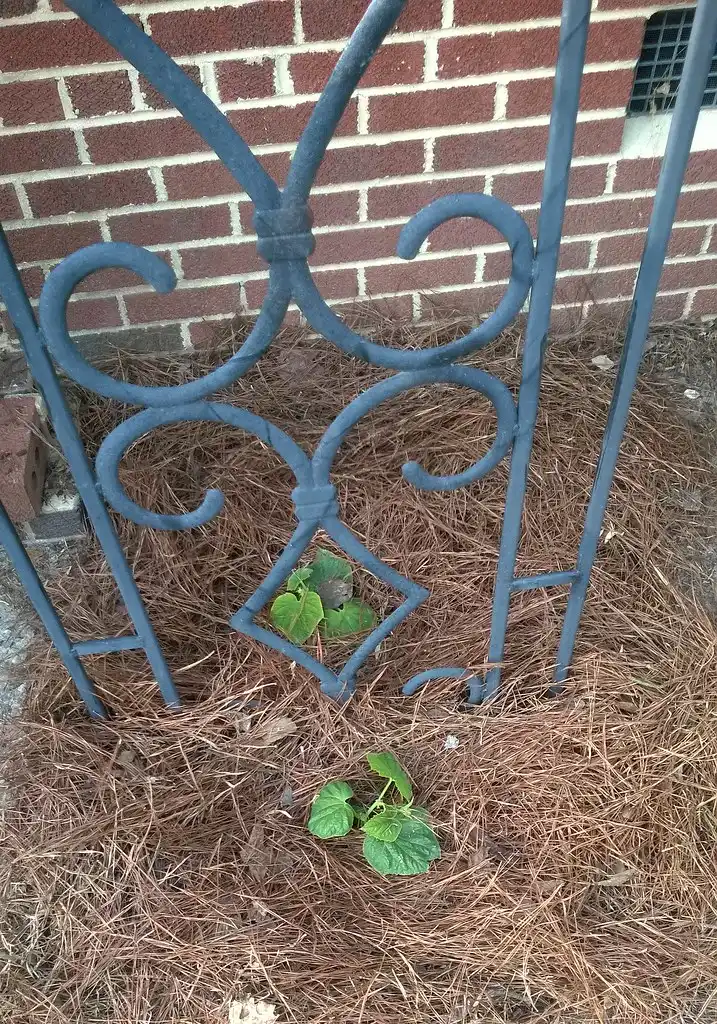
How to transplant seedlings without shocking the roots?
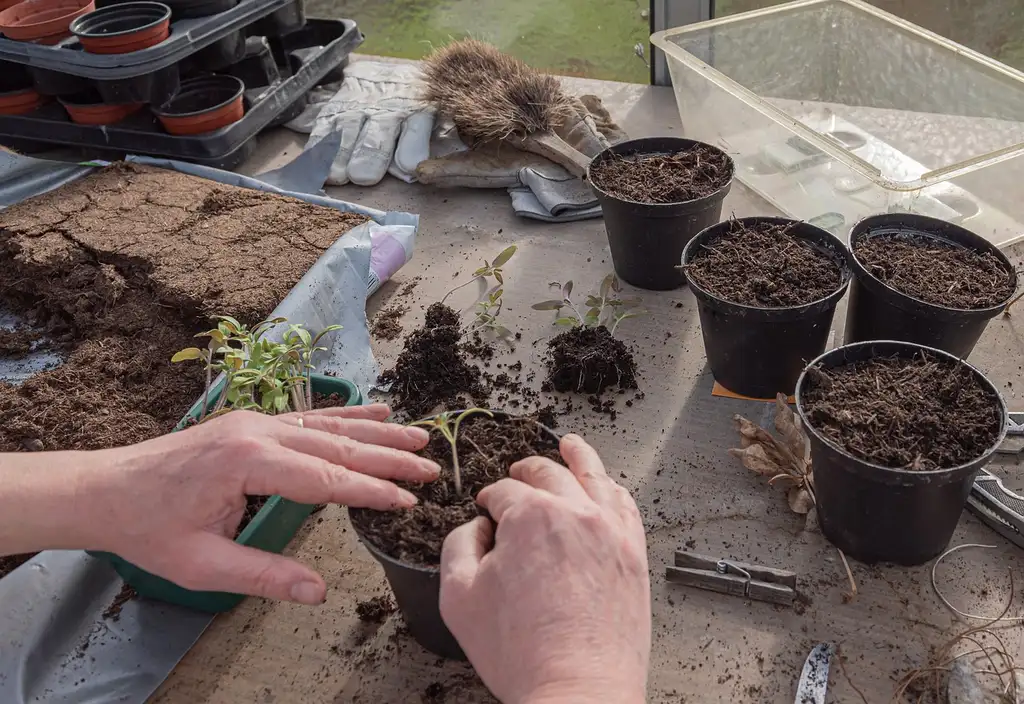
Keep the root ball intact, move quickly but gently, and set the seedling into pre-moistened soil at the right depth. Transplant shock is a stress response from root disruption; root-hair loss is a main driver because it reduces water and nutrient absorption. Mild cases often resolve in five to ten days, while severe cases may last two to three weeks.
Follow this transplant sequence
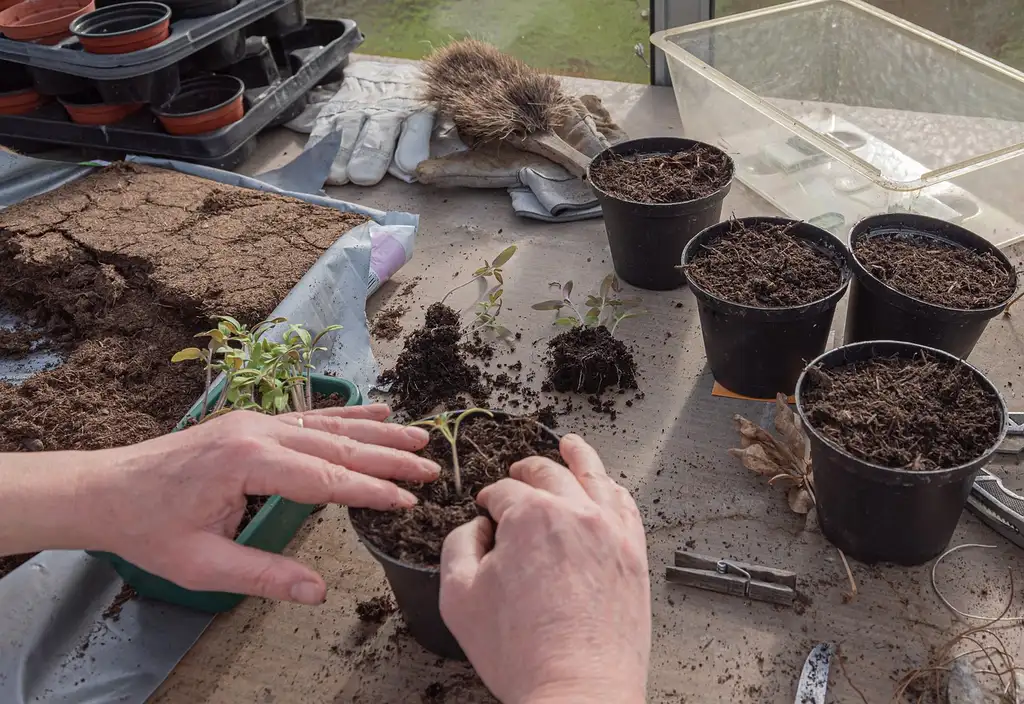
- Water the plug 1–2 hours before moving so the medium holds together.
- Pre-moisten the receiving bed or container until it feels evenly damp, not soggy.
- Loosen the cell or pot, then lift from the root ball, not the stem.
- Set the seedling at the correct depth for its crop type.
- Backfill gently and firm once to remove air pockets.
- Water in with a soft stream to settle soil without washing media away.
Handle the root ball like a fixed shape
Use starter cells or pots that release seedlings cleanly. A moist medium slides out with less damage, while dry peat pots can pull roots apart and overwatered plugs can slump during extraction. The goal is not a bare-root move. For most seedlings, less exposure is better.
Watch for the first stress sign
Yellowing of lower leaves within 24 to 72 hours is a common early sign of transplant shock. Mild droop can be temporary if moisture stays steady and temperatures stay moderate. If leaves collapse hard at midday and recover by evening, the seedling may still rebound.
Should you loosen the roots before transplanting seedlings?
Usually, no. Keep the plug intact unless the seedling is clearly root bound and the roots are circling the outside of the cell in a tight mat. Minimal disturbance protects fine roots, and those roots matter more than a tidy-looking plug.
When to leave the plug alone
If the root ball holds together and white roots are visible without heavy spiraling, slide it straight into the new hole. This is the safest path for brassicas, legumes, and many young ornamentals. A common first-timer mistake is teasing apart a healthy plug just because a few roots show at the edges.
When a light tease is acceptable
If the root tips are beginning to circle, pinch only the outermost loop once or twice. Do not comb the whole root mass apart. Cucurbits and other larger seedlings dislike rough handling, so a light touch matters even more when the plug is starting to bind.
How to spot root-bound plugs
A root-bound plug feels springy, slips out in one thick cylinder, and may show white roots wrapping around the edge or bottom. In small starter cells, this happens faster than in larger pots. If the roots are already circling tightly, transplant sooner rather than later.
How deep should you plant seedlings after transplanting?
Plant most seedlings at about the same depth, with a few exceptions that can handle a slightly deeper set. Avoid burying the crown on most crops, because trapped moisture around the stem can slow establishment and invite rot.
Match depth to crop type
Legumes and brassicas usually transplant reliably at their original depth. Cucurbits need gentler handling and steady warmth, so keep the root ball intact and avoid extra stem burial. Root crops are poor transplant candidates because their edible roots dislike distortion.
Handle peat pots and compressed plugs carefully
Break off any rim that sits above the soil line, or it can wick moisture away from the root ball. If the pot is dry and stiff, pre-wet it before planting so it softens and releases more cleanly. A compressed plug should be seated firmly enough to stay in contact with surrounding soil, but not packed hard.
Common mistakes
Most failures come from a dry plug, a rough pull, or a bad planting bed. Avoiding those three errors prevents more wilt than any extra product or additive.
Transplanting dry seedlings
Dry plugs crumble and shed root hairs. Water the seedling in advance, then transplant while the medium still holds together. If a tray was allowed to dry hard, soak the cell tray bottom briefly before removal.
Pulling from the stem
Always support the root ball from below. Pulling from the stem can snap fine roots below the surface even when the top still looks intact.
Planting into dry or compacted soil
Receiving beds and containers should be pre-moistened and loose enough for roots to spread. Compacted soil slows establishment. Water first, then plant, then water in again with a soft stream.
Skipping aftercare
Seedlings need steady moisture and reduced stress for several days after transplanting. A shaded morning and calm weather help. If the site is hot and windy, give temporary shelter instead of assuming a wilted plant will bounce back on its own.
Transplant decision checklist
Use this checklist before every move. It separates a safe transplant window from one that needs another day or two.
Plug moisture score
- 2 points: Moist, cohesive, and cool
- 1 point: Slightly dry at the edges
- 0 points: Dry, dusty, or falling apart
Root binding score
- 2 points: Fine roots at edges, no tight spirals
- 1 point: Roots visible and slightly crowded
- 0 points: Thick circling mat or plug deformation
Weather readiness score
- 2 points: Mild, cloudy, and calm
- 1 point: Bright but not hot, with light wind
- 0 points: Heat, frost risk, or drying wind
Post-plant wilt audit
- Check leaves at 2 hours, then again at dusk.
- Look for droop, lower-leaf yellowing, or stalled growth.
- Press the soil 1 inch deep; if it feels dry, water gently.
- Shade the plant for a short period if midday wilt appears.
- Call it a problem only if the plant worsens for several days, not after a single warm afternoon.
Prevention
Set seedlings out only after hardening off is complete and the bed is already pre-moistened. That simple sequence reduces root loss and shortens recovery.
Frequently asked questions
How do I transplant seedlings without shocking the roots?
Water the plug 1–2 hours ahead, pre-moisten the receiving soil, lift from the root ball, and transplant on a cloudy day with mild temperatures. Set the seedling at the correct depth, backfill lightly, and water in with a soft stream. That sequence protects fine roots and limits drying.
When should I water seedlings before transplanting?
Water long enough before the move for the plug to become evenly damp, usually 1–2 hours ahead. The medium should hold together in your hand, not crumble or drip. If it is waterlogged, wait until excess moisture drains so the root ball can release cleanly.
How deep should I plant seedlings after transplanting?
Set most seedlings at the same depth they grew in the cell, with the crown above the soil line. Tomatoes can be set deeper, but many crops cannot. For peat pots, tear off the exposed rim so it does not wick moisture away from the root ball.
Should I loosen the roots before transplanting seedlings?
Only if the roots are clearly circling the outside of the plug. For most seedlings, leave the root mass alone and disturb it as little as possible. A tight spiral or dense mat in a starter cell means the plant should move sooner, not be combed apart.
How long should seedlings be hardened off before transplanting?
Hardening off usually takes seven to fourteen days. Begin with indirect light or full shade for one to two hours, then build up through three to four hours by days three to four and five to six hours by days five to seven. By days eleven to fourteen, seedlings can stay outside overnight.
What time of day is best to transplant seedlings?
Early morning or late afternoon works best because temperatures are lower and the sun is less intense. Avoid midday heat, especially after wind or a dry spell. A calm, cloudy stretch gives seedlings the easiest start and reduces the chance of rapid water loss from leaves.
How do I know if my seedlings are root bound?
Root-bound seedlings often slip out as a tight cylinder, with roots circling the edge or bottom of the cell. The plug may feel springy and dry out fast. In that case, transplant soon and use a slightly larger starter pot next time so roots have more room.
What should I do if seedlings wilt after transplanting?
First, check soil moisture and water gently if the top layer feels dry. Then give short-term shade from hot afternoon sun and wind. Mild transplant shock often resolves in five to ten days, while severe cases may last two to three weeks, so avoid overreacting after one wilted day.
How soon can I fertilize seedlings after transplanting?
Wait until the plant has resumed growth and the leaves look steady, not limp. Heavy feeding too early can stress a weakened root system. A light starter feeding is safer than a strong dose, and it should follow a thorough watering rather than dry soil.