How to Harden Off Seedlings Before Moving Them Outside
Harden off seedlings over roughly 1–2 weeks by starting with a short period in shade and calm air, then add sun, wind, and outdoor time gradually while temperatures stay above the crop’s minimum. Skip this step and tender leaves can scorch, stall, wilt, or die after transplanting. This guide gives a weather-aware schedule for sun, wind, and temperature limits so you can move seedlings outside with less risk.
This guide is part of our Seed planting guide for beginners series.
What you’ll need


- Seedlings with at least a few sets of true leaves
- A sheltered outdoor spot with shade or dappled light
- A covered porch, shrub line, fence line, greenhouse edge, or similar windbreak
- A cold frame or floating row cover, if available
- A way to check daytime highs, nighttime lows, rain, and wind
- A watering can
- Trays or flats that make moving plants in and out easy
📊 Hardening off commonly takes 1 to 3 weeks. Source: How to Harden Off Plants and Seedlings Before Planting Them.
How hardening off works and why it matters
Hardening off means slowly exposing indoor seedlings to outdoor light, air, and temperature swings. It lowers transplant shock by teaching leaves and stems to handle stronger sun, moving air, wider temperature changes, and lower humidity. Seedlings that go out too fast can wilt, discolor, sunburn, or stall even if they looked healthy indoors.
The stress usually comes from several directions at once. Sun can bleach shade-grown leaves. Wind speeds water loss. Cool nights slow growth. Dry outdoor air pulls moisture faster than a window sill ever does. The safest approach is to add exposure only while the plant keeps its leaves firm.
When should I start hardening off seedlings before last frost?
Start about 1 to 2 weeks before transplanting, using the last frost date as the planning anchor. Hardening off commonly takes 1 to 3 weeks, and several sources place the first outdoor step around 7 to 14 days before planting out. Local weather still matters more than the calendar.
If spring turns cold, windy, or bright all at once, slow the schedule. A mild, overcast day with no wind is a better start than a hot afternoon or a breezy front. Cool-night regions may need a longer ramp-up, especially for peppers and cucumbers.
- Check your last frost date and plan backward 7 to 14 days.
- Watch the forecast for wind, sun, rain, and nighttime lows.
- Delay the start if a cold snap or strong wind is coming.
How to harden off seedlings step by step
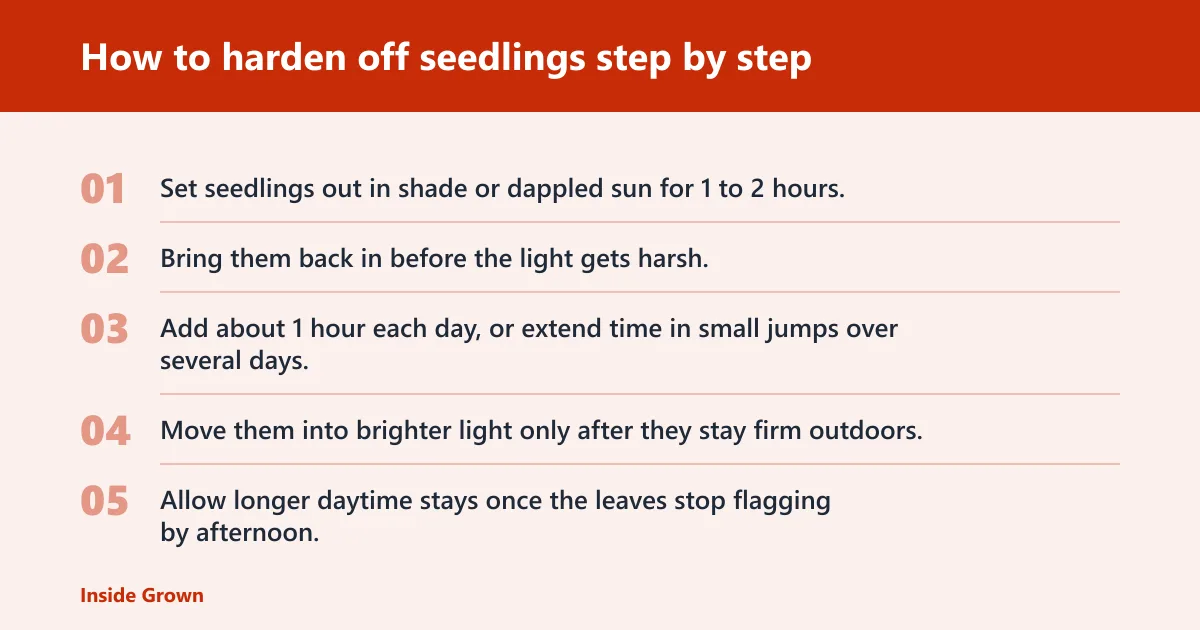
Begin with a short outdoor visit in a sheltered spot. The first exposure can be about 2 hours, or 1 to 2 hours if the seedlings are tender. Add another hour daily or a few hours over several days, then lengthen the time only if leaves stay firm and growth stays green.
Suppose a tray of tomato seedlings comes from a bright south window and sits under a porch roof for 2 hours on day 1. If the leaves still look turgid at dusk, day 2 can add light morning sun and day 3 can stretch the stay. If they droop, slow down instead of pushing ahead.
- Set seedlings out in shade or dappled sun for 1 to 2 hours.
- Bring them back in before the light gets harsh.
- Add about 1 hour each day, or extend time in small jumps over several days.
- Move them into brighter light only after they stay firm outdoors.
- Allow longer daytime stays once the leaves stop flagging by afternoon.
- Begin overnight stays only when frost is absent and temperatures stay safe.
Use the right shelter on windy days
A porch, shrub border, fence line, or greenhouse edge can cut wind enough to make the difference between steady acclimation and constant wilting. Epic Gardening recommends keeping winds over five mph away initially. Windbreaks matter most for small pots and leggy seedlings, which dry out faster and bend more easily.
What temperature is too cold for hardening off seedlings?
Many seedlings should usually begin hardening off only when daytime temperatures are roughly above 50°F. Daytime temperatures under 45°F are a reason to keep plants indoors, and many warm-season crops should not see temperatures below 45°F. Peppers want more warmth than tomatoes, so they usually need the gentlest schedule.
Pause the process during cold snaps, windy afternoons, or a bright day that follows several shaded indoor weeks. Sudden sun after low-light growth can do more harm than cool air alone. Cold frame users should still close the frame at night when lows are marginal.
| Crop | Starting condition | Cold caution | Hardening-off pace |
|---|---|---|---|
| Tomatoes | Moderate warmth | Keep above about 45°F | Standard 7 to 14 day ramp-up |
| Peppers | Warmer than tomatoes | Avoid cool nights | Slower, warmer transition |
| Lettuce | Cool-tolerant | Still protect from wind and sun shock | Can begin earlier in mild weather |
| Cucumbers | Warm and sheltered | Sensitive to cold | Do not rush outdoor time |
| Brassicas | Cool-season friendly | Wind and sun still matter | Usually moderate pace |
| Herbs | Varies by type | Tender herbs need more caution | Adjust to leaf texture and stem strength |
Should I harden off seedlings in shade or sun first?
Start in shade or dappled sun, not full midday sun. Shade-grown leaves often scorch if they jump straight into strong light. A sheltered porch, the north side of a house, shrubs, or the edge of a cold frame gives seedlings a slower light transition and less water loss.
Floating row cover can add a little warmth while still allowing sunlight, air, and water through. A cold frame works well too, because you can open it by day and close it by night. Both options help buffer sun, wind, and sudden temperature drops.
What seedlings need extra caution?
Tomatoes usually tolerate a standard ramp-up over about 1–2 weeks. Peppers often need a slower, warmer transition. Lettuce and brassicas handle cool weather better, but they still need wind and sun acclimation. Cucumbers are sensitive to cold and should not be rushed. Herbs vary: basil needs more care than thyme or oregano.
Seedlings started in low light, cramped pots, or leggy conditions need a gentler schedule. Thin stems and pale leaves mean the plant is already stressed. Give those plants shorter exposure windows and more shelter until new growth looks sturdier.
How do you protect seedlings from wind while hardening off?
Use a windbreak from the first day. Light wind moves seedlings enough to toughen them, but stronger gusts strip moisture fast and cause limp leaves. A fence line, shrubs, a covered porch, a cold frame, or the greenhouse edge all reduce stress without blocking all air movement.
A floating row cover can also help. It filters wind, adds a few degrees of warmth, and still lets light, water, and air pass through. Keep it loose enough that it does not crush the leaves. Remove or vent it if the sun turns hot.
- Place trays where wind hits lightly, not directly.
- Use a porch, shrubs, or a fence as a shield.
- Move plants inside if gusts pick up or leaves whip.
Can I harden off seedlings in a cold frame or under row cover?
Yes. A cold frame is one of the easiest ways to harden off because you can open it by day and close it by night. That setup protects against wind and cold while still exposing plants to outdoor light and air. Floating row cover is useful when you need a lighter barrier.
Keep the frame vented on warm days, or the seedlings may overheat. Close it before evening if frost is still possible. Under row cover, check that leaves are not pressed flat and that the soil still dries enough to avoid rot.
What are the signs seedlings are ready to plant outside?
Seedlings are ready when they can stay out all day without wilting and can handle overnight exposure when conditions are safe. Leaves should stay firm after several hours of sun and wind, and new growth should keep its color instead of looking bleached or stunted. True leaves should be present and active.
Look for sturdy stems, normal leaf color, and no afternoon collapse. A plant that still flops in a few hours is not ready. If the forecast holds mild, overnight stays are the final test before transplanting.
What mistakes kill seedlings during hardening off?
The biggest mistakes are skipping the process, moving seedlings into full sun too fast, and leaving them outside through wind or cold nights. Another common error is assuming a nursery plant is already adapted. Many nursery seedlings were grown under protected conditions and still need a transition.
Wilting after a fast move, sunscald, discoloration, and stunting all point to transplant shock. If you see those signs, stop the schedule, give shelter, and rebuild exposure more slowly. Dry root balls, tiny cells, and leggy growth raise the risk further.
- Stop outdoor exposure for 24 hours if leaves wilt hard or bleach.
- Move the tray into shade or a cold frame.
- Resume at the last safe exposure length, not the next step.
- Water if the mix is dry, but do not soak the tray constantly.
What to do after wilting, sunscald, or cold-night risk
If seedlings wilt, move them into shade right away and make the next exposure noticeably shorter. If leaves bleach or look scorched, keep them under filtered light for several days. If a cold night is forecast, bring the plants in or close the cold frame before dusk; do not “tough it out.”
Say a tray of cucumbers sits out too long on a bright 58°F day and the leaves collapse by noon. The next move is not more sun. It is shade, water if dry, and a restart at a shorter daily window with warmer conditions.
Use this one-page hardening-off decision checklist
| Seedling type | Forecast check | Exposure plan | Recovery move if stressed |
|---|---|---|---|
| Tomatoes | Day above 50°F, light wind | 1 to 2 hours in shade, then add about 1 hour daily | Cut the next exposure back by half |
| Peppers | Warm day and mild night | Start shorter than tomatoes and keep them warmer | Return to protected shade |
| Lettuce | Cool, calm day | Start in dappled sun and extend gradually | Reduce direct sun before noon |
| Cucumbers | No cold night risk | Keep sheltered; do not rush overnight stays | Bring indoors if growth stalls |
| Brassicas | Cool weather, low wind | Moderate ramp-up with airflow control | Use row cover or frame overnight |
| Herbs | Depends on species and leaf softness | Treat soft herbs like tender seedlings | Slow the schedule if leaves droop |
Checklist: if the plant looked firm yesterday, add time today; if the forecast drops below 45°F for cold-sensitive crops, stop and shelter; if the tray sits in full sun after growing indoors, add shade first; if the plant stays upright all day and through a safe night, it is close to planting out.
Frequently asked questions
How long does it take to harden off seedlings?
Most seedlings need 1 to 3 weeks, with many schedules landing around 1 week to 14 days. Start with 1 to 2 hours outdoors and increase time in small steps. Warm-season crops and seedlings that were grown in low light often need the longer end of the range.
When should I start hardening off seedlings before last frost?
Use the last frost date as the anchor and begin about 1 to 2 weeks before transplanting. If spring weather turns cold, windy, or cloudy, start later and move more slowly. The calendar gives the frame, but the forecast decides each day’s exposure.
What is the best schedule for hardening off seedlings?
Begin with 1 to 2 hours in shade, add about 1 hour each day, and move toward full-day exposure as long as leaves stay firm. By around day 10, overnight stays can begin if frost is absent and the crop can handle the night temperature.
Do seedlings need to be hardened off if they came from a nursery?
Often yes. Many nursery seedlings were grown under protected conditions and still need a transition to sun, wind, and cooler nights. Check for true leaves, firm stems, and whether the plant has already been standing outdoors. If not, give it a shorter but real hardening-off period.
What temperature is too cold for hardening off seedlings?
For many seedlings, daytime temperatures under 45°F are too cold, and a daytime start above about 50°F is safer. Cold-sensitive crops such as peppers and cucumbers need warmer conditions than tomatoes. If a cold snap is coming, keep plants indoors or under some kind of cover.
What are the signs seedlings are ready to plant outside?
Ready seedlings can stay out all day without wilting and can handle overnight exposure when conditions are safe. Leaves should stay green, stems should look sturdy, and growth should not stall after outdoor time. If a plant still droops by afternoon, it needs more time.