How to Plant Seeds Under Grow Lights for Sturdy Seedlings
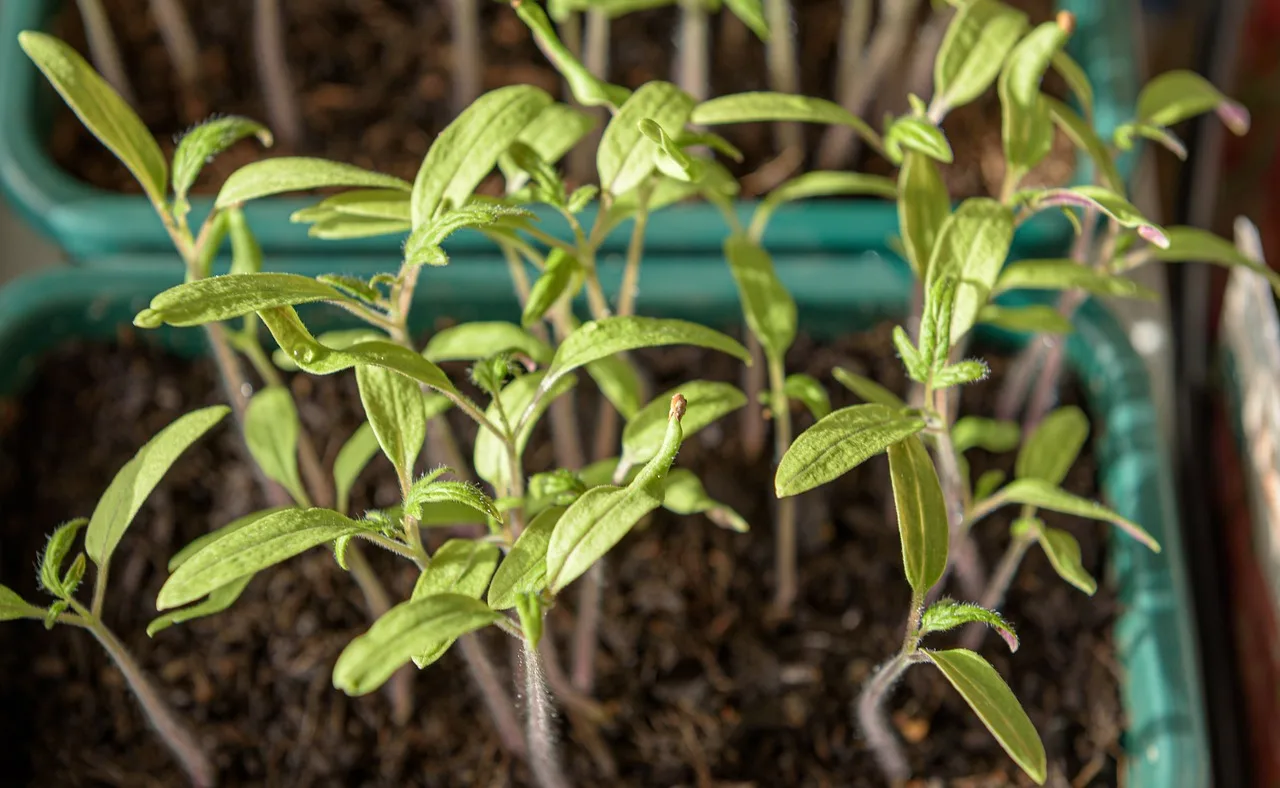
Start seeds in cell trays under lights set a few inches above the leaves, run them for much of the day, and use a small fan once cotyledons open to help keep stems sturdy. Too little light, too long a day, or still air gives you leggy seedlings that bend, weaken, and transplant poorly. This guide shows a tray-by-tray setup for light height, timer settings, and airflow from sowing through hardening off.
How much light do seedlings need?
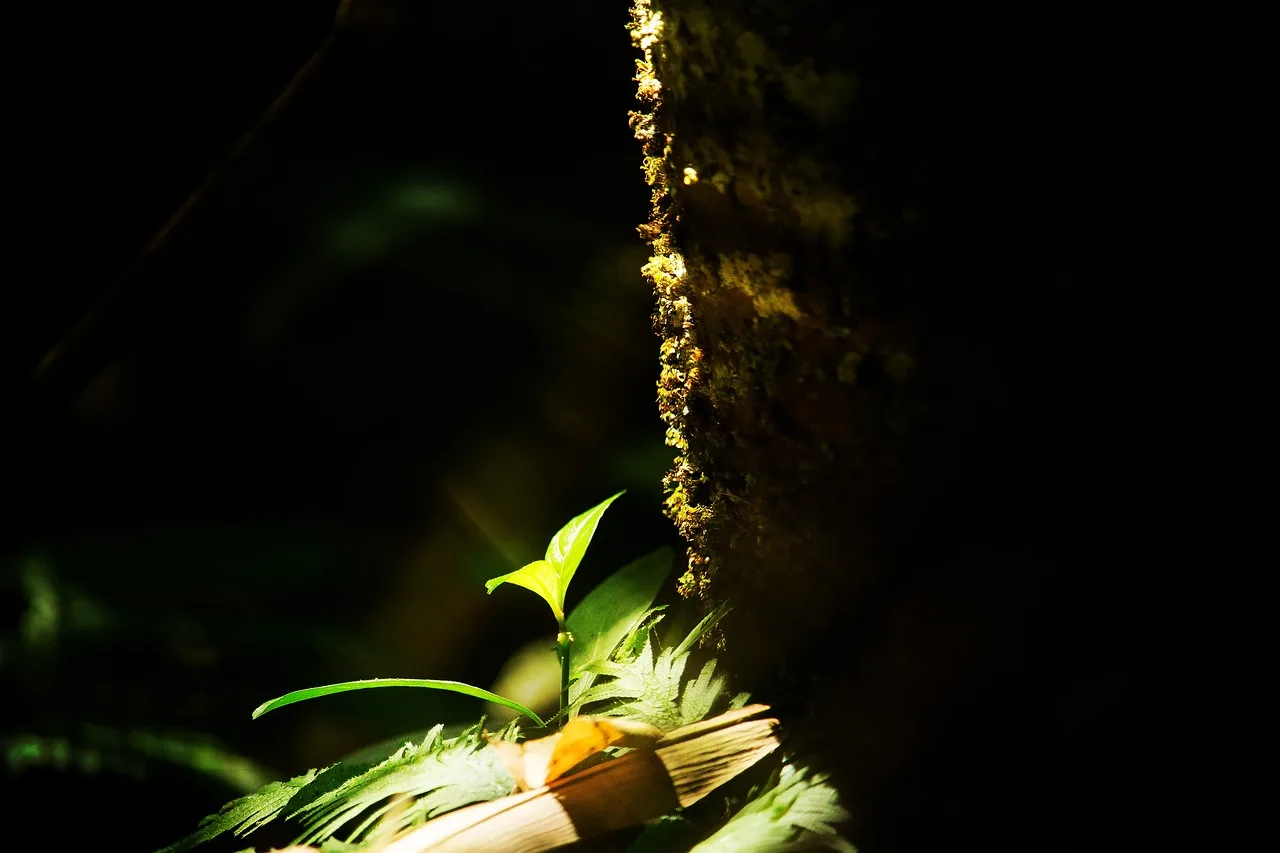


Seedlings need strong, steady light every day. Dim window light changes by the hour, and that swing often leaves seedlings tall, spindly, and weak. Keep the output steady so growth stays compact from germination through the first true leaves.
Why windowsills usually fall short
Light near a window can look fine to your eye and still be weak for seedlings. One-sided light also makes trays lean, which leads to uneven stems and uneven leaf growth across the flat.
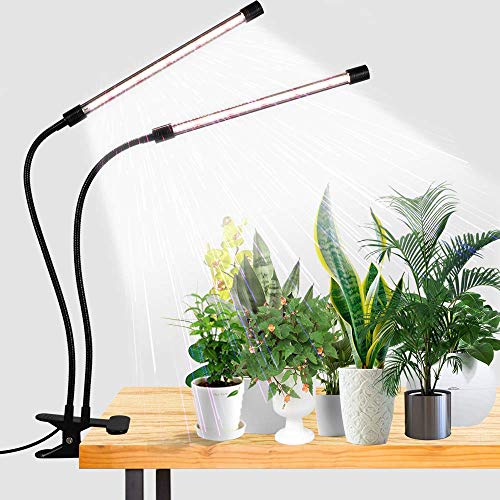
A grow light solves two problems at once: it gives you consistent output and lets you center the fixture over the canopy so every cell gets similar coverage. That matters for uniform seedlings, especially in trays with mixed germination times.
What steady daily light does for compact growth
Proper light supports photomorphogenesis in seedlings, the light-driven shift toward shorter internodes, thicker stems, and sturdier leaves. The article linked to this topic notes that seedlings need specific wavelengths in the blue and red ranges, and that proper light helps seedlings grow more compact and sturdy.
What kind of grow light is best for seedlings?
For most home seed starting, a full-spectrum or white LED fixture is the most practical choice. Blue light supports compact growth, while red light contributes to photosynthesis. You do not need a separate lamp for each crop, but you do need even, bright coverage over the whole tray.
Full-spectrum, white LED, and regular LED bulbs
White LED bars, strips, or panel-style fixtures are usually easier to use than warm decorative bulbs because they spread light more evenly across seedling trays. Full-spectrum lighting is commonly recommended for general seed starting because it covers a broad range that includes the wavelengths seedlings use for growth.
A regular LED bulb can work for a very small setup if it is bright enough, mounted close enough, and aimed to cover the tray rather than the room. It is a poor choice if it leaves corners dim or forces the light too far above the canopy.
What to look for in fixture shape
Strip LEDs and shop-light-style fixtures are often easier to center over a tray or rack because they spread light across a longer area. Bulb-style lamps can work for one small flat, but they are harder to keep even from edge to edge. For multiple trays, a wider fixture is usually simpler and more consistent.
How do you set up a seedling tray under grow lights?
Put the tray directly under the fixture so the light is centered over the canopy, not over the tray edge. Use a reflective surface under or around the setup if possible, because bounced light reduces side-light loss and improves uniformity. Match the tray size to the footprint of the light so the outer cells are not left in shade.
A tray-by-tray setup method
- Set the tray or cell flat under the light so the tray center aligns with the light center.
- Place the fixture low enough to give strong light across the full canopy.
- Add a reflective backing or light-colored surface nearby to reduce dark side areas.
- Check all tray corners for equal brightness after the lights turn on.
- Move smaller trays to the brightest part of the footprint if the fixture covers more than one flat.
What a good setup looks like
Picture a 10-by-20 tray under a bar-style LED on a shelf. The fixture runs parallel to the long side of the flat, and the tray sits centered so each cell gets similar light. That arrangement usually works better than a single bulb hanging off to one side.
A common first-timer mistake is putting a tray near a bright window and treating the grow light as an afterthought. That often creates uneven growth because one side gets light from the lamp and the other gets weak window light that changes through the day.
How close should grow lights be to seedlings?
For many seedlings, start with the light a few inches above the leaf tops after sprouting, then keep it close enough to limit stretching without causing heat stress. Lower it if stems lengthen between nodes; raise it if leaves pale, curl, or show scorch. The check point is leaf-top distance, not pot rim height.
Starting height by fixture type
Most manufacturers list exact hanging distances, but a practical starting rule is different by fixture shape. Keep strip LEDs and panel-style lights close enough to bathe the canopy evenly, and keep bulb-style lamps far enough away that leaf temperature stays comfortable.
| Fixture type | Starting height after sprouting | Adjustment rule |
|---|---|---|
| LED strip or bar | 2 to 4 inches above leaf tops | Lower a little if stems stretch; raise if leaves curl or fade |
| Panel-style LED | 4 to 6 inches above leaf tops | Keep centered over the tray and even across the canopy |
| Bulb-style LED | 6 to 12 inches above leaf tops | Use only if the bulb covers the tray evenly and does not heat leaves |
| Shop-light fixture | 2 to 6 inches above leaf tops | Set low enough to prevent stretch, then raise with plant growth |
When to lower or raise the light
Lower the light if seedlings start reaching upward, stems lengthen between nodes, or the flat looks airy instead of compact. Raise the light as the canopy grows and the top leaves approach the fixture. A simple rule is to keep the leaf tops within the range above while avoiding heat or direct scorch.
Say your basil tray has sprouts that are leaning toward the lamp after two days. Lowering the fixture by an inch or two often helps more than extending the timer, because the problem is distance and intensity, not just duration.
How many hours a day should seedlings stay under lights?
Most seedlings often do well with long daily light and a dark period at night. A timer matters because a steady photoperiod helps seedlings settle into a reliable day and night rhythm. Longer light periods without darkness can increase stress without fixing weak light intensity.
Why a timer matters
Seedlings respond best when the schedule stays steady. Turning lights on and off by hand makes the photoperiod inconsistent, and that inconsistency can show up as uneven growth across trays. A plug-in timer removes that problem.
Do different crops need different schedules?
Most vegetable and flower seedlings can share a similar 14 to 16 hour schedule. The exact number matters less than keeping it consistent and bright. If a crop seems slow, increase intensity first by lowering the fixture before extending the day.
Why are my seedlings tall and leggy under grow lights?
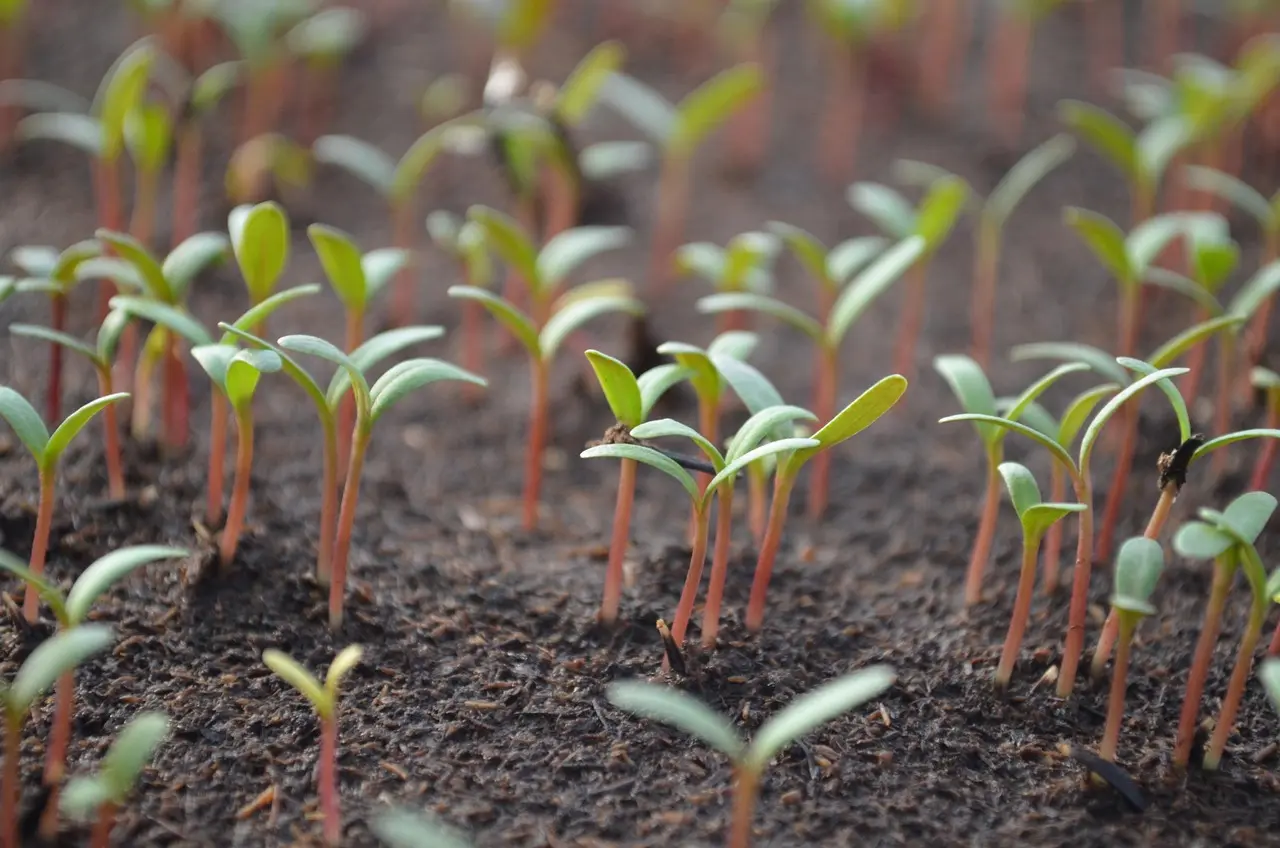
Leggy seedlings often mean the light is too far away, too dim, or not even across the tray. Insufficient light makes stems stretch as the plant searches upward. Normal first true-leaf growth is different: leaves expand, but stems stay relatively short and sturdy.
How to tell legginess from normal stretch
Leggy seedlings have long stems, weak posture, and a clear lean toward the light. Normal seedlings may lengthen a little as the first true leaves appear, but they stay upright and compact. If stems are thin and the gap between leaf sets is growing quickly, the light is likely too weak.
Fixes for stretched seedlings
- Lower the light until it is back in the close range.
- Center the tray under the brightest part of the fixture.
- Add airflow with a small fan so stems move slightly.
- Increase uniformity with a reflective surface.
- Do not simply add more hours if the intensity is already low.
Heat, damping off, and uneven trays
Heat stress can look like a limp, dried edge on the newest leaves or a tray that seems to dry out faster under one side of the lamp. Damping off is different; it often shows as seedlings that collapse at the stem line in wet media. Uneven trays usually point to uneven light coverage, not a seed problem.
How do you keep seedlings from getting too hot under lights?
Keep seedlings cool by controlling bulb temperature, maintaining airflow, and watching for leaf scorch. Light should be close enough to stay effective, but not so close that the leaves warm up or dry out quickly. A small fan helps move air across the tray and reduces heat buildup around stems.
Airflow and heat management
Set the fan to move the leaves gently, not whip them around. That light movement helps stems thicken and also prevents stagnant air that can favor disease. If a fixture feels warm to the hand near the canopy, raise it before leaves scorch.
Suppose a panel light sits over a 20-cell tray on a shelf and the top leaves curl by midday. That is a sign to increase height, improve airflow, or both. Heat stress and light stress can happen together, especially under a close bulb-style lamp.
When should you raise grow lights as seedlings grow?
Raise the fixture when the top leaves get close enough to touch or nearly touch the light, or when the canopy no longer fits evenly under the footprint. The goal is to keep strong light on the leaf tops while avoiding heat and burn. As the seedlings grow, the light should move up with them.
Leaf-top distance as the check point
Check the distance from the highest leaf to the fixture, not from the tray rim. That matters because different cells can grow at different speeds, and the tallest seedlings set the effective distance for the whole tray. If the tallest plants are crowding the light, raise it.
Simple signs you raised it too late
- Top leaves start curling upward or bleaching.
- Stems stretch while lower leaves stay small.
- The tray grows unevenly, with the center tighter than the edges.
- Leaf tips dry faster than the potting mix.
Seedling grow-light setup checklist and troubleshooting table
Use this checklist as the working setup rule for each tray: keep the fixture centered, keep the canopy close to the light, keep the timer steady, and keep air moving once cotyledons open. These adjustment rules are meant to be checked by leaf-top distance, not by guesswork.
Setup checklist
- Set the timer for 14 to 16 hours on, then keep the schedule consistent.
- Place the tray so the light is centered over the canopy.
- Start with the fixture 2 to 4 inches above leaf tops for strip or bar LEDs after sprouting.
- Use 4 to 6 inches for panel-style LEDs and 6 to 12 inches for bulb-style lamps if heat is a concern.
- Check that all tray corners receive light; add reflectivity if one side looks dim.
- Start a small fan once cotyledons open so stems move slightly.
- Raise the fixture as the tallest leaves approach it.
- Lower the fixture if stems lengthen between nodes or seedlings lean toward the lamp.
Troubleshooting table
| Problem | Likely cause | What to change |
|---|---|---|
| Leggy seedlings | Light too far away, too dim, or uneven | Lower the fixture, center the tray, add reflectivity, keep 14 to 16 hours daily |
| Heat stress | Fixture too close or bulb too warm | Raise the light, improve airflow, check for curled or scorched leaves |
| Uneven tray growth | Light footprint does not match tray size | Re-center the tray, move small trays under the brightest zone, use a wider fixture if needed |
| Slow or weak germination | Cold media, inconsistent moisture, or poor seed quality | Hold soil evenly moist and warm; keep lights on once sprouts appear rather than before most seeds emerge |
| Light burn | Fixture too close or leaves touching the lamp | Raise the light immediately and watch for pale patches or dry edges |
Do seedlings need grow lights before they sprout?
Most seeds do not need grow lights before sprouting, but they do need enough warmth and moisture. Once sprouts appear, move them under bright, steady light right away to prevent stretch. Waiting too long after emergence is a common reason new seedlings become weak.
When to switch from heat and moisture to light
Keep newly sown trays warm and evenly moist until germination begins. As soon as the first seedlings break the surface, start the light schedule. That timing helps the cotyledons open under strong light instead of reaching for a window.
Can I use a regular LED bulb for seedlings?
Yes, a regular LED bulb can work for a very small tray if it is bright enough, close enough, and centered well over the canopy. It is less forgiving than a strip or panel fixture because it may leave edges dim. For one small flat, it can be acceptable; for multiple trays, it is usually awkward.
When a bulb is acceptable
A bulb is most useful when you can hang it low over a single tray and keep side light from wasting output. If the seedlings stretch or the outer cells lag behind, the bulb is not delivering even enough coverage for that setup.
Frequently asked questions
How close should grow lights be to seedlings?
After sprouting, keep most strip or bar LEDs about 2 to 4 inches above the leaf tops. Panel-style fixtures usually start a little higher, around 4 to 6 inches, while bulb-style lamps may need 6 to 12 inches to avoid heat. Adjust by leaf-top distance, not by pot height.
How many hours a day should seedlings be under grow lights?
A reliable schedule is 14 to 16 hours of light each day, followed by a dark period. A timer helps keep that photoperiod steady, which matters more than occasional long days. If seedlings still stretch, lower the fixture before extending the schedule.
What kind of grow light is best for seedlings?
Full-spectrum or white LED fixtures are the easiest choice for most seed-starting setups. They provide broad light, including the blue light associated with compact growth and the red light that contributes to photosynthesis. The fixture should cover the tray evenly and stay close enough to prevent stretch.
Why are my seedlings tall and leggy under grow lights?
Leggy seedlings usually mean the light is too weak, too far away, or uneven across the tray. Seedlings become tall, spindly, and weak when indoor light is insufficient. Lower the fixture, center the tray, and add airflow so stems can thicken instead of reaching.
Do seedlings need grow lights before they sprout?
Most seeds do not need light before sprouting. Focus first on warmth and steady moisture. Once the seedlings emerge, put them under the lights right away so the cotyledons and first true leaves develop under strong light instead of stretching toward a window.
How do I keep seedlings from getting too hot under lights?
Keep the fixture close enough for strong light, but not so close that leaves warm up or scorch. Use a small fan for gentle airflow, and raise the light if the canopy starts to curl, dry out, or bleach. Heat control matters as much as brightness in tight indoor setups.