How to Test Seed Viability Before Planting
A 10-seed germination check is a practical way to estimate seed viability: if about 80% or more sprout, plant normally; about 50% to 79% means over-seed; below about 50% usually means replace the seed or use a dormancy treatment if the species needs one. Skipping this can leave beds half empty and waste planting time. This guide shows how to test old seed, read the result, and choose the next step.
Quick workflow: 1) test the seed, 2) calculate the germination percentage, 3) choose whether to plant normally, over-seed, or replace.
Why test seed viability before planting?

- Provides a healthy start for microgreens and seed sprouting
- Suitable for a wide range of plant types
- Designed to fit all standard plant germination trays
Seed viability is the share of seeds that are alive and able to sprout. It declines with time, even in storage. Testing before you sow helps you avoid thin stands, wasted bed space, and the false comfort of a full packet that no longer performs like a fresh one.
A printed packet germination rate is a benchmark, not a promise. A packet marked tested at 90% germ may still underperform if storage was hot, humid, bright, or long. Extension guidance on seed storage generally emphasizes cool, dry, dark conditions for slowing decline, and that advice is especially useful for older packets.
What you’ll need
- 10 seeds from one packet or lot
- Paper towel
- Sealable plastic bag or covered container
- Water for moistening the towel or soaking larger seeds
- Label and marker
- Warm location suited to the species
- Notebook or phone note for the date and result
How do you test if seeds are still viable?
The most reliable DIY option is the paper towel germination test. It gives a practical germination percentage from 10 seeds, while the float test is faster but less reliable. For many species, the result reflects germination under those conditions, so use the right temperature and light needs for the crop instead of forcing every seed into one setup.
Paper towel germination test
Use this as your main home test when you want a clearer read than a quick soak can give. Ten seeds is a convenient sample because each sprout equals 10%, but larger samples are more precise. Some species also need light, alternating temperatures, chilling, or dormancy treatment, so the setup should match the crop as closely as possible.
- Count out 10 seeds. Ten makes the math simple because each sprout equals 10%. If your packet is mixed or old, sample from the whole packet, not just the largest seeds.
- Moisten the towel. Wet the paper towel until it is moist, not soaking wet. Too much water invites mold and rot, which can give a false low result.
- Seal the sample. Place the seeds on the towel, fold it, and set it in a sealed plastic bag or covered container. Keep it in a warm location that suits the species; some seeds need light or cooler conditions, so do not treat dark, warm storage as universal.
- Check daily for sprouts. Open or inspect the setup often enough to watch for radicle emergence, the first root showing. A basic test takes about a week to 10 days, and the bag should stay moist the whole time. If it dries, mist the towel lightly and reseal.
- Count and record results. Count only seeds with a visible radicle. Divide sprouted seeds by 10 to get the germination percentage, then write the date on the packet so you can compare older lots later.
Paper towel checks are a useful home estimate, but they are not a laboratory viability test. Results can vary with temperature, moisture, species dormancy, and seed age, so treat the number as a planning tool rather than a guarantee.
Water float test
The float test is best as a quick screen for larger seeds, not as the final word on viability. It can help separate obviously poor seed from likely usable seed, but it cannot reliably distinguish every viable seed from every dead one. Use it for a fast first pass, then confirm with a towel test if the packet matters.
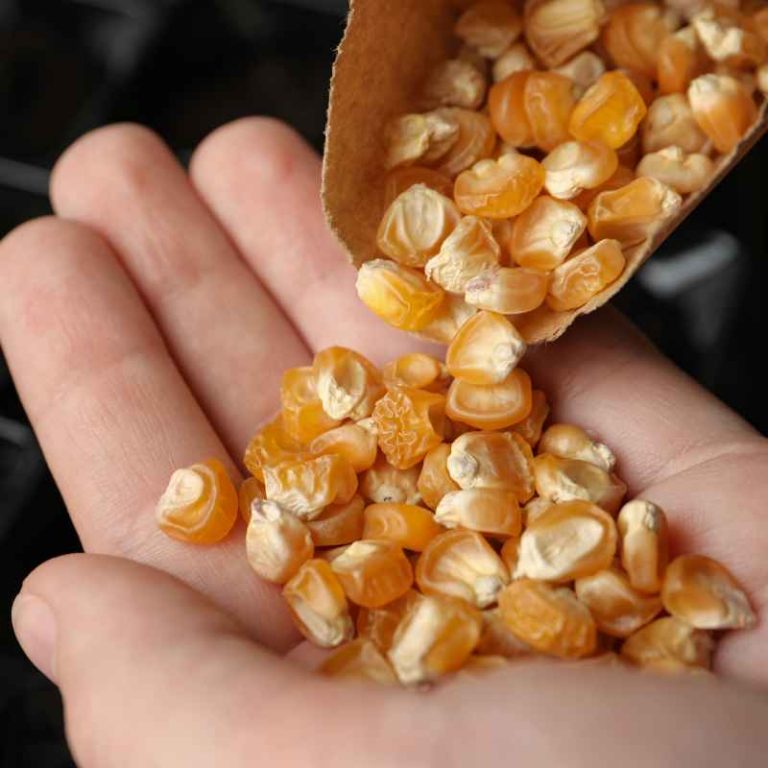
- Use it as a quick screen. The float test is best for larger seeds like beans, peas, and corn. It is a screen, not a final answer, because hollow, damaged, or very dry seeds may float while some viable seeds may still float at first.
- Soak briefly. Put the seeds in room-temperature water for about 15 minutes. Longer soaking can start rot or blur the result.
- Sort floaters and sinkers. Remove the seeds that sink and inspect the ones that float. Treat the sinkers as more promising, then confirm borderline seed with a paper towel test if the packet matters or the count is low.
Say your pea packet has 10 seeds and 7 sink in 15 minutes. That is a decent sign, but it is still less reliable than waiting for a radicle on a moist towel. For a crop that germinates slowly or unevenly, the towel test gives a better read.
What affects seed viability over time?
Storage conditions shape how fast viability drops. Temperature, humidity, light exposure, storage duration, and species-specific life span all matter. Cool, dry, dark storage helps many seeds last longer, but the limit still varies by crop, and a packet that looked fine two seasons ago can drop sharply since then.
Seed packet germination rate helps set expectations. If the packet says 50% to 98%, that printed number is a starting point for comparison, not a guarantee of field success. A home test tells you what that lot can likely do now.
Some university and extension resources also note that viability varies by species and even by seed lot, so a single percentage should be read as a snapshot, not a permanent rating. That matters at the garden scale too: a packet of mixed-age seed can behave like more than one lot.
Viability decision table
| Result band | Action | Extra seed rate | Dormancy treatments? | When to discard or replace |
|---|---|---|---|---|
| 80–100% | Plant normally. | None for most crops. | No, unless the species is known to need a pre-sow treatment. | Keep the packet if storage was good and the lot is still within its expected life. |
| 60–79% | Over-seed if the bed can absorb losses. | Add 20% to 40% more seed. | Only for species that need it. | Replace if seed is scarce, the crop is space-limited, or the result is below the packet claim by a wide margin. |
| 40–59% | Use only if the planting can tolerate gaps. | Add about 50% more seed. | Yes, only if the crop is hard-coated or known for dormancy. | Replace for tight spacing, high-value beds, or small seed counts where losses would hurt the stand. |
| Below 40% | Replace seed in most cases. | More than 50% is usually inefficient. | Only test dormancy steps if the species commonly needs them and you have enough seed left to justify it. | Discard or buy fresh seed unless the species is rare, slow, or you are trying a dormancy-specific treatment. |
What should you do with borderline results?
Borderline results need a crop-by-crop decision, not a fixed pass or fail. If the stand can absorb losses, over-seed. If the crop is small, expensive, or space-sensitive, replace seed sooner. If the species is known for dormancy, use a dormancy step only when the result points that way.
Over-seed when the stand can absorb losses
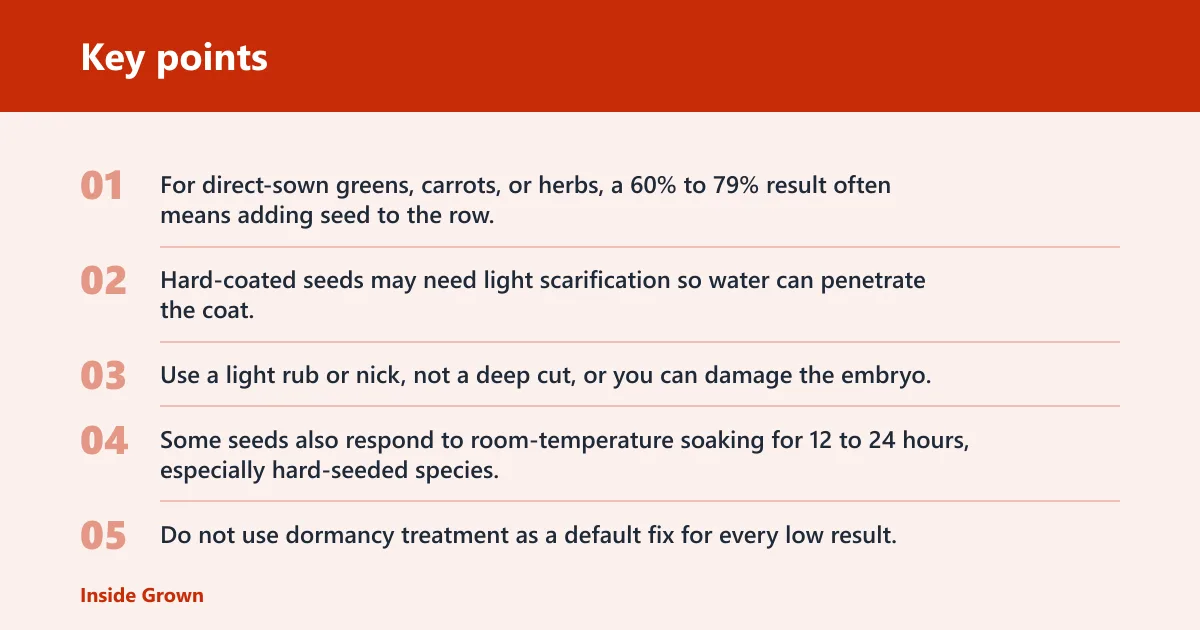
For direct-sown greens, carrots, or herbs, a 60% to 79% result often means adding seed to the row. Say a bean lot tests at 6 of 10. That may still be usable in a wide planting slot, but it is a weak choice for a short row where every missing hill matters.
Use dormancy treatments only for the right seeds
Hard-coated seeds may need light scarification so water can penetrate the coat. Use a light rub or nick, not a deep cut, or you can damage the embryo. Some seeds also respond to room-temperature soaking for 12 to 24 hours, especially hard-seeded species.
Do not use dormancy treatment as a default fix for every low result. A low test can also mean age, poor storage, mold, or rotting from excess moisture. Scarification and soaking help only when the seed biology calls for them, and some species also need light, alternating temperatures, or a period of chilling before they will germinate well.
Replace seed when the result is too low
If the test lands below 40%, fresh seed is usually the better buy. The exception is a species that is known to need a species-specific treatment and for which you still have enough seed to justify a second try. Otherwise, more time on an old packet usually costs more than replacement.
Common mistakes
- Soaking the towel. A dripping towel can rot seed and hide a good packet behind mold.
- Using too few seeds. Ten seeds keeps the percentage easy to read; three or four sprouting out of 10 is only 30 to 40%, which is too uncertain to trust for a whole bed.
- Ignoring species needs. Some seed needs light, alternating temperatures, or cooler conditions to germinate, so one warm dark setup can create a false low result.
- Confusing dormancy with death. A hard-coated or dormant seed may not sprout in a simple towel check even if it is still alive.
- Trusting the float test alone. It is faster, but it can miss viable seed and it can also keep nonviable seed in the mix.
Picture a packet of old parsley seed that shows only 4 sprouts out of 10. That does not automatically mean every seed is dead. It may mean the lot is old, or it may mean the species needs a different germination setup than the towel provided.
Prevention is simple: label each packet with the test date, sprouting count, and storage note. A dry, cool, dark shelf slows decline, but the record is what tells you whether to trust that packet next season.
Frequently asked questions
Why is it important to test seed viability before planting?
Testing keeps you from overfilling beds with dead seed and then waiting for a weak stand to fill in. A 10-seed check gives a quick percentage you can compare with the packet claim and your crop’s spacing needs.
How long before planting should I start seeds?
For old seed, test it before you schedule the sowing date. A paper towel check takes about a week to 10 days, so start early enough to replace seed, over-seed, or adjust your planting density without losing the season.
How many seeds should I test for viability?
Test 10 seeds. That makes each sprout worth 10%, which is easy to read and easy to compare across packets. If the lot is very small, use what you can spare and note that the result is less stable.
What is a good seed germination rate for old seeds?
As a home-garden rule, 80% or more is strong, 60% to 79% is workable with extra seed, and below 60% usually needs a harder look. A useful benchmark should still be weighed against crop spacing, seed value, and how much room you have to over-sow.
Should I use the float test or paper towel test?
Use the paper towel test if you want the better read. Use the float test only as a quick first screen for larger seeds like beans, peas, and corn, and confirm borderline lots with a towel test before you plant.
Can I improve germination after a low viability test?
Sometimes. Try light scarification for hard-coated seed, or a room-temperature soak for 12 to 24 hours when the species is known to benefit. If the result is still below 40%, replacement is usually the better move than repeated rescue steps.