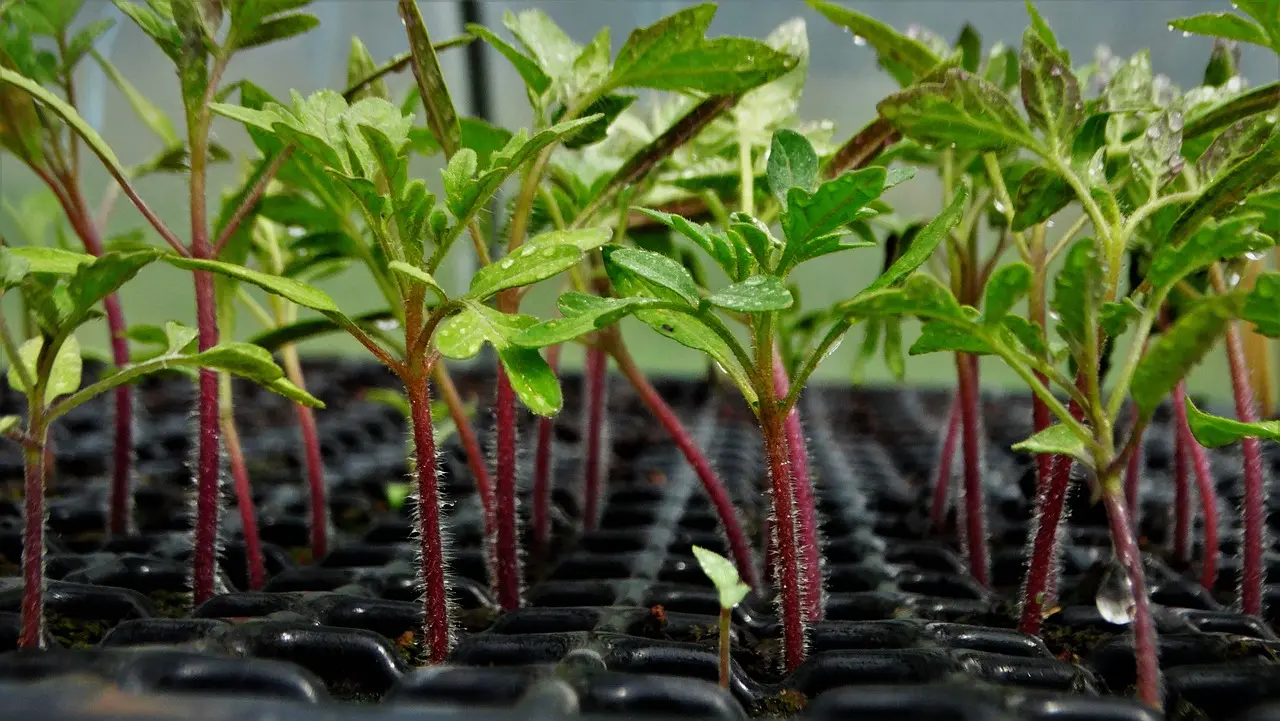
How to Plant Tomato Seeds for Strong Seedlings
Start tomato seeds 6 to 8 weeks before your last expected frost, sow them 1/4 inch deep in a fine, moist mix, and give strong light within 24 hours of emergence so seedlings stay stocky. If you start too early or keep them dim and warm, seedlings stretch, weaken, and become harder to transplant. Use the sowing depth, temperature, light, and timing that fit your climate and setup.
What you’ll need


- Tomato seeds, either purchased seed or saved seed from ripe fruit
- Seed-starting mix that is fine-textured and soilless
- Seed tray or small pots with drainage holes
- Labels and a marker
- Watering can with a fine rose or a spray bottle
- Grow lights or a very bright south-facing window
- Heat mat, if your room runs cool
- Small fan for gentle airflow
- Clear dome or plastic cover, if you need to hold moisture before sprouting
When should you start tomato seeds?
Start tomato seeds indoors about 4 to 8 weeks before your last frost date, with many gardeners often aiming for about 6 to 8 weeks. That timing gives seedlings enough room to size up without sitting too long in small cells, which can leave you with tall, root-bound plants that move poorly to the garden.
Match timing to your setup
If you have grow lights and steady warmth, you can sow a little earlier within that window. If you rely on a windowsill, sow closer to transplant time so the plants do not outgrow the light they can get indoors. A south-facing window can work for a short stretch, but it is less dependable than lights for compact growth. If your room runs cool, a heat mat can help the mix stay in the germination range. For gardeners in short-season climates, the safest plan is usually to start on the later side of the window and transplant only when seedlings are ready, not just when the calendar says spring has arrived.
A common first-timer mistake is sowing in February for a late-May transplant when the seedlings have no strong light. They grow fast, then flop. A better plan is to count back from your last frost date, then match the start date to the light and space you actually have. In long-season areas, that can mean a bit more flexibility; in short-season areas, it usually means keeping the schedule tight so seedlings are ready when outdoor conditions are.
How deep should you plant tomato seeds?
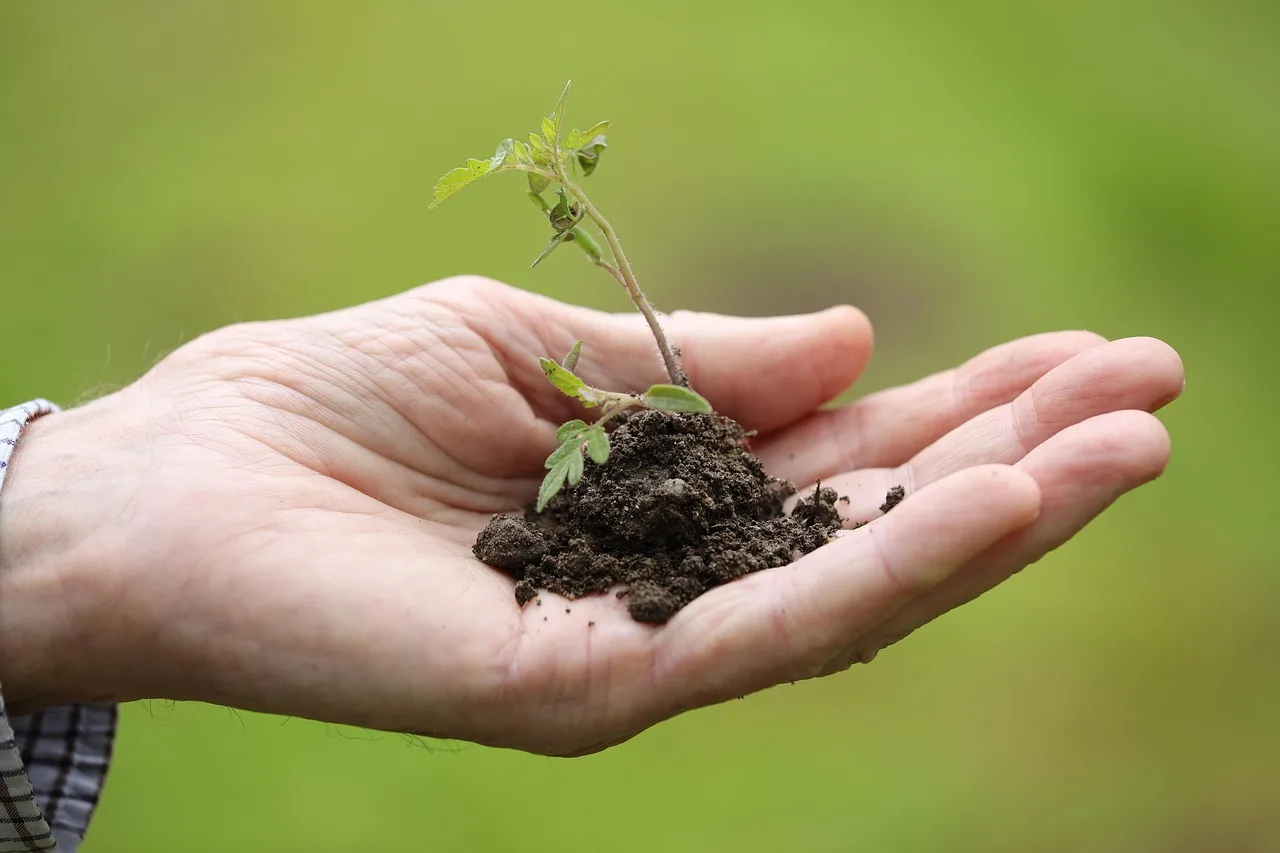
Plant tomato seeds about 1/4 inch deep in a fine, moist seed-starting mix. That shallow depth gives the seed enough contact with moisture while still letting the sprout reach light without wasting energy. Deep sowing can slow emergence, and shallow sowing can dry out too fast.
What container to use
Use a seed tray or small pot with drainage holes. A reused container is fine if it has drainage and is clean. Smaller cells dry faster and need closer watering, while larger pots hold more moisture and give roots more room. For very tiny seeds, a finer mix helps the roots thread through the medium cleanly.
Tomato seeds are often started in a light, soilless seed-starting mix. It may or may not contain nutrients. The main job is texture: fine enough for new roots, open enough to drain, and moist enough to support germination without staying soggy.
How many seeds per cell
Sow about one to three seeds per cell or pot, then thin to the strongest seedling after sprouting. Two to three seeds per pot and spacing seeds about 1 inch apart. That reduces the chance of an empty cell while avoiding a crowded clump that shades itself and invites damping-off.
- Fill the container. Moisten the seed-starting mix before filling trays or pots so the surface is evenly damp, not muddy. Press it lightly to remove large air pockets.
- Place the seeds. Set one to three seeds in each cell or pot, then cover them with about 1/4 inch of mix. Label the container right away.
- Water from below or mist. Add water gently until the mix is evenly moist. Stop before water pools in the tray, because saturated mix can slow oxygen flow to the seed.
- Hold steady warmth. Keep the container in the 65° to 85°F range while seeds germinate. A common guideline recommends about 75°F soil temperature, and temperatures above 95°F can work against good sprouting.
- Shift to strong light fast. Once sprouts appear, remove the cover and place seedlings under bright sun or grow lights for 16 hours a day. Keep lights about 2 inches from the tops to limit stretch.
How do you keep seedlings stocky?
Give tomato seedlings warmth for germination, then strong light, slightly cooler conditions, and airflow after sprouting. Those four pieces work together. If any one is weak, seedlings can get pale and leggy, even if the other parts are right.
Use light like a tool
Tomato seedlings can be kept under lights for 16 hours a day. Keep lights close enough to stop stretching, but not so close that leaves heat up or curl. A bright window can work for a short time, but grow lights are more reliable for compact growth. If you are using a windowsill, rotate trays daily so the stems do not lean toward one side.
Air movement helps too. A small fan on low for a few hours daily can strengthen stems and reduce legginess. Gentle brushing can do the same job. The goal is mild movement, not wind that dries the mix or bends seedlings flat.
If a tray on a sunny sill gives you pale stems after a week, the light is too weak or too far away. Move the tray closer to the light source, turn it daily if sunlight comes from one side, and add a fan for a few hours each day.
Feed at the right time
Seedlings usually do not need fertilizer until transplant time. Against fertilizing right after sprouting. Too much early nutrition can push soft growth before the root system is ready. If the mix includes nutrients, that is often enough for the first stage.
- Keep the top dry enough. Water when the surface starts to lose its sheen, but do not let the mix dry out completely. Even moisture supports root growth without inviting rot.
- Thin before crowding starts. Remove extras so each cell has one strong plant. Crowding cuts light and airflow, which makes stems thinner.
- Pot up on time. Move seedlings to larger containers when they are a few inches tall or have true leaves. Cotyledons are not true leaves, and true leaves are the better trigger for transplanting.
True leaves are the first set that looks like a tomato leaf, not the smooth seed leaves. Many guides use two to three sets of true leaves as a good cue. Potting up prevents root binding and gives the stem room to thicken before outdoor transplanting.
Can you direct sow tomato seeds?
Yes, but only in climates with a long enough warm season and warm soil. Tomatoes are warm-season crops, so direct sowing makes sense only when the garden soil is already warm and there is enough time for the plant to mature before cold weather returns. In many places, indoor starting is still the safer choice.
Choose direct sowing carefully
Direct sowing works best for gardeners who can skip the indoor bottleneck and still give the crop a long, warm run. It is less forgiving in short seasons because tomatoes need time to grow after emergence, not just time to sprout. Variety choice matters here too, because faster varieties are better suited to direct sowing in borderline climates.
Direct sowing also removes the transplant step, which means no potting up and less root disturbance. The tradeoff is slower early control over heat, moisture, and spacing. If spring is cool or wet, indoor sowing is usually the stronger option for stocky seedlings.
Tomato seed sowing table
| Setup type | Ideal sowing depth | Germination temperature range | Watering cadence | Top failure risk |
|---|---|---|---|---|
| Windowsill | 1/4 inch | 65° to 85°F | Check daily; water when the surface starts to dry | Leggy seedlings from weak light |
| Heat mat | 1/4 inch | About 75°F soil temperature, staying below 95°F | Check daily; keep the mix moist, not soggy | Overheating or overwatering |
| Grow lights | 1/4 inch | 65° to 85°F | Check daily; water from below when needed | Stretching if lights sit too far away |
| Direct sow | 1/4 inch | Warm soil in the 65° to 85°F range | Keep evenly moist until emergence | Cold soil and slow, uneven sprouting |
Fresh seed and saved seed are not the same choice. Purchased seed is usually the more consistent route for germination and variety identity. Seeds saved from ripe tomatoes can work, but fruit grown for eating may come from hybrids, so the next generation can vary in shape, vigor, and maturity. Saved seed can also carry disease if the fruit or handling was contaminated, so use only healthy fruit, dry the seed fully, and label it carefully.
For gardeners who want the most predictable start, purchased seed is the safer choice. If you save seed, expect more variation than you get from a commercial packet and treat plant health as part of the process from the beginning.
Common mistakes
Most weak tomato seedlings come from a sequence of errors, not one bad choice. Sowing too early makes plants sit indoors too long. Warm, dim conditions stretch them. Overwatering then slows roots and invites damping-off. Fix the setup early, not after the plants have already gone lanky.
Symptom guide
| Symptom | Likely cause | Fix |
|---|---|---|
| Leggy seedlings | Light is too weak, too far away, or too short in duration | Move lights to about 2 inches from the tops and run them for 16 hours a day |
| Pale seedlings | Light is insufficient or seedlings are crowded | Thin to one plant per cell and increase light intensity and duration |
| Collapsing seedlings | Mix stayed soggy and drainage is poor | Cut watering, improve drainage, and use a lighter seed-starting mix |
- Correct the light first. Move the light closer or switch to a stronger source before changing anything else. If the stem is already long, bury it deeper at potting up so the lower stem can root.
- Reduce moisture pressure. Let the surface dry slightly between waterings and empty any standing water from trays. Seedlings need moisture, but saturated mix invites weak roots.
- Increase root room. Pot up once true leaves are present or seedlings are a few inches tall. Bigger containers give the roots room to branch instead of circling.
Start at the right date, use a draining container, and keep the light close from the day sprouts appear. That combination prevents most weak starts before they begin.
How to plant tomato seeds
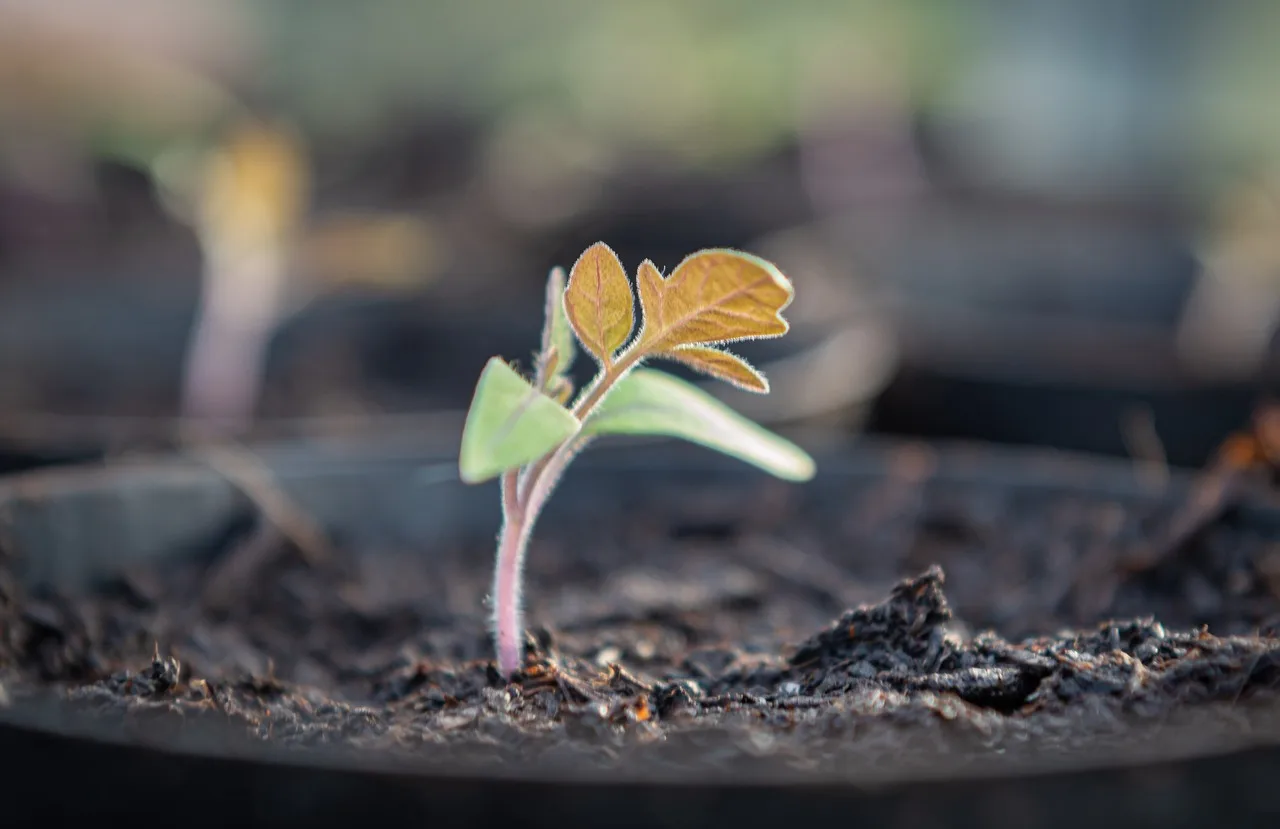
Plant tomato seeds in a fine seed-starting mix, about 1/4 inch deep, in a container with drainage holes. Keep the mix moist, not soggy, and hold it in the 65° to 85°F range until sprouting. As soon as seedlings emerge, move them under strong light so they do not stretch.
- Time the sowing window. Count back from your last frost date and choose a start date that gives seedlings enough time to grow without becoming root-bound. A general indoor window is 4 to 8 weeks before frost, with many gardeners using 6 to 8 weeks. In short-season climates, start close to the later side of that range so seedlings are ready when transplant weather arrives; in long-season climates, you have a little more room to adjust.
- Prep the tray, pots, and mix. Use a clean tray or small pots with drainage holes, then moisten the mix before filling so it is evenly damp rather than dry in the middle. Pack it lightly to remove big air pockets, but do not compress it hard. A fine, soilless mix is best because it drains well and still holds enough moisture for germination.
- Sow at the right depth. Place one to three seeds per cell or pot and cover them with about 1/4 inch of mix. That depth helps the seed stay moist without forcing the sprout to struggle upward. Label the container right away so you can track the variety and sowing date.
- Keep warmth and moisture steady. Water gently from below or with a fine mist so the seed stays evenly moist, then hold the container in the 65° to 85°F range until germination. A heat mat can help if the room runs cool, and the target soil temperature is about 75°F. Avoid soggy mix, because too much water slows oxygen flow and can weaken the seed before it emerges.
- Move seedlings into strong light. As soon as sprouts appear, remove any cover and place the tray under bright light for 12 to 16 hours a day. Keep lights close enough to prevent stretching, and use a windowsill only if it is truly bright and can be monitored closely. If you can keep the light source around 2 inches from the tops, seedlings are less likely to flop.
- Thin and pot up at the true-leaf stage. When the seedlings have true leaves, thin them so each cell has one strong plant. True leaves are the first leaves that look like the tomato plant itself, not the smooth seed leaves. Pot up once seedlings are a few inches tall or have two to three sets of true leaves so roots have space to branch and the stem can strengthen.
- Harden off and transplant deeply. Before moving plants outdoors, harden them off by gradually increasing exposure to sun and outdoor conditions. At transplant time, set tomatoes deeper than they were growing in the pot, leaving only the top leaves above the soil if needed. The buried stem can root along its length, which helps support the plant and improves establishment.