How to Plant Seeds in Raised Beds for Faster Germination
Plant seeds in raised beds at the packet depth, press the row into firm, fine soil, and keep the top inch evenly damp. Warm-season seeds often germinate fastest in soil around 65-85°F. Skip those steps, and seeds dry out, wash deeper, or rot before sprouting. This guide shows how to build a fast-germinating seedbed by adjusting soil contact, moisture, and temperature, plus a few crop-specific tweaks.
What you’ll need

- Seed packets and a simple sowing plan
- Hand trowel and rake
- Watering can with a fine rose or a hose nozzle that mists gently
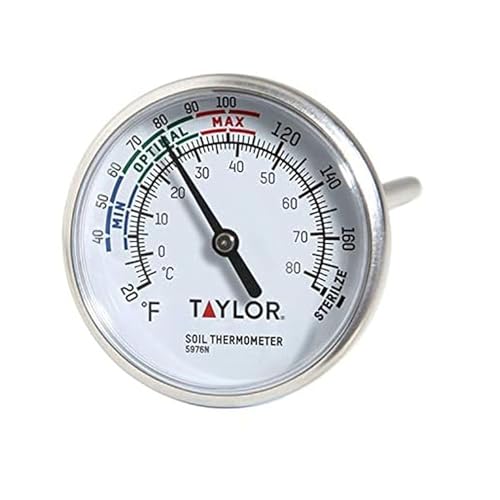
- Soil thermometer
- Labels or row markers
- Fine compost for topdressing, if the crop allows it
- Vermiculite for a thin cover on small-seeded crops
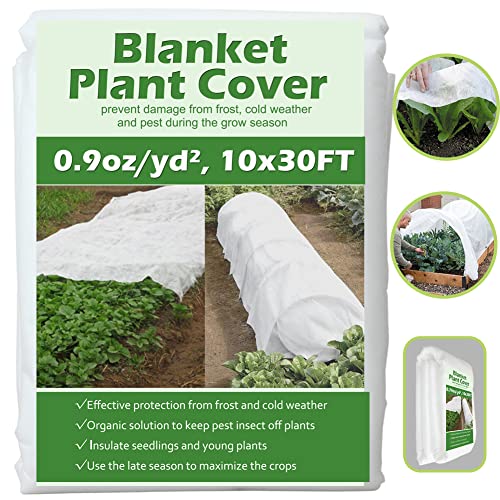
- Row cover or light burlap for bird and slug pressure
Raised bed sowing checklist
| Crop | Seed size | Sowing depth rule | Pre-soak? | Cover layer | Watering method | Likely bottleneck |
|---|---|---|---|---|---|---|
| Radish | Small | About 2 to 3 times the seed width | No | Light soil or fine compost | Mist after sowing, then keep evenly damp | Surface drying |
| Carrot | Tiny | Surface sow or barely cover | No | Very thin vermiculite | Gentle mist only | Crusting soil |
| Lettuce | Tiny | Surface sow; press in | No | Thin vermiculite | Fine mist, frequent checks | Heat and drying |
| Beans | Large | 1 to 2 inches deep, per packet | No | Soil only | Pre-water, then water in gently | Cold soil |
| Peas | Large | 1 to 2 inches deep, per packet | Yes, if dry and old | Soil only | Soak, sow, then keep moist | Cold soil and hard seed coat |
| Beets | Medium | About 1/2 to 1 inch deep | Optional | Fine compost or soil | Even moisture until emergence | Uneven moisture |
How do you prepare raised bed soil?
Build the seedbed in the top 1-2 inches of the raised bed. That layer should be fine-textured, well-draining, and able to hold moisture long enough for seed-to-soil contact to work. Level the surface, remove clods, and water lightly before sowing so dry pockets do not pull moisture away from the seed.
- Rake the top 1-2 inches until the texture is fine and even.
- Break apart clods and pull off stones, sticks, and old roots.
- Shape the bed flat or into shallow rows, depending on the crop.
- Pre-water the bed until the surface is damp, not muddy.
- Check the soil temperature with a thermometer before planting warm-season seed.
Cold soil slows germination, even when the bed looks moist. A thermometer gives you a clear check instead of guessing from air temperature alone.
How deep should you plant seeds in a raised bed?
Use the packet depth as the main rule, then adjust for seed size. Tiny seeds usually need surface sowing or only the lightest cover. Larger seeds can go deeper, but burying any seed too far delays emergence and can stop it from reaching light. Firm the soil gently after sowing so the seed touches damp earth.
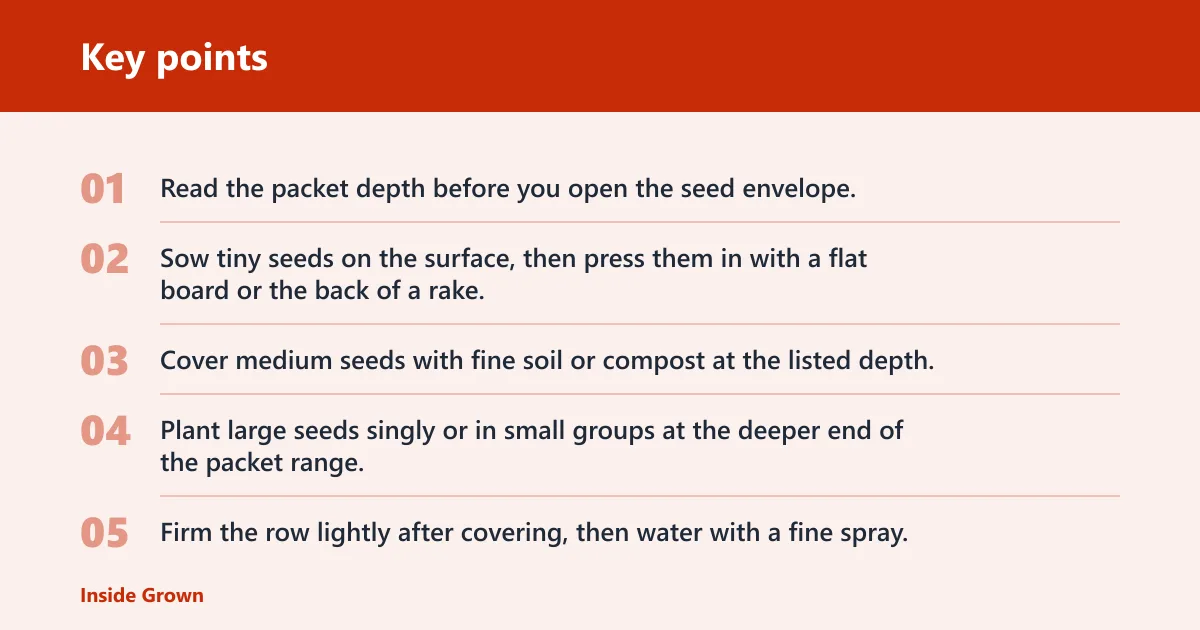
- Read the packet depth before you open the seed envelope.
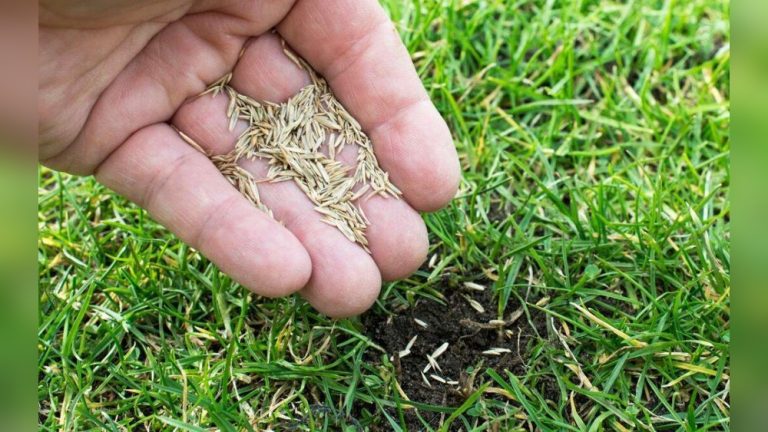
- Sow tiny seeds on the surface, then press them in with a flat board or the back of a rake.
- Cover medium seeds with fine soil or compost at the listed depth.
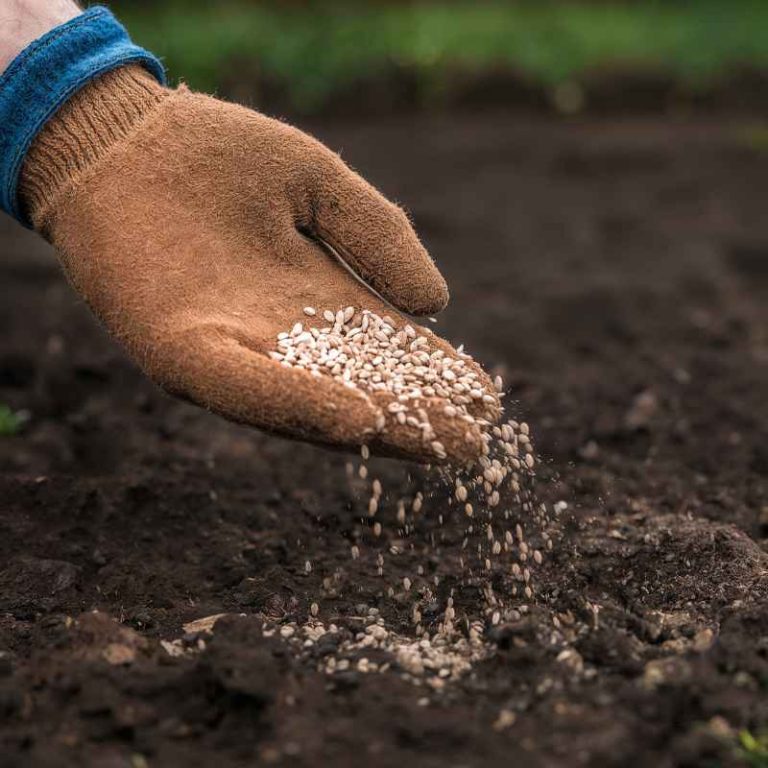
- Plant large seeds singly or in small groups at the deeper end of the packet range.
- Firm the row lightly after covering, then water with a fine spray.
- If seedlings come up crowded, thin them once they have true leaves.
Picture a row of lettuce seeds scattered across a smooth bed. If the top layer dries in an hour, the exposed seeds stall. A thin vermiculite cover helps hold moisture without burying them too deeply.
Should you soak seeds before planting?
Soak hard-coated seeds when the crop type benefits from it, but do not soak everything. Beans, peas, and some slow starters can gain from pre-soaking, while tiny seeds usually do better dry. For especially stubborn seed coats, scarification or pre-sprouting can help, but only for crops that tolerate it.
- Sort seeds into three groups: sow dry, soak, or pre-treat.
- Soak only hard-coated seeds that benefit from water uptake before planting.
- Use scarification for seeds with very tough coats when the packet or crop guidance allows it.
- Use pre-sprouting only for seeds that can be moved carefully once the root tip appears.
- Plant pre-treated seeds at once, then keep the seedbed evenly damp.
Suppose a packet of peas has older seed and a hard coat. Soaking can shorten the wait, but the bed still needs warmth and steady moisture; soaking does not fix cold soil.
How do you keep raised bed soil moist after sowing seeds?
Keep the top layer evenly damp, with no standing water. Water deeply before sowing, then use light misting after planting so seeds stay in contact with moisture without washing deeper. In raised beds, the upper inch can dry fast, so check it often until sprouts appear.
- Water the bed before sowing if the top layer feels dry.
- After sowing, mist the surface until the cover layer is darkened, not puddled.
- Check moisture at least daily in warm or windy weather.
- Add a second light watering only when the top half-inch begins to dry.
- Use a finer nozzle if the surface crusts or seed shifts.
A common first-timer mistake is using a heavy stream because the bed looks dry on top. That can push seeds deeper, pack the surface, and leave a crust that slows emergence.
What seed spacing helps germination in raised beds?
Spacing affects how evenly seeds can emerge, especially in dense rows. Small seeds are often over-sown and thinned later. Large seeds are usually planted one by one or at fixed intervals. Row or block planting keeps the seedbed manageable, and final spacing comes after thinning, not before.
- Follow the packet spacing for the final plant distance.
- Scatter tiny seeds thinly, then thin seedlings later.
- Plant large seeds singly to avoid root crowding.
- Use rows for crops that need air flow and easy thinning.
- Mark crowded spots early so you can thin on time.
Say your beet row comes up in a thick band instead of spaced singles. Thin the extra seedlings once the first true leaves appear; that reduces competition for water, light, and room without changing the initial germination step.
Can you cover seeds to help them sprout faster?
Yes, but the cover should match the seed size. A thin layer of vermiculite or fine compost can hold moisture and reduce surface drying. It should never bury tiny seeds so deeply that they lose contact with light or cannot break through. For bird pressure or slug pressure, a light row cover or burlap can help until emergence.
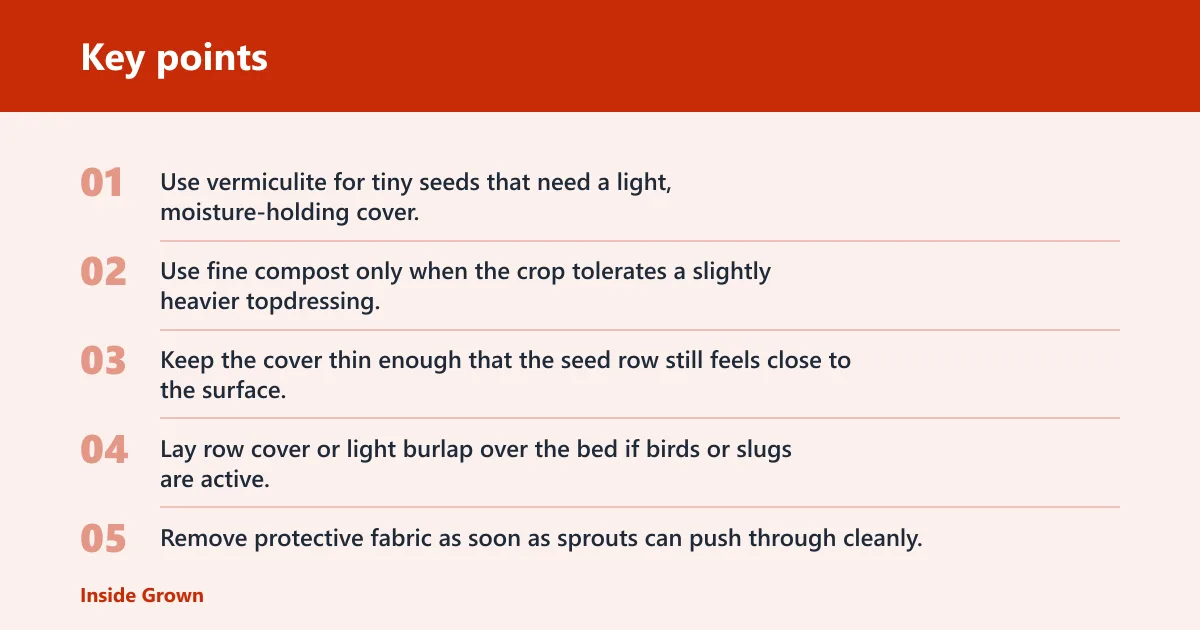
- Use vermiculite for tiny seeds that need a light, moisture-holding cover.
- Use fine compost only when the crop tolerates a slightly heavier topdressing.
- Keep the cover thin enough that the seed row still feels close to the surface.
- Lay row cover or light burlap over the bed if birds or slugs are active.
- Remove protective fabric as soon as sprouts can push through cleanly.
Do not use mulch that forms a hard cap. If the surface seals after watering, seedlings struggle to break through even when the seed itself is viable.
How do you know if your raised bed soil is too cold for seeds?
Use a soil thermometer, not air temperature, to judge planting conditions. Cold soil slows germination, especially for warm-season crops such as beans and squash. If the bed stays cool through the morning, hold off on those crops and sow cool-season seeds instead, or wait for the soil to warm.
- Insert a soil thermometer 1 to 2 inches deep in the sowing zone.
- Check in the morning and again later in the day.
- Plant warm-season crops only when the bed stays warm enough through the day.
- Choose cool-season crops if the bed is still cold.
- Delay sowing if the soil feels wet and chilly at the same time.
Common mistakes
Burying tiny seeds too deeply: Carrot and lettuce seed need a surface or near-surface sowing. Too much cover blocks emergence.
Watering in heavy bursts: Strong flow can crust the surface, move seeds out of place, or create uneven moisture.
Sowing into cold soil: Warm-season crops stall in cool beds. Check temperature before you plant.
Skipping thinning: Crowded seedlings compete for water and light once they emerge.
Leaving the top layer dry: Raised beds dry faster than many ground beds, so the first inch needs regular checks.
Frequently asked questions
How do I plant seeds in raised beds for faster germination?
Prepare the top 1-2 inches as a fine, even seedbed, sow at packet depth, firm the soil gently, and keep the surface evenly damp. Check soil temperature before planting warm-season crops, and protect fresh sowings from crusting, birds, and slugs.
Should I soak seeds before planting them in raised beds?
Soak only seeds that benefit from it, such as some hard-coated crops. Tiny seeds usually do better dry. If a seed needs scarification or pre-sprouting, do that only for the correct crop and sow it right away so the root does not dry out.
What is the best way to plant tiny seeds in raised beds?
Sow tiny seeds on the surface or just barely covered, then press them into firm soil. Use a thin vermiculite topdressing if the bed dries quickly. Water with a mist, not a stream, and protect the row if birds are likely to scratch it open.