How to Sow Seeds Directly in a Raised Bed
Sow seeds directly in a raised bed by using the packet for depth, giving each crop the room its mature size needs, and timing sowing to soil temperature. Press seeds into fine soil, cover lightly, and keep the top inch evenly moist until sprouting. Bad placement or dry soil costs you thin stands, patchy germination, and lost weeks. This guide covers depth, spacing, timing, soil prep, moisture control, and what to do when seeds fail to come up.
What direct sowing means in a raised bed


Direct sowing means planting seed right where it will grow. It works well for quick crops and for plants that dislike transplanting, including many root crops and other seeds that hate root disturbance. In raised beds, the method depends on fine soil, careful spacing, and steady moisture.
Raised beds dry and warm faster than in-ground plots, so timing and surface prep matter. A loose, weed-free seedbed with few clods helps seed touch moist soil instead of sitting in air pockets. That contact starts germination.
Which crops are worth direct sowing?
Start with carrots, radishes, beans, peas, spinach, kale, lettuce, and cucumbers. Carrots and other taproot crops do better when they are not moved. Beans and peas are usually easier to place straight into the bed. Lettuce, spinach, and radishes are fast enough that direct sowing saves time.
Large vegetable seeds can be sown directly into the soil when properly spaced. Smaller seeds can also be direct sown, but they are harder to place precisely, so thinning later is often necessary.
📊 Some slow-to-germinate seeds can be soaked in water for 12 to 24 hours. Source: UMD.
What you’ll need
- Seed packets for each crop
- Hand trowel or dibber
- Fine compost or screened soil
- Watering can or gentle hose setting
- Row cover or light mesh
- Labels and marker
How do you prepare the bed?
Clear weeds and debris, break up clods, level the surface, and make sure the top layer is fine enough for small seed. A raised bed seedbed should be loose, weed-free, and moist but not waterlogged. That setup improves seed-to-soil contact and cuts down on gaps that dry seed out.
- Remove weeds, roots, sticks, and old plant material.
- Break clods and rake the surface level.
- Check moisture by squeezing a handful of soil; it should hold together lightly and crumble, not drip.
- Mix in screened compost or fine soil on the top layer if the surface is coarse.
- Rake again until the bed is fine enough for the smallest seed you plan to sow.
If the surface crusts easily, a narrow band of fine compost or vermiculite over the row can help. That thin layer reduces crusting and gives delicate seedlings a better path through the surface.
How deep should you plant seeds in a raised bed?
Use the seed packet first. Packet directions are the main source for depth and spacing, and they are often more exact than general rules. If the packet conflicts with a general rule, follow the packet unless the bed is unusually dry, crusting, or heavy enough to justify adjusting slightly shallower or deeper.
A common rule of thumb is to sow seeds at two times their width. Ohio State University also notes a three-times-seed-width depth rule in raised-bed context, so the packet and the seed size should guide the final choice. Small seeds often need only a light covering. (UMD)
When is a light covering enough?
Small seeds should usually be covered with just enough soil or a thin layer of compost to hold them in place and block light if the crop needs darkness to germinate. Tiny seed buried too deeply may rot or fail to emerge. For very fine seed, press it into the surface, then sift over a thin cover.
In light, sandy soil, sow a little deeper. In heavier clay, sow shallower. That adjustment helps protect seed in loose ground while avoiding a hard cap in dense soil.
How should larger seeds be handled?
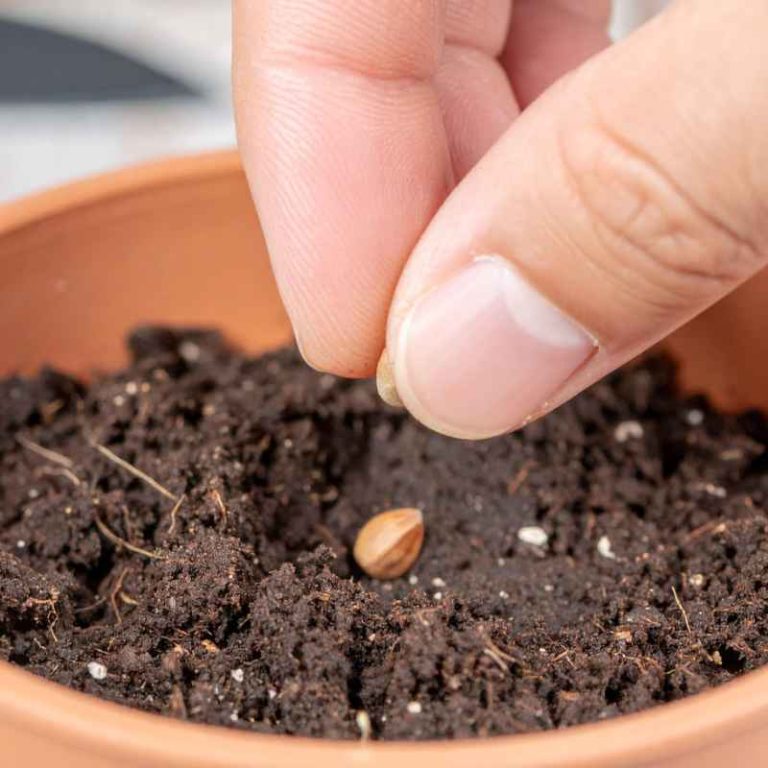
Larger seeds can be placed more precisely, usually one by one or in small groups, then covered to the packet depth. Beans, peas, and cucumbers are easier to space this way than tiny seeds are. Firm the soil lightly after covering so the seed touches damp earth.
How far apart should seeds go?
Spacing depends on whether you are using row spacing, hill spacing, or broadcasting. In a raised bed, the bed width matters as much as the crop. A narrow bed may need denser rows and stricter thinning, while a wider bed can give each plant more room from the start.
Small seeds are often sown evenly and thinly, then thinned later. The RHS recommends sowing evenly and thinly to reduce later thinning. Larger seeds can be placed with the final spacing in mind, which saves time and reduces crowding.
When should you plan for thinning?
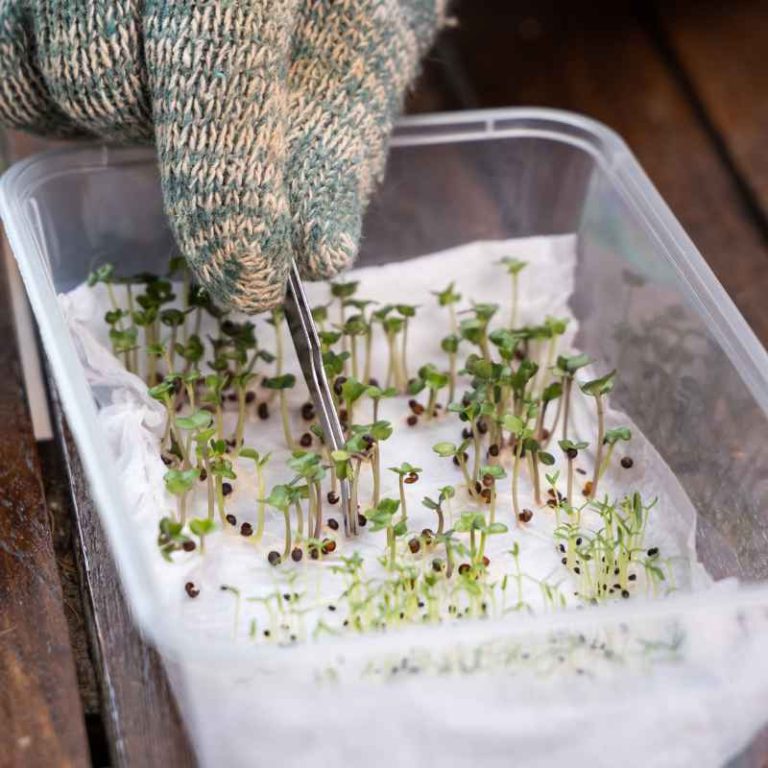
Plan to thin whenever the seed is too small to place exactly or when the packet suggests sowing more than one seed per spot. Thinning removes extra seedlings after germination and prevents crowding and yield loss. You can do it by hand, or use a rake in some beds for very fine seed.
Say your lettuce row comes up as a solid green mat in a 12-inch-wide bed. Lettuce should be thinned in stages, not all at once, so remaining seedlings are less likely to be uprooted by accident. Crowded seedlings compete for light, water, and root space.
Raised-bed sowing steps
- Check the soil temperature before you sow; do not rely on the calendar alone.
- Wait if the soil is too cold, because cold soil slows germination and can cause rot.
- Make shallow furrows, drills, or small planting holes with a dibber or trowel.
- Place seed at the packet depth, then cover lightly and press the surface firm.
- Water gently so you do not wash seed out of the row.
- Label the row or block immediately.
- Use row cover if birds, mice, or cold nights are a risk.
A common first-timer mistake is watering hard enough to expose seed after covering it. A gentler stream keeps the seed where you put it and preserves the fine surface you prepared.
If the weather turns dry, the top inch should be rechecked daily. The top inch should stay about evenly moist through germination. For very dry surfaces, add water in two passes about 10 to 15 minutes apart so moisture can sink in instead of running off.
Raised-bed sowing table
| Crop type | Sowing depth rule | Spacing method | Moisture strategy | Expected germination risk | First troubleshooting action |
|---|---|---|---|---|---|
| Carrots | Use packet depth; shallow cover only | Thinly in rows | Keep surface evenly moist | High if the bed dries or crusts | Mist daily and cover with row cover |
| Radishes | About 2x seed width | Rows or broadcast, then thin | Moist but not soggy | Moderate in cold, wet soil | Wait for warmer soil and reseed gaps |
| Beans | Packet depth; often a bit deeper than tiny seed | Place individually or in hills | Water after sowing, then keep evenly moist | Lower, but cold soil can slow them | Check soil temperature and resow if needed |
| Peas | Packet depth | Rows with support nearby | Even moisture until emergence | Moderate in hot soil | Reseed into a cooler part of the bed |
| Spinach | Light covering | Thinly in rows | Keep the seedbed cool and moist | Moderate if soil crusts | Add fine compost or vermiculite over the row |
| Kale | Packet depth | Rows with later thinning | Even moisture through sprouting | Moderate in very warm soil | Shade the bed briefly with row cover |
| Lettuce | Very shallow cover | Thinly in rows or blocks | Do not let the surface dry out | High in heat and dry air | Resow in cooler soil and keep covered |
| Cucumbers | Packet depth or 2x seed width | Hills or wider spacing | Warm soil and steady moisture | High if planted too early | Delay sowing until soil warms |
Row cover can speed germination and protect seeds from animals. Keep it on until germination is underway or until warming conditions improve. It is especially useful in raised beds where birds can scratch seed loose from the shallow top layer.
Suppose a 4-by-8-foot bed has been sown with carrots in a narrow row down the center. A heavy rain can crust the surface and leave the row uneven. The next move is to top-dress that strip with a thin band of fine compost or vermiculite, then water gently so the crust softens without exposing seed.
Common mistakes
Cold, wet soil is one of the fastest ways to lose seed. Seeds sown in soils that are too cold may rot or be eaten before germinating, and the bed may look untouched for days. The fix is to wait for better soil temperature instead of sowing on the calendar. (Iastate)
Another common problem is a drying surface, especially with carrots and lettuce. If the top inch dries out, germination can stall. Water lightly and often enough to keep the seed zone evenly moist.
Skipping thinning is another trap. Overcrowded seedlings waste space and reduce yield. If the row comes up too thick, thin early while seedlings are small.
Watch for washout, crusting, and animal damage. If seed disappears after rain, reseed and use a lighter hand with watering plus row cover. If the surface seals over, add a thin layer of compost or vermiculite and rewater gently.
What if germination is uneven?
First, check whether the bed dried at the surface, crusted, or was planted too deep. Then compare the packet depth with the actual sowing depth and the soil temperature. Uneven stands often mean some seed stayed too dry while other seed sat in colder, wetter spots.
If that did not fix it, overseed the thin areas with the same crop and protect the row with mesh or row cover. In a raised bed, a small reseed patch is easier than trying to correct a whole row.
Frequently asked questions
How far apart should I space seeds in a raised bed?
Use the mature plant size on the packet, then choose row spacing, hill spacing, or thin broadcasting based on the crop. Small seed may be sown densely and thinned later. Larger seed can be placed more precisely so each plant has room without crowding.
What seeds can you plant directly in the ground?
Carrots, radishes, beans, peas, spinach, kale, lettuce, and cucumbers are common raised-bed choices for direct sowing. Direct seeding is especially useful for crops that dislike transplanting or that grow quickly enough to be worth placing straight into the bed.
Do I need to thin seedlings after direct sowing?
Yes, if you sowed small seed or planted more than one seed per spot. Thinning prevents crowding and yield loss. Remove extras when seedlings are still small so the roots of the plants you keep are not disturbed.