How far apart to plant seeds for healthy growth
Space seeds by the plant’s mature width, not seed size: give each plant the final spacing on the packet, then sow 2 to 3 seeds per hole and thin to one. Crowded seedlings fight for light, water, and air, which can cut yields and raise disease risk. This guide shows how to space seeds in beds, rows, and containers, plus when to sow closer on purpose.
How far apart should you plant seeds?


Seed spacing is the distance between seeds in a row or at a planting station. It is different from row spacing, which is the gap between rows, and from final plant spacing, which is the room each mature plant needs to spread.
What seed spacing means in a row or station
For direct sowing, the key number is usually the in-row distance between seeds or the spacing between planting stations. That distance sets root room, light, and air for each seedling after germination. It also sets how much thinning you will need later.
How row spacing differs from in-row spacing
Row spacing is the gap you leave so you can weed, water, harvest, and keep foliage dry. In-row spacing is the gap between plants within that row. A bed can have wide rows and still be crowded if seeds are packed too tightly inside each row.
Why final plant size matters more than seed size
Small seed does not automatically mean small plant, and large seed does not guarantee a wide canopy. Final size, canopy spread, root room, and growth habit matter more. A tiny lettuce seed can become a broad plant, while some large-seeded crops still stay fairly compact.
What should you follow: the seed packet or a spacing chart?
Use the seed packet when it gives a species-specific spacing, because packet directions are more precise than generic charts. A chart can help with planning, but the packet spacing is often the better guide if the two differ. Many packets also assume thinning, so read every line, not just the spacing number.
When packet spacing should override general guidance
If the packet gives a direct spacing, a row spacing, and a thinning note, follow that set of instructions first. Some crops need extra room because they branch, bolt, or form large roots. Others are listed close together because the packet expects you to thin after germination.
How to read spacing, thinning, and sowing notes
Look for three separate details: how far apart to place seeds, whether to sow more than one seed per hole, and when to thin. If the packet says to sow several seeds per station, that is a thinning crop. If it says to sow in clusters, the goal may be a clump for transplanting.
Why some packets expect extra seeds per hole
Not every seed germinates. Some crops also germinate unevenly. Extra seeds per hole help fill a spot, then thinning leaves the strongest seedling. The tradeoff is simple: more seeds at sowing, then less crowding later.
How plant size and growth habit change spacing
Seed spacing should account for plant type, growth habits, and growing conditions. Compact plants need less room than sprawling ones. Upright plants can sometimes sit closer than spreading ones. Fast-growing crops often need earlier thinning because they fill space quickly, while slow growers may tolerate a tighter start.
Compact versus sprawling plants
Compact plants stay narrower and cast less shade, so they can be set closer than spreading plants. Sprawling crops send leaves across the soil surface and can trap moisture if packed too tightly. That extra leaf overlap can slow drying and raise disease pressure.
Upright versus vining plants
Upright crops often use vertical space, while vining crops spread outward or climb. Vining plants such as cucumbers and squash need far more room than a small upright crop, and they are commonly listed at 3-5 feet apart. Their leaves need airflow to dry after rain or watering.
Fast-growing versus slow-growing crops
Fast growers can become crowded quickly, which is why a tight sowing often needs a clear thinning plan. Slow growers may look spaced out at first, but they still need their final room. A seedling tray or a direct-sown bed should both be planned around the mature plant.
When should you sow extra seeds and thin later?
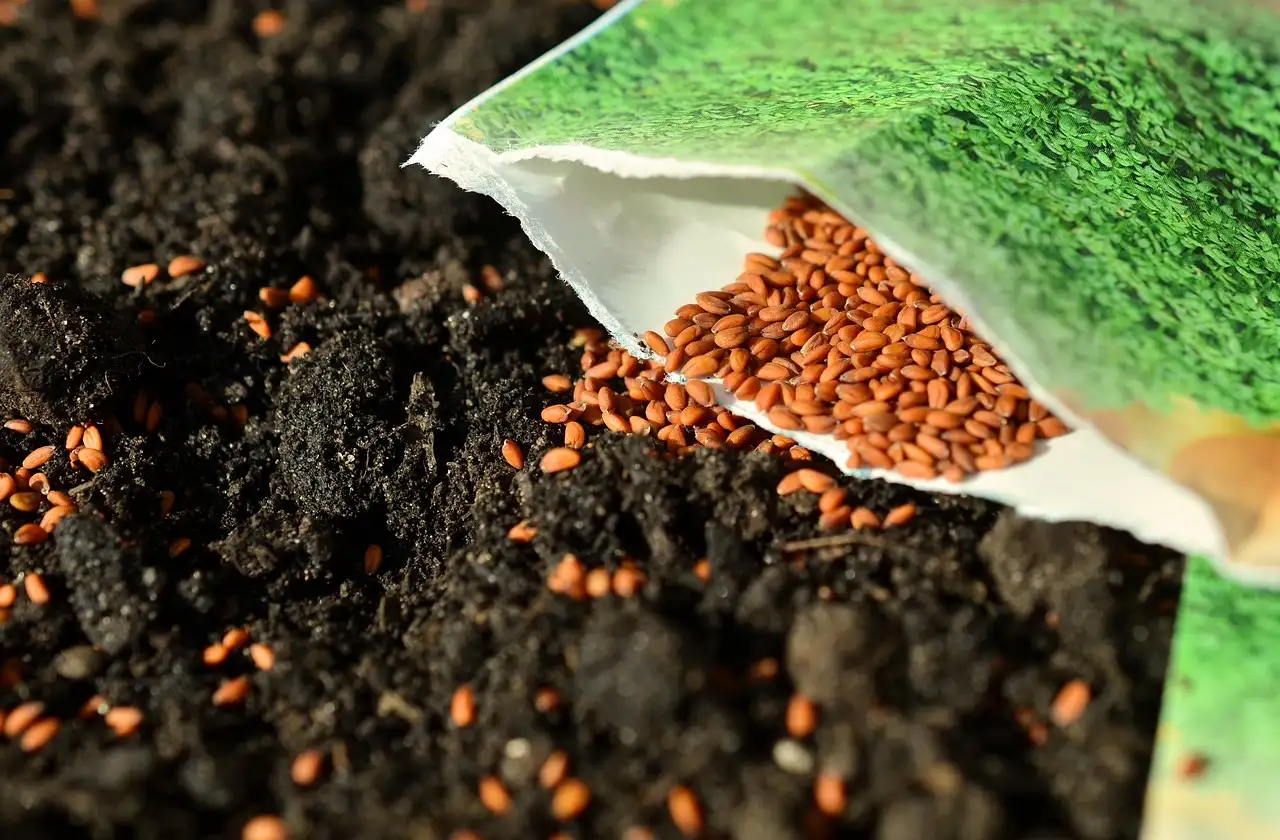
Sow extra seeds when germination is uncertain, when the crop handles disturbance well, or when the packet expects thinning. Thin once true leaves appear, when seedlings are usually easier to judge and handle. Root crops are the main exception: thin early enough to avoid root distortion.
Which crops handle thick sowing well
Leafy greens and some flowers often handle close sowing better than root crops. Small plants can be planted as close as 1-2 inches apart, and leafy greens such as spinach and kale can be planted as close as 1 inch apart. Those crops are often thinned or harvested young.
When to thin after true leaves appear
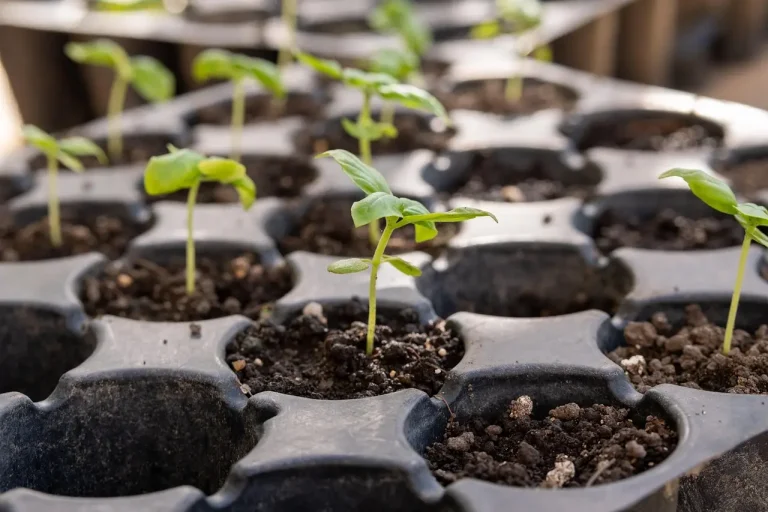
Wait until the first true leaves are visible. Cotyledons are the seed leaves, not the full plant. Once true leaves appear, you can keep the strongest seedlings and remove the rest. Thinning sooner can leave gaps if a seedling fails, while thinning too late can tangle roots. (en.wikipedia.org)
When clusters are better than single seeds
Clusters make sense when you want a clump for transplanting, a dense patch for cutting, or a bouquet-style flower group. They also help with crops that are started indoors and moved later. In a cluster, the final spacing is managed at transplant time rather than at germination.
Say your lettuce seeds sprout in a 12-inch raised bed and every hole has three seedlings. If you wait until the plants have true leaves, you can keep one strong plant per spot and still maintain airflow. If you skip thinning, the leaves overlap and stay damp longer after watering.
Crop-spacing decision table for common garden seeds
Use this table as a translation guide, not a rigid rulebook. It turns packet directions into three actions: sow at final spacing, sow tight and thin, or sow in clusters for transplanting. It also shows where containers, rows, and broadcast beds need different handling.
| Crop type | Action | Why this fits | Container note | Row or bed note |
|---|---|---|---|---|
| Carrots | Sow tight and thin | Root vegetables such as carrots and beets should be planted 1-2 inches apart | Use deeper pots and thin early to avoid twisted roots | Keep rows straight so thinning is easy |
| Beets | Sow tight and thin | Root crops need room to size up belowground | Choose a container with enough depth for root expansion | Space rows so you can reach in without stepping on soil |
| Lettuce | Sow tight and thin | Leafy greens can be planted as close as 1 inch apart | Good for cut-and-come-again harvests if kept airy | Thin early in broadcast beds to limit mildew |
| Beans | Sow at final spacing | Most bean types dislike root disturbance after sprouting | Use large pots or avoid crowding at the edge | Space rows for picking and airflow |
| Cucumbers | Sow in clusters for transplanting | Vining plants such as cucumbers and squash should be planted 3-5 feet apart | Start in plugs or larger cells, then move carefully | Give vines room to spread or trellis them |
| Squash | Sow in clusters for transplanting | Large leaves and wide vines need broad spacing | Use oversized starts if transplanting indoors | Leave open access for pollination and harvest |
| Direct-sown flowers | Sow at final spacing or sow tight and thin | Choose based on whether the flower forms one stem or a clump | Clusters work well for transplantable annuals | Broadcast beds need thinning for airflow |
Picture a first-timer sowing carrots by seed size alone and planting them far apart because the seeds are small. The result is not better spacing; it is wasted bed space and uneven rows. The correct cue is the mature root, not the size of the seed.
How do you measure seed spacing without special tools?
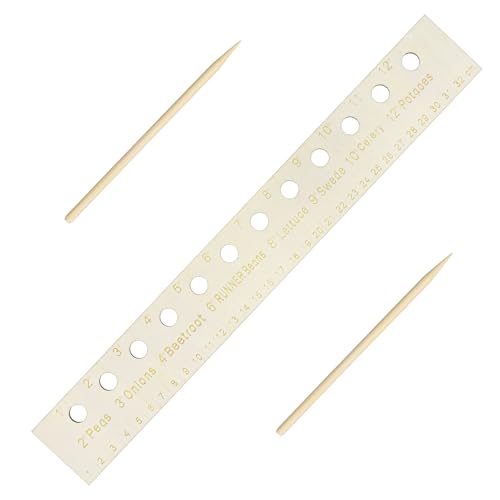
You do not need special gear. A ruler or measuring tape can set in-row spacing, while a garden marker and string line help keep rows straight. Those simple tools make spacing repeatable, which matters more in mixed beds, succession sowing, and small gardens where every inch counts.
Using a ruler or measuring tape
Lay the ruler or tape along the row and mark each planting point. For close crops, measure every hole. For broader crops, mark larger gaps from the start. A measuring tape or ruler can be used to measure spacing, and it is enough for most home gardens.
Marking rows with a garden marker
A garden marker lets you place small dots where seeds go or mark the ends of each row before sowing. That keeps planting stations consistent. It is especially helpful when the packet gives one spacing for seeds and another for rows.
Using a string line for straight spacing
Stretch a string line before planting to keep rows straight and easy to read. Straight rows improve access for thinning and watering. They also make it easier to see where plants are too close, which helps you fix crowding before the canopy closes.
- Read the packet for seed spacing, row spacing, and thinning notes.
- Choose the final spacing if the crop hates transplanting or has a large root.
- Sow extra seeds only when the packet expects thinning or germination is uncertain.
- Mark planting points with a ruler, tape, marker, or string line.
- Thin after true leaves appear, unless the crop needs earlier correction.
How spacing changes in containers, raised beds, and rows
Spacing shifts with the growing space. Containers crowd faster because roots, water, and nutrients are limited. Raised beds dry and warm faster, which can support tighter timing but still need airflow. In-ground rows need enough width for movement, drying, and access at harvest.
Container spacing and edge effects
In containers, plants compete more quickly at the edges because the rooting area is fixed. Leave extra room for upright foliage and do not count on the pot wall for usable soil space. Wide or vining crops usually need one plant per large container, not a packed cluster.
Raised-bed spacing for airflow and access
Raised beds can handle careful spacing, but they still need open channels for air and hands. Dense planting in a raised bed can block drying, especially after irrigation. Keep enough space to reach the center of the bed without stepping on the soil.
In-ground row spacing for movement and drying
In-ground rows should leave room for walking, weeding, and air movement. Wider row spacing helps leaves dry faster after rain. That matters because damp foliage can raise disease risk, especially in crowded plantings where air cannot move through the canopy.
Frequently asked questions
How far apart should I plant seeds in a row?
Plant seeds by the final spacing of the crop, not by a universal chart. Small plants can be planted as close as 1-2 inches apart, while larger plants need far more room. Always compare the row spacing with the in-row spacing so you do not crowd the bed by accident.
How close can I plant lettuce seeds?
Lettuce can be planted very close at sowing, and leafy greens such as spinach and kale can be planted as close as 1 inch apart. Many gardeners sow a little thicker and thin later, because lettuce handles that approach well when you wait for true leaves before thinning.
Do seed spacing rules change for small vs large seeds?
Yes. Seed spacing changes with plant size and growth habit, not seed size alone. A small seed can become a broad plant, and a large seed can stay compact. Use mature width, root room, and canopy spread as the real guide.
Should I plant extra seeds and thin later?
Often, yes. Sowing extra seeds helps when germination is uneven or when the crop is meant to be thinned after sprouting. Thin after true leaves appear so the remaining seedlings are strong enough to keep. This approach is common for roots, greens, and many direct-sown flowers.
How do I know spacing for carrots, beans, and flowers?
Use the packet first, then compare it with the crop’s growth habit. Root vegetables such as carrots and beets should be planted 1-2 inches apart. Beans often need final spacing because they dislike root disturbance. Direct-sown flowers may need either single spacing or cluster sowing, depending on the species.
What happens if I plant seeds too close together?
Too-close planting increases competition for water, nutrients, and light. It also reduces air circulation, which can raise disease risk and keep leaves wet longer. The result can be weak stems, smaller harvests, and more thinning work later than if the spacing had been set correctly at the start.