How to Plant Seeds for a Spring Garden
Start with your average last frost date, then match each crop to soil temperature and germination speed. Cool-tolerant seeds can go out before the last frost if the ground is workable. Slow or frost-sensitive crops usually start indoors first. Plant too early and seeds can rot, stall, or get hit by frost.
Your last frost date varies by region, so local timing matters most. Next, read the seed packet before you plant. Packet directions should usually tell you whether the crop is for indoor starts or direct sowing, plus depth, spacing, light, temperature, humidity, and expected days to germination.
What should you plant first?


For spring, the quickest way to choose is to ask three questions: can the crop handle cool soil, does it dislike root disturbance, and will it reach the garden faster if started inside? Beans, peas, radishes, spinach, lettuce, and other cool-season crops usually fit the earliest windows. Warm-season crops usually wait.
Spring seed-sowing decision table
| Crop | Best sowing method | Minimum soil-temperature tendency | Expected germination speed | Spring window | Common failure |
|---|---|---|---|---|---|
| Peas | Direct sow | Cool soil; can germinate in chilly ground | Moderate | Early spring | Cold-soil rot or slow emergence |
| Radishes | Direct sow | Cool to moderate soil | Fast | Early spring to mid-spring | Poor emergence if soil crusts or stays cold |
| Spinach | Direct sow | Cool soil | Moderate | Early spring | Bolting or weak stands if heat arrives fast |
| Lettuce | Direct sow or indoor start | Cool soil | Moderate | Early to mid-spring | Slow emergence in cold soil |
| Beans | Direct sow | Warm enough soil; dislikes cold ground | Fast to moderate | Mid-spring to late spring | Cold-soil rot and patchy stands |
| Carrots | Direct sow | Cool soil | Slow to moderate | Early to mid-spring | Crusted soil and poor emergence |
| Beets | Direct sow | Cool to moderate soil | Moderate | Early to mid-spring | Uneven sprouting in cold soil |
| Bok choy | Direct sow or transplant | Cool soil | Fast to moderate | Early to mid-spring | Bolting if planted too late |
This table gives a practical order. Early spring is for crops that tolerate cold soil. Mid-spring is for crops that still like cool conditions but want a steadier seedbed. Late spring is for beans and other crops that need warmer soil before they start well.
Say your last frost date is still three weeks away and the soil is crumbly, not muddy. That is a strong time to direct sow peas, radishes, spinach, and carrots. Beans are better held back until the soil warms, because cold ground slows them and raises rot risk.
How do you read a seed packet?
Read the packet before planting because it tells you the crop’s basic job: start indoors, sow outside, or do both. It also gives depth, spacing, light, temperature, humidity, and germination timing. Those details matter more than the calendar when spring weather swings from cold to warm in a single week.
Check four lines first. One says whether the seed can be started indoors or direct sown. One gives days to germination. One gives sowing depth. One tells you whether the seed needs light, darkness, or steady warmth. If the packet names humidity or covering instructions, follow those too.
Packet details to check
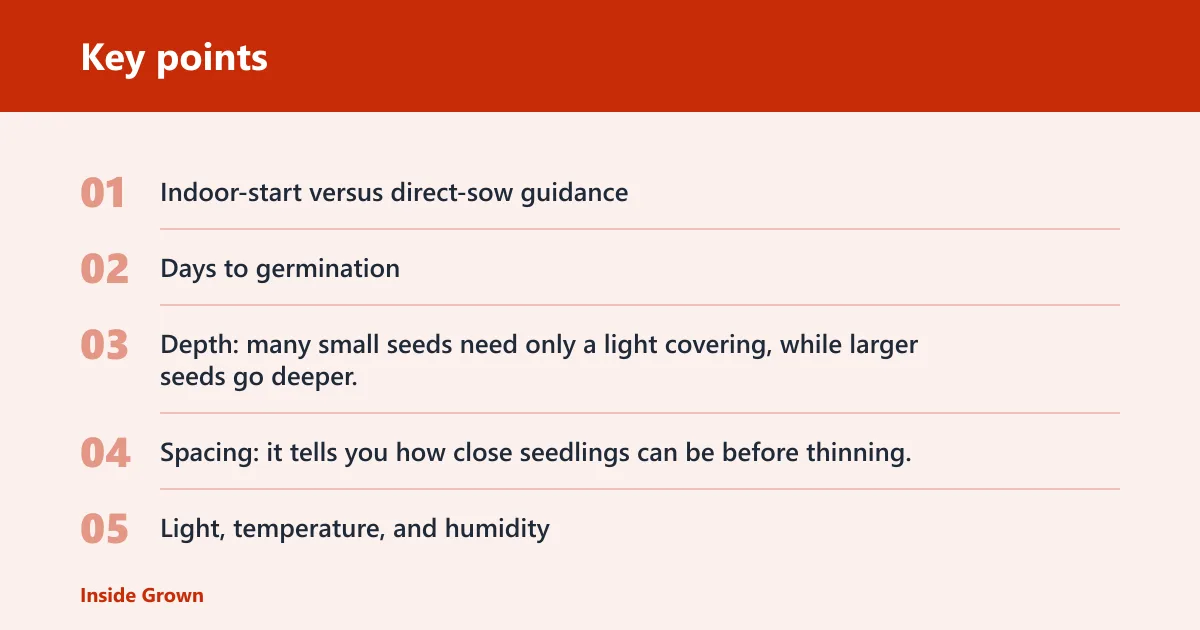
- Indoor-start versus direct-sow guidance: this is the first decision point.
- Days to germination: use it to judge whether the crop fits your spring window.
- Depth: many small seeds need only a light covering, while larger seeds go deeper.
- Spacing: it tells you how close seedlings can be before thinning.
- Light, temperature, and humidity: these affect sprouting speed and seedling strength.
Do not guess at depth. A seed planted too deep may run out of stored energy before it reaches light. A seed planted too shallow can dry out. For spring planting, shallow sowing in evenly moist soil is often safer for tiny seeds, while larger seeds need firmer contact with the soil.
A common first-timer mistake is dumping water on newly sown carrot seeds instead of misting the soil lightly. That can bury tiny seeds too deeply or pack the surface into a crust. A gentler mist keeps the top layer moist without moving the seed. That matters most for carrots, lettuce, and other small-seeded crops.
What do you actually need?
You only need a short list of seed-starting materials to begin well: seed-starting mix, starter trays or plantable pots, a spray bottle, and labels. If you are starting indoors, add grow lights when window light is weak. If you skip lights, use the brightest south-facing window available.
Seed-starting mix matters because it is a soilless medium made for trays and pots. It drains better than garden soil and helps seedlings germinate without packing down. Starter trays or plantable pots give seedlings room to root before transplanting. Labels keep several crops from getting mixed up when they sprout at different speeds.
Simple spring setup
- Fill trays or pots with seed-starting mix.
- Plant at the depth listed on the packet.
- Moisten with a spray bottle, then keep the surface evenly damp.
- Set the containers where they get steady warmth and light.
- Label each row or pot right away.
Grow lights are recommended when windows do not give strong, steady light. Seedlings do best with 16 hours of light, and weak light is a common reason indoor starts stretch and fall over. If you do not have lights, a south-facing window is the best fallback because it gives the strongest natural light available indoors.
Seed germination depends on light, temperature, humidity, soil depth, and time. Those needs vary by crop. That is why two packets bought on the same day can behave very differently in the same tray.
When should you start indoors?
Start indoors when a crop needs more time than your spring window allows, or when it dislikes being direct sown in cold soil. A common rule is to count back from the last frost date using the packet’s indoor-start timing. That keeps seedlings ready at transplant time without letting them get too large.
For spring, indoor starts make the most sense for slower crops and for crops that benefit from a head start before the soil outside warms. Do not rush everything inside. If a crop grows fast, resents transplant shock, or germinates well in cool soil, direct sowing is usually simpler and safer.
Suppose your packet says a crop needs six to eight weeks indoors before transplanting, but your indoor space has only a dim window. Starting that crop too early will often leave you with long, thin seedlings that lean toward the glass. Waiting or adding lights is the better move.
Indoor-start decision rule
- Start indoors if the crop needs warmth, a longer season, or protection from a short spring.
- Direct sow if the crop is quick, cool-season, and sensitive to transplant shock.
- Wait if the packet timing would force seedlings to sit indoors too long before the garden is ready.
How early can you start? Only as early as the packet and your last frost date allow. Starting too soon creates crowded roots, leggy tops, and a long wait before transplanting. That is extra work with little payoff for many spring crops.
Which seeds should go straight outside?
Beans, peas, radishes, spinach, and many other cool-season crops are often better direct sown. Direct sowing avoids transplant shock, gives roots room from the start, and keeps you from raising seedlings that outgrow their containers before the garden can use them. It is the cleaner choice for many spring crops.
CBC lists beans, peas, lettuce, arugula, spinach, and green onions as beginner-friendly seeds, and it names turnips, radishes, carrots, beets, and bok choy as good direct-sow crops. That matches what many spring gardeners want: quick payoff, fewer containers, and less handling.
Direct-sow crops to prioritize
- Beans: wait for warmer soil, then sow directly.
- Peas: sow early because they tolerate cool conditions better than beans.
- Radishes: sow early for fast germination and quick harvests.
- Spinach: sow in cool soil before heat pushes it to bolt.
Why direct sowing often wins in spring: it removes one move from the process. Fewer moves mean less root disturbance, fewer broken stems, and less chance of transplant shock. That matters most for crops that sprout quickly and finish fast.
How do you prevent common spring failures?
Spring failures are often linked to planting before the soil is ready, rather than to seed quality alone. Cold-soil rot, poor emergence, damping off, leggy seedlings, and transplant shock all trace back to timing, moisture, or light. Fix those five points and spring sowing gets much more predictable.
Cold-soil rot and poor emergence
Seeds that sit in wet, cold ground often rot before they sprout. Beans are a common example because they want warmer soil than peas or spinach. If the ground still feels cold and sticky, wait or choose a crop that is built for cool conditions.
Damping off in trays
Damping off is a seedling failure that often starts when trays stay too wet and air movement is low. Use clean containers, well-drained seed-starting mix, and only enough water to keep the surface evenly moist. Crowded trays raise the risk because stems stay damp longer.
Leggy seedlings from weak light
Leggy seedlings stretch when they do not get enough light. A south-facing window can work, but it may still fall short for fast-growing crops. Grow lights give stronger, steadier light and reduce stretching when spring days are still short or cloudy.
Transplant shock after moving seedlings outdoors
Transplant shock happens when seedlings move from protected indoor conditions to wind, direct sun, and cooler nights too quickly. Harden them off gradually and transplant only when the garden is ready. If the crop dislikes root disturbance, direct sow instead of forcing a move.
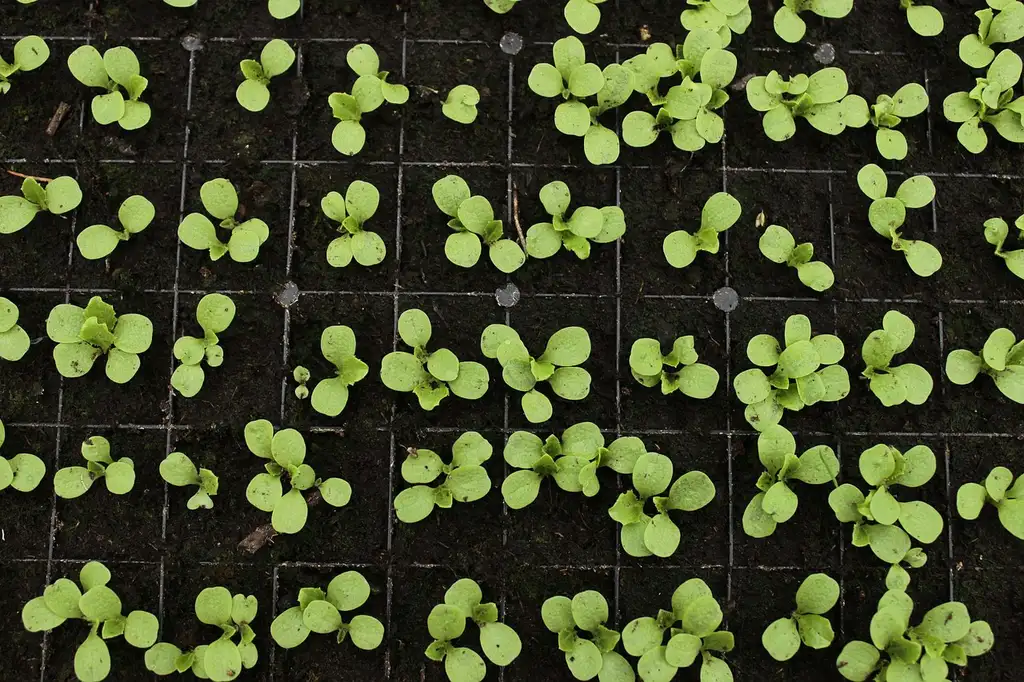
Picture a tray of spinach seedlings sitting in a warm kitchen for too long because the garden soil is still cold. The plants may look healthy at first, then get floppy and pale from weak light. That is a timing problem, not a seed problem, and it usually means the crop should have gone outside sooner.
Frequently asked questions
When to plant seeds for a spring garden
Plant spring seeds when your soil is workable and your last frost date tells you hard frost is less likely. Cool-season crops can go out earlier, while warm-season crops wait for warmer soil. The packet’s sowing directions should guide the exact timing for each crop.
What to plant in early spring garden
Early spring is the place for peas, radishes, spinach, carrots, beets, and other cool-season crops that can germinate in chilly soil. Beans usually wait until the soil warms. If the ground is still cold and wet, favor direct-sown crops that tolerate those conditions better.
What to plant in a spring garden
For spring, choose crops based on soil temperature, frost risk, and germination speed rather than a blanket calendar. Beans, peas, radishes, spinach, lettuce, arugula, green onions, turnips, carrots, beets, and bok choy are common spring choices. Match each one to the earliest safe window.
How early can I start seeds before my last frost date?
Start seeds only as early as the packet recommends, then count backward from your last frost date. Slow crops may need several weeks indoors, while fast or cool-season crops should stay outside or be started later. Starting too early often creates oversized, weak seedlings.
Which spring garden seeds should go directly in the ground?
Beans, peas, radishes, spinach, carrots, beets, turnips, and bok choy are often better direct sown. These crops handle cool soil well or dislike transplanting. Direct sowing also avoids transplant shock and gives roots the best start right where the plant will grow.
Do I need grow lights to start spring seeds indoors?
Grow lights are not mandatory for every indoor start, but they help when window light is weak or uneven. A south-facing window is the best fallback if you skip lights. For stronger seedlings, especially in early spring, lights are the safer choice because they give steadier intensity and longer daily exposure.
What seed-starting materials do I actually need?
At minimum, use seed-starting mix, starter trays or plantable pots, a spray bottle, and labels. Add grow lights if your natural light is poor. Those basics cover moisture, drainage, and organization, which are the main needs for spring germination and early seedling growth.
How do I choose between sowing indoors and direct sowing?
Choose indoor sowing for slow crops that need a head start and can handle transplanting. Choose direct sowing for crops that germinate well in cool soil, grow fast, or dislike root disturbance. The seed packet and your last frost date should settle the decision for each crop.