How Long Do Seeds Take to Germinate Indoors?
Most indoor seeds sprout in 3 to 14 days, but slow growers can need 2 to 4 weeks before you call them failed. Misreading a normal delay can waste trays, heat, and time, while reseeding too early can crowd seedlings. This guide breaks down crop-by-crop germination windows, the conditions that speed or slow them, and how to tell lagging seeds from dead ones.
Seed germination indoors


Seed germination is the first sprouting stage, from water uptake to the first visible emergence. Timing changes with species and indoor conditions, so the same packet can sprout quickly in one room and slowly in another. Warmth, steady moisture, seed age, sowing depth, and oxygen all affect speed.
Before emergence, keep the medium evenly moist, warm enough for the crop, and loose enough for air to move through it. After emergence, light matters because weak light can leave new seedlings thin and stretched.
Why timing varies by crop
Some seeds move fast. Others are slow by nature and may need a longer wait even when conditions are right. Tomato and cucumber seeds usually move faster than pepper, chilli, or onion seeds, and that difference matters when you decide whether to keep waiting.
Depth matters too. Small seeds need a shallow sowing depth, while larger seeds tolerate a little more cover. Too deep means the sprout spends energy reaching the surface instead of breaking through cleanly.
Best setup for sprouting
A shallow seed-starting tray, seed-starting mix, steady warmth, and a humidity dome or lid give most indoor crops the best chance to sprout on time. For many seeds indoors, a heat mat is recommended, and a lid helps hold moisture until the first sprouts appear.
Seed-starting mix and trays
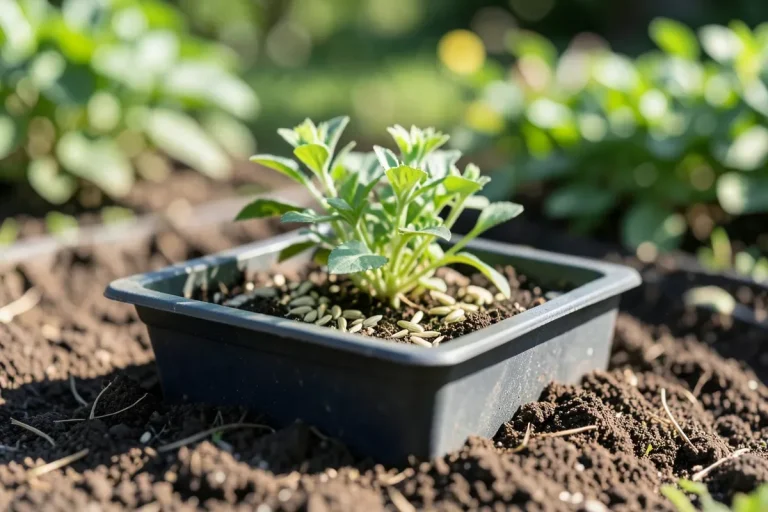
Use a seed-starting tray with shallow cells for most seeds. Fill it with seed-starting mix or coir instead of potting soil or garden soil. The medium should be fine-textured and light enough to hold moisture without staying soggy. Seed compost should be fresh each year.
Fill the container so the soil sits about a quarter inch below the top. That small gap helps water stay in the cell instead of spilling away. It also gives young seedlings a little room before the surface dries out too fast.
Humidity dome and warmth
A humidity dome or lid can trap moisture and warmth above the tray, which keeps the top layer damp while seeds absorb water. A heat mat is recommended for most seeds indoors because many crops sprout faster when the medium stays warm.
Do not confuse warmth with heat. Seeds do not need extreme temperatures, and different crops do better at different levels. A tomato seed that sits in a cool room may stall, while a pepper seed in the same setup may seem especially slow.
Light after emergence
Light matters most after the seed has sprouted. Grow lights should run for 16 hours and be off for 8 hours, especially if natural light is weak. Without enough light, seedlings can become weak and leggy.
That is why a lid should come off after seedlings appear. The open air reduces humidity around the stems, improves ventilation, and lowers the risk of damping-off in wet, crowded cells.
Indoor germination timeline table
This timeline groups common crops by typical indoor speed and gives a practical point to check conditions if nothing has shown above the soil line. Use it as a guide, not a hard deadline. Seed age, temperature, sowing depth, and moisture can shift every crop a few days either way.
| Germination group | Common crops | Typical indoor window | If nothing has happened by this many days |
|---|---|---|---|
| Fast | cucumber, sunflower, marigold | 3 to 7 days | Check warmth, moisture, and sowing depth at day 7 |
| Moderate | tomato, basil, lettuce, brassicas | 5 to 10 days | Check conditions at day 10 |
| Slow | pepper, chilli, onion | 10 to 21 days | Check conditions at day 21 before reseeding |
If a fast crop has not moved after a week, the setup needs a close look. If a slow crop is still quiet after two weeks, that may still be normal, especially in a cool room. The final call should be based on the crop, not on one houseplant-style rule for everything.
How long do common seeds take?
Common indoor crops do not move at the same pace. Tomato seeds often pop sooner than pepper or onion seeds, while cucumber and sunflower usually sit in the faster group. Use the crop itself to set your expectations before you start checking the tray every day.
Tomato and pepper timelines
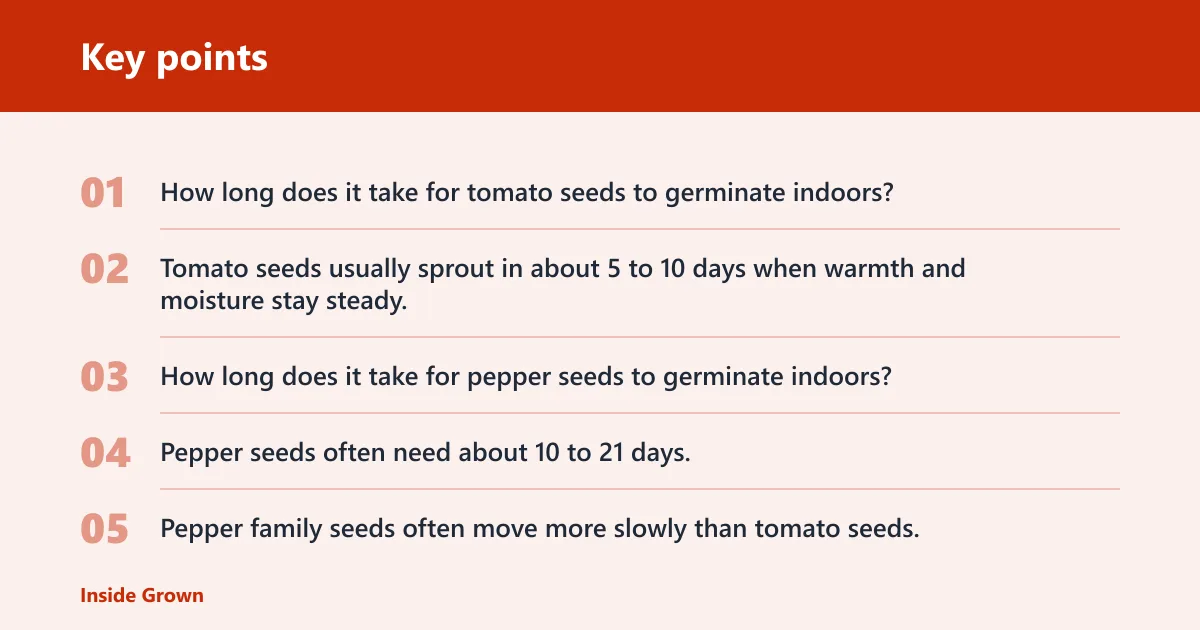
How long does it take for tomato seeds to germinate indoors? Tomato seeds usually sprout in about 5 to 10 days when warmth and moisture stay steady. How long does it take for pepper seeds to germinate indoors? Pepper seeds often need about 10 to 21 days, and chilli seeds are commonly reported to follow a similar slow pattern.
That gap is normal. Pepper family seeds often move more slowly than tomato seeds, so a tray that looks silent on day 8 may still be on track. A warm mat and even moisture matter more for these crops than for many faster seeds.
Chilli and cucumber timelines
How long do chilli seeds take to germinate indoors? Chilli seeds commonly need 10 to 21 days, sometimes a little longer if the room is cool. How long do cucumber seeds take to germinate indoors? Cucumber seeds often sprout in about 3 to 7 days.
Suppose cucumber seeds are still quiet after 8 days in a properly warm tray. That points to a problem with temperature, moisture, or seed depth. If chilli seeds take 14 days, that may still be normal, especially if the room is cool at night.
Onion, sunflower, and marigold timelines
Onion seeds often take 7 to 14 days indoors, sometimes longer if the medium cools off. Sunflower seeds usually sprout in 3 to 7 days, and marigold seeds often fall into a similar 4 to 7 day window. Those faster crops are useful for checking whether the tray setup is working.
A common first-timer mistake is judging the whole tray by one crop. A pepper cell may be right on schedule while the sunflower next to it has already opened. Group crops by pace when possible so you do not pull healthy seeds too soon.
What slows indoor germination?
Cold soil, old seed, overwatering, sowing too deep, and low oxygen are the main reasons indoor germination slows down. Each one can delay sprouting without killing the seed at once, so the first step is to check the setup before you assume the packet has failed.
Cold soil and low room temperature
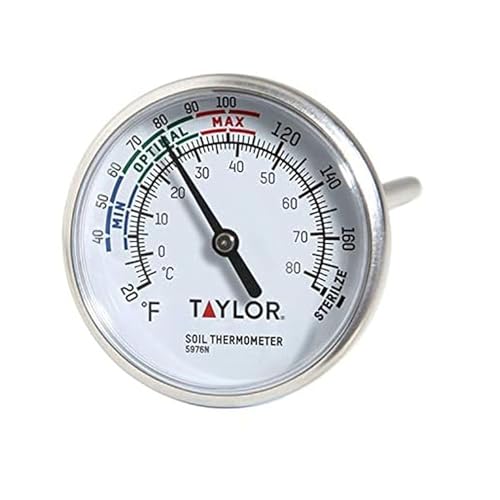
Many seeds sprout faster with warmth, but not all crops want the same temperature range. If the tray sits in a cool room or on a cold windowsill, the seed may absorb water and then stall. A heat mat can help hold the medium in the warmer range many crops prefer.
If a tray is on a windowsill that drops cold at night, move it to a steadier indoor spot and keep the lid on until the first sprouts appear. Fluctuating temperatures are a common reason for uneven germination, especially with pepper, chilli, and onion.
Old seed and poor storage
Seed age matters. Older seed often germinates more slowly and less evenly than fresh seed, especially if it was stored in heat or humidity. Fresh, dry storage gives a better chance of strong sprouting than seed that has been sitting open in a warm room.
Decision rule: if a crop is known to be slow and the tray has been kept at the right warmth, moisture, and depth, wait until the upper end of the crop window before reseeding. If the same crop is still silent after that point and the seed is old, poor viability becomes more likely than bad timing.
Too much water or sowing too deep
Seed-starting mix should stay moist, not saturated. Too much water cuts oxygen from the cell and can lead to rot. Watering from the bottom is recommended if possible once seedlings emerge, because it keeps the surface drier and helps avoid damping-off.
If seeds were buried too deep, they may not have enough energy to reach the surface. Check the sowing depth against the crop size, then loosen the top layer gently only if the seed has not broken through. Do not dig around blindly, because that can damage seeds that are already starting.
When should you remove the dome?
Remove the humidity dome or lid as soon as seedlings appear above the mix. Keeping it on longer traps moisture around the stems and raises the chance of fungal problems. The heat mat should also come off once the seeds sprout, unless the crop clearly still needs steady bottom warmth and the medium is not overheating.
Signs it is time
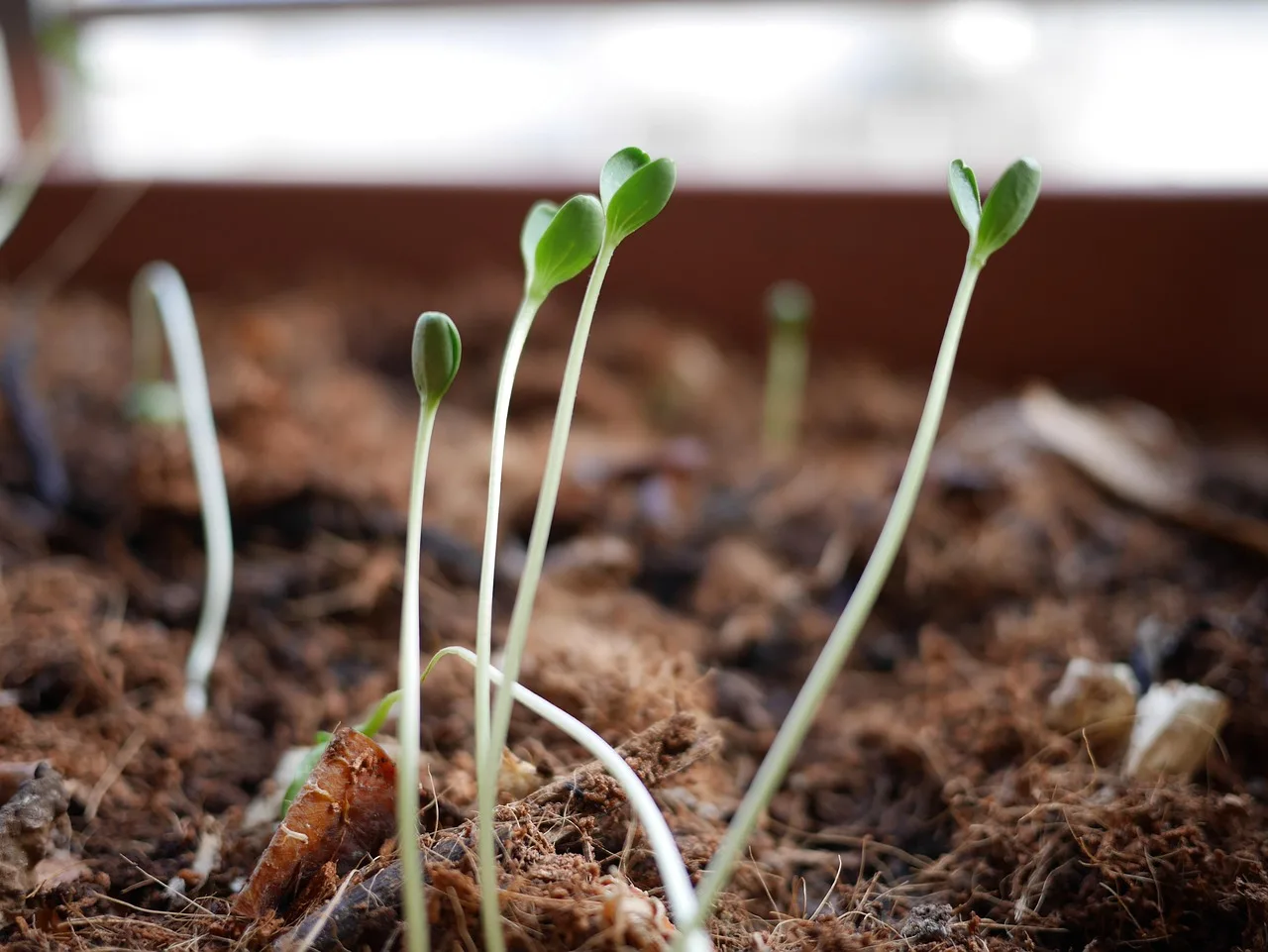
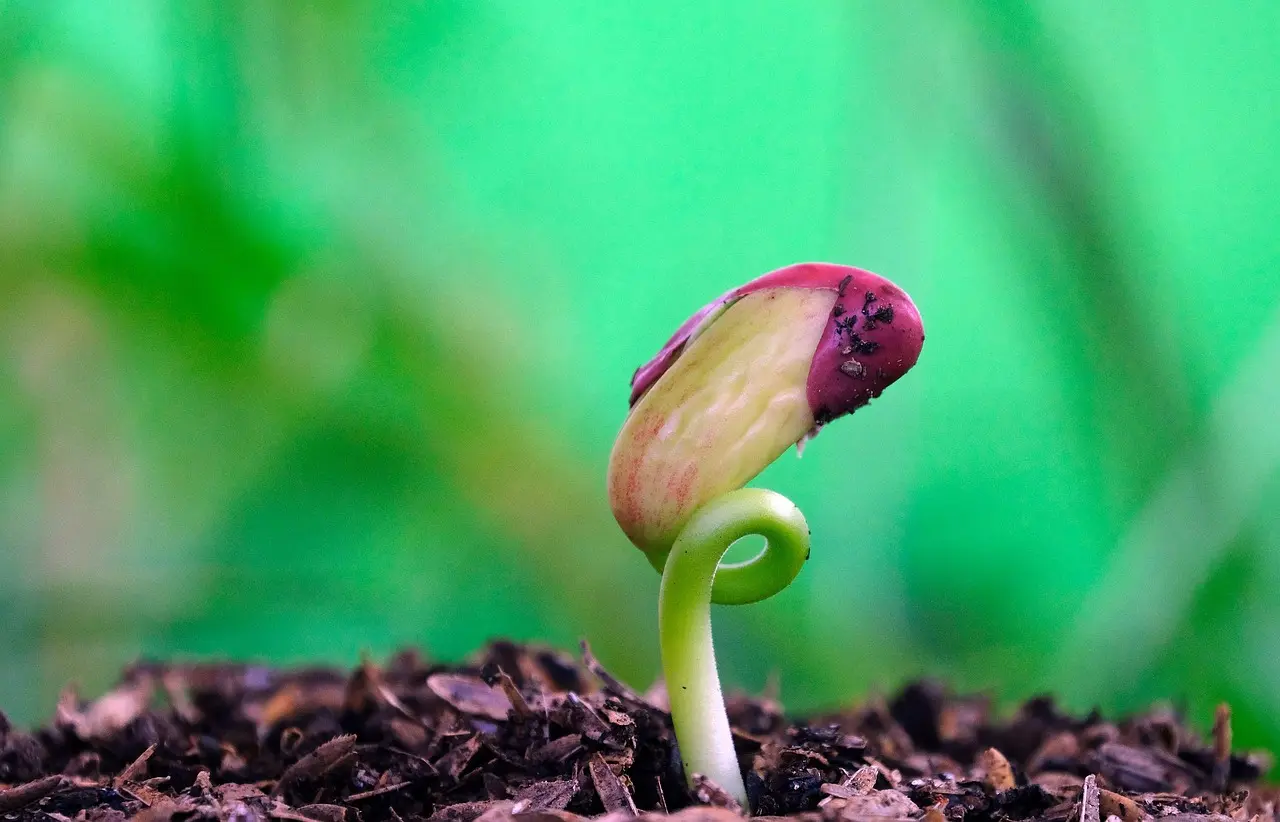
Look for the first open cotyledons or the first green hook breaking the surface. That is the point to open the tray, increase airflow, and move the seedlings toward stronger light. The change should happen quickly, not days later.
If only one or two seeds have opened while the rest are still waiting, lift the lid briefly for airflow and return it only if the mix is drying too fast. Once most of the tray is up, leave the lid off.
How to avoid damping-off
Damping-off is more likely when humidity stays high, air stays still, and the surface remains wet. That is why the lid comes off after sprouting and why bottom watering is preferred when possible. Clean trays and fresh seed compost each year also help reduce risk.
Picture a tray of pepper seedlings in a warm room with a dome left on after sprouting. The stems stay soft and damp, and the surface never dries. Taking the dome off and improving airflow changes that setup fast.
After sprouts appear
Once seedlings are up, the job changes from germination to growth support. Move them under stronger light, keep the schedule at 16 hours on and 8 hours off, water from the bottom if possible, and thin crowded seedlings so each plant has room.
Move to stronger light
If natural light is weak, use grow lights right away. Weak light is the main reason seedlings stretch and flop. Keep the fixture close enough for good brightness without heat stress, and keep the daily cycle steady.
Bright light does not speed germination before the sprout appears, but it matters immediately after emergence. That timing is easy to miss, and it is one reason many trays look fine at first and then become lanky a week later.
Use bottom watering
Bottom watering is preferred once seedlings have emerged. Set the tray in water long enough for the mix to wick moisture upward, then drain it. That keeps stems and leaves drier than top watering does.
Top watering after sprouting can splash fine soil onto stems and leave the surface too wet. If the tray dries fast, water more often in smaller amounts rather than soaking it each time.
Thin crowded seedlings
Thin seedlings after emergence if more than one seedling is growing in a cell or if the group is crowded. Crowding steals light, air, and root space. Keep the strongest seedling and remove the extras cleanly so the remaining plant can grow steadily.
Thinning is easier once the second set of leaves starts to form, but the exact timing depends on the crop. The key is to avoid leaving several seedlings tangled together long enough for them to compete for light.
Frequently asked questions
How long do seeds take to germinate indoors?
Most indoor seeds sprout in 3 to 14 days, but slow crops can take 2 to 4 weeks. The exact pace depends on species, seed age, warmth, moisture, depth, and air in the mix. Use the crop’s normal window before deciding a seed has failed.
How quickly do seeds germinate?
Fast seeds can show in 3 to 7 days, moderate crops often need 5 to 10 days, and slow crops may need 10 to 21 days or longer. Temperature and moisture usually explain most delays. A steady setup is more reliable than guessing by calendar alone.
How long does it take for tomato seeds to germinate indoors?
Tomato seeds usually sprout in about 5 to 10 days indoors. If they are still quiet by day 10, check warmth, moisture, and sowing depth before reseeding. Tomato is a moderate germinator, so a short delay is usually not a sign of failure.
How long does it take for pepper seeds to germinate indoors?
Pepper seeds often take 10 to 21 days indoors, and chilli seeds usually follow the same pace. They are slower than tomato and cucumber seeds, so patience matters. A warm medium and steady moisture are especially important for these crops.
What slows seed germination indoors?
Cold soil, old seed, overwatering, and sowing too deep are the biggest causes of delay. Low oxygen from soggy mix also slows sprouting. If a tray is late, check those conditions before you assume the seed packet is no good.
When should I remove the humidity dome after seeds sprout?
Remove the dome as soon as seedlings appear above the mix. Keeping it on longer traps moisture and reduces airflow, which raises disease risk. After that, shift to stronger light and better ventilation right away.