When to Start Seeds Indoors in January by Last Frost Date
Start seeds indoors in January for crops that need about 10–12 weeks before transplanting, or when your local last frost date is still many weeks away. Starting too early can leave seedlings tall, rootbound, and crowding their containers before planting time. This guide shows which crops belong in January, how to read seed-packet timing, and how to work backward from your local last frost date.
How to decide if January is the right time
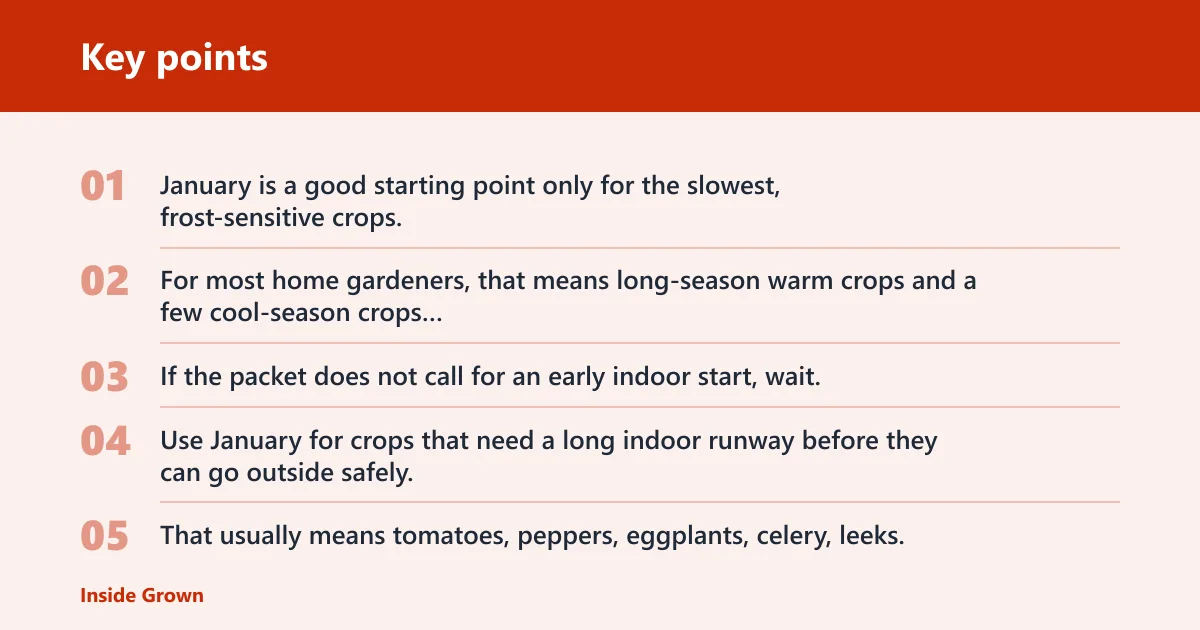


January is a good starting point only for the slowest, frost-sensitive crops. For most home gardeners, that means long-season warm crops and a few cool-season crops with a long indoor lead time. If the packet does not call for an early indoor start, wait.
The January rule
Use January for crops that need a long indoor runway before they can go outside safely. That usually means tomatoes, peppers, eggplants, celery, leeks, and a few brassicas in colder regions. If a seed packet says a crop should be started only 3 to 6 weeks before transplanting, January is often too early unless your last frost date is unusually late.
Start too early and seedlings can outgrow their cells before transplant time. Start too late and plants may not mature in time. January is for crops that need the extra weeks, not for filling every tray on the bench.
Why your last frost date matters more than the month on the calendar
Your last frost date is the local spring freeze date you count backward from for indoor sowing. It changes by region and elevation, so a January schedule in a low-elevation mild area will not match a mountain valley or a cold inland site. That date is the anchor, not the calendar month.
Seed packets usually state timing as weeks before the last frost date, along with indoor or direct-sow guidance. That is more useful than a generic month-by-month chart because it adjusts to your climate automatically.
When January is too early
January is too early when the crop needs only a short indoor lead time, when the packet recommends direct sowing, or when your growing space cannot support the seedlings through the full indoor period. It is also too early if your light is weak enough that seedlings will stretch long before transplant time.
Suppose a packet says “start indoors 6 weeks before last frost,” but your local last frost date is still 14 weeks away. In that case, wait unless the crop is very slow-growing and the packet gives a longer indoor window. The calendar is not the reason to sow; the frost math is.
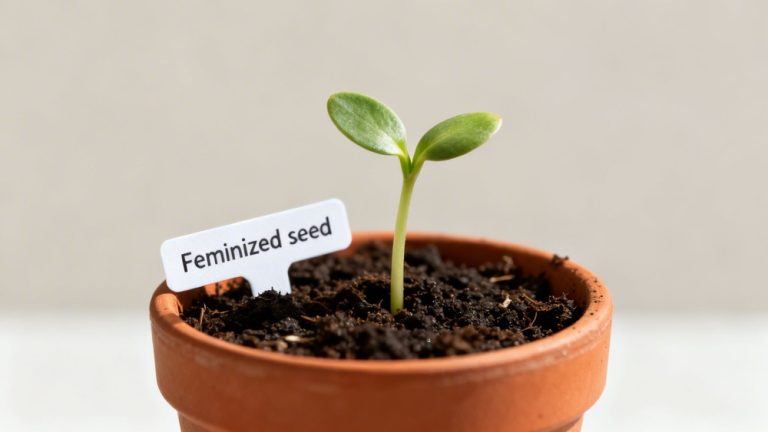
Count backward from the local spring freeze date
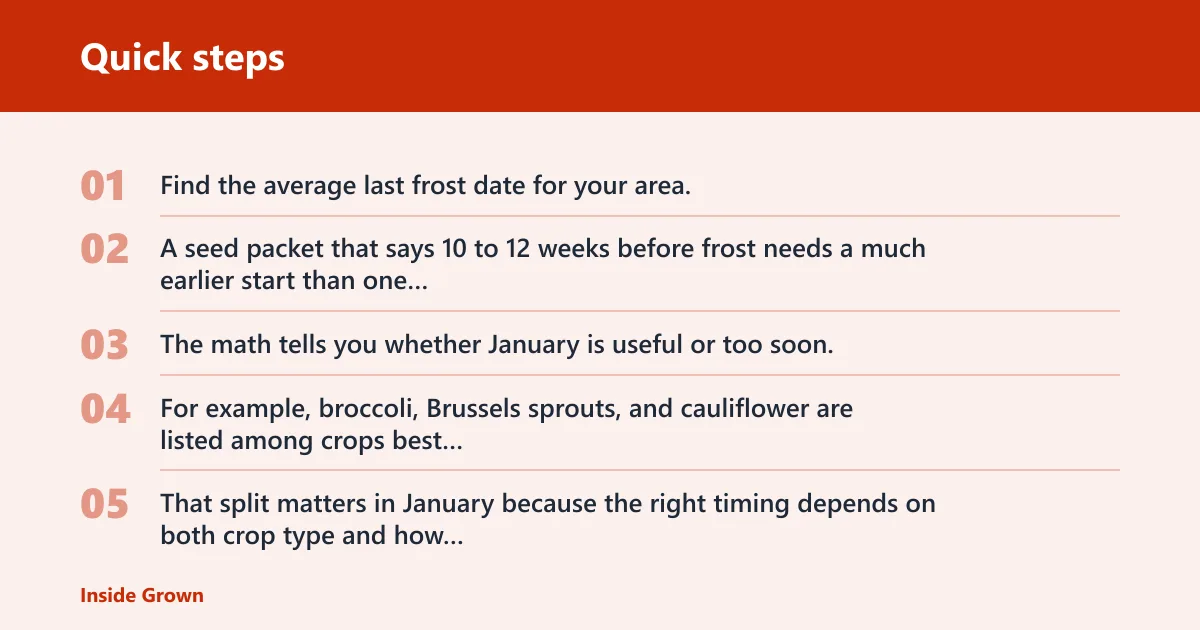
Find the average last frost date for your area, then subtract the weeks on the seed packet. A seed packet that says 10 to 12 weeks before frost needs a much earlier start than one that says 3 to 4 weeks before frost. The math tells you whether January is useful or too soon.
For example, broccoli, Brussels sprouts, and cauliflower are listed among crops best started indoors, while carrots are listed as best direct-sown outdoors. That split matters in January because the right timing depends on both crop type and how long it needs to stay inside.
Why region and elevation change the answer
Two gardeners can both open a packet in January and get different answers. A coastal mild-winter garden may be able to delay many starts. A cold region with a late frost or a high-elevation garden may need to start certain crops now or even earlier than January.
That is why “When to start seeds indoors in January” is never one fixed date. Elevation, local weather patterns, and frost history all change the count-back result.
How to translate packet timing into a January plan
Read the packet first for weeks before last frost, then check whether it names indoor sowing or direct sowing. If the packet says to start indoors 8 to 10 weeks before frost, that points to a January sowing window in many climates. If it says direct sow, skip the tray.
That rule also helps when the packet gives a range such as 8 to 12 weeks. Use the longer end for slow crops, cooler homes, or dim light. Use the shorter end only when your last frost date is close enough that waiting would push transplanting too late.
What seeds to start in January?
January is best for warm-season crops with long indoor lead times and for a few cool-season crops that need a head start. Tomatoes, peppers, and eggplants are the classic indoor starts. Some brassicas and celery also belong on the January list, especially in cold winter regions.
Warm-season crops that often belong on the January
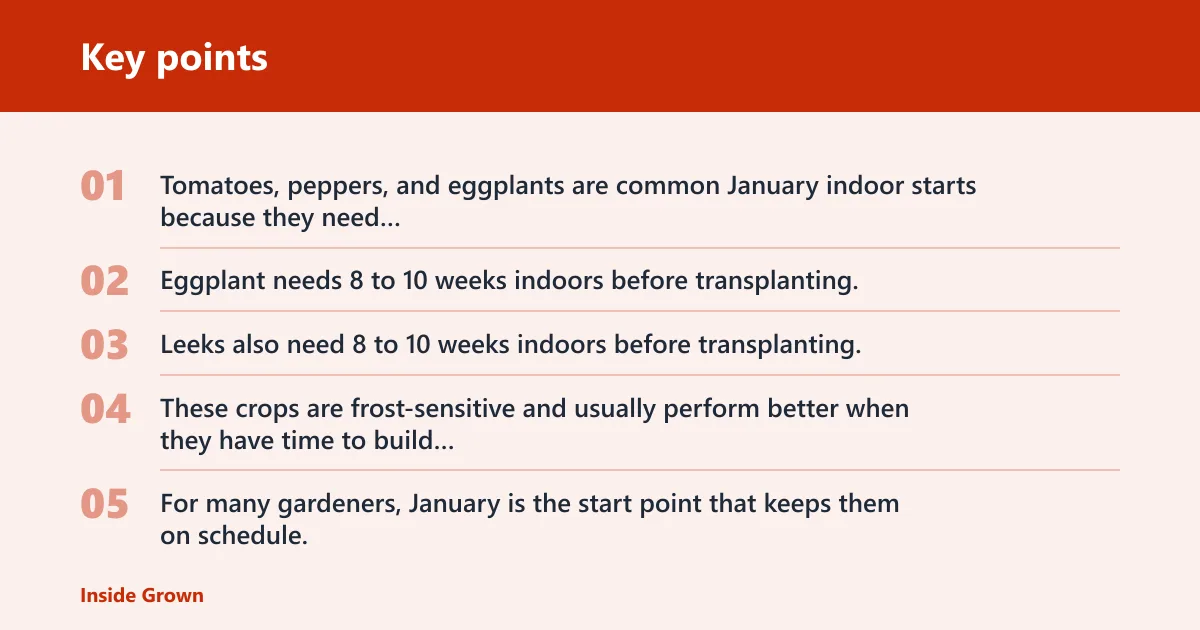
Tomatoes, peppers, and eggplants are common January indoor starts because they need warmth and a longer runway before transplanting. Eggplant needs 8 to 10 weeks indoors before transplanting, and celery needs 10 to 12 weeks indoors before transplanting. Leeks also need 8 to 10 weeks indoors before transplanting.
These crops are frost-sensitive and usually perform better when they have time to build sturdy roots indoors before outdoor planting. For many gardeners, January is the start point that keeps them on schedule.
Cool-season crops that may start indoors now
Broccoli, Brussels sprouts, cauliflower, kale, and cabbage are cool-season crops that may be started indoors in January when the packet timing calls for it. Broccoli, Brussels sprouts, and cauliflower are all listed among crops best started indoors. In cold regions, that indoor start can give them the head start they need before spring planting.
Some cool-season crops can also be direct-sown depending on climate. Peas often fit that pattern, and many gardeners skip indoor starts for them. The packet and your local frost date should settle the question.
Crops that usually wait for direct sowing
Carrots are listed as crops best direct-sown outdoors, and radishes are fast-growing and cold-tolerant, so direct sowing makes sense. Cucumbers are usually not a January project either; they are started indoors only 3 to 4 weeks before the frost-free date. Melons, pumpkins, and squash are also usually direct-sown unless your climate is very short-season.
A common first-timer mistake is sowing cucumbers in January because the packet says they can be started indoors. The wording matters. A 3 to 4 week indoor lead time is very different from a crop that needs 10 to 12 weeks inside.
January seed-starting table
Use this table as a January decision rule, then adjust for your packet and your local frost date. “Start in January?” means whether January is a sensible sowing window, not whether the crop can ever be started indoors.
| Crop type | Weeks before last frost target | Start in January? cold winter region | Start in January? moderate winter region | Start in January? mild winter region |
|---|---|---|---|---|
| Tomatoes | 6 weeks before last frost | Yes | Usually yes | Often wait until later |
| Peppers | 8 to 10 weeks before last frost | Yes | Yes | Maybe, if your last frost is early enough |
| Eggplant | 8 to 10 weeks before last frost | Yes | Yes | Maybe, if packet timing fits |
| Celery | 10 to 12 weeks before last frost | Yes | Often yes | Sometimes wait |
| Leeks | 8 to 10 weeks before last frost | Yes | Yes | Maybe |
| Broccoli | 6 to 8 weeks before last frost | Yes | Maybe | Often wait or direct-sow later |
| Cauliflower | 6 to 8 weeks before last frost | Yes | Maybe | Often wait |
| Cucumbers | 3 to 4 weeks before frost-free date | No | No | No, unless your frost date is very close |
| Carrots | Direct sow | No | No | No |
| Radishes | Direct sow | No | No | No |
When should you wait?
Wait when the packet asks for fewer weeks before last frost than you still have available, when the crop is better direct-sown, or when your indoor setup cannot keep growth steady. January is not the right answer for every crop. It is the right answer only when frost math and crop timing agree.
If the packet calls for fewer weeks before last frost
If a packet says 3 to 4 weeks before frost, starting in January is often too early unless your climate is unusually late. That timing is common for cucumbers and some other fast crops. For those, early sowing creates extra weeks of indoor maintenance with no benefit.
If seedlings would outgrow their containers before transplant time
Seedlings can fill a cell tray quickly. Small cells are efficient for onions, brassicas, lettuce, and flowers when transplant timing is controlled, but they are not ideal if the crop must stay indoors for a long stretch. Tomatoes, peppers, and eggplants often do better in larger pots once roots begin to fill the first container.
If indoor light is too weak for steady growth
Natural window light is often insufficient for seedlings in winter. Weak indoor light can cause seedlings to stretch and lean, which is a warning that January sowing is outpacing your setup. If you cannot keep the fixture close enough and adjust it as plants grow, wait to sow or add proper grow lights.
Say your windowsill faces south but the seedlings still lean toward the glass after a few days. That is a light problem, not a seed problem. A brighter setup or a later sowing date is better than trying to rescue stretched plants.
January seed-starting setup
Use the right setup before you sow. A seed-starting mix is fine and porous, not garden soil, and it should be moistened before filling trays. Then match the container, light, and temperature to the crop.
Seed-starting mix and cell trays
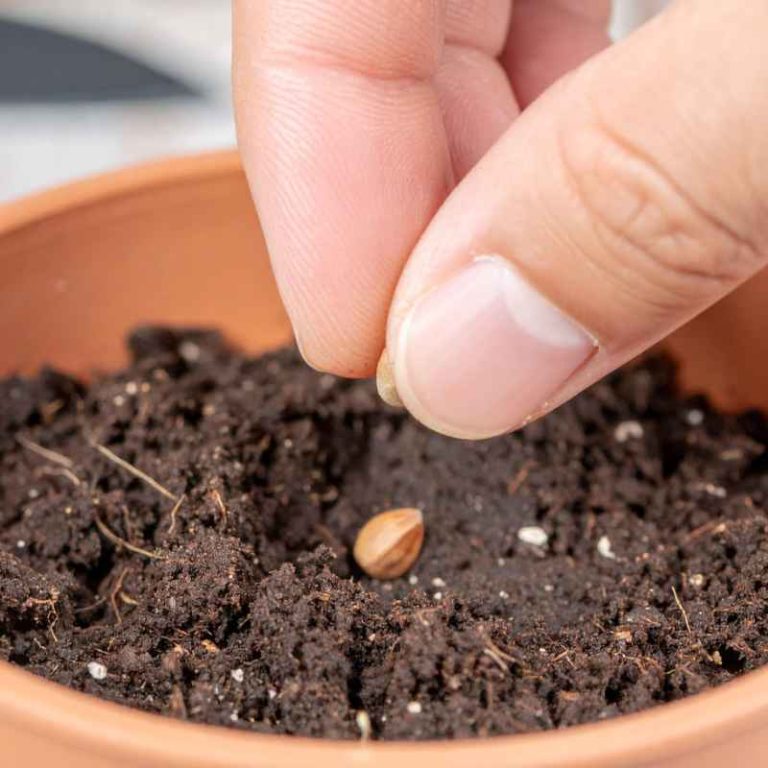
Seed-starting mix gives seeds the loose, even moisture they need. Fill cell trays after moistening the mix, then sow according to the packet depth. Cell trays are a practical choice for many small seedlings and help you manage transplant timing.
Grow lights and fixture height
Grow lights are the answer when window light is not enough. A 4-foot shop light is described as a common seed-starting fixture. Keep the light close enough to support compact growth, and raise it as seedlings grow so they do not stretch toward it. (UMD)
The goal is stocky seedlings, not long stems. If the light stays too far away, seedlings lean and thin out fast.
Heat mats, humidity domes, and larger pots
Heat mats supply bottom heat for warm crops, especially peppers and eggplants, and they help match germination temperature needs. A humidity dome helps retain moisture before emergence, but it should be vented or removed after sprouting so foliage does not stay overly wet. That change matters quickly after germination.
Larger pots are useful for tomatoes, peppers, and eggplants that need more root room indoors. If a crop will stay inside longer, a bigger container can slow root crowding and reduce the need to up-pot too soon.
Seedlings need indoor care
Indoor sowing is only the first step. Keep moisture even without waterlogging the mix, move seedlings from dome to open air after sprouting, and begin hardening off before outdoor planting. That transition reduces transplant shock once the weather allows the move outside.
- Moisten the seed-starting mix before filling trays.
- Sow the crop at the packet depth and timing.
- Use a humidity dome only until sprouts appear.
- Keep seedlings under grow lights with the fixture adjusted as they grow.
- Shift into larger pots if roots fill the cells before transplant time.
- Harden off seedlings before planting them outdoors.
Suppose tomato seedlings are in small cells and the roots are circling the bottom while the last frost date is still five weeks away. That is a sign to pot up, not to ignore the calendar. The goal is steady growth without a cramped root system.
Frequently asked questions
When should I start seeds indoors in January?
Start seeds indoors in January only when the crop needs a long indoor lead time and your local last frost date is still several weeks away. That usually means warm-season crops like tomatoes, peppers, and eggplants, plus a few slow cool-season crops such as celery and some brassicas.
What seeds to start indoors in January?
Tomatoes, peppers, eggplants, celery, leeks, broccoli, Brussels sprouts, and cauliflower are common January indoor starts. Crops like carrots and radishes are usually better direct-sown, and cucumbers generally wait until only 3 to 4 weeks before the frost-free date.
How early to start seeds indoors?
Use the seed packet first, then count backward from your last frost date. Seeds are generally started indoors about 6 weeks before the last frost date, but some packets call for 8 to 10 weeks before frost. That range is the real timing guide, not the month on the calendar.
When to start seeds indoors chart
A timing chart should be tied to your local frost date and each crop’s weeks-before-frost target. Use one only as a starting point. For January decisions, the most useful chart separates crops that truly need an early indoor start from crops that should wait for later sowing or direct sowing.
When to start seeds indoors in Indiana?
In Indiana, the right January timing depends on your local last frost date and where you are in the state. Because the date varies by region and elevation, count backward from your local spring freeze date and follow the packet. Cold areas often can start more crops in January than mild pockets can.
When to start seeds indoors in the UK?
In the UK, start dates still depend on your local frost pattern, exposure, and elevation rather than the month alone. Use the same count-back method from your local last frost or frost-risk date, then compare it with the packet. Many crops can wait, while long-season crops may need an early indoor start.