How to Start Seeds Indoors for a Vegetable Garden at Home
Start seeds indoors by counting backward from your average last frost date. Sow fast growers a few weeks before transplanting, with medium crops started a bit earlier and slow growers started earlier still. Poor timing leads to leggy seedlings, stunted transplants, and missed harvest windows. This guide shows how to match each vegetable’s indoor sowing date, grow time, and transplant readiness to your frost date.
This guide is part of our Vegetable gardening guide series.
What you’ll need
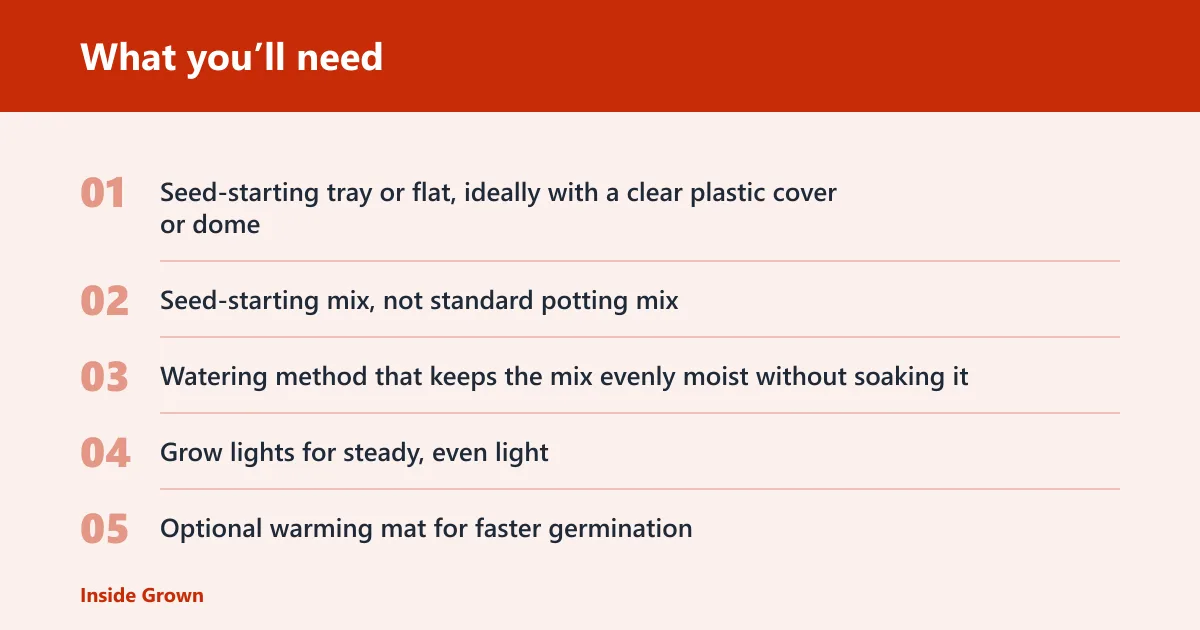


- Seed-starting tray or flat, ideally with a clear plastic cover or dome
- Seed-starting mix, not standard potting mix
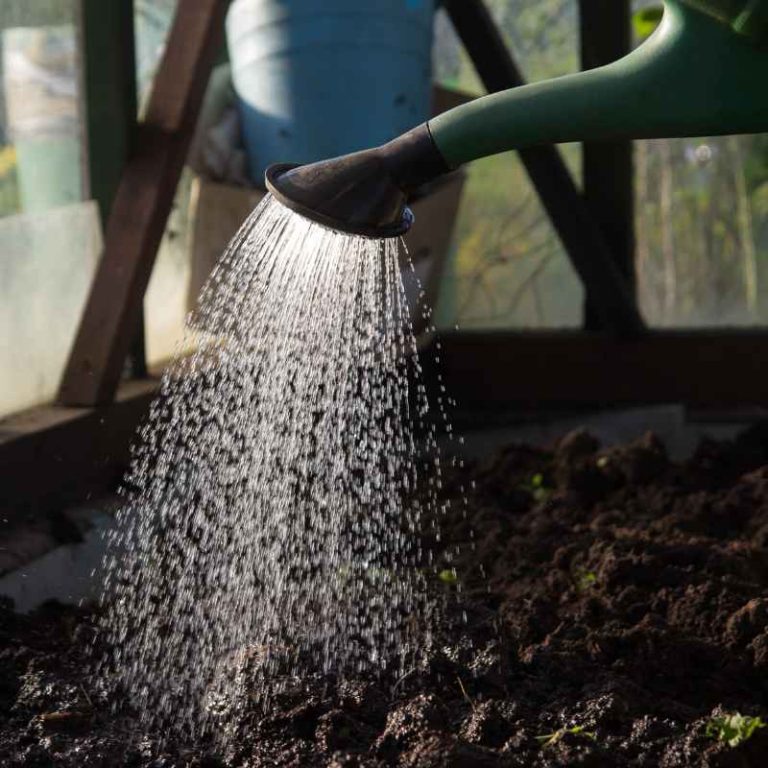
- Watering method that keeps the mix evenly moist without soaking it
- Grow lights for steady, even light
- Optional warming mat for faster germination
- Optional small fan to reduce damping off risk and strengthen stems
- Plant labels and a marker
- A clean surface or rack near power for lights
📊 Smart Gardener says it offers recommendations from more than 3000 organic, GMO free, edible varieties. Source: Smartgardener.
When should you start seeds indoors for your vegetable garden?
Use your average last frost date as the main anchor, then count backward by crop type and seed packet timing. USDA hardiness zone gives a broad regional clue, but frost dates and local microclimate set the real window for annual vegetables. South-facing exposure and wind protection can shift planting by days or more.
Build your timing around the frost dates
Average last frost date and average first frost date define the growing season window. For indoor sowing, work backward from the last frost date first, then check whether a crop needs extra time to reach transplant size. Seed packets often give the most useful crop-specific range, and those instructions vary by variety.
Use microclimate as a correction, not the base plan
A sheltered yard can warm sooner than nearby open ground. A windy site or a low spot can stay cold longer. That is why the same USDA hardiness zone can still support different sowing dates from one garden to the next. Treat the zone as a broad reference, not a planting calendar.
Read the packet, then fit it to your frost date
Packet directions usually list weeks before last frost. If a tomato packet says 6 to 8 weeks and your average last frost is May 10, sow from about mid-March to late March. Use the packet first, then adjust for transplant readiness and your local conditions.
Which vegetables should you start indoors versus direct sow outside?
Start indoors when a crop needs a long warm-up, when germination is slow, or when the first edible part needs a long season to mature. Direct sow when roots dislike transplanting, when seedlings grow fast outdoors, or when indoor timing would make plants too large before planting out. Borderline crops depend on your season length.
Best candidates for indoor starts
Tomatoes should be started 6 to 8 weeks before the last frost. Peppers, eggplant, and many slow herbs also benefit from a head start because they need warm soil and a long season. These crops usually transplant well if you keep them compact and move them out before they fill their cells.
Crops that often do better direct sown
Cucumbers need only 3 to 6 weeks of lead time indoors, and many gardeners direct sow them once soil is warm. Beans, peas, carrots, and beets are usually better sown outside because their roots and growth habit do not reward extra indoor handling. The same is often true for squash in short, warm seasons.
Borderline crops depend on your season
Broccoli, cauliflower, kale, and lettuce can go either way. In short seasons, indoor starts can matter. In long, mild seasons, direct sowing or transplanting very young seedlings may be simpler. A common first-timer mistake is starting every crop indoors, then running out of space before the weather allows planting.
How to start seeds indoors, step by step
- Check the seed packet for sowing depth, lead time, and transplant size.
- Fill trays with moistened seed-starting mix, leaving a little space at the top.
- Sow seeds at the listed depth, or press tiny seeds onto the surface if the packet says they need light.
- Cover lightly, mist, and label each cell or row.
- Set trays under steady warmth until germination, then move them under strong light right away.
- Water from below or at the base to keep foliage drier and reduce damping off risk.
- Thin crowded seedlings early so roots and stems do not compete.
- Harden off seedlings before transplanting by increasing outdoor exposure over several days.
Keep timing tied to transplant readiness
Most seedlings are ready to transplant after 4 to 6 weeks, but the calendar matters less than size and strength. If roots fill the cell, stems lean, or leaves touch neighboring plants, move them on or pot them up. Do not let seedlings sit so long that they outgrow the container.
Use this simple sequence for multiple crops
Sort crops by weeks before last frost, then sow the longest growers first and the fastest growers last. For example, peppers go in before cucumbers, and cucumbers go in before direct-sown crops. That sequence keeps seedlings near the right size when the outdoor planting window opens.
Do you need grow lights or a heat mat to start seeds indoors?
Grow lights give seedlings steady, even light indoors, and a warming mat can speed germination for warm-season crops. Neither is mandatory for every setup, but both solve common problems that windowsills often create. A fan is optional, yet useful for airflow and damping off prevention.
When grow lights matter most
If seedlings stretch toward a window, the light is too weak or too one-sided. Use lights close to the canopy and raise them as plants grow. Window light changes through the day, while grow lights keep output more even and help prevent leggy growth.
When a heat mat helps
A warming mat is most useful before sprouting, not after. It helps warm soil for crops that want faster germination, especially tomatoes, peppers, and eggplant. Remove or reduce bottom heat after most seedlings emerge so they do not get soft or stretched.
When a fan helps
A small fan moving air across seedlings can lower disease pressure and encourage sturdier stems. Keep the airflow gentle. Strong blasting dries trays too fast and can damage delicate leaves. Air movement should complement, not replace, dry-down between waterings.
Common mistakes to avoid
The biggest problems are easy to name and easy to prevent: starting too early, using the wrong mix, watering too much, and ignoring transplant timing. These errors often matter more than the exact tray or light brand. Small corrections at sowing time save weeks later.
Starting too early
Sow too soon and plants can become leggy before transplanting outdoors. That happens when roots and stems outgrow the indoor setup but the garden is still too cold. The fix is to count backward from the last frost date and match each crop to its own lead time.
Using potting mix instead of seed-starting mix
Seed-starting mix is finer and drains better than standard potting mix, which is why it is recommended for better germination. Better drainage and aeration reduce crusting and waterlogging. That matters because tiny roots need oxygen as much as moisture.
Overwatering and crowding
Wet, crowded trays invite damping off and weak stems. Keep the surface damp, not saturated, and thin seedlings early. Suppose a 72-cell tray of basil stays wet at the surface for three days; a small fan plus less frequent watering usually helps more than adding more water.
Prevention: label every tray with crop name and sow date, then note the planned transplant week beside it. That one habit makes it easier to spot crops that are drifting past their best indoor window.
Crop-by-crop seed-starting schedule
This table gives a practical starting point for common vegetables. Adjust within the range using your last frost date, packet instructions, and how fast your seedlings reach transplant size. If a crop matures quickly or dislikes root disturbance, lean toward direct sowing instead of an indoor start.
| Vegetable | Weeks before last frost | Germination temperature | Transplant size | Direct-sow alternative |
|---|---|---|---|---|
| Tomato | 6 to 8 | 70 to 80°F | 4 to 6 true leaves, sturdy stem | Usually not preferred in short seasons |
| Pepper | 8 to 10 | 75 to 90°F | Compact plant with several true leaves | Only in long, warm seasons |
| Eggplant | 8 to 10 | 75 to 90°F | Strong, stocky seedlings | Rarely direct sown in cool climates |
| Broccoli | 4 to 6 | 60 to 75°F | 4 to 5 true leaves | Yes, in cool spring soil |
| Cabbage | 4 to 6 | 60 to 75°F | 4 to 5 true leaves | Yes, in cool spring soil |
| Lettuce | 3 to 5 | 60 to 70°F | 2 to 4 true leaves | Yes, often best direct sown |
| Cucumber | 3 to 6 | 70 to 95°F | 1 to 2 true leaves, before root fill | Yes, often preferred |
| Squash | 2 to 4 | 70 to 95°F | Very young seedlings | Yes, usually direct sown |
| Bean | 0 | 70 to 85°F | Not ideal for indoor starting | Yes, direct sow |
| Carrot | 0 | 50 to 85°F | Not ideal for indoor starting | Yes, direct sow |
Use this checklist for crops that should not start indoors
Skip indoor sowing when a crop has a taproot that dislikes disturbance, when it matures fast outside, or when the transplant window is very narrow. If the packet recommends direct sowing, trust that instruction unless your season is too short to finish the crop outdoors.
- Root crops that form a single edible root, such as carrots
- Fast warm-season crops that germinate and grow quickly outdoors, such as beans
- Crops that are likely to outgrow the tray before planting day
- Varieties with packet instructions that clearly favor direct sowing
Frequently asked questions
When should I start seeds indoors for my vegetable garden?
Count backward from your average last frost date, then match each crop to its own lead time. Slow growers usually need 6 to 10 weeks, medium crops 4 to 6 weeks, and fast growers 2 to 4 weeks. Use packet instructions to fine-tune the date for each variety.
How many weeks before the last frost should I start each vegetable?
Tomatoes are commonly 6 to 8 weeks, cucumbers 3 to 6 weeks, and peppers 8 to 10 weeks before the last frost. Broccoli and cabbage often fall around 4 to 6 weeks. Always compare those ranges with the seed packet, since variety timing can shift.
Which vegetables should I start indoors versus direct sow outside?
Start indoors for crops that need warmth and a longer season, such as tomatoes, peppers, and eggplant. Direct sow crops that dislike root disturbance or grow fast outside, such as beans, carrots, and many squash. Borderline crops depend on your frost-free window and garden space.
What supplies do I need for starting seeds indoors?
Use a seed-starting tray or flat, seed-starting mix, labels, water, and strong light. A plastic cover, warming mat, and small fan can help, but they are optional. The most dependable setup keeps moisture, warmth, and light steady.
How much light do indoor seedlings need?
Seedlings need strong, even light as soon as they emerge. Grow lights are the most dependable option because window light is often too weak or uneven. Keep the lights close enough to prevent stretching, then raise them as the plants grow taller.
What can go wrong if I start seeds indoors too early?
Early sowing can leave seedlings leggy before transplanting and can force them to sit too long in small cells. That creates weak stems, tangled roots, and more transplant shock. The fix is to match sowing dates to your last frost date and the crop’s transplant size.