How to Start Herbs From Seed Indoors in Winter
Start winter herbs from seed indoors under a bright south window or grow light. Use bottom heat for basil, parsley, and cilantro. Pick quick, cut-and-come-again herbs if you want harvests now. Without enough light and steady warmth, seedlings stretch, stall, or rot. This guide covers which herbs to start, the light and temperature they need, and when to sow for harvests now versus spring transplants.
Plan your winter herb goals and timing


Start with your goal, not the seed rack. Some herbs make sense for winter kitchen harvests, while others are better treated as spring transplants or skipped entirely if your room is too dim or too warm and dry.
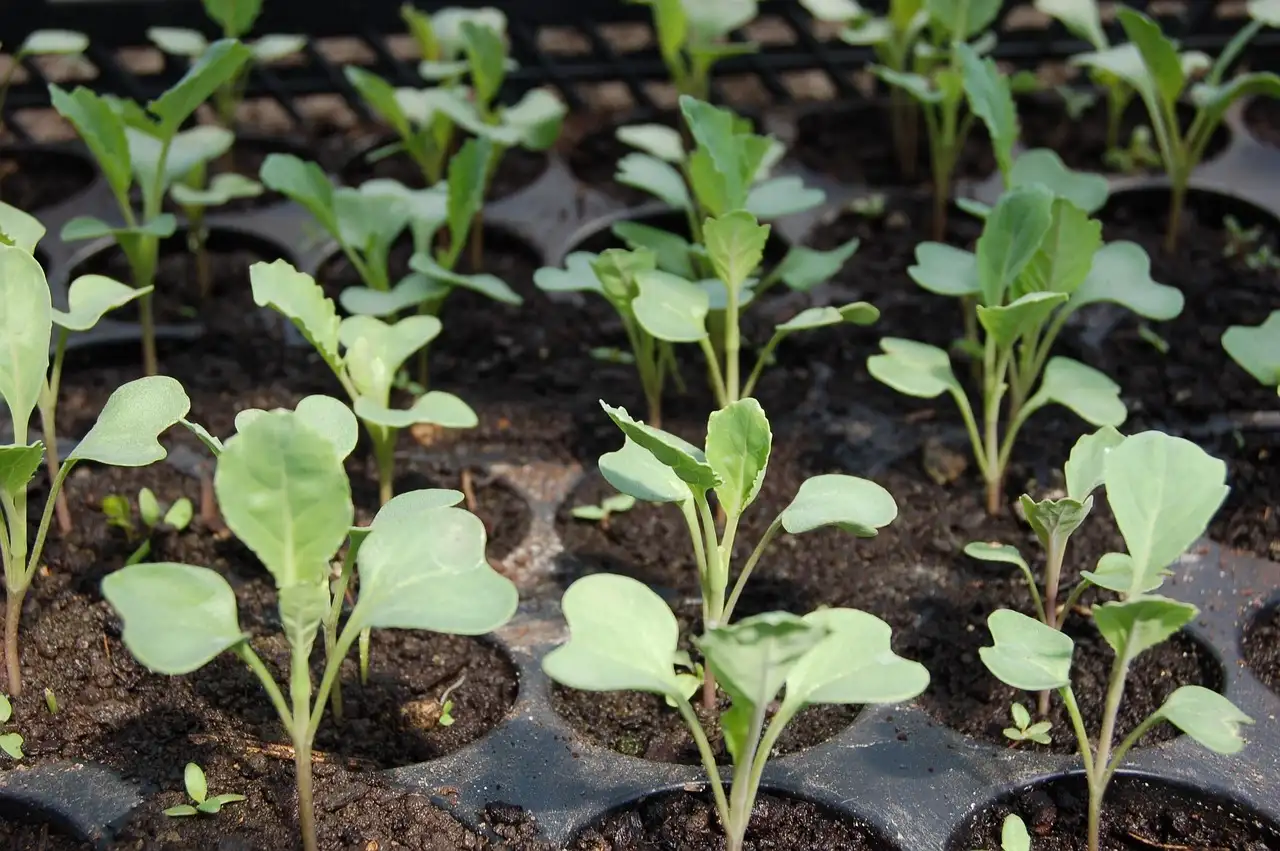
Seed packets matter because they set sowing time against your local last frost date. For slow herbs, that date helps you count backward so seedlings do not get too large and lanky before they can go outside. Plants started too early can become large and lanky before planting outdoors.
Match the herb to your goal
If you want leaves to clip through winter, choose herbs that handle indoor light and steady harvests well. If you want spring transplants, choose herbs that can move from cells to the garden after roots fill the mix and the weather has settled.
That difference matters. A basil pot on a bright kitchen windowsill serves a different purpose than parsley cells grown for outdoor beds after frost danger passes.
Check your frost date before you sow
Your local last frost date is the planning point for spring transplants. It tells you when to start seeds indoors, when to expect seedlings to be ready, and when to move them outside without freezing them back.
Read the seed packet first, then count backward from your local last frost date. Fast herbs can be started closer to transplant time, while slow herbs like parsley need more patience and often more light than a winter window provides.
Decide whether your setup has enough light
Most herbs want at least 6 hours of full sun, and seedlings need even steadier light than mature plants. A south-facing window can work for some herbs if the room stays bright, but short winter days and indoor shadows often make supplemental lights the safer choice. (UMD)
If your setup cannot provide strong light, choose herbs that tolerate weaker conditions or skip seed starting for now. A weak setup is the main reason winter seedlings become thin, pale, and top-heavy.
📊 Most seeds germinate when the soil temperature is between 68° and 86°F. Source: Iastate.
Which herbs are easiest to start from seed indoors in winter?
The easiest winter herbs are the ones that tolerate indoor light, germinate at a workable pace, and still make sense in a cold season. Basil, chives, cilantro, parsley, and thyme can all be started indoors, but they do not all perform the same way in a winter room.
Cool-weather herbs are often better candidates for early indoor sowing than heat-loving herbs that demand intense light. Chives and cilantro are more forgiving. Parsley is slower. Basil wants warmth and bright light. Thyme can work, but it asks for patience and steady light.
Best bets for winter seed starting
Chives are one of the safest choices for winter sowing. They are frost tolerant, they handle early indoor starts well, and a single seed per cell is enough for many setups. Parsley also belongs here if you can wait for germination and keep the mix evenly moist.
Cilantro is a good winter candidate too, especially for an early crop before warm weather pushes it to flower. Cilantro is often considered frost tolerant and may work best when started early, then transplanted before heat arrives.
Herbs to start only with strong light
Basil and thyme can be started indoors, but both need stronger light than a dim windowsill usually provides. Basil is a warm-season herb that often grows well from seed indoors when light and warmth are steady. Thyme has very fine seed handling and slow early growth, so weak light quickly turns it leggy.
Suppose you sow basil in a cool dining room with only a north-side window. The seedlings may sprout, but they often stretch toward the glass and collapse later unless supplemental lights and warmth are added.
Herbs better bought, divided, or cut
Some winter projects are better handled without seed. If you want speed, buy starts. If you already have clumps of chives or mint, division is often more reliable than seed. For woody or slow herbs, cuttings can be a smarter winter option than waiting on tiny seeds.
This is especially true when your goal is fresh leaves now, not spring transplants. Seed is only the best choice when the herb fits your light, temperature, and timing.
Herb seed decision table
Use this table to match the herb to your winter setup. The ratings assume indoor winter conditions, not outdoor beds, and they separate harvest-now herb choices from plants meant for spring transplanting.
| Herb | Germination speed | Light need | Indoor success | Sowing method | Best winter choice |
|---|---|---|---|---|---|
| Basil | Moderate | Strong light | High with lights, fair on a bright south window | Lightly cover | Seed |
| Parsley | Slow | Moderate to strong light | Fair if patience and cool temps are steady | Lightly cover | Seed |
| Chives | Moderate | Moderate light | High for winter starts | Cover lightly or sow one seed per cell | Seed or division |
| Cilantro | Moderate | Moderate light | High in cool rooms, lower in warm rooms | Lightly cover | Seed |
| Thyme | Slow | Strong light | Fair with careful watering and patience | Surface sow or barely cover | Seed or purchase |
| Mint | Moderate | Light shade to moderate light | Good, but often easier from cuttings or division | Lightly cover | Division or cutting |
Use a light, porous seed starting mix so roots can breathe and water drains evenly. Heavy garden soil holds too much water and can keep tiny roots cold and airless.
For transplanting later, move seedlings into a high-quality well-drained potting mix. That mix should support roots after germination, not smother them during sprouting.
Use the right sowing depth
Fine seeds can be sown on the surface of the medium and lightly pressed in. Other seeds should be covered to a thickness of one to two times the seed’s diameter. That keeps tiny seeds from being buried too deeply while still giving larger seeds enough contact with the mix.
For very small herb seeds, pressing them onto moist mix is often better than trying to bury them evenly. This matters for parsley and thyme, where deep sowing can reduce emergence.
Keep moisture even without soaking the mix
The goal is evenly moist, not soggy. Use a gentle watering method so seeds stay in place and the surface does not crust over. The medium can also be moistened with a rubber bulb sprinkler.
A common first-timer mistake is watering until the tray drips and then sealing it in a warm room. That combination invites damping off and slow, weak germination.
Do herbs need a grow light?
Not always, but winter seedlings usually do better with one. A south-facing window can work for compact, fast herbs in a bright room, while a grow light is the better tool when daylight is short, the window is weak, or the seedlings need even exposure across a tray.
Cold glass, shadows from eaves, and short days all reduce usable light. That is why many winter herb starts do fine for a week and then begin leaning, stretching, or stopping growth.
When a south-facing window is enough
A south-facing window can be enough for chives, cilantro, or other less demanding herbs if the room stays bright for much of the day. Shifting Roots suggests a south-facing window for best results, and that advice makes sense when the seedlings are close to the glass and not shaded by nearby walls or curtains.
Even then, keep expectations modest. A windowsill setup is usually better for compact winter growth than for fast, full transplants.
When to use supplemental lights
Use supplemental lights for basil, parsley, thyme, and any tray that starts stretching. Rural Sprout says seedlings need 6-8 hours of direct light per day at minimum, and many winter windows do not provide that consistently. A grow light gives you control when daylight is weak.
One practical setup is 12 hours of supplemental light daily. That is often the difference between sturdy herb seedlings and thin ones that lean toward the window.
How long to run indoor lights each day
For winter herb seedlings, a simple routine is better than frequent guesswork. Keep the light close enough for even coverage, and run it on a timer so the seedlings get a consistent day length.
If the tray sits far from the lamp, light quality drops fast. Short, bright exposure is better than long, weak exposure that leaves the stems reaching.
Heat and moisture at germination
Most seeds germinate when the soil temperature is between 68° and 86°F. Warmth speeds sprouting and improves uniformity, but seedlings usually grow better a bit cooler after they emerge. That balance matters in winter, when rooms often swing between chilly nights and hot, dry daytime air.
Basil, parsley, and cilantro can often benefit from bottom heat at germination if the room is cool. Once sprouts appear, remove extra heat if the room is already warm enough for growth.
Prevent damping off and stretching
Damping off shows up fastest in wet, stagnant conditions. Keep the mix moist but not saturated, give the tray airflow, and avoid crowding seedlings too tightly. Strong light also helps prevent stem stretch.
Say your parsley sprouts in a 60°F room under a dim window. Germination may be slow, and the seedlings may stand up thin and pale before they ever make true leaves. Warmer soil at sprouting and stronger light after emergence usually solve more problems than extra water does.
When should you transplant herb seedlings outdoors?
Move seedlings outdoors after they have true leaves, healthy roots, and weather that suits the herb. Transplant too early, and the plants can stall. Wait too long, and crowded roots or weak stems make the move harder.
For chives, that move can happen early because they are frost tolerant. For cilantro and other carrot-family herbs, cool conditions are an advantage. Basil needs warmth and no frost at all.
Wait for true leaves and healthy roots
True leaves tell you the seedling has moved past the first sprout stage. Roots should hold the mix together without being tangled or circling hard at the bottom of the cell.
If seedlings are still soft and threadlike, give them more time under light and steady moisture before they go outside.
Harden off gradually before planting out
Move seedlings outdoors in stages so they can adjust to sun, wind, and cooler nights. Start with a few hours in shade, then increase exposure over several days. This reduces shock and helps avoid scorched leaves.
Use a well-drained potting mix at transplant time, keep spacing adequate for airflow, and water after planting so roots settle into the new soil without sitting in puddles.
Frequently asked questions
How do I grow herbs indoors in winter from seed?
Choose a herb that fits your light, temperature, and goal. Fill cells with a light seed starting mix, sow at the packet depth, keep the mix evenly moist, and place the tray under a south window or grow light. Match warmth and light to the herb instead of treating every seed the same.
Do herbs need a grow light when started indoors in winter?
Not every herb needs one, but many winter seedlings do better with supplemental light than with a window alone. Use a grow light when the window is dim, days are short, or seedlings begin to lean. For winter herb starts, consistent light is often more important than extra warmth.
How much light do herb seedlings need indoors?
A bright setup should give seedlings at least 6 hours of full sun, or about 6-8 hours of direct light at minimum. Supplemental lights can fill the gap when a window cannot. Basil and thyme usually need more intensity than chives or cilantro.
Can I start basil, parsley, and thyme from seed indoors?
Yes. Basil starts well indoors if you give it warmth and strong light. Parsley can be started indoors, but it is slow and prefers cooler conditions after sprouting. Thyme can also start from seed, though fine seed handling and steady light make it a more patient project.