How to Plant Wildflower Seeds for a Natural Look
Sow wildflower seeds on bare, weed-free soil in autumn or early spring, then scatter them thinly at about 1 to 2 grams per square meter and press them in without burying. Seed laid too thick, or at the wrong time, usually turns into grass and weeds instead of a loose meadow. This guide covers site prep, seed mix choice, sowing method, spacing, and follow-up care for a natural look.
What you’ll need
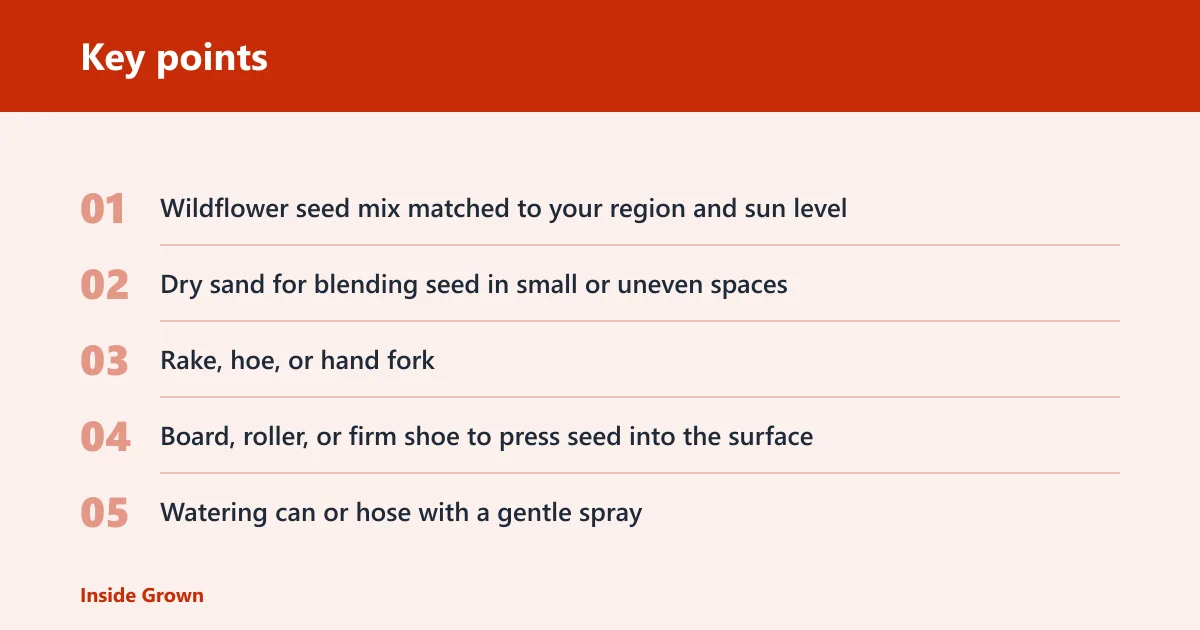


- Wildflower seed mix matched to your region and sun level
- Dry sand for blending seed in small or uneven spaces
- Rake, hoe, or hand fork
- Board, roller, or firm shoe to press seed into the surface
- Watering can or hose with a gentle spray
- String, stakes, or a simple grid marker for larger patches
- Measuring tape for square footage
Pick the look before you pick the seed
Start with the shape you want, then match the seed mix to that space. A tidier border needs a lighter, more controlled sowing pattern. A mini meadow can look looser, but it still needs the right sun, drainage, and seed rate. In my zone 6 garden planning, a natural look always starts with restraint rather than packing in more seed.
Choose a mix that fits the site
Check whether the packet says native, non-native, annual, perennial, or a blend. Regional suitability matters more than the picture on the front. A mix meant for dry prairie soil will look thin in damp shade, and a woodland mix will struggle in full sun with lean soil.
Measure the area first
Use square footage to set a real seed rate. For larger areas, a common rule of thumb is about 1/2 pound per 1,000 square feet, but always check the packet or product page first. That number helps you avoid a patch that looks bare in one corner and crowded in another. For a general seed-rate reference, see Extension guidance on establishing wildflower prairies and NRCS wildflower establishment guidance.
Match scale to maintenance
A small bed asks for more control at the edges. A lawn conversion needs wider spacing, steadier prep, and more patience. If you want a natural look, think in terms of uneven drift, not a uniform carpet.
When should you plant wildflower seeds?
Wildflower seeds can be planted in spring, summer, and fall, but the best window depends on frost timing and climate. Spring sowing is commonly done after the last frost, once the soil has warmed. Fall suits warm-winter areas, while cold-winter gardens often do better with dormant sowing after 2-3 killing frosts.
Spring sowing
Choose spring after the last frost if you want quick soil warming and a simpler start. Seeds germinate when soil temperature reaches 55°F or warmer, a threshold widely used in extension guidance for cool-season and warm-season germination timing. See University of Maryland Extension’s germination temperature information, Penn State Extension on wildflower meadows, and USDA NRCS wildflower guidance. In early to mid-spring, warm climates can often sow outdoors with good results.
Summer sowing
Summer sowing can work, but it needs extra watering. Hot, dry conditions pull moisture from the surface fast, so keep the bed evenly damp until seedlings are established. This is a good choice only if you can water regularly.
Fall and dormant sowing
For warm-winter areas, fall sowing can give a natural schedule that fits seasonal rains. In cold-winter climates, dormant sowing after 2-3 killing frosts is often the better call. Dormant planting is used when the ground is below 50°F and beginning to freeze.
Why soil temperature matters
Soil warmth matters more than the calendar alone. A site may still feel mild above ground while the top layer stays too cool for quick germination. Watch the soil, not only the date, if you want a more even start.
How do you prepare the ground?
Clear the site down to bare soil before you sow. Remove grass and weeds first, loosen the top layer, and avoid rich soil or extra compost. Wildflowers usually do better in average or lean ground than in heavily amended soil.
Remove grass and weeds
Pull out turf, roots, and active weeds. Do not scatter seed into an existing lawn and expect a meadow look. Dense grass wins the light and moisture fight, and the result usually looks messy in the wrong way.
Loosen, then level
Rake or lightly fork the top layer so seeds can settle into the soil surface. You want a fine, loose top layer, not deep fluff. Break up clods and level high spots so broadcasting looks even from the start.
Check drainage
Wildflowers need soil that drains after rain. If water sits for hours, improve the site before sowing or choose a mix made for that condition. Soggy ground can leave bare gaps, weak seedlings, and uneven bloom timing.
How do you sow wildflower seeds evenly?
Broadcast the seed lightly, keep it near the surface, and press it in after sowing. Good seed-to-soil contact matters more than depth. If the seed is buried too deeply, germination drops and the patch looks patchy instead of natural.
Mix seed with dry sand
Blend seed with dry sand so you can see your spread better and cover the area more evenly. This is especially useful in small borders or oddly shaped edges. The sand also helps prevent clumps that create obvious seed piles.
Use a simple grid
For larger spaces, mark the bed into sections with string or light lines in the soil. Sow one section at a time so you can keep coverage even. This is the easiest way to avoid empty strips and dense blotches.
Use a wrist-flicking motion
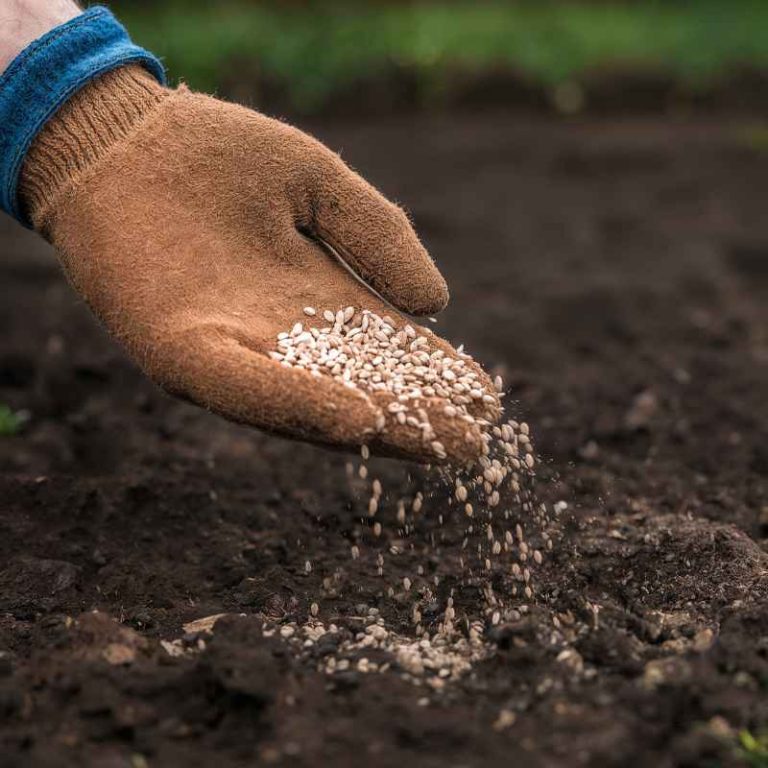
Hold the seed mix low and flick your wrist in a light, steady motion. Aim for broad, thin coverage rather than a thick scatter. A natural look comes from even distribution with small irregularities, not from dumping seed in a few spots.
Firm the seed
After sowing, press the seed into the soil with a board, roller, or your feet. Do not bury it deeply. Firming improves contact with the soil while keeping the seed close enough to the surface for germination.
Wildflower sowing checklist
| Site type | Sowing method | Visual outcome | Sun hours | Sowing season | Use sand? | Firm soil? | Most common mistake |
|---|---|---|---|---|---|---|---|
| Lawn edge | Mix seed with dry sand, then broadcast in two light passes | Loose edge with a soft transition into the lawn | 6+ hours | Spring after frost or fall | Yes | Yes | Sowing into turf instead of bare soil |
| Small border | Mark a simple grid and sow one section at a time | Controlled, informal drift with fewer clumps | 3-4+ hours or more | Spring after frost or fall in warm-winter areas | Useful | Yes | Burying seed too deeply |
| Mini meadow | Blend seed with sand and use a wrist-flicking broadcast | Open, natural scatter with a meadow feel | 6+ hours | Fall in the right climate or dormant sowing after 2-3 killing frosts | Recommended | Yes | Overwatering into mud or overfeeding the soil |
How do you care for seedlings?
Keep the surface moist until germination, especially after summer sowing or during hot, dry periods. Once seedlings appear, water lightly and regularly rather than flooding the bed. Leave the area alone as much as possible so slow starters are not disturbed.
Water with care
A gentle spray keeps seed in place. Heavy watering can move seed into piles, wash it into low spots, or crust the soil surface. Even moisture matters more than volume in the first few weeks.
Watch for slow germination
Some mixes come up unevenly. That is normal. Do not rake the bed again once sprouts appear, and do not top up with extra seed unless you have clear bare patches that match the original sowing pattern.
Adjust in small steps
If a section looks thin after the first watering cycle, add seed at the original rate for that area only, then recheck coverage. For a 10 square foot gap, keep the added seed light and uniform rather than doubling the amount in one pass.
How do I source free wildflower seeds?
If you want free wildflower seeds, check local seed libraries, conservation district giveaways, and native plant society swaps. Many public libraries, extension offices, and neighborhood garden groups host seasonal seed exchanges or distribution events, especially in late winter and early spring. Native plant societies often share locally adapted seed from members, which can be a better fit than a generic mix if your goal is a natural look.
Common mistakes
These are the failures that usually ruin a natural look. Most of them come from rushing the prep or treating all mixes the same.
- Sowing into existing turf or a weedy surface.
- Choosing a mix that does not fit local sun or drainage.
- Adding compost or fertilizer that pushes lush, coarse growth.
- Burying seed too deep or leaving it loose on the surface.
- Skipping the packet coverage rate and scattering by guesswork.
Suppose you have a 40 square foot front border with six hours of sun. If you skip the grid and dump seed from one corner, the first third of the bed will look crowded while the far edge stays bare. A light, section-by-section broadcast fixes that.
A common first-timer mistake is trying to seed over a patchy lawn edge without clearing the grass first. The grass grows faster than the flowers, so the result looks uneven and overfull instead of intentionally untidy.
Frequently asked questions
How do you grow wildflower seeds successfully?
Pick a mix suited to your region, sun, and drainage, then follow the packet coverage rate. Most wildflowers need at least 6 hours of full sun, while partial-shade types can do well with 3-4+ hours. Keep watering steady until the seedlings settle.
How do you plant wildflower seeds outdoors?
Prepare a bare bed outdoors, mark the area, and broadcast the seed evenly with dry sand if needed. Spring sowing should wait until after the last frost. In cold-winter sites, dormant sowing after 2-3 killing frosts can work better than a late warm spell.
When is the best time to plant wildflower seeds?
The best time depends on climate, but spring and fall are the main sowing windows. Spring works after the last frost, while fall suits warm-winter areas. Seeds germinate when soil temperature reaches 55°F or warmer, so soil warmth should guide the final call.
Should wildflower seeds be planted in spring or fall?
Use spring if your frost dates are clear and you can water early growth. Use fall if your area has mild winters or if you want dormant sowing in a cold-winter climate. Fall and dormant planting often fit natural cycles better than a hot, dry summer start.
Can I just throw wildflower seeds on my lawn?
No. Avoid scattering seeds into an unprepared lawn or yard. Grass blocks light, seed-to-soil contact stays poor, and germination drops. Strip the turf first, loosen the surface, and sow only on bare soil if you want a meadow look rather than a weedy patch.