How to Sow Seeds for a Cut-and-Come-Again Harvest
Sow cut-and-come-again crops thinly, then thin to about 10–15 cm apart for loose-leaf types or about 20–30 cm for larger leaves. Take the first cut when plants have about 4–6 true leaves. Crowding, cutting too low, or harvesting too early can reduce regrowth and shorten the picking season. This guide covers sowing depth, spacing, timing, and the first-cut rules that keep leafy crops producing again.
What cut-and-come-again means


Cut-and-come-again means you harvest part of the plant and leave the growing point in place. For leafy crops, that usually means taking outer leaves or a top section while the center keeps growing. That is why sowing, spacing, and the first cut matter so much.
This method works best with fast-growing leafy crops that recover after partial harvest. Lettuce, Swiss chard, kale, and arugula fit that pattern well. The same approach also suits small beds and containers, where you can pick a little at a time instead of clearing a whole row.
Which plant parts to leave in place?
Leave the crown, central rosette, or main stem tip intact. If you remove those parts, the plant has little left to regrow from. For lettuces, keep the center growing. For chard and kale, leave enough outer growth to feed the plant after each cut.
A common mistake is to sow the seeds in a single dense clump, making the seedlings compete so heavily that the crop slows down before it can keep producing tender new growth. The plant then spends its energy replacing too much at once. A better approach is to remove the oldest outer leaves first and leave younger leaves in the center, where new growth begins.
Why regrowth depends on the first cut
The first cut sets the pace. If you wait until plants are overlarge, crowded, or beginning to bolt, repeat harvests usually slow down. If you cut too early, the plant may not have enough leaf area to recover quickly. Aim for the stage where the plant has several true leaves and a strong root system.
Say your lettuce seedlings are packed tightly in a shallow tray. If you leave them crowded into the bed, the leaves stretch upward and stay small. If you thin them on time and take only the outer leaves at first, the center can keep building new growth for several weeks.
What seeds should I sow for cut-and-come-again harvesting?
Start with lettuce, Swiss chard, kale, and arugula. These are the core seed-sown crops for repeated leaf picking. Homes and Gardens lists seven cut-and-come-again vegetables, including Swiss chard, lettuce, kale, broccoli, asparagus, rhubarb, and arugula, but the first four are the clearest matches for a seed-sowing guide focused on leafy regrowth.
Broccoli can fit an ongoing-harvest approach only in the sense that some plants keep producing side shoots after the main head is cut. Asparagus and rhubarb are different crops with different planting methods, so they are poor stand-ins for seed-sown leaf crops. If your goal is repeated picking from seed, stay with leafy types first.
Lettuce for outer-leaf picking
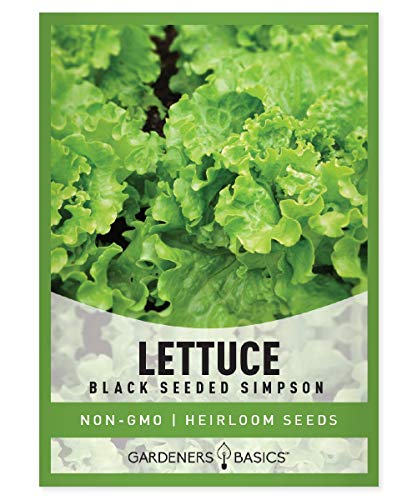
Lettuce is the classic cut-and-come-again crop. Sow loose-leaf types in bands or rows, then pick outer leaves while the center keeps growing. That gives you repeated leaf harvests instead of a single whole-plant cut.
Swiss chard for long picking windows
Swiss chard can be planted in spring for summer into fall harvests, and it can be sown again in midsummer when the first planting slows. You can also overwinter it with fleece or cloches, then keep picking individual outer leaves as needed.
Kale and arugula for steady leaf harvests
Kale tolerates repeated outer-leaf harvests when you leave the center intact. Arugula grows faster and is often picked leaf by leaf or as small clusters. Both benefit from succession sowing because they can turn over quickly in warm weather.
When a crop is a poor match
A crop is a poor match if it bolts quickly, makes a single harvest, or needs a large root or crown to be left untouched for months. That is why the question is not only what to sow, but how to sow it and when to begin cutting.
How deep and far apart should you sow?
Sow shallowly and evenly, then thin to the final spacing you want for harvest style. Loose-leaf crops can sit closer than full-size plants if you plan to cut young leaves often. Larger leaves need more room so air can move and regrowth stays steady.
For most leafy seeds, a covering of about 0.5 to 1 cm is a practical target. Tiny seeds such as lettuce and arugula need only a light covering. Bigger seeds such as chard and kale can go a little deeper, but still not deeply.
Seed depth by crop group
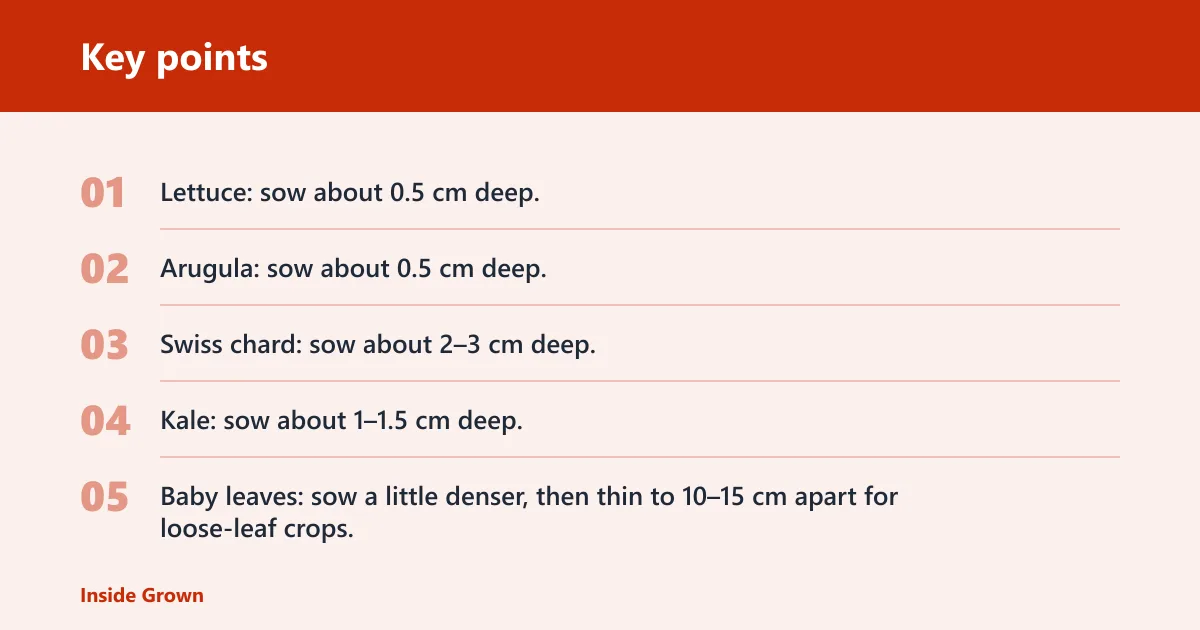
- Lettuce: sow about 0.5 cm deep.
- Arugula: sow about 0.5 cm deep.
- Swiss chard: sow about 2–3 cm deep.
- Kale: sow about 1–1.5 cm deep.
Depth matters because shallow seed can dry out before it germinates, while deep seed may emerge weakly. If the surface crusts over, the seedling may never break through. Keep the covering even and the surface lightly moist until germination.
Spacing for baby leaves versus larger leaves
- Baby leaves: sow a little denser, then thin to 10–15 cm apart for loose-leaf crops.
- Larger leaves: thin to 20–30 cm apart for chard and kale if you want longer picking from fuller plants.
- Arugula: 5–10 cm apart works for repeated baby-leaf cutting.
For lettuce, a close sowing can work if you plan to harvest small leaves often. For chard and kale, more space helps the plants keep building leaf mass after each pick. Overcrowding does not always end a crop, but it often narrows the margin for drought, heat, and missed harvests.
When to thin and how much room to leave
Thin when seedlings have a few true leaves and you can handle them without damage. Keep the strongest plants and remove the rest cleanly. If you want repeated cutting, leave enough room for each plant to keep a usable rosette or stem base after harvest.
Picture a 1 m bed sown thickly with chard. If you leave all the seedlings in place, the plants compete for light and moisture, and each cut exposes less leaf area for regrowth. If you thin to the right spacing, each plant can recover from outer-leaf picking more reliably.
Can I direct sow in pots or beds?
Yes. You can direct sow cut-and-come-again crops in pots, window boxes, raised beds, and open ground. The key is even moisture at germination and enough root room for regrowth. Shallow containers dry faster, so they need closer attention than deeper beds.
The same crops that work in beds often work in containers, especially lettuce and arugula. Swiss chard and kale need deeper containers because their roots and leaf mass are larger. Cut-and-come-again crops can work in pots or window boxes, which makes them useful for small spaces.
Best containers for repeated picking
- Lettuce and arugula: shallow-to-medium pots and window boxes.
- Swiss chard: deeper containers that hold moisture longer.
- Kale: larger pots with room for a stronger root system.
Direct sowing in a container is usually simplest for arugula and loose-leaf lettuce. For chard and kale, many gardeners still direct sow, but a larger pot or bed gives steadier regrowth because the root zone stays cooler and moister.
Direct sowing versus indoor starts
Direct sow when the crop dislikes root disturbance or when you want a simple crop rotation. Start indoors only if your season is short, your spring soil stays cold, or you need a head start before transplanting. For repeated leaf picking, direct sowing is often enough.
Do not overwater seed trays or newly sown rows. The surface should stay evenly moist, not soggy. If the top layer dries out during germination, seedlings emerge unevenly, and uneven stands are harder to harvest in a repeat-cut system.
How soil moisture affects germination
Seed needs steady moisture to sprout well. After germination, switch from surface wetness to deeper, less frequent watering. That encourages roots to search downward, which helps plants recover after cutting. Dry, shallow-rooted plants stall sooner after harvest.
Cut-and-come-again sowing matrix
This matrix shows the practical choices that make repeat harvests more reliable: when to sow, how far apart to space the plants, when to make the first cut, how much to leave behind, and the most common way each crop fails.
| Crop | Direct-sow timing | Target spacing | Days to first cut | Leave after cutting | Common failure mode |
|---|---|---|---|---|---|
| Lettuce | Spring to late summer; repeat every 2–3 weeks for succession sowing | 10–15 cm for loose-leaf picking | 25–35 days | Keep the center and 3–4 young leaves | Bolting in heat; cutting the crown too low |
| Swiss chard | Spring; sow again in midsummer when the first sowing slows | 20–30 cm | 35–50 days | Leave the crown and outer leaf bases | Dry soil and overcrowding in warm weather |
| Kale | Spring or late summer for a cooler run of growth | 30–45 cm | 40–60 days | Leave the growing point and lower leaves | Picking too many inner leaves at once |
| Arugula | Spring and early autumn; sow little and often | 5–10 cm for leaf picking | 20–30 days | Leave several small leaves per plant | Heat stress and flowering too soon |
| Spinach | Cool spring or late summer sowings | 10–15 cm | 30–40 days | Leave the center rosette | Bolting as temperatures rise |
| Mustard greens | Spring through early autumn | 10–15 cm | 25–35 days | Leave the central growth point | Drying out after a hard cut |
| Pak choi | Cool spring or late summer | 15–20 cm for smaller plants | 30–45 days | Leave the heart intact | Heat causing premature flowering |
| Beet greens | Spring to midsummer | 10–15 cm for leaf use | 30–45 days | Leave the crown untouched | Cutting too close to the crown |
| Turnip greens | Spring and late summer | 10–15 cm | 30–40 days | Leave the crown and lower leaves | Stress from irregular watering |
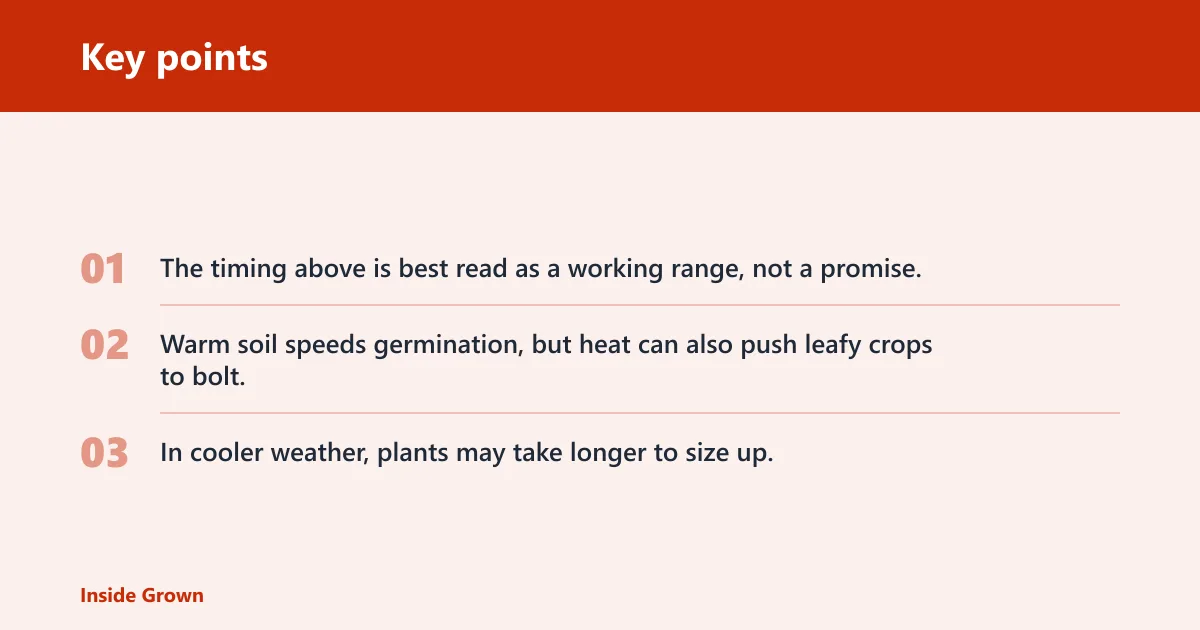
The timing above is best read as a working range, not a promise. Warm soil speeds germination, but heat can also push leafy crops to bolt. In cooler weather, plants may take longer to size up, yet they often hold usable leaf quality for longer.
How do you keep plants producing?
Keep plants producing by cutting lightly, watering after harvest, and leaving enough leaf area to feed regrowth. For lettuce, chard, and kale, the first cut should remove only the outer leaves or the top section you can spare. Never strip the plant bare.
How often you harvest depends on growth rate. In strong growth, pick every few days. In cooler or drier spells, stretch the interval. The rule is simple: if the plant looks slower to replace leaves, give it more time before the next cut.
First-cut rules for lettuce, chard, and kale
- Lettuce: start with outer leaves once the plant has 4–6 true leaves; keep the center intact.
- Swiss chard: pick older outer leaves first and cut thick stems at the base.
- Kale: harvest the lowest, oldest leaves before moving up the stem.
Do not cut below the point where new leaves are forming. That is the most common way to end repeat harvests too soon. Leave enough growth behind so the plant can keep photosynthesizing while it replaces what you removed.
How often to harvest without stripping plants bare
Harvest small amounts more often rather than taking too much at once. That keeps the plant in a steady growth cycle. If you need a larger harvest, take it in stages over several days instead of cutting every leaf in one pass.
Watering and feeding after each cut
Water after harvest if the soil is dry. Mulch lightly in beds, and keep container compost evenly moist. A plant that dries out after cutting spends energy on survival, not leaf production. A steady moisture supply is the simplest way to keep repeat harvests coming.
How can succession sowing stretch harvests?
Succession sowing stretches the season by staggering sowing dates so not every plant reaches harvest at the same time. For lettuce and arugula, sow small batches about every 2–3 weeks for succession planting. For chard, sow a spring batch, then sow again in midsummer when the first batch slows.
That approach matters because cut-and-come-again crops do not all peak together. Some rush in cool weather, then slow in heat. Others hold longer but still benefit from a fresh sowing to replace tired plants. Succession sowing keeps the patch productive instead of all at once.
Using fleece or cloches for Swiss chard
Swiss chard can be overwintered with fleece or cloches. That protection helps carry the crop into colder weather and extend picking into spring. Use protection when frost threatens and remove it when temperatures ease so the leaves do not stay damp for too long.
Swiss chard is one of the clearest examples of how sowing choices affect harvest cadence. A spring sowing gives summer-to-fall picking, a midsummer sowing fills the gap later, and winter protection can carry the crop farther than a single sowing would manage on its own.
Frequently asked questions
How do you sow seeds for a cut-and-come-again harvest?
Sow the seed at the crop’s usual depth, keep moisture even, then thin to the spacing that matches your harvest style. For repeated picking, leave enough room for the crown or center to keep growing. Sow in small batches so you are not forced to harvest everything at once.
How deep should I sow cut-and-come-again seeds?
Use a light covering for small seeds and a slightly deeper sowing for larger ones. Lettuce and arugula can be sown about 0.5 cm deep, kale around 1–1.5 cm, and Swiss chard about 2–3 cm. The goal is even emergence, not a deep burial.
How far apart should I sow lettuce or chard for repeated picking?
For lettuce, thin to 10–15 cm apart if you want loose-leaf picking. For Swiss chard, give each plant 20–30 cm so the leaves can rebuild after repeated cuts. Closer sowing can work for baby leaves, but larger leaf harvests need more room.
Can I direct sow cut-and-come-again vegetables in pots or beds?
Yes. Pots, window boxes, raised beds, and open ground all work if the soil stays evenly moist. Shallow containers suit lettuce and arugula best, while chard and kale do better in deeper pots or beds. The smaller the container, the closer you need to watch watering.
How do I keep cut-and-come-again plants producing after harvest?
Cut only the outer leaves or the top section you can spare, then water if the soil is dry. Keep the center or growing point intact, and do not strip the plant bare. Harvest a little at a time, because steady leaf area helps the plant replace what you removed.