How to Fix Seeds That Were Planted Too Deep
If seeds were planted too deep, gently uncover them only when the label depth was exceeded by about 2 to 3 times; otherwise it may be better to wait, since many seedlings can still push through if the seed is viable. Burying them deeper than they can emerge wastes time, dries out the seedbed, and can leave you with patchy rows. This guide helps you judge viability, spot a buried seedling, decide when to uncover, and know when to reseed.
How do you tell if seeds are buried too deep?
Start with the seed packet. It lists sowing depth, germination time, and crop-specific notes, so use it before guesswork. If the crop is still inside its normal germination window, the seed may simply be slow. If the surface is crusted, compacted, or waterlogged, emergence can fail even when the depth was right.
Check the packet first
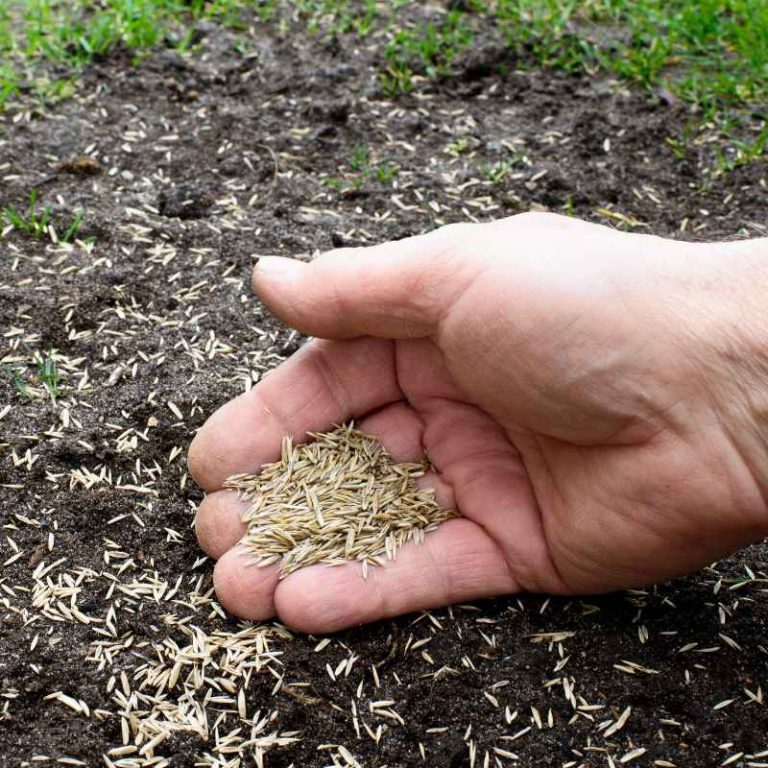
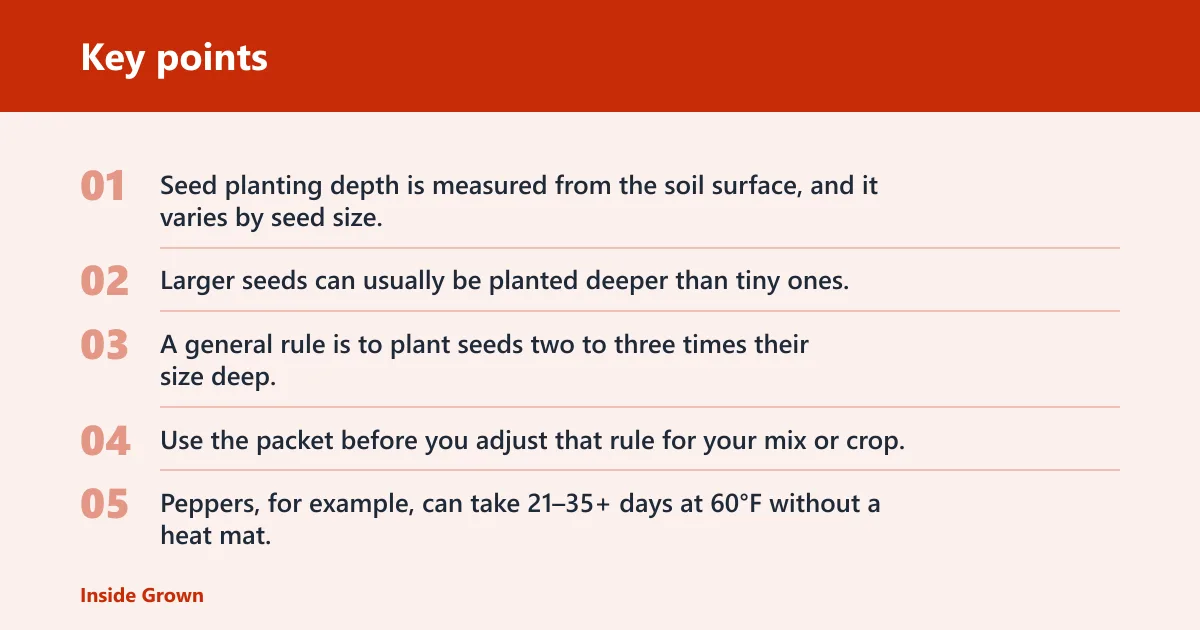
Seed planting depth is measured from the soil surface, and it varies by seed size. Larger seeds can usually be planted deeper than tiny ones. A general rule is to plant seeds two to three times their size deep, and another common rule of thumb is about twice as deep as seed size. Use the packet before you adjust that rule for your mix or crop.
Separate slow germination from failed emergence
Some crops are simply slow. Peppers, for example, can take 21–35+ days at 60°F without a heat mat. That delay does not prove the seed was buried too deep. If the packet’s germination time has not passed, the better move is usually to wait rather than disturb the row.
Look for crusting, compaction, or standing water
Even a seed at the right depth can fail if the surface hardens. Heavy or clay-heavy soil can make deep planting worse, because the seedling has more resistance on the way up. Too much water also matters: seeds can fail because the soil is too wet and oxygen cannot reach them, and deep planting can trap too much moisture around the seed.
Deep-plant rescue checklist
| Symptom | Likely cause | Immediate fix | When to re-sow |
|---|---|---|---|
| No sprout yet, but packet time is not over | Slow germination, cool soil, or viable seed still working | Leave it alone unless the surface is sealed or soggy | After the packet window passes and a viability check fails |
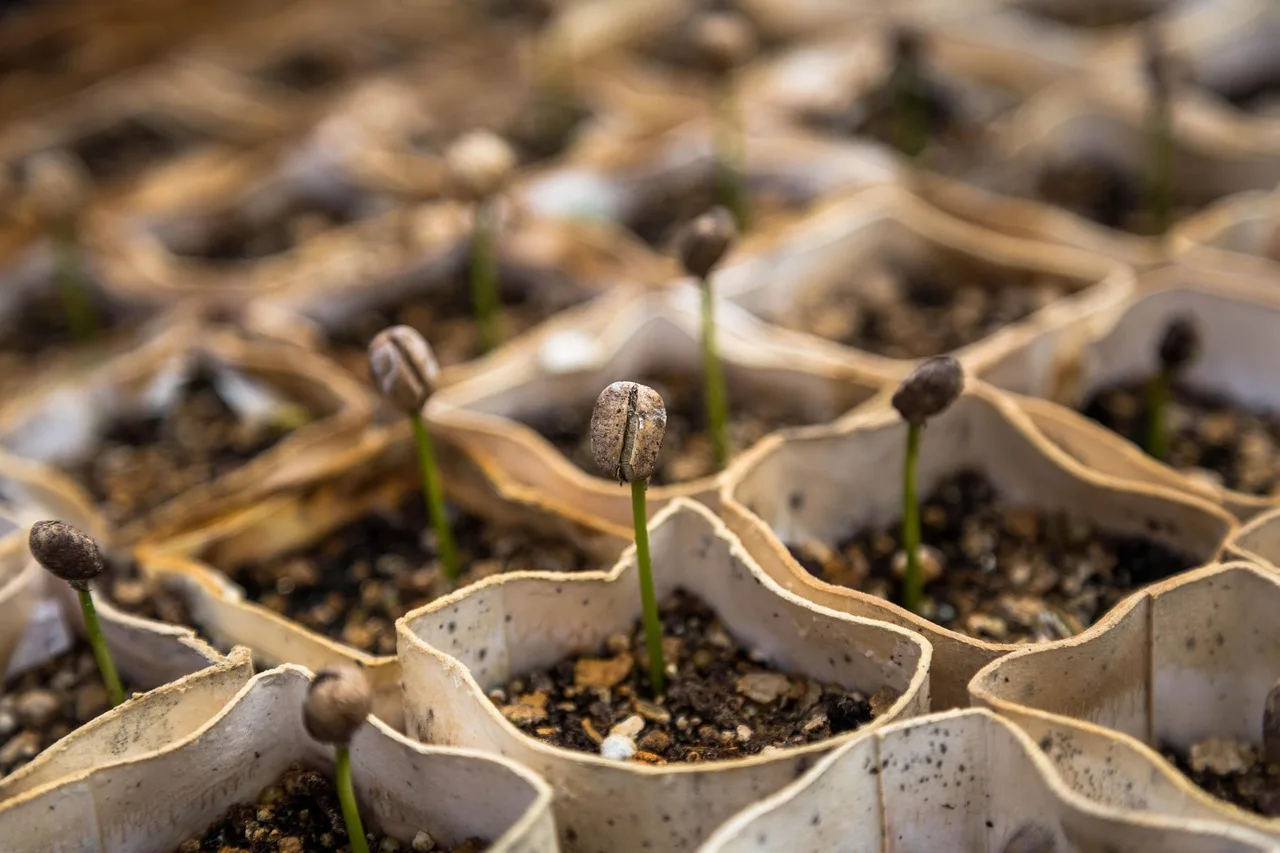
| Cracked seedling visible under the surface | Seedling is trapped by depth or crusted soil | Gently remove only the soil directly above the sprout | Only if the sprout is damaged or the seedling collapses |
| Soil crusted over | Drying surface, compaction, or fine-textured mix | Break the crust lightly with a fingertip and mist the top layer until damp | If no emergence after the expected time and the seed is not viable |
| Too-wet mix | Excess moisture, poor airflow, rot risk | Stop watering, improve drainage, and let the mix dry slightly | If the seed softens, smells off, or shows rot instead of growth |
| Slow crop versus dead crop | Crop naturally slow, or seed failed for another reason | Compare the packet timing and check seed viability with a paper towel test | Reseed after the expected germination window and a failed viability check |
Use a quick viability check
Older seed may fail regardless of depth, and viability varies by crop. A paper towel test uses exactly 10 seeds to check whether a batch still germinates. Fresh storage improves odds. The paper towel test and packet window are commonly used to help decide whether to reseed after failed viability checks.
Should you uncover seeds planted too deep?
Only uncover when the seed was buried far beyond the label depth, the seed is still within its likely germination window, and the soil can be opened without ripping roots or drying the bed. If the seed is already germinating, or if you suspect a trapped seedling under crusted soil, uncovering too much can do more harm than waiting.
When a gentle uncover helps
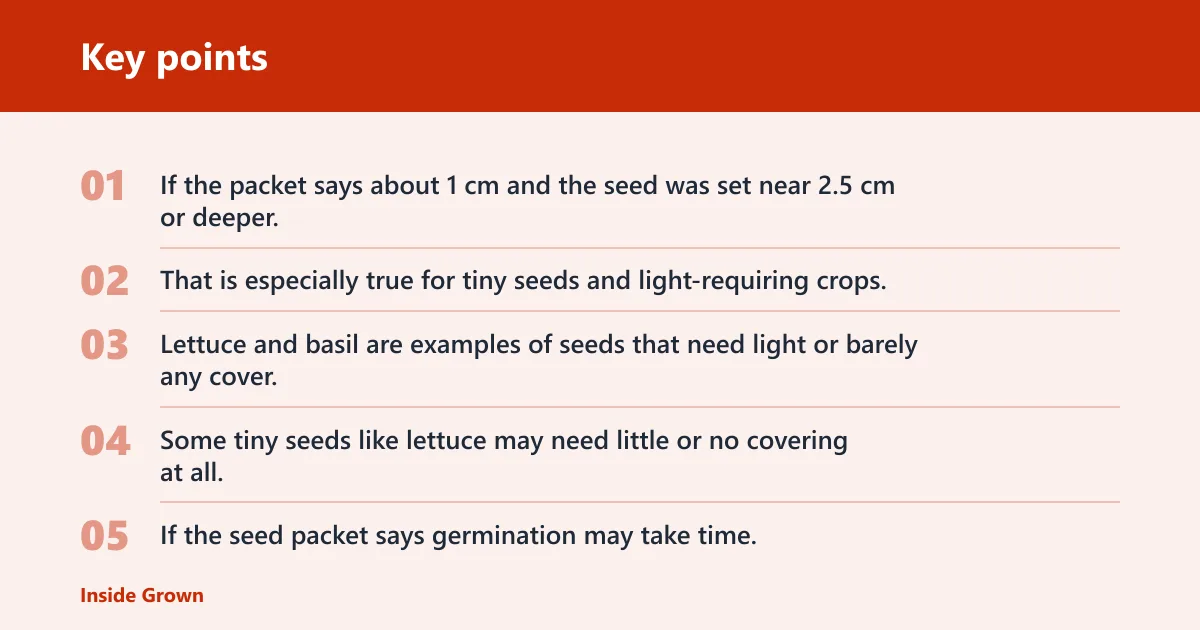
If the packet says about 1 cm and the seed was set near 2.5 cm or deeper, a light correction may help. That is especially true for tiny seeds and light-requiring crops. Lettuce and basil are examples of seeds that need light or barely any cover. Some tiny seeds like lettuce may need little or no covering at all.
When to leave the seed alone
Do not dig up every slow row. If the seed packet says germination may take time, and the surface is still open and moist, patience is often the better move. For larger seeds, the larger the seed, the greater the depth should be, so a seed that seems “deep” may still be correctly placed.
When re-sowing is the better call
If the seed is old, poorly stored, or sitting in cold, wet media, waiting may just delay the next planting. Deep planting can slow germination or stop sprouting completely, and seeds that are too deep may never germinate. When the packet window has passed and the paper towel test fails, reseeding is usually the cleaner choice.
Suppose a lettuce tray was sown under 1 cm of fine mix, then the surface crusted dry overnight. Break the crust lightly so the seedlings can push through. If the same tray had been buried under 3 cm and still shows nothing after the packet’s germination window, reseeding is the better bet.
What to do if a seedling is stuck under soil?
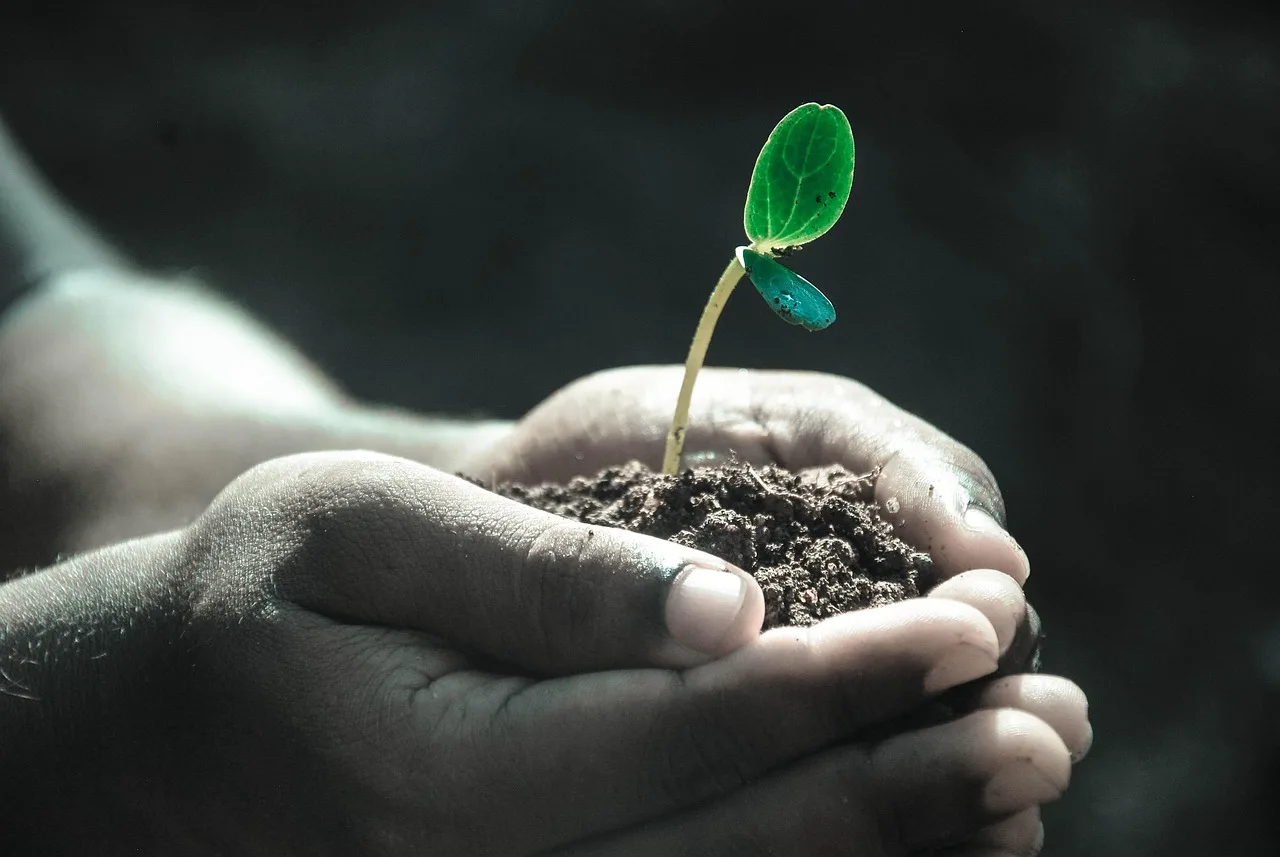
If a sprout is visible but trapped, treat it differently from a seed that never emerged. The goal is to free the path, not to dig out the plant. Loosen the crusted surface lightly, keep the mix evenly moist, and watch for collapse at the soil line, which can point to damping off in wet conditions.
Loosen crusted soil without damaging the sprout
Use a fingertip or a small tool to break only the crust above the seedling. Do not pull on the stem. If the seedling has already bent strongly or is twisted in the soil, the root may be damaged. A seedling heat mat can help warm-season crops in trays by raising tray temperature 10–20°F above ambient, but it should not replace gentle handling.
Fix moisture so the surface does not harden again
Keep the mix damp enough that it does not dry into a hard crust, but stop short of waterlogging. Too dry can stall germination, but too wet can rot the seed and encourage crusting when the surface dries hard. A thermostat-controlled heat mat helps keep conditions steady under trays, which matters because soil temperature can be colder than room air and warm-season crops are sensitive to that gap.
Protect weak seedlings from damping off
Damping off is more likely in wet media and weak seedlings. It can make a seedling collapse at the soil line after it has emerged. If the stem pinches off, the problem is no longer depth alone. Reduce excess moisture, improve airflow, and remove badly affected seedlings so they do not sit in saturated mix.
How deep is too deep for seeds?
“Too deep” depends on seed size and crop. Tiny seeds need only a thin cover, if any, while larger seeds can go deeper. The packet is still the first reference. When the label is missing, use seed size as your guide and keep in mind that planting deeper can slow germination or stop sprouting completely.
Tiny seeds and light-requiring crops
Tiny seeds like lettuce may need little or no covering. Lettuce and basil are examples of seeds that need light or barely any cover. If you bury them deeply, they may stay dark and fail to emerge. For these crops, the safest move is surface sowing or a dusting of mix that barely obscures the seed.
Medium seeds
Medium-sized vegetable seeds often sit in the middle of the two-to-three-times-size rule. They need enough cover to stay moist and anchored, but not so much that the shoot exhausts itself before reaching light. If the soil is heavy or clay-heavy, lean toward the shallower end of the packet’s range.
Large seeds
Large seeds tolerate a deeper set than tiny seeds. That does not mean “deeper is safer.” If the seed is set too far below the surface, it can struggle to reach light, especially in compacted or crusted soil. Use the packet depth and the seed’s size together, not one alone.
How can you keep this from happening again?
The best prevention is to use the packet depth as your baseline, then adjust for seed size, soil texture, and moisture. Loose, airy soil makes emergence easier. Keep the seedbed evenly damp during the germination window, and use warmth only where the crop needs it. The goal is steady conditions, not constant wetness.
Match depth to soil texture and seed size
Fine seedbeds often crust more easily than loose mixes, so tiny seeds do better close to the surface. Heavy or clay-heavy soil makes deep planting worse because shoots face more resistance. A larger seed can still fail if the surface seals over, so loosened topsoil matters as much as the measured depth.
Control moisture and temperature during germination
Keep the medium damp, but not waterlogged. Waterlogging blocks oxygen and raises rot risk. If you are germinating warm-season crops in trays, a seedling heat mat can raise soil temperature 10–20°F above ambient, which may help speed germination. Heat helps only when moisture and depth are already in range.
A common first-timer mistake is to water heavily after sowing because the surface looks dry. That can keep the lower layer too wet, which slows emergence and can rot seed. A lighter, steadier watering pattern usually works better than alternating a dry crust with soaked mix.
Frequently asked questions
Will seeds grow if planted too deep?
Sometimes, yes. Many seeds can still emerge if the soil is loose, moist, and the seed is viable. But planting deeper can slow germination or stop sprouting completely, and seeds that are too deep may never germinate. Tiny seeds are the most likely to fail when buried too far down.
Can you save seedlings if you planted the seeds too deep?
Often, yes, if the seedling has already broken through part of the path. Gently remove only the soil that is clearly blocking the sprout. Do not pull on the stem. If the seedling is pale, stretched, or collapsing at the soil line, adjust moisture and watch for damping off.
How do I tell if seeds are buried too deep or just slow to germinate?
Start with the packet’s germination time and sowing depth. If the seed is still inside its normal window, it may just be slow. If the surface is crusted, compacted, or soggy, the seed may be blocked. A paper towel test can help separate depth problems from weak seed.
Should I uncover seeds that were planted too deep?
Only if the seed was buried far beyond the label depth and the crop should have emerged by now. Do not uncover every row by default. If the seed is a tiny, light-requiring type like lettuce or basil, shallow placement matters more. If it is a slow crop, waiting may be smarter.
How can I avoid planting seeds too deep next time?
Read the packet first, then match depth to seed size and soil texture. Tiny seeds need little or no cover, while larger seeds can go deeper. Keep the mix damp during the germination window, avoid crusting, and use a heat mat only for warm-season crops that benefit from warmer soil.