How to Water Newly Planted Seeds Without Washing Them Away
Use bottom watering for trays and pots, a mist or fine-rose sprayer for tiny surface-sown seeds, and a slow shower from about 12 inches for larger buried seeds once the mix is settled. Pour too hard and seeds shift, clump, or sink unevenly, which can lead to poor germination. This guide shows the safest watering method by seed size, sowing depth, and setup, plus a simple rule for each stage.
What you’ll need


- Seed-starting mix that is fine-textured and moisture-retentive
- A spray bottle or mister with a fine droplet pattern
- A bottom-watering tray for cells or pots
- A watering can with a rose or fine shower head
- A clear dome, plastic wrap, or other humidity cover with airflow
- Fine vermiculite, straw, or a germination blanket for direct-sown beds
How should you water seeds before they sprout?
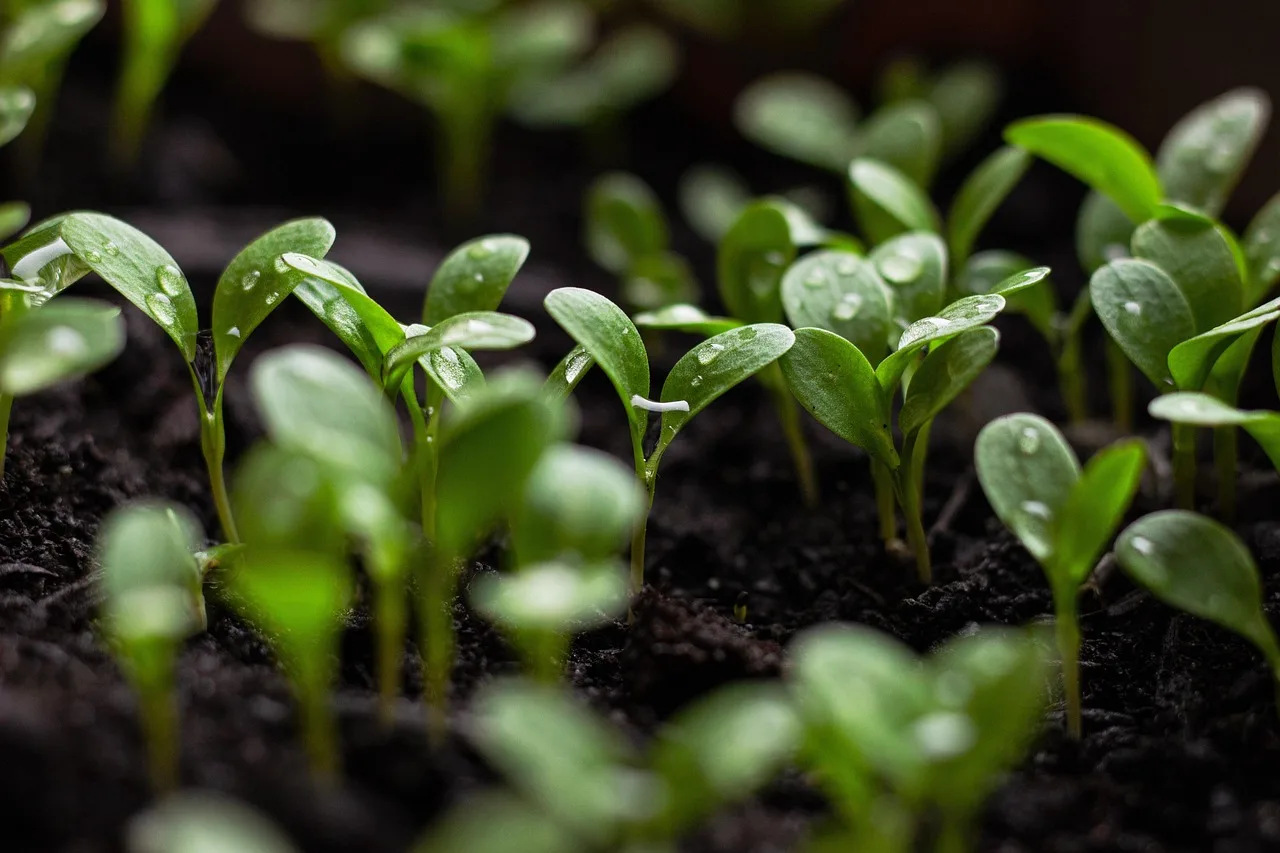
Pre-moisten the seed-starting mix before sowing so it feels evenly damp, not dry on top and soaked below. Then choose the gentlest method that matches seed size and planting depth: mist for the smallest surface-sown seeds, and a fine shower or bottom watering for larger seeds and settled mix.
Pre-moisten the mix first
- Dampen the seed-starting mix until it holds together when squeezed, then breaks apart with light pressure.
- Fill trays, pots, or cells and level the surface without packing it down.
- Plant seeds at the depth on the packet, or on the surface if they need light to germinate.
Seed-starting mix dries faster than garden soil, so a dry fill can pull water away from seed pockets after planting. A dry top layer also forms a crust more easily after a hard watering.
Match the method to seed size
- Use a spray bottle or mister for dustlike or surface-sown seed.
- Use a watering can with a fine rose for larger seeds or beds that have already settled.
- Use bottom watering for cells and pots when you want moisture to rise without disturbing the surface.
Shallower sowing needs gentler watering because the seed sits close to the surface and shifts easily. Deeper sowing gives the seed more cover, but the top layer still needs steady moisture so the seed can take up water and emerge.
Keep the surface damp, not waterlogged
Add water in passes. If the surface darkens evenly and stays loose, stop. If puddles appear, the mix has taken on more water than the seed zone needs.
A common first-timer mistake is soaking the tray until water pools under the cells right after sowing. That can float tiny seed upward, shift them into clumps, and leave other spots bare.
How do you water tiny seeds without moving them?
Mist tiny or surface-sown seeds lightly, then switch to bottom watering once the mix can wick water without splashing. For the smallest seed, the goal is to add moisture with almost no impact on the surface. Thin covers can help, but only if they still let air move through.
Mist surface-sown seeds lightly
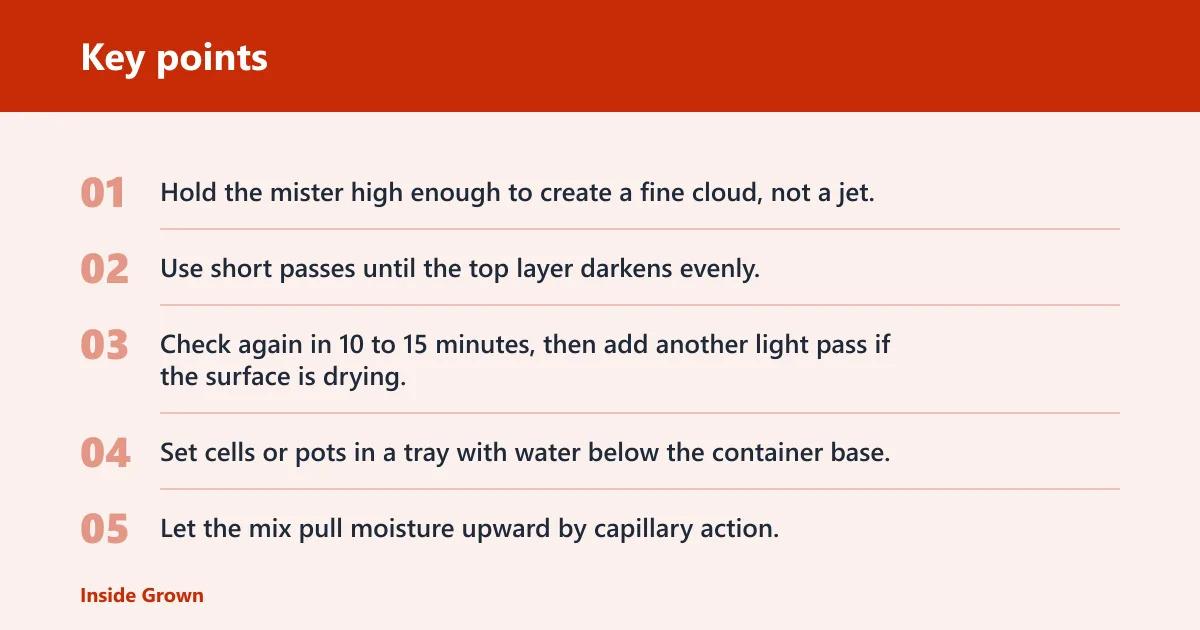
- Hold the mister high enough to create a fine cloud, not a jet.
- Use short passes until the top layer darkens evenly.
- Check again in 10 to 15 minutes, then add another light pass if the surface is drying.
Use the mister for light top-ups, not full saturation. A spray bottle can keep a seed bed from drying between checks, but it is too slow for deeply dry mix or a large cell pack.
Use bottom watering after planting
- Set cells or pots in a tray with water below the container base.
- Let the mix pull moisture upward by capillary action.
- Remove the container once the top layer is evenly damp.
This method cuts surface disturbance and works well after seed is covered. It is especially useful in trays with many small cells, where a top pour can expose some seed and bury others.
Add a light cover only when it will not block emergence
Use fine vermiculite, a thin straw layer, or a germination blanket over direct-sown seed to help hold it in place and soften splash. Keep the layer light. If it blocks light, air, or emergence, it is too heavy.
Suppose lettuce seed is sprinkled on a tray and kept under a clear dome. A fine mist can hold the surface steady for a few days, but once the first loops of green appear, take the cover off so the seedlings do not sit in still, wet air.
When should you switch watering methods?
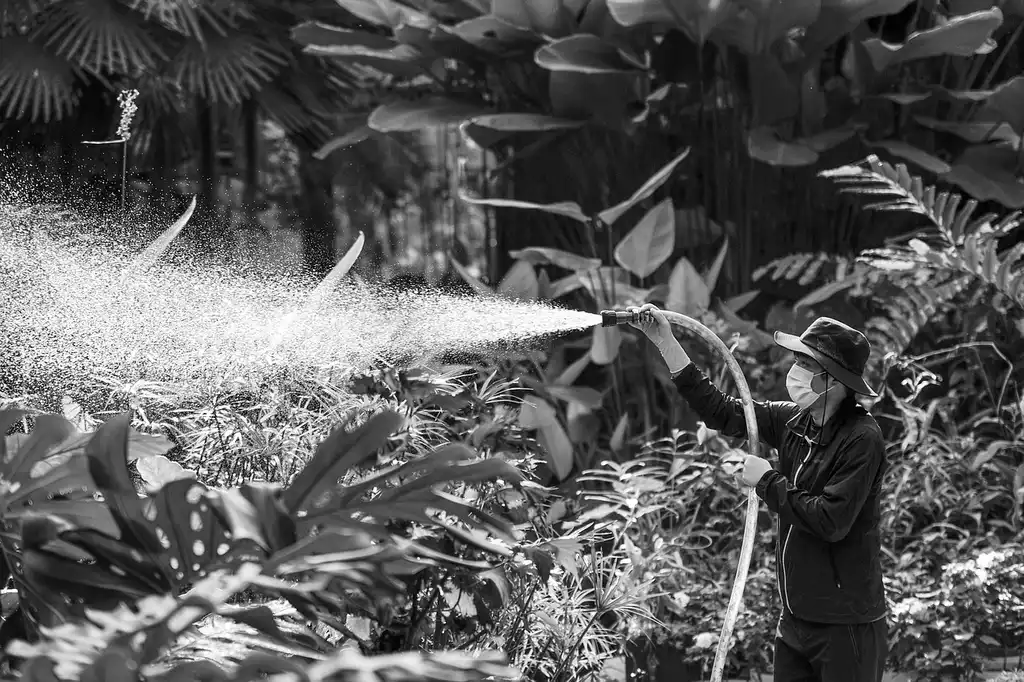
Switch from misting to a fine-rose watering can or bottom watering once sprouts are anchored and the surface no longer shifts under a light touch. As roots begin to take hold, seedlings need more steady moisture below the top skin of mix and less surface spray.
Move from misting to gentle top watering
- Check whether the root zone is holding the seedling steady.
- Use a watering can with a fine rose from low height for settled soil or larger seedlings.
- Add water slowly until the mix is damp through, then stop.
Use about 1/8 to 1/4 inch of water per pass on small containers, then recheck the weight and surface color before adding more. That keeps you from soaking the whole tray in one round.
Keep airflow up as coverings come off
- Remove a dome or plastic wrap as soon as the first seedlings break the surface.
- Prop the cover open briefly if humidity is still useful, but leave an opening for air.
- Increase fresh airflow around the tray so the surface dries slightly between waterings.
When the surface stays wet for too long and airflow is poor, damping-off risk rises. That is most likely in dense seedbeds under tight covers.
Seed watering decision table
| Seed size and sowing depth | Setup type | Safest watering method | Troubleshooting: washout, crusting, drying out |
|---|---|---|---|
| Very tiny, surface-sown seed | Tray or cell pack | Mister, then bottom watering once the mix is settled | Washout: shorten spray bursts. Crusting: use finer mist and steadier moisture. Drying out: check twice daily. |
| Small seed, covered with about 1/8 inch of mix | Pot or cell | Fine-rose watering can from low height, or bottom watering | Washout: water along container edge. Crusting: avoid heavy spray. Drying out: add water in two passes. |
| Larger seed, covered deeper than 1/4 inch | Tray, pot, or bed | Fine shower head or bottom watering after planting | Washout: keep flow soft. Crusting: keep the top layer evenly moist. Drying out: mulch lightly. |
| Direct-sown seed in a garden bed | In-ground row or drill | Fine shower, then a light mulch or seed blanket | Washout: water after the soil settles. Crusting: use vermiculite or straw. Drying out: water earlier in the day. |
Common mistakes
- Using a strong stream: it breaks the seedbed apart. Switch to a fine rose or mister.
- Letting the surface dry completely: the top can crust and trap emerging seedlings. Recheck before it gets pale and dusty.
- Leaving covers on too long: high humidity with little airflow can invite damping-off. Remove covers when germination starts.
- Overwatering dense seedbeds: soggy mix shuts out air and slows rooting. Water enough to keep it evenly moist, then stop.
Picture a tray of basil seed where the mix turns light brown on top by midday. A full soak is not the first fix. A few passes with a mister, or a short bottom-water session, keeps the surface stable without turning the tray into mud.
Frequently asked questions
How do you water newly planted seeds without washing them away?
Use the least force that still wets the seed zone: mist tiny surface-sown seed, bottom-water trays and pots, and use a fine rose for larger buried seed. Keep the flow low and the container close to the soil surface so the top layer does not move.
Should you water seeds before or after planting them?
Water the seed-starting mix before sowing so it is evenly damp through, then water again only as needed after planting. Dry mix often repels water at first, which can leave seed pockets unevenly wet and slow to germinate.
How often should newly planted seeds be watered?
Check daily, and often twice a day in warm or breezy conditions. Water whenever the top layer starts to lose its dark color but before it dries out completely. Tiny seed in shallow mix usually needs closer attention than larger seed in deeper cover.
What is the best way to keep seed soil moist without overwatering?
Use a humidity cover with airflow, then switch to bottom watering or brief misting instead of frequent heavy pours. The mix should feel damp, not saturated, and water should disappear into the surface within a short time rather than sit on top.
Can you water seeds with a watering can or spray bottle?
Yes, if the watering can has a rose or fine shower head and you keep it low. A spray bottle works well for tiny or surface-sown seeds, but it is best for light top-ups. Neither should replace bottom watering for larger tray setups.
When can you switch from misting to normal watering?
Switch once seedlings emerge and the roots begin to hold them in place. At that point, use a fine-rose watering can or bottom watering instead of mist alone. If the surface still shifts, keep the gentler method for a few more days.