How to Plant Seeds in Sandy Soil Without Losing Moisture
Mix the seed row with a 1 to 2 inch layer of fine compost or screened topsoil, sow shallowly, then water with a fine spray often enough to keep the top half-inch evenly damp. Without that buffer, sandy beds dry fast and seeds can crust over, wash deeper, or fail to germinate. This guide covers how to build that temporary moisture buffer and water it correctly until seedlings are up.
What you’ll need


- Compost, aged manure, bark, or peat moss for moisture retention
- Phosphorus-rich fertilizer for planting time
- Seed packet or grower instructions for sowing depth and spacing
- Fine mulch, such as screened compost or a very light straw layer
- Hand watering can with a rose, hose nozzle on a gentle spray, or a low-output sprinkler
- Rake or hand trowel
- Sieve or screen for removing stones and debris
- Clean water source for frequent light irrigation
How should you prepare sandy soil before sowing?
Add organic material before sowing. Sandy soil has more than 50% sand, so water drains through it fast and the surface dries quickly; mixing in organic matter helps the bed hold moisture and adds nutrients. If the bed is very lean or dries within hours, amend first instead of sowing straight into bare sand.
Build the seedbed moisture buffer
- Remove stones, roots, and debris from the planting strip.
- Spread 2 inches of organic material over the top 6 inches of soil.
- Mix that amendment through the top 6 inches before sowing seed.
- Blend in a phosphorus-rich fertilizer at planting, working it into the top sandy soil and compost.
- Rake the surface level, then lightly firm it so it is settled, not packed.
Compost, aged manure, bark, or peat moss can all help sandy beds hold water longer. They belong in the seedbed, not on top, so work them into the planting depth. Picture a 3-by-5-foot bed that turns powdery by midday after watering; that bed needs amendment first, not more sprinkles.
When direct sowing is reasonable
Direct sowing makes sense when the sand already has some organic matter, the bed stays damp for at least part of the day, and the seed type is suited to drier conditions. Deep-rooted drought-tolerant plants usually cope better than thin-rooted, moisture-hungry types. If the soil blows loose in your hand and turns pale and powdery between waterings, amend first.
How deep should seeds go in sandy soil?
Follow the grower’s instructions for sowing depth, then keep the seed in firm contact with damp soil. Tiny seeds usually stay near the surface, while larger seeds can go a bit deeper. In loose sand, the main mistake is burying seed too far down or leaving it loose enough to dry out at the contact point.
Set depth by seed size
- Check the packet for the sowing depth before you open the seed.
- For tiny seeds, press them into the surface or cover with only a light dusting of fine material if the packet allows it.
- For larger seeds, plant to the listed depth and cover with loose, fine soil.
- Firm the row lightly with your fingers or the flat of a trowel.
- Use a fine spray until the top layer is evenly damp, not puddled.
Suppose a row of lettuce seed dries out because the top quarter-inch is loose and fluffy. A light pressing after sowing keeps the seed from sitting in dry pockets, while a hard blast of water can push it deeper and leave gaps in the row.
First 14 days moisture plan
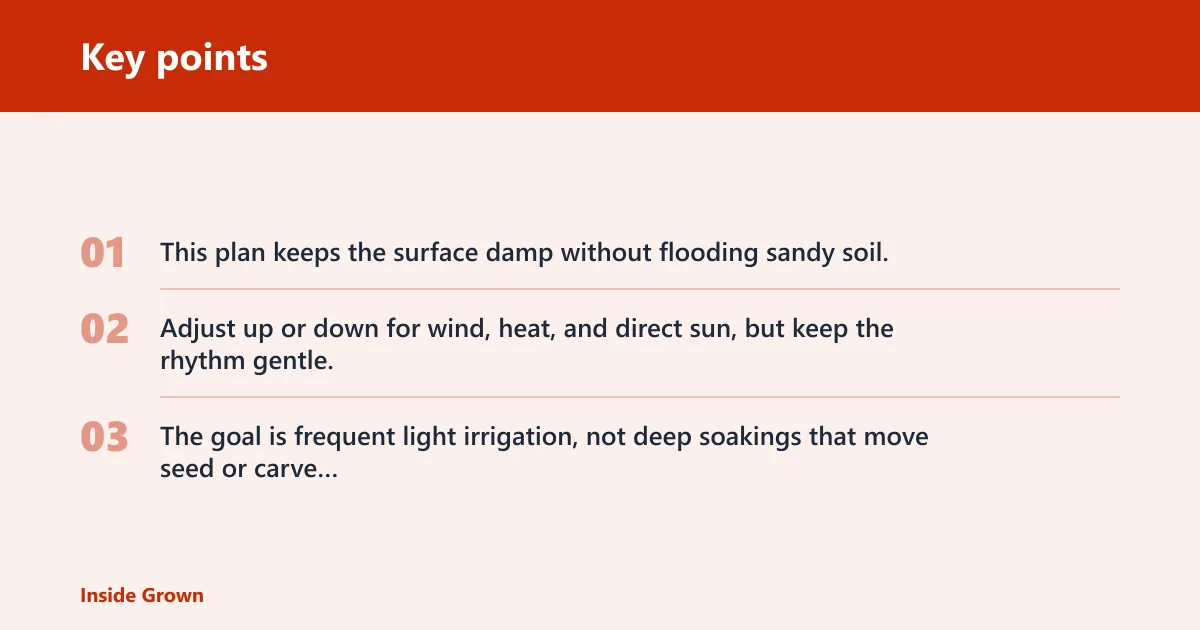
This plan keeps the surface damp without flooding sandy soil. Adjust up or down for wind, heat, and direct sun, but keep the rhythm gentle. The goal is frequent light irrigation, not deep soakings that move seed or carve channels in loose sand.
| Day | Watering frequency | Target soil feel | Amendment trigger | Failure signs to watch |
|---|---|---|---|---|
| 0 | Water once after sowing | Top half-inch evenly damp | Add amendment next time if water vanishes in minutes | Seed washout, exposed seed, runoff channels |
| 1 | Check morning and late afternoon; water if the surface lightens | Cool, damp, never crusted | Amend if the bed dries by midday | Pale surface, powdery texture, loose seed |
| 2 | Light spray once or twice as needed | Even dampness through the top layer | Top-dress only if seed is already covered and not tiny | Crusting, patchy damp spots |
| 3 | Water before the surface dries fully | Slightly dark, not soggy | Mix more organic material into the next bed section if this one dries fast again | Seed drifting downhill, surface cracking |
| 4 | One to two light waterings | Damp to fingertip depth | Use finer mulch only if sprouts are not yet visible | Seed still visible, washed-out rows |
| 5 | Water once, then recheck within hours in hot weather | Uniformly moist | Increase amendment next sowing if the bed feels dry after a single warm afternoon | Patchy germination begins |
| 6 | Light irrigation as the top surface starts to pale | Springy, damp surface | Top-dress only after seedlings are up and strong enough | Crust forming after watering |
| 7 | Check morning, water if the top half-inch has dried | Moist but airy | Amend the next row if this one still dries too quickly | Thin stand, uneven sprouting |
| 8 | One light watering, more if wind is strong | Consistent dampness | Use more organic material in the next section if sand still feels loose | Exposed seed, bird pecking, dry streaks |
| 9 | Water before sunset if the bed is drying faster than expected | Even moisture, no runoff | Raise organic matter rate on the next bed if needed | Surface turns pale and dusty |
| 10 | Light spray once; twice in heat | Damp at the surface, not saturated | Keep using fine mulch only if seedlings are not smothered | Seedling lean, crust, washout |
| 11 | Check twice; water only when the top begins to lighten | Moist, not glossy | Amend larger bare stretches before the next sowing | Patchy germination persists |
| 12 | One light watering | Firm enough to hold seed, soft enough for sprouts | None if moisture is holding | Cracking or drying around rows |
| 13 | Maintain the same light rhythm | Evenly damp through the top layer | Prepare a better-amended bed for the next sowing if needed | Seedlings stall, row gaps widen |
| 14 | Shift toward the grower’s establishment schedule if sprouts are up | Moist for roots, not wet on top | Stop adding surface amendments once plants are established | Dry rings, weak stand, washout from heavy watering |
How often should you water seeds in sandy soil?
Water often enough to stop the surface from drying out, but keep each pass light. Sandy soil needs a frequent light-irrigation rhythm because water moves downward fast. A common target is for the top half-inch to stay evenly damp. Heavy watering is a problem because it can bury seed, create runoff, and leave crusts after the surface dries.
Keep the watering gentle
- Use a fine spray, not a hard jet.
- Water long enough to moisten the working depth, then stop before runoff starts.
- Check the surface again later the same day in sun, wind, or warm weather.
- Add another light pass if the top layer turns pale or powdery.
- If seedlings emerge, continue the same gentle rhythm until roots are established.
A common first-timer mistake is soaking the row until water cuts small channels through the sand. That can move seed deeper in one spot and leave another spot dry. A finer spray and shorter pass usually work better than one heavy soaking.
Common mistakes
Sandy seedbeds fail for a few repeatable reasons: the surface dries too fast, seed gets moved, or the bed is left too bare. The fixes are simple, but they need to happen in the right order. If the soil is very lean, amend first; if the seed is tiny, keep it near the surface; if the row dries out, water lightly and more often.
What goes wrong and how to avoid it
- Watering hard enough to move seed: switch to a fine spray and shorter watering passes.
- Leaving the surface bare: use a light mulch only after sowing, and keep it fine enough not to smother very small seed.
- Skipping amendments in very dry sand: mix in 2 inches of organic material into the top 6 inches before sowing.
- Using mulch that is too coarse or too thick: keep it light so air and moisture still reach the seed row.
- Ignoring crusting or washout: reseed the bare spots after gently reworking the surface.
Picture a bean row in a hot, exposed bed after a windy afternoon. If the top layer looks pale and seed shows at the surface, the next step is not a heavier soak. First, settle the row with a light spray, then add a thin mulch only where the seed is covered well enough to stay in place.
Frequently asked questions
How do you keep seed rows moist in sandy soil?
Mix in organic material before sowing, then use frequent light irrigation for the first two weeks. Aim to keep the top half-inch evenly damp. A fine spray works better than a strong stream because it holds the seed in place and reduces crusting, washout, and dry pockets along the row.
Should you mix compost into sandy soil before planting seeds?
Yes, especially when the bed dries fast or feels very lean. Compost is one of the listed organic materials that helps sandy soil retain moisture and add nutrients. Work about 2 inches into the top 6 inches before sowing, rather than leaving it on the surface where it cannot buffer the seed row well.
What mulch works best to stop sandy soil from drying out?
Use a fine, light mulch that does not smother small seed. Screened compost or a very thin layer of a fine organic mulch is safer than coarse chunks. Apply it lightly after sowing, and keep it shallow enough that seedlings can still break through without becoming trapped under the cover.
Can you plant seeds directly in sandy soil without amending it first?
Sometimes, but only if the bed already holds moisture well enough for the seed type. Direct sowing is more reasonable for drought-tolerant or deep-rooted plants than for tiny, moisture-sensitive seeds. If the soil dries within hours, or if the surface turns powdery between waterings, amend first.
Which seeds handle sandy soil better than others?
Deep-rooted drought-tolerant plants usually cope better in sandy beds than shallow-rooted, moisture-demanding seeds. For vegetables, herbs, or flowers, choose types that are known to handle drier conditions and then still give them a buffered seedbed. Seed packet guidance matters here because sowing depth and moisture needs vary by seed.
Do you need fertilizer when planting seeds in sandy soil?
A phosphorus-rich fertilizer can help at planting when it is worked into the top sandy soil and compost. It supports establishment, especially in a bed that has been amended for moisture retention. Keep the application at planting time and follow the package directions so the seed row is fed without being overtreated.