How to Improve Sandy Soil for Better Water Retention
Work a few inches of finished compost into the top layer, then keep a couple of inches of mulch on top; in very sandy beds, add charged biochar if you use it, and you may notice better moisture retention this season and more next year. Skip this, and water moves through fast, roots stay near the top, and fertilizer money washes away before plants can use it. This guide shows which amendment stack fits your bed, how much improvement to expect, and when each change should start paying off.
What you’ll need
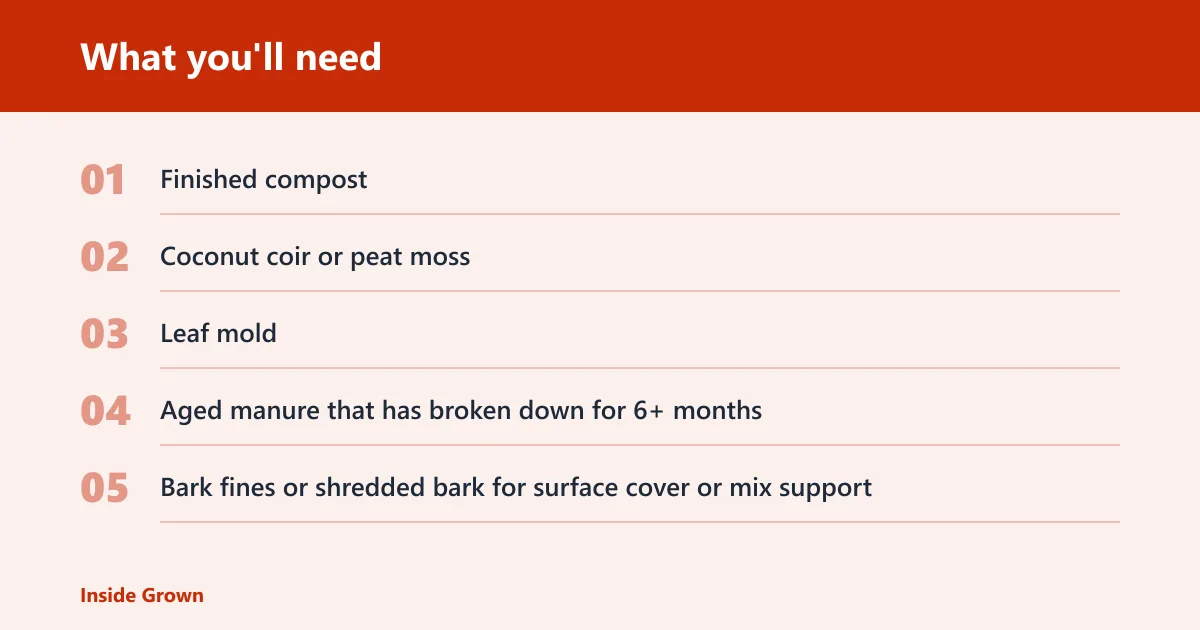


- Finished compost
- Coconut coir or peat moss
- Leaf mold
- Aged manure that has broken down for 6+ months
- Bark fines or shredded bark for surface cover or mix support
- Phosphorus-rich fertilizer for new planting
- Balanced dry fertilizer for new turf
- Shovel, wheelbarrow, measuring tape, and a bucket
According to gardeningknowhow.com — Sandy soil is considered soil made up of over 50% sand.
How do you improve sandy soil for better water retention?
Put organic matter into the root zone, not only on top. Sandy soil has over 50% sand, so it drains fast and holds fewer nutrients than finer ground. The quickest practical fix is compost, then coir, leaf mold, or aged manure based on budget, climate, and what you are planting.
- Measure the bed and mark the area to fix.
- Choose the amendment stack that matches the problem.
- Work materials into the top 6 inches of soil.
- Water deeply, then mulch to slow drying.
- Recheck moisture after a week and adjust the mix next season.
Why does water drain so fast in sandy soil?
Sandy particles leave large pore spaces, so water moves through quickly instead of hanging around for roots. That same structure also lets nutrients leach out fast. A squeeze test usually gives the clue: sandy soil falls apart right away instead of holding even a weak shape.
What you’ll need
- A tape measure for bed size
- A spade for a squeeze test and digging
- A bucket for mixing small batches
- Finished compost as the main amendment
- Coir, leaf mold, peat moss, or aged manure for targeted correction
- Mulch for the surface layer
How do you choose the right amendment for your bed?
Choose by the problem in front of you, not by habit. Fast drainage calls for compost plus coir or peat moss. Low organic matter calls for compost and leaf mold. Tight budgets point to homemade leaf mold. Sustainability concerns point away from peat. Shrubs want a steadier mix; annual beds can take a faster soil rebuild.
Step 1: Test the bed and map the problem spots
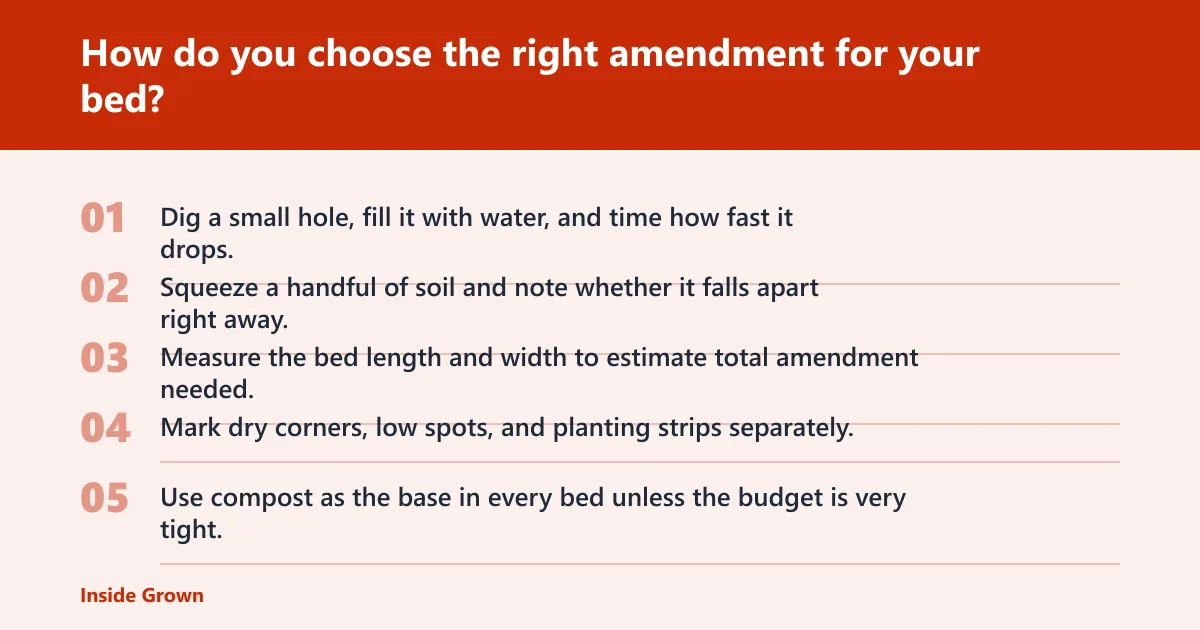
- Dig a small hole, fill it with water, and time how fast it drops.
- Squeeze a handful of soil and note whether it falls apart right away.
- Measure the bed length and width to estimate total amendment needed.
- Mark dry corners, low spots, and planting strips separately.
Step 2: Pick the amendment stack and amount
- Use compost as the base in every bed unless the budget is very tight.
- Add coir or peat moss when moisture retention is the main goal.
- Blend in leaf mold when the bed needs a low-cost organic boost.
- Use aged manure only after it has aged for several months.
- Work everything into the top 6 inches, not deeper.
What is the best amendment for sandy soil?
Compost is the best all-purpose amendment for sandy soil. It improves water retention, feeds soil biology, and is the safest default for most beds. For a plain annual program, apply 2 to 4 inches of compost each year, then mix it through the top 6 inches so roots can use it.
Best all-purpose mix
Use compost as the main ingredient, then add a smaller share of leaf mold or coir if the bed dries very fast. That mix fits flowers, shrubs, and mixed borders better than a one-material fix. If the bed is new, keep the ratio simple and repeat it next season instead of overloading the first pass.
Best budget mix
Leaf mold is the cheapest practical path if the garden already has leaves. It can change water retention a lot and is easy to make at home. Shred leaves, pile them, and let them break down fully before mixing. Bark can help structure, but it should support the blend, not stand alone as the fix.
Best low-peat mix
Coconut coir is the cleaner choice when sustainability matters. It improves moisture retention and behaves well in sandy beds that shed water fast. Peat moss also raises water-holding capacity, but it carries a sustainability caveat, so it makes more sense when local supply, budget, or existing stock favors it.
How much compost should I add to sandy soil?
A practical starting point is 2 inches of organic material worked into the top 6 inches of soil. For ongoing care, apply 2 to 4 inches of compost annually. That amount usually changes the bed enough to notice without smothering roots or creating a muddy, unstable layer near the surface.
Estimate by bed size
- Multiply length by width to get square feet.
- Use a consistent depth, usually 2 inches for a first pass.
- Spread the material evenly before mixing it in.
- For a second-year top-up, repeat at the lighter end of the range.
| Bed size | 2-inch application | 3-inch application | Best use |
|---|---|---|---|
| 50 sq ft | about 0.31 cubic yards | about 0.46 cubic yards | Small flower bed |
| 100 sq ft | about 0.62 cubic yards | about 0.93 cubic yards | Mixed border |
| 200 sq ft | about 1.23 cubic yards | about 1.85 cubic yards | Large bed or strip |
Should I add peat moss or coco coir to sandy soil?
Add coir when you want moisture retention with a lighter sustainability footprint. Use peat moss when it is easier to source and the tradeoff is acceptable. Both help sandy soil hold water, but neither should replace compost. They work best as part of a mix, not as the whole fix.
Step 3: Work amendments into the top 6 inches
- Spread compost first, then layer coir, leaf mold, or aged manure on top.
- Blend the material through the top 6 inches with a shovel or fork.
- Do not bury fresh organic matter deep; it breaks down poorly there.
- Keep bark near the surface or use fine bark only as a mix component.
Can I turn sandy soil into loam?
Not right away, and usually not fully. True loam depends on a balanced mix of sand, silt, and clay, with ideal turf soil makeup often described as 70% sand, 15% clay and 15% silt. You can move sandy ground toward loam-like behavior over time, but the better goal is steadier moisture and nutrient retention.
The amendment decision table
| Problem | Recommended fix | Mix depth | When to expect change |
|---|---|---|---|
| Fast drainage | Compost + coconut coir | Top 6 inches | Same season |
| Nutrient loss | Compost + leaf mold | Top 6 inches | 1 to 2 months |
| Low organic matter | Compost + aged manure | Top 6 inches | Next growing season |
| Budget limits | Leaf mold + bark fines | Top 6 inches | Same to next season |
| Sustainability concerns | Compost + coconut coir | Top 6 inches | Same season |
| Flower beds | Compost + leaf mold | Top 6 inches | Same season |
| Shrubs | Compost + coir, lighter rate | Top 4 to 6 inches around root zone | 1 growing season |
| Turf | Fine compost topdressing plus overseeding | Thin layer across surface | Several weeks to months |
How often should I fertilize sandy soil?
Sandy soil usually needs more frequent feeding because nutrients move through it quickly. New turf should get a balanced dry fertilizer once a month, with an extra nitrogen feeding between regular feedings. Before sowing in amended sandy soil, use a phosphorus-rich fertilizer to support establishment.
Step 4: Water, mulch, and feed for the first season
- Water deeply after amendment so the mix settles around roots.
- Mulch with about 2 inches to reduce surface drying.
- For seed, keep the soil evenly moist until germination.
- For new turf, feed monthly with a balanced dry fertilizer.
- Add the extra nitrogen feeding if growth stalls between feedings.
Before-and-after check method
After the first watering, dig a small test hole the next day and feel how far moisture holds. Repeat after a week, then again after the next rain or irrigation cycle. If the top layer stays damp longer and the bed needs less frequent watering, the amendment mix is doing its job.
What should I avoid mixing into sandy soil?
Avoid fresh manure, large layers of amendment left only on top, and the idea that a sand-clay blend will fix everything at once. Fresh manure can burn plants. Surface-only additions help mulch, not soil structure. Heavy clay dumped into sand can create uneven zones that drain badly in one layer and seal in another.
Common mistakes
- Using fresh manure instead of aged manure.
- Skipping the top 6 inches and only topdressing.
- Guessing at amount instead of measuring bed size.
- Using the same mix for turf, shrubs, and annual beds.
- Confusing bark mulch with a true soil amendment.
If that didn’t work, try this next
- Add more compost next season at the annual rate.
- Blend in coir if water still moves through too fast.
- Use leaf mold in areas that need cheaper organic matter.
- For turf, topdress lightly and keep to the monthly feeding plan.
Frequently asked questions
How do I improve sandy soil for better water retention?
Work 2 to 3 inches of finished compost into the top 6 inches, then mulch the surface. If the bed still dries quickly, add coconut coir or leaf mold in the next round. Expect better moisture holding the same season, with stronger results after repeated annual additions.
What is the best amendment for sandy soil?
Compost is the best all-purpose choice because it improves water retention and feeds soil biology. For extra moisture holding, pair it with coir or leaf mold. If the goal is long-term bed improvement, repeat the compost addition each year instead of treating it as a one-time fix.
How much compost should I add to sandy soil?
Use 2 to 4 inches annually, and work it into the top 6 inches of soil. For a first pass, 2 inches is a solid target for most beds. Larger beds need the amount scaled to square footage, so measure before ordering or hauling material.
Should I add peat moss or coco coir to sandy soil?
Use coconut coir if sustainability matters more to you. Use peat moss if supply, texture, or cost makes it the easier choice. Both improve water-holding capacity, but neither should replace compost. In most beds, compost plus coir is the better long-term combination.
Can I turn sandy soil into loam?
Not quickly, and not usually fully. Sandy soil can move toward loam-like behavior with repeated organic additions, but true loam depends on a broader mineral balance. Aim for better retention, better feeding, and steadier root growth rather than chasing a total texture change in one season.
How often should I fertilize sandy soil?
Feed more often than you would in heavier soil because nutrients leach out faster. New turf should get a balanced dry fertilizer once a month, plus an extra nitrogen feeding between regular applications. Before sowing, use a phosphorus-rich fertilizer to support establishment in amended ground.
What should I avoid mixing into sandy soil?
Avoid fresh manure, deep piles of unblended organic matter, and random sand-clay recipes meant to force loam overnight. Do not treat mulch as a soil amendment. Use measured additions in the top 6 inches instead, then repeat the process over time if the bed still dries too fast.