How to Avoid Poor Drainage When Landscaping a Yard
Before you add beds, sod, patios, or grading, check whether water is pooling, moving toward the house, or staying put for more than 24 hours after rain; that is the drainage failure mode you need to fix first. If you skip that step, you can trap water under new surfaces, kill turf and plants, and pay twice to tear out and redo the work. This guide shows how to spot the cause, test the yard, and match the fix to the problem before you install anything new.
What you’ll need
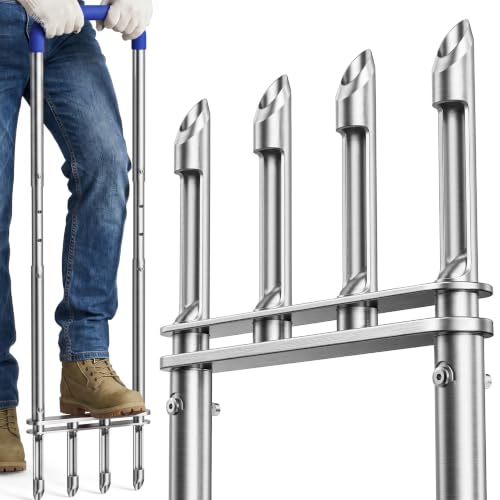
- Adjustable height for comfortable use
- Dual foot platform for balanced pressure
- Four hollow tines pull soil cores
- A shovel or trowel
- A flat board or long level
- Measuring tape
- Garden hose
- Timer or phone stopwatch
- Flags, stakes, or paint markers
- Topsoil and compost
- Rake
- Aerator or core aeration service if soil is compacted
- Gutter scoop and hose for cleaning downspouts
How to test your yard drainage
Start with a simple after-rain check, then confirm whether the problem is surface pooling or slow infiltration. If water sits in one place, follows a slope toward the house, or lingers after a light to moderate rain, you are looking at a drainage problem that needs the right fix, not just more plants or mulch.
After-rain checks
- Walk the yard. Mark any standing water, soggy turf, overflowing downspouts, and spots where runoff changes direction. Note whether the wet area is near the house, at a low point, or across a wider section of lawn.
- Wait and recheck. Look again after 24 hours and then again at 72 hours. If water still stands after about 3 days, compaction is likely a problem.
- Watch the source. Check whether the water starts at the roof edge, flows off a patio, or appears only where the ground is low. Roof runoff points to gutters and downspouts; water that appears across open soil points more to grading or infiltration.
Quick infiltration test
- Dig a test hole. Make a hole about 6 inches wide and 6 to 8 inches deep in the wet area. Fill it with water and let it drain once so the soil is saturated.
- Refill and time it. Fill the hole again and watch how fast the water level drops. Slow drop in dense or clay soil points to infiltration trouble, not only surface slope.
- Compare nearby spots. Test one wet area and one better-drained area. A sharp difference usually means a local low spot, compacted soil, or a grading issue rather than a yard-wide soil problem.
Drainage triage checklist
Use this table before you choose a fix. Match the symptom to the likely cause, try the first fix, and escalate only if the water keeps coming back. This keeps you from installing the wrong feature and burying the real problem under new work.
| Symptom | Likely cause | Quick test | DIY fix | Pro-level fix | Red flags for foundation risk |
|---|---|---|---|---|---|
| Water pools next to the house after rain | Bad grading or downspout discharge | Watch whether runoff moves toward the wall | Extend downspouts about 10 feet away and regrade soil away from the foundation | Site grading with drainage design | Pooling against the foundation, damp basement walls, or recurring seepage |
| Soggy soil in one low patch | Low spot | See whether water collects in the same place every storm | Build up with topsoil and compost, then smooth and recheck after rain | Repeated fill and regrading | Low spot sits beside the house or garage slab |
| Turf stays wet across a broad area | Compacted soil | Water stands after 3 days or the soil feels hard and dense | Aeration and compost | Soil replacement, deeper drainage, or subgrade correction | Water never infiltrates near the foundation line |
| Runoff rushes off the roof edge | Clogged gutters or short downspouts | Check gutters after a storm | Clean gutters and add extensions | Buried piping to a better outlet | Overflowing eaves near basement windows or vents |
| Water remains after light rain, not just storms | Clay soil or broader drainage failure | Soil drains much slower than nearby areas | Aeration plus compost; reroute roof runoff | Swale, French drain, or catch basin | Water persists near walls, sidewalks, or steps |
| Repeated flooding at the same low point | Severe site drainage problem | Water comes back after several fixes | Temporary pumping and extension of discharge away from the area | Catch basin with underground piping or pump | Water reaches the foundation, crawl space, or basement |
What fix matches the problem?
The right fix depends on the failure mode. Grading helps when water moves toward structures. Downspout extensions help when the roof is the source. Aeration and compost help slow infiltration in compacted or clay soil. A swale, French drain, rain garden, or catch basin fits persistent runoff or recurring low-point flooding.
Grading and low spots
- Check slope first. Use a level or board to see whether the ground falls away from the house. A common regrading target is a 6-inch drop over the first 10 feet.
- Fill shallow lows. Add topsoil mixed with compost to depressions that collect water. Compact lightly, rake smooth, and retest after rain.
- Escalate repeated sinks. If the same low spot keeps settling, plan for repeated fill and a full regrade instead of one patch.
Gutters and downspout extensions
- Clean the gutters. Clear debris at least twice a year and after major storms.
- Send water farther out. Add extensions so roof runoff lands about 10 feet away from the foundation.
- Direct the outlet wisely. Feed the extension to a swale or rain garden if the site can carry that extra water without sending it to a neighbor or a low wall.
Soil compaction and clay soil
- Aerate the compacted area. Use core aeration where foot traffic, cars, or construction have packed the soil.
- Work in compost. Topdress with compost after aeration so openings stay useful and infiltration improves.
- Limit the expectation. Clay soil is denser than sandy or loamy soil and slower to filter rainwater, so compost helps, but severe standing water usually needs more than soil amendment alone.
Persistent standing water and catch basins
- Choose a collection point. Use a catch basin where water repeatedly gathers in the same low area and surface fixes have failed.
- Route it downhill. A drainage pipe should slope downhill at least 1/8 in. p so collected water keeps moving.
- Escalate if needed. Add a pump or underground piping when the basin must move water farther than gravity can handle.
Drainage fixes that work
Some drainage features move water away; others store it briefly and release it slowly. Match the feature to the source and the space you have. A swale works for shallow runoff. A rain garden works where you want to catch roof water and use plants that tolerate wet feet. A French drain works for persistent standing water below the surface.
Site grading
Use grading when the yard slopes toward the house or leaves a pocket that traps water. It changes the ground surface so runoff moves away from foundations instead of sitting beside them.
Say your back patio drops water toward a basement wall after every storm. Regrading the first 10 feet can solve the problem if the slope is the real issue; adding plants alone will not fix water moving the wrong way.
Swales and rain gardens
A swale is a shallow, wide drainage channel that moves water slowly and should not hold it. Swales often carry downspout water into the yard or a rain garden, which uses water-loving plants in a low area designed to catch runoff.
Build them only where the outlet is lower and the water can keep moving. A swale that stays wet too long is not doing its job. That usually means it needs a better outlet, a different shape, or a different fix entirely.
French drains and catch basins
A French drain is a gravel-filled trench with a perforated pipe. It fits persistent standing water or subsurface water that keeps reappearing after rain. A catch basin fits severe, recurring flooding at a low point and often works best with underground piping or a pump.
Suppose a side yard stays muddy even when the downspouts are already extended. That points to subsurface drainage, not roof runoff. In that case, a French drain or catch basin is more appropriate than another surface bed.
Common mistakes
Many drainage jobs fail because the fix treats the symptom, not the source. Covering wet soil with mulch, planting into a low spot, or sending downspout water a few feet downhill can simply move the problem somewhere else.
- Do not add new beds before checking slope and runoff paths.
- Do not rely on mulch or extra soil to solve standing water.
- Do not use a swale if it cannot drain onward.
- Do not assume compacted soil is a grading problem, or the reverse.
- Do not stop after extending a downspout if the discharge lands in another low area.
When should you call a pro?
Call a pro when water keeps returning after the first fix, when flooding is severe, or when the wet area sits near the foundation. Those are signs the problem may involve grading, subsurface flow, or a larger outlet issue that needs design and equipment beyond a basic DIY repair.
Foundation risk signs
Look for standing water beside the house, damp basement walls, water in a crawl space, or runoff aimed at window wells and steps. Those patterns deserve prompt attention because the drainage problem is no longer just a lawn issue.
Recurring flooding after multiple fixes
If you have already cleaned gutters, extended downspouts, and corrected a low spot, but the same area still floods, a deeper system may be needed. That is where a French drain, catch basin, or full regrading plan usually enters the picture.
Frequently asked questions
How do I test whether my yard drains well?
Watch the yard after rain, then check again after 24 hours and 72 hours. Dig a small test hole, fill it with water, and see how fast it drains. If water still stands after 3 days, compaction is likely part of the problem.
Should I use grading, a French drain, or a rain garden?
Use grading when water moves toward the house or sits in a shallow dip. Use a French drain for persistent standing water or subsurface water. Use a rain garden when you have a place to receive runoff and want a planted basin that handles roof water or similar flow.
How far should downspouts discharge from the house?
Downspout extensions should carry water about 10 feet away from the foundation. If the yard slopes back toward the house or into another low spot, send the discharge farther or route it into a swale, rain garden, or underground piping that reaches a safe outlet.
What causes poor drainage in a landscaped yard
Common causes include grading errors, compacted soil, clay soil, clogged gutters, and low spots. New beds, edging, or patios can also trap water when they interrupt the original flow path and leave no clear outlet for runoff.
When does poor drainage require a professional?
Get help when water keeps returning after basic fixes, when flooding is severe, or when the problem sits near the foundation. Recurring standing water after light to moderate rainfall, damp walls, or repeated basement seepage call for a drainage plan beyond surface adjustments.