How to Create a Drainage Mound for Wet Soil
Create a drainage mound by raising the planting area about 8 to 12 inches above grade with a broad base, then blend the native soil with compost and plant on the crown. If you bury a plant into wet soil instead, roots can stay starved of oxygen, rot, and fail after the first heavy rain. This guide shows when mound planting is safer than buried drainage, how to size and build the mound, and how to plant it correctly.
What you’ll need

- Shovel and spade
- Garden rake
- Measuring tape
- Stakes and string
- Wheelbarrow or tarp for soil mixing
- Soil probe or digging bar for checking hardpan
- Bucket or hose for the drainage test
- Coarse gravel for a drainage layer where a trench is used
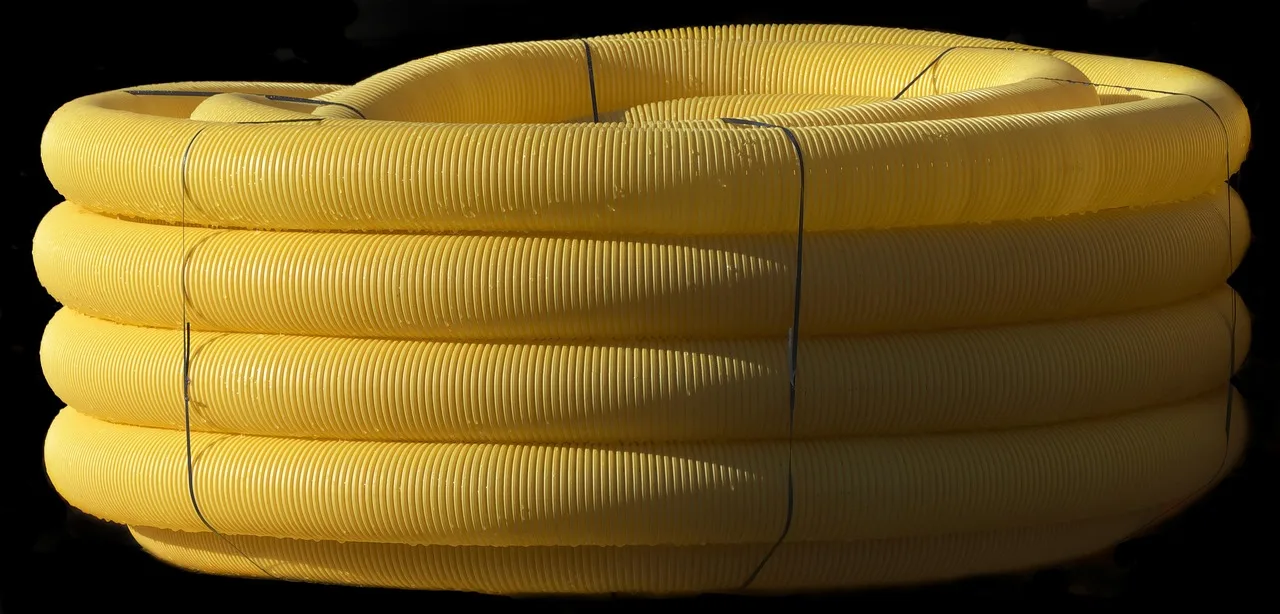
- Perforated drain pipe if you are building a French drain to an outlet
- Permeable membrane for trench drainage
- Compost or other free-draining organic matter for blending with native soil
- Mulch
- Low shrubs, perennials, or groundcovers suited to wet soil
How do you know you need a mound?
Start with a drainage test before you move soil. Dig a hole 30-60cm deep, fill it with water, and time how long it takes to drain. If water remains for hours or days, the soil may need drainage. That result matters because compacted soil, clay, and a hardpan layer need different fixes.
Separate compaction from natural wetness
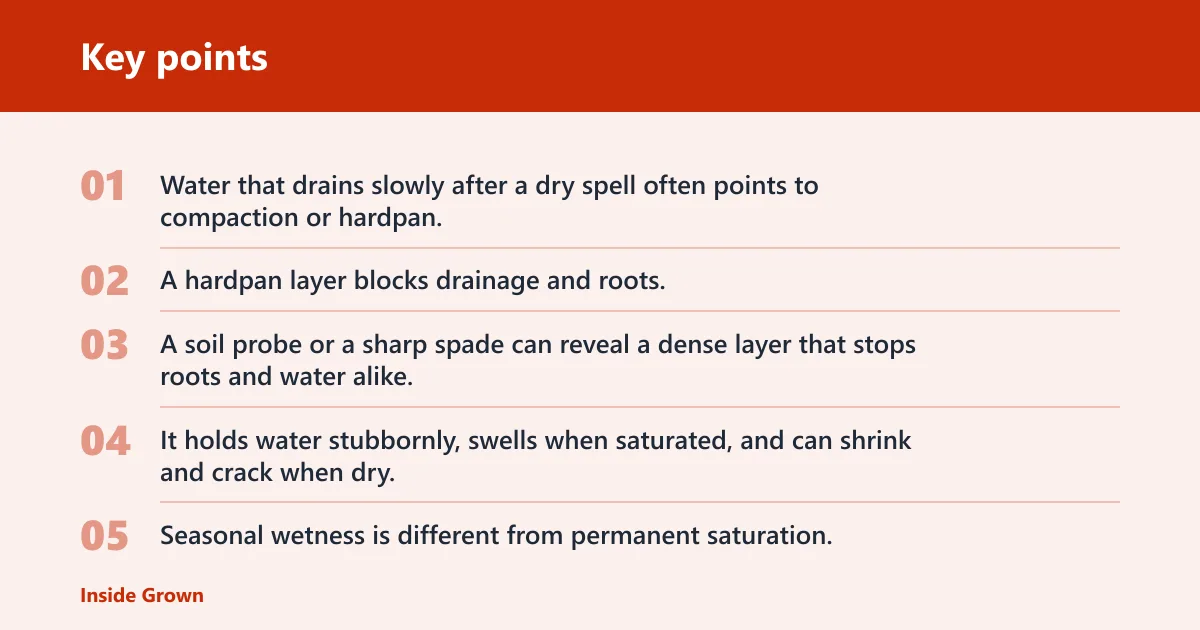
Water that drains slowly after a dry spell often points to compaction or hardpan. A hardpan layer blocks drainage and roots, and it often shows up in developed sites where machinery or fill has compressed the subsoil. A soil probe or a sharp spade can reveal a dense layer that stops roots and water alike.
Clay soil is another common cause. It holds water stubbornly, swells when saturated, and can shrink and crack when dry. Seasonal wetness is different from permanent saturation. If the site only stays wet after long rain or snowmelt, a mound may be enough. If the ground stays wet all year, you need an outfall or a different planting plan.
Watch for ponding and plant symptoms
Water sitting after rain, yellowing leaves, and weak growth near the crown are common signs that roots are short on oxygen. Say your front border sits in a shallow dip and puddles for two days after a storm. That is not only a planting problem; it is a drainage problem that will keep punishing roots unless the site has a place to send water.
Where should the water go?
A drainage mound needs a defined place for water to go before you build it. That place may be a ditch, stream, soakaway, dry well, or daylight outlet. Without an outlet, water can only move sideways or collect under the mound. Check local rules before you discharge to a sewer or storm drain, because local byelaws may restrict that.
Identify the outlet before any digging
If you are planning a French drain, the trench still needs a fall toward the outlet. Drainage trenches should fall toward the outlet at 1:40, and small-scale drainage pipes are usually laid 40-60cm deep. Drainage pipes are typically buried about 45cm deep, and feeder drains are commonly spaced 3-6m apart.
Open ditches may be dug about 90cm deep when a site can handle surface conveyance. French ditches use coarse gravel and permeable membranes. Piped drainage uses perforated plastic pipe on a gravel bed. That setup can work well, but it is skilled and heavy work, so a raised bed or mound can be the safer choice where the outlet is limited.
Which mound setup fits your site?
| Site condition | Mound height | Base width | Drainage layer | Choose French drain or raised bed instead when |
|---|---|---|---|---|
| Clay soil | 8-12 inches | At least 3 times the crown width | Compost blended through the mound; gravel only if a trench is also installed | Choose a French drain if you can send water to an outlet; choose a raised bed if the site stays wet and low |
| Seasonal wetness | 6-10 inches | 2.5-3 times the plant spread | Free-draining amended soil over native soil | Choose mound planting when water drains away after storms and the issue is temporary |
| High water table | 12 inches or more, with a broad crown | At least 4 times the crown width | Raised planting mix only; no buried trench if the water table is close to the surface | Choose a raised bed when subsoil stays saturated and there is no lower outlet |
| Roof runoff | 8-12 inches | Wide enough to catch redirected flow without erosion | Amended soil plus surface mulch; add a drain only if runoff can reach an outlet | Choose a French drain if downspout water can be carried to daylight, a ditch, or soakaway |
| No outlet | 8-12 inches for planting only | Broad, gently sloped sides | Free-draining planting mix; avoid buried drainage that cannot discharge | Choose a raised bed instead, because there is nowhere for surplus water to go |
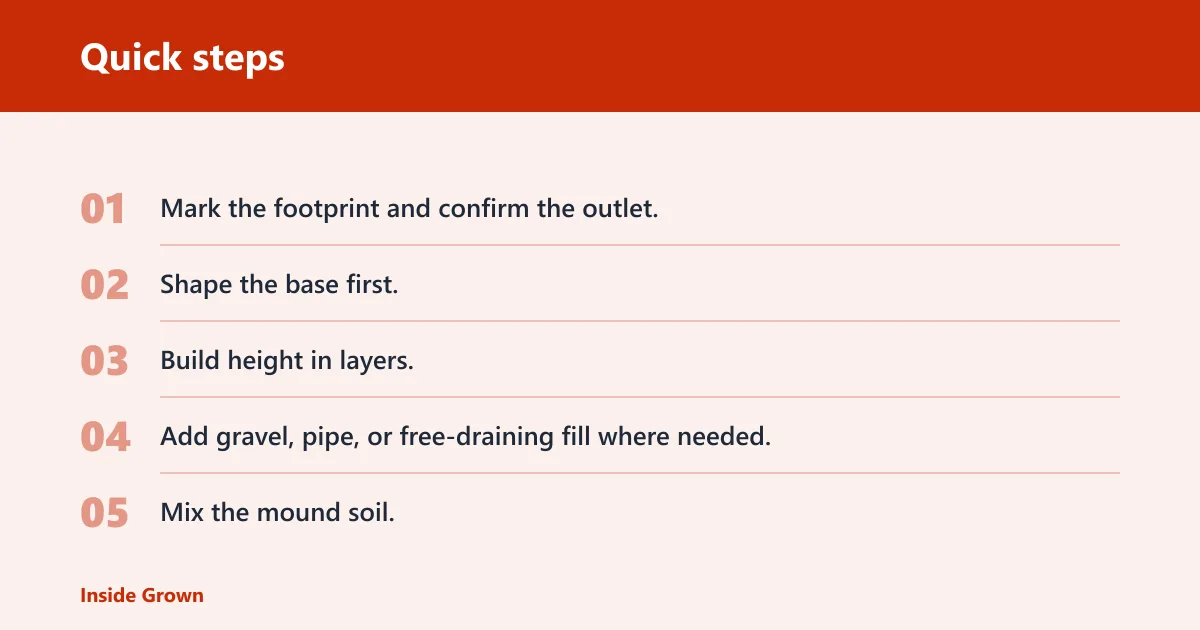
- Mark the footprint and confirm the outlet. Sketch the high and low side, then mark a broad oval or rectangle with stakes and string.
- Shape the base first. Strip turf, loosen the top layer, and widen the footprint so the sides can slope instead of collapsing.
- Build height in layers. Add soil in lifts and keep the center 8 to 12 inches above grade for small shrubs and perennials.
- Add gravel, pipe, or free-draining fill where needed. Use coarse gravel as the drainage layer in a trench, and lay perforated pipe on top if you have an outlet.
- Mix the mound soil. Blend native soil with compost so the crown drains faster than the surrounding ground.
- Plant on the crown. Keep the root flare visible and set the plant slightly high rather than burying it.
- Mulch and stabilize. Apply mulch, then use groundcovers or low plants on the slope so rain does not wash the sides away.
- Top up after settling. Add 2 inches of soil where the mound sinks, then recheck the slope and drainage after the next rain.
Picture a 6-foot-wide bed for three shrubs in a side yard that gets puddles after storms. A 10-inch mound with a 3-foot-plus base on each side gives roots a drier crown without forcing a buried drain into a site that has only one workable daylight outlet.
When should you choose a French drain or raised bed?
Use a French drain when you can direct water to an outlet and need to move excess water away from the root zone. Use a raised bed when surplus water has nowhere to go. Choose mound planting when you need a planting surface now and the wet area is limited to the surface soil.
Pick the least invasive fix that fits the site
A French drain makes sense if runoff from an upslope lawn, driveway, or roof can reach a ditch, soakaway, dry well, or daylight outlet. A raised bed makes more sense where the site is low, the soil stays saturated, and local rules or site shape limit discharge. Do not force a trench where the ground has no exit.
Suppose a backyard border sits above a shallow hardpan, but there is a dry well downhill and room for pipe. A trench with perforated drain pipe may solve the problem. Suppose the same border sits in a hollow with no outlet and no slope. A raised bed is the safer option.
Common mistakes
- Building without an outlet. If water has nowhere to go, buried drainage will not fix the site.
- Making the mound too narrow or too steep. That leaves roots exposed and causes erosion.
- Ignoring roof runoff or uphill flow. Water from above can undo the mound even if the center drains well.
- Skipping the drainage test. You may miss a hardpan layer or mistake clay for temporary wetness.
- Using gravel alone under a mound with no drainage plan. Gravel does not create an outlet.
- Planting too deep. Roots need air near the crown, especially in wet soil.
If that didn’t work, try this next
If the mound still stays wet after rain, dig a small inspection hole at the low side and check whether water is pooling above a dense layer. If it is, cut a swale or add a French drain only where you can send flow to an outlet. If no outlet exists, convert the planting area to a raised bed and stop trying to bury drainage under it.
A common first-timer mistake is to add more compost and expect the clay to behave like loam. Compost helps structure, but it does not replace a real drainage route. If the ground water sits for days, the site needs a different layout, not just softer soil.
Frequently asked questions
How to build a mound for planting
Mark a broad footprint, then raise the center 8 to 12 inches above grade. Blend the native soil with compost, shape gentle sides, and plant on the crown. Finish with mulch and low plants that hold the slope without trapping water at the stem.
Mound system vs drain field
A garden mound is a planting layout for wet soil, while a drain field is a separate system built to disperse effluent. They are not interchangeable. For home gardens, the question is whether water can leave the site at all; if not, use a raised bed rather than a buried drain.