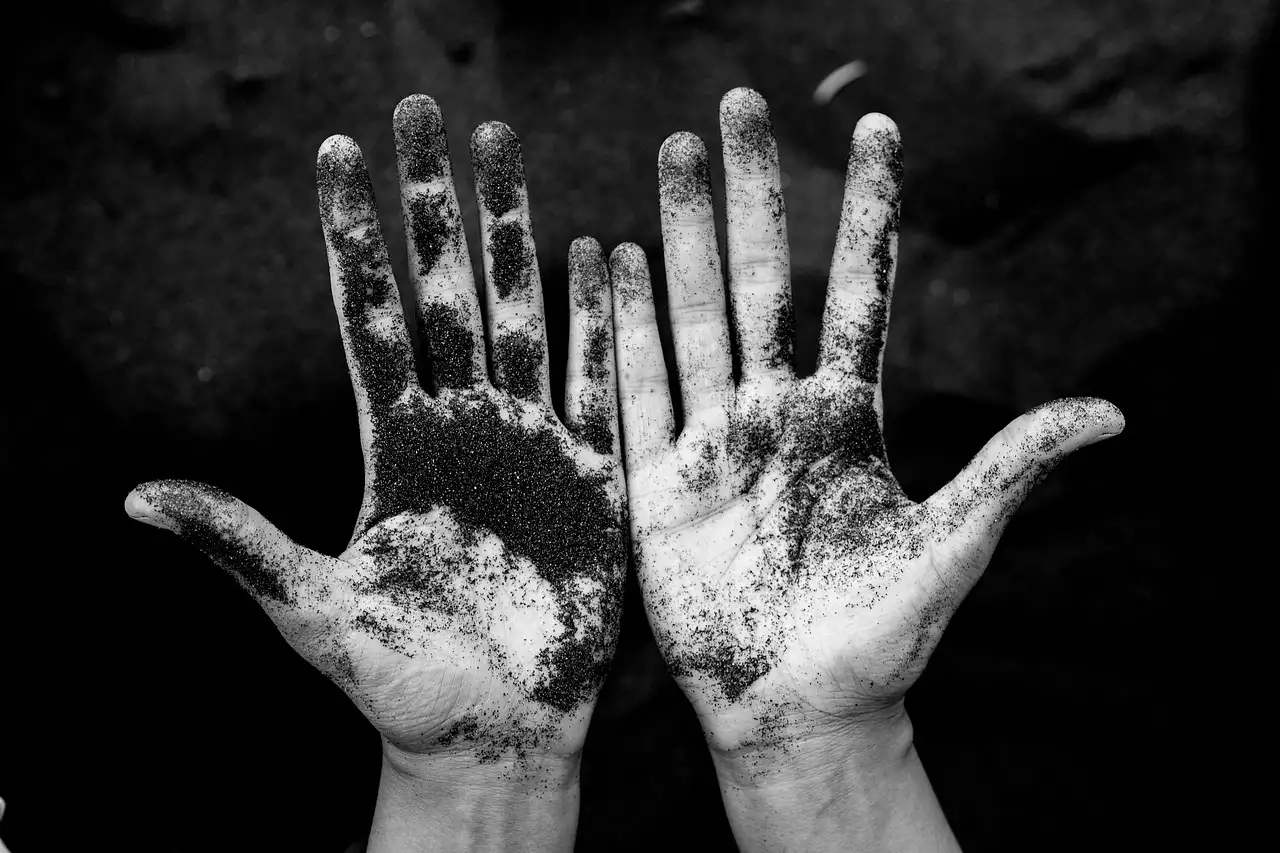
How to Identify Soil Texture by Hand
To identify soil texture by hand, moisten a small sample, rub it, then do a ribbon test: gritty soil is sand, a short ribbon under about 2.5 cm is loam, and a long ribbon over about 5 cm is commonly classified as clay. Misreading texture leads to wrong watering, poor amendment choices, and planting beds that drain badly or dry out too fast. This guide shows the hand test and turns the result into practical watering and amendment decisions for planting beds.
What soil texture is and what you’ll need
Soil texture is the mix of sand, silt, and clay in a sample, and that mix controls how the soil feels, drains, and holds water. Sand feels gritty and loose, and water moves through it fast. Silt feels smooth or floury. Clay feels sticky when wet and hard when dry. Loam sits between them and is usually the best fit for planting beds.
Texture matters because it shapes watering and prep choices before anything goes in the ground. A sandy bed needs more frequent watering and less heavy amendment. A clay bed often needs gentler watering and more attention to drainage and structure. Loam usually needs the least correction.
What you’ll need
- A small sample from several spots in the bed or yard
- Clean water
- A cup, saucer, or tray for mixing
- A clear straight-sided jar for confirmation
- A paper towel or gloves
- Something to note touch cues and ribbon length
How do you test soil texture by hand?
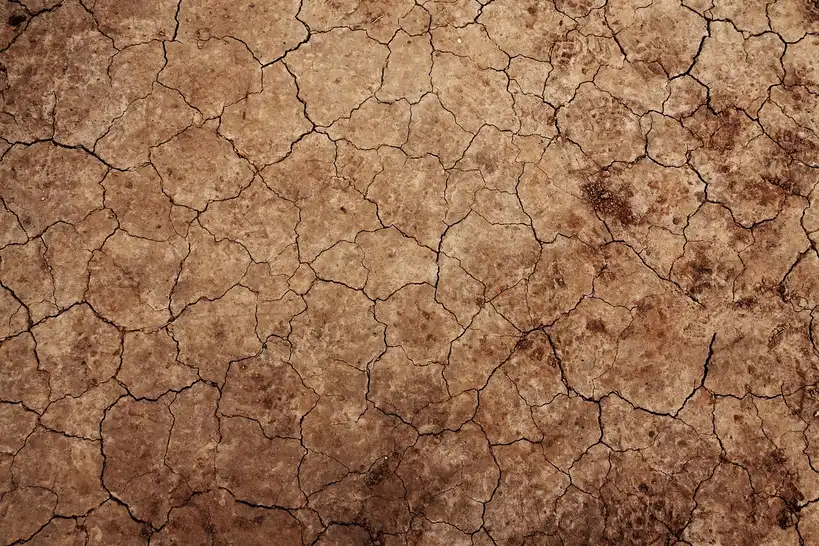
Start with moist soil, not bone-dry soil, because moisture changes how the sample feels and whether it forms a ribbon. Rub the sample between your fingers, look for grit, smoothness, or stickiness, then form a ball and press it into a ribbon. The feel and ribbon length together point to a likely texture class.
- Collect small samples from at least three spots in the area.
- Remove roots, rocks, and mulch pieces.
- Add a few drops of water until the soil feels like putty, not soup.
- Rub the soil between thumb and forefinger to check for grit, smoothness, or stickiness.
- Form a ball in your palm.
- Press the ball between thumb and forefinger to make a ribbon, then measure how far it extends before breaking.
- Match the feel and ribbon result to the closest texture class.
- Use that class to pick watering and bed-prep choices before planting.
A common first-timer mistake is testing one dry handful from one spot and calling it the whole bed. That can miss a compacted surface layer or a mixed soil that changes a few feet away. If the sample feels dusty and won’t bind, mist it and wait a minute before retesting.
What sand, silt, clay, and loam feel like
Sand is the largest particle, so it feels gritty and loose, and water passes through it quickly. Silt is smaller and feels smoother or floury. Clay is the finest fraction, so it feels sticky when wet and can form hard clods when dry. Loam feels crumbly or balanced because it is a mix of the three.
Organic matter can change the feel of a sample, even though it is not one of the texture fractions in many guides. A top layer with compost or leaf mold may feel darker, softer, or more workable than the soil below it. That can make the surface seem better than the underlying bed.
How do you read the ribbon length?
Ribbon length is the fastest hand cue for estimating clay content. Short ribbons usually point toward sandier or loamier soil. Medium ribbons point toward loam or clay loam. Long ribbons point toward clay-heavy soil. The feel still matters, because a smooth ribbon and a gritty ribbon do not mean the same thing.
| Touch cues | Ball and ribbon behavior | Likely texture class | Next-step planting advice |
|---|---|---|---|
| Gritty, loose, little stickiness | Ball forms weakly; ribbon breaks before 2.5 cm | Sandy soil or sandy loam | Water more often in smaller doses; work in organic matter and avoid over-tilling |
| Smooth or floury, slightly sticky, some shape retention | Ball holds; short to medium ribbon around 2.5–5 cm | Loam or silt loam | Use standard watering; add compost for structure and keep soil covered |
| Sticky, plastic feel, strong shape retention | Ball holds firmly; ribbon extends over 5 cm | Clay or clay loam | Improve drainage and structure before planting; avoid working wet soil |
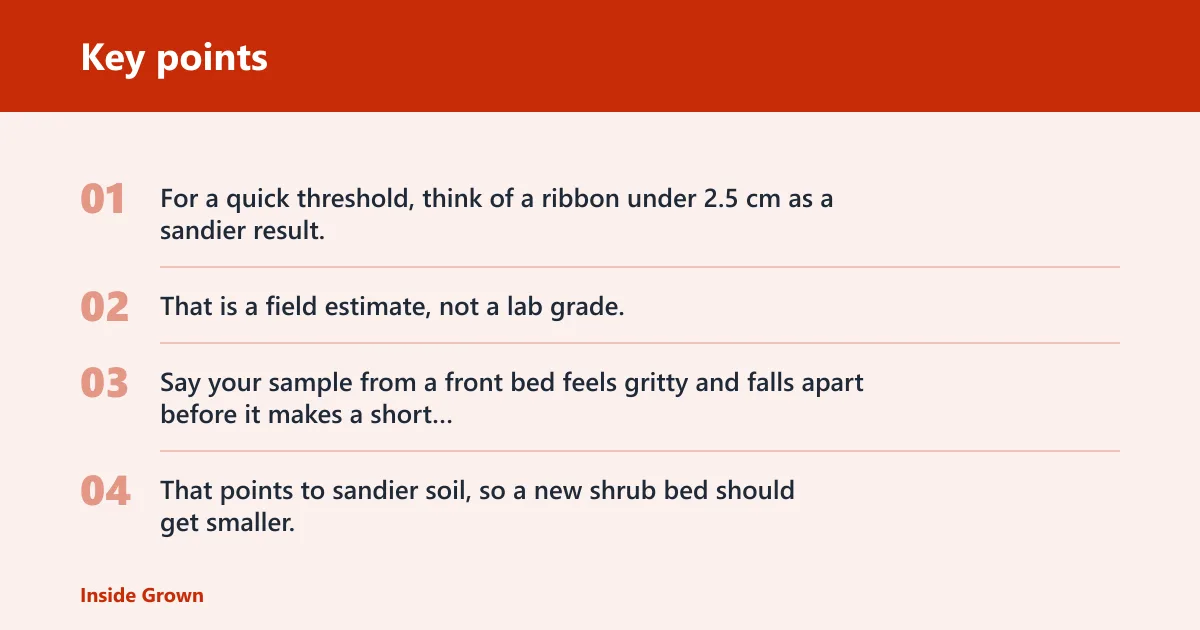
For a quick threshold, think of a ribbon under 2.5 cm as a sandier result, 2.5–5 cm as a middle result, and over 5 cm as a clay-heavy result. That is a field estimate, not a lab grade, but it is enough to guide watering and bed prep in a home bed.
Say your sample from a front bed feels gritty and falls apart before it makes a short ribbon. That points to sandier soil, so a new shrub bed should get smaller, more frequent watering at planting and compost mixed into the top layer rather than heavy clay-rich fill.
Soil texture worksheet
Use this worksheet to record what each spot feels like before you decide on watering or amendments. Sampling multiple spots matters because one corner of a yard can be sandy while another is compacted or more clay-heavy. Write down the result for each sample, then base the bed plan on the weakest area if the planting space is continuous.
| Sample spot | Gritty, smooth, or sticky? | Ball forms? | Ribbon length | Likely class | Planting-bed action |
|---|---|---|---|---|---|
| Spot 1 | |||||
| Spot 2 | |||||
| Spot 3 |
When should you use a jar test?
Use a jar test when the hand result is unclear, when the soil is very dry, or when the bed seems mixed from place to place. The jar test is slower, but it gives a clearer estimate of sand, silt, and clay by settling them in layers. It is the better check when a ribbon feels borderline.
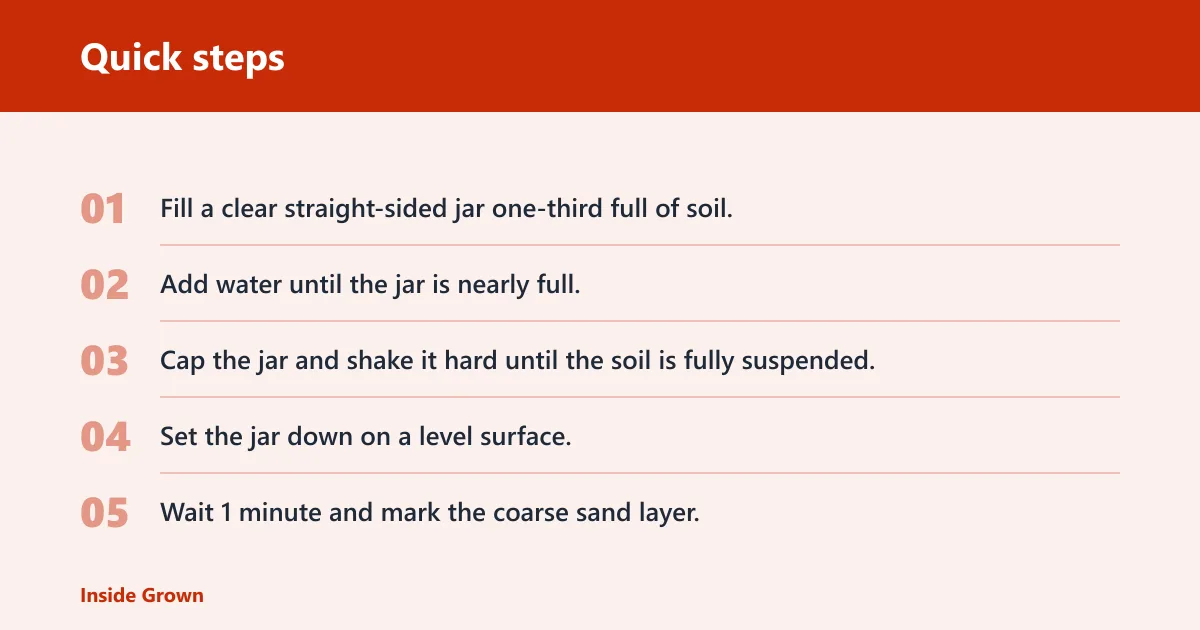
- Fill a clear straight-sided jar one-third full of soil.
- Add water until the jar is nearly full.
- Cap the jar and shake it hard until the soil is fully suspended.
- Set the jar down on a level surface.
- Wait 1 minute and mark the coarse sand layer.
- Wait 2 hours and mark the silt layer.
- Wait 48 hours and mark the clay layer.
- Estimate the depth of each layer and convert those depths into percentages.
- Use the soil texture triangle to identify the class.
Sand settles first, then silt, then clay. If a light top layer floats above the settled soil, that is usually organic matter. It can affect structure and feel, but it is not part of the texture triangle percentages in the same way as sand, silt, and clay.
Suppose a bed around a patio feels smooth in the top inch but sticky a few inches down. That often means a changed surface layer over tighter subsoil. In that case, the jar test helps confirm whether the planting zone is truly loamy or whether only the top layer has been improved.
How the texture triangle helps
The soil texture triangle converts sand, silt, and clay percentages into a texture class. It is the final check after settling layers are measured. If the sand percentage is high, the point lands on a sandier class. If clay is high, the point moves toward a clay class. A middle point often lands in loam or one of its close relatives.
This matters because the class tells you how the bed will behave. Sandy classes dry fast and need more frequent irrigation. Clay classes hold more moisture and can stay wet longer after rain. Loam is usually the easiest starting point for most planting beds because it balances water storage and drainage.
Common mistakes
Most wrong calls come from testing the wrong sample, reading it too dry, or assuming one handful says everything about a yard. A compacted crust can feel more clay-like than the soil below it. A compost-rich top layer can feel better than the native soil underneath. Mixed beds need more than one sample.
- Testing bone-dry soil: mist it first, then retest after a short wait.
- Testing one spot only: sample several places and compare the results.
- Confusing organic matter with texture: check below the top layer if the surface feels unusually soft.
- Ignoring compaction: if the soil crumbles only on top and stays tight below, treat drainage and rooting depth as separate issues.
If the hand test still feels borderline after retesting, use the jar test instead of guessing. That is the next step when the ribbon length sits between classes or the sample changes from one spot to another.
Frequently asked questions
How do I determine soil texture by hand?
Moisten a small sample, rub it between your fingers, then shape it into a ball and a ribbon. Gritty points toward sandier soil, smooth or floury points toward silt, and sticky points toward clay. Use ribbon length and feel together, then choose watering and amendment steps from the likely class.
How do I test soil texture?
Start with a sample from several spots, not one handful. Add water until the soil holds together, then check touch cues and ribbon length. If the result is still unclear, use a clear jar, one-third soil, and enough settling time to separate sand, silt, and clay into layers.
How do I determine the texture of soil?
Use the feel test for a fast estimate and the jar test for a clearer check. The feel test tells you whether the soil is likely sandy, silty, loamy, or clay-heavy. The jar test supports that guess by showing how much of each fraction settles in the container.
What does gritty, smooth, or sticky soil mean?
Gritty usually means sandier soil, which drains fast and needs closer watering after planting. Smooth or floury usually means more silt, which sits between sand and clay in water behavior. Sticky usually means more clay, which holds shape when wet and keeps moisture longer after rain.
How long should a ribbon be in the hand test?
A short ribbon under 2.5 cm usually points to a sandier or loamier result. A ribbon around 2.5–5 cm often suggests loam or clay loam. A ribbon over 5 cm usually points to clay-heavy soil. Use that length with the touch cue, not by itself.
When should I use a jar test instead of a feel test?
Use the jar test when the soil is very dry, when the hand result is borderline, or when different spots in the bed feel different. The feel test is faster. The jar test is better for confirmation because settling layers make the sand, silt, and clay mix easier to compare.
What soil texture is best for planting beds?
Loam is usually the best target for most planting beds because it balances moisture and drainage. Sandy soil needs more frequent watering. Clay soil holds more moisture and may need better structure and drainage before planting. Silt-heavy soil can sit in the middle but still needs careful watering.