Potting Mix vs Soil: What Is the Difference?
Potting mix is a soilless, container-made medium built for drainage, air, and moisture balance; garden soil is heavier, denser, and usually a poor choice in pots. Use the wrong medium and roots can stay waterlogged, lack oxygen, or pack so tightly that watering and fertilizing stop working. This guide explains what potting mix contains, how it differs from soil, and how pot shape and drainage change what you should buy.
Roots need a mix that drains fast to prevent saturated zones


Potting mix and potting soil are built for different jobs. Potting mix is made for containers, where water has limited escape routes and roots need more air space. Potting soil is a soil-based blend that can hold more water and weight, which can help in larger outdoor containers or beds, but often works poorly in small pots.
The key difference is not marketing language. It is how the medium behaves inside a closed container with one drainage hole. In a pot, water does not disappear into the ground around it, so the root zone needs a mix that drains, resists compaction, and still holds enough moisture for the plant you are growing.
Why a pot changes the water equation
A pot is a closed container with one drainage hole, so excess water has far less room to spread out than it does in the ground. That creates a perched wet zone near the bottom of the container, where roots can sit in saturated media if the mix drains too slowly.
In open soil, water can move deeper and outward. In a pot, gravity and container shape do most of the work. That means drainage speed affects root health directly, and a medium that seems fine in a bed can stay too wet in a planter.
How container roots differ from in-ground roots
Roots in a pot live in a limited volume, so the media has to do more of the work that natural soil layers would normally handle. That makes aeration and structure matter more than they do in the ground. A dense medium can leave roots short of oxygen even when the plant is watered correctly.
Compaction is the other problem. Soil and heavy blends settle in pots, air spaces shrink, and roots struggle to move through the packed material. In the ground, worms, runoff, and larger soil volume reduce some of that pressure. In a pot, there is nowhere for the medium to spread.
How potting mix is built
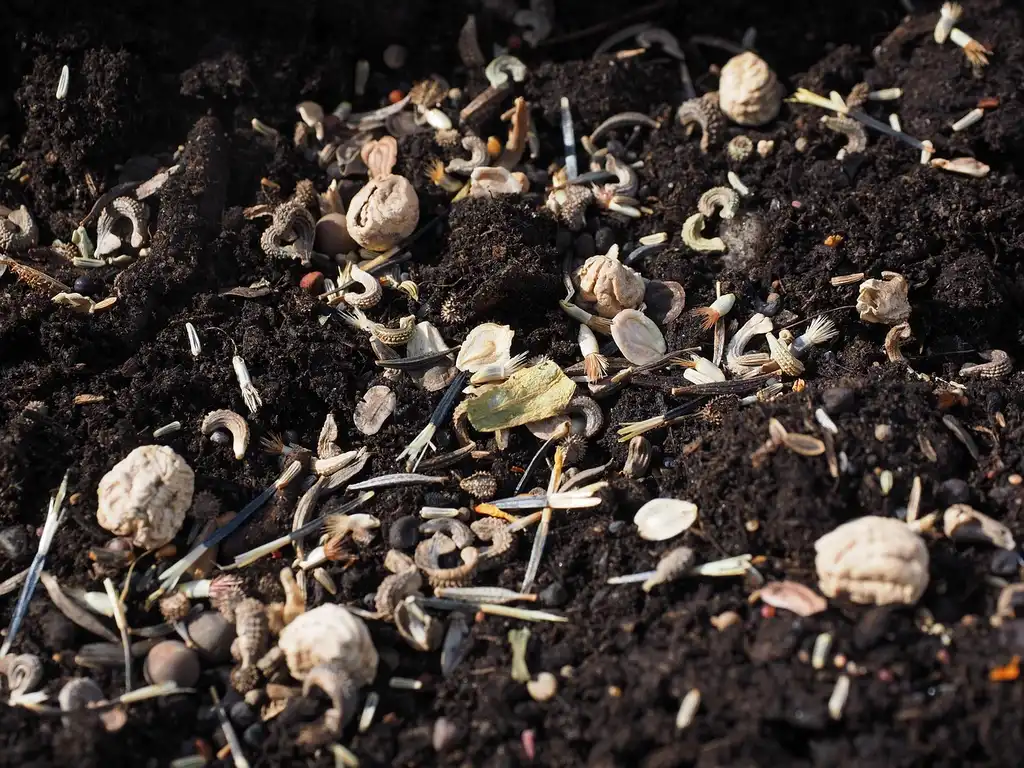
Potting mix is a soilless growing medium made for container plants. Common ingredients often include peat moss, coco coir, perlite, vermiculite, bark, pumice, and biochar, with different blends often adjusted for drainage, water retention, and structure. Most bags are lightweight and airy compared with soil-based products.
Common ingredients and what they do
- Peat moss: holds moisture and helps create a light texture; it is common in many mixes, but peat harvesting raises environmental concerns.
- Coco coir: a soil-free alternative to peat moss that helps with water control and structure.
- Perlite: improves drainage and aeration by keeping the mix open and loose.
- Vermiculite: helps hold moisture while still keeping the mix lighter than soil.
- Bark: adds chunkier structure and air space, which can help roots breathe.
- Pumice and biochar: appear in some soilless blends and can contribute to structure and porosity.
Why soilless blends drain and breathe better
Soilless mixes are built to preserve air pockets around roots. Those open spaces let oxygen reach the root zone and reduce the chance that water stays trapped too long. That is why potting mix is usually lighter and fluffier than potting soil.
Seed starting usually calls for this kind of medium because young roots are tender and can be harmed by dense soil. A fine, light mix helps seedlings establish without packing down around the stem.
Why soil behaves differently in pots

Potting soil is a soil-based growing medium, often made with screened topsoil, composted organic matter, and small amounts of sand or peat. It is heavier and denser than potting mix, and it usually retains moisture longer. That can be useful in some larger containers, but it can be risky in small pots.
Compaction and settling in containers
In a pot, heavier media settle faster than they do in the ground. As the particles pack together, air space shrinks and the root zone becomes denser. That compaction reduces airflow, slows drainage, and makes watering less predictable over time.
A common first-timer mistake is filling a 6-inch nursery pot with garden soil because it can seem sturdy at planting time. A few waterings later, the top looks dry while the lower half stays wet, and the plant shows yellow leaves, slow growth, or a sour smell from the root zone.
Reduced airflow and root rot risk
Roots need oxygen. When a medium stays wet too long, air pockets fill with water and roots can suffocate. That is one path to root rot, especially in a pot with poor drainage or a dense mix that holds water longer than the plant can use it.
Drainage helps, but it is not a cure-all. A pot with one drainage hole still needs the right medium, the right watering rhythm, and a plant that matches the moisture level you can maintain.
Is potting mix better than soil?

Potting mix is usually the better fit for containers because it drains faster, stays lighter, and gives roots more air. Soil-based blends can work when a plant wants more moisture retention or when the container is large enough to tolerate heavier media without staying soggy. The best choice depends on the plant and the pot.
| Plant type | Container type | Moisture preference | Recommended medium |
|---|---|---|---|
| Houseplants | Small to medium pots with drainage holes | Moderate, even moisture without sogginess | Potting mix, often with perlite or bark for airflow |
| Seedlings | Cell trays, starter pots, shallow flats | Even moisture, fast drainage, fine texture | Seed-starting potting mix |
| Succulents | Small pots or terra-cotta containers with good drainage | Low moisture, fast dry-down | Fast-draining potting mix with grit or perlite |
| Outdoor planters | Large tubs, patio pots, raised beds | More moisture retention, slower dry-out | Heavier potting soil or a soil-based blend |
When a heavier blend can work
A soil-based blend can make sense in outdoor planters or raised beds that need more water-holding capacity. It can also be useful for moisture-loving plants in large containers that dry out quickly in hot weather. The larger the container, the more forgiving a heavier mix can be.
Still, the plant matters more than the label. A fern and a cactus do not want the same root environment, even if both are in pots. Moisture preference should drive the decision.
How moisture preference changes the answer
Fast-draining mixes suit plants that hate wet feet. Slower-drying blends help plants that prefer steady moisture. If a plant wilts after drying too much, a mix with more moisture-holding ingredients may be useful. If it sulks in soggy media, move toward a lighter potting mix with more aeration.
Picture a 4-inch nursery pot of basil on a bright windowsill. If the medium is a dense, soil-heavy blend, the top may dry while the center stays wet. In that case, the plant can stall even though you are watering regularly. A lighter potting mix gives the roots a better balance of moisture and air.
What the label really means
Store labels are not always cleanly separated. Potting mix and potting soil are sometimes used interchangeably, so the ingredient list matters more than the front panel wording. A bag labeled “potting soil” may still be mostly peat, perlite, and compost, while another may include screened topsoil and sand.
How to read ingredient lists
- Look for the first few ingredients, not only the product name.
- Check whether the bag lists topsoil, compost, peat moss, coco coir, perlite, vermiculite, bark, or sand.
- Notice whether the mix is described for indoor plants, seed starting, or outdoor planting.
- Look for terms like “well-draining,” “moisture control,” or “for containers,” then compare them with the ingredient list.
- Check whether fertilizer is included, since some mixes are amended and others are not.
How to spot peat-based and peat-free blends
If peat moss appears near the top of the ingredient list, the mix is usually peat-based. If the bag lists coco coir instead, it is a peat-free or reduced-peat option. That difference matters if you want a lower-impact ingredient choice or if you prefer a medium that handles water a little differently.
Peat moss holds moisture well and helps make a light mix. Coco coir also helps with water control and structure, but it comes from a different raw material. Either can work, depending on the rest of the blend.
What drainage and fertilizer claims do and do not tell you
Claims like “fast drainage” or “feeds for weeks” do not tell you how the mix will behave in your container. A bag can drain quickly and still be too dry for a moisture-loving plant. Another may carry fertilizer but still compact in a pot over time.
For example, a hanging basket may dry out faster than a floor planter because airflow is higher on all sides. If the label promises drainage but the basket has only a tiny root ball and a hot, bright location, you may still need a mix that holds a little more moisture.
Potting mix matrix
This decision table gives a quick way to match plant type, container, and moisture needs to a medium. Use it as a starting point, then adjust for pot size, drainage holes, and how quickly the plant dries between waterings.
| Plant type | Container type | Moisture preference | Recommended medium |
|---|---|---|---|
| Houseplants | Indoor pots with one drainage hole | Moderate moisture, good airflow | Potting mix with perlite or bark |
| Seedlings | Trays or small starter cells | Even moisture, no heavy compaction | Fine seed-starting potting mix |
| Succulents | Small, fast-drying pots | Low moisture, quick dry-down | Fast-draining potting mix with extra aeration |
| Outdoor planters | Large patio pots or raised beds | More moisture retention | Soil-based potting soil blend |
Potting mix checklist
- Check the ingredient list first.
- Look for peat moss, coco coir, perlite, vermiculite, bark, or topsoil.
- Match the bag to the plant type: indoor, seed starting, outdoor, or moisture-loving.
- Confirm the container has drainage holes before choosing a denser blend.
- Prefer lighter, airier mixes for most houseplants and seedlings.
- Choose a heavier blend only when the plant and container need more moisture retention.
Choose potting mix if… / Choose soil if…
Choose potting mix if you are growing in indoor containers, starting seeds, or planting in a pot that needs fast drainage and more air around the roots. Choose a soil-based blend if you are filling larger outdoor containers, raised beds, or a setup where moisture retention matters more than lightness.
Choose potting mix if…
- You are planting houseplants in pots with drainage holes.
- You are starting seeds and need a fine, light medium.
- You are growing succulents, aroids, or other plants that dislike wet roots.
- You want a mix that stays open and resists compaction longer.
Choose soil if…
- You are filling outdoor planters or raised beds.
- You need more moisture retention for a thirsty plant.
- The container is large enough that a denser blend will not stay soggy as easily.
- You want a soil-based medium that includes topsoil and composted organic matter.
Can you use potting mix in the ground?
Yes, but only as a limited amendment in the right situation. Potting mix can help loosen a planting hole or improve texture in a small area, but it is not a replacement for real garden soil in a bed. In open ground, the surrounding soil changes drainage and root growth in ways a pot does not.
If you use it in the ground, use it to improve structure, not to create an isolated pocket that drains differently from the rest of the bed. A very loose pocket inside compact soil can trap water or keep roots from moving outward naturally.
When it is the wrong choice for beds
Potting mix is usually the wrong choice when you need to build a full bed from scratch or amend a large planting area. It is too light and too container-specific for that job. In open soil, a bed needs a medium that matches the surrounding ground, not a potting blend that was built for a closed container.
Suppose you fill a shallow raised bed with a very airy container mix and plant moisture-loving greens. The bed may dry too quickly, even after frequent watering, because the medium was built for pots rather than for broad in-ground water movement.
Frequently asked questions
Is potting mix different from soil?
Yes. Potting mix is a soilless growing medium made for containers, while potting soil is a soil-based blend that often contains topsoil, composted organic matter, and sand. The container setting matters because roots need more air and faster drainage in a pot than they do in open ground.
What’s the difference between soil and potting mix?
Soil is heavier and denser, and it usually holds moisture longer. Potting mix is lighter, fluffier, and built to preserve air spaces around roots. That difference helps prevent waterlogged roots in pots, where drainage is limited and compaction can build up over time.
Can I use garden soil in pots?
Usually no. Garden soil is dense, compacts in containers, and can reduce airflow around roots. It may hold too much water in a pot with one drainage hole, which raises the risk of root rot and makes watering harder to manage.
What ingredients are in potting mix?
Common ingredients include peat moss, coco coir, perlite, vermiculite, bark, pumice, and biochar. The exact blend varies by product. Seed-starting mixes are usually finer, while mixes for houseplants or tropicals may include chunkier bark for more aeration.
How do I tell potting mix from potting soil in the store?
Read the ingredient list, not only the front label. If you see topsoil, compost, or sand, the product is soil-based. If you see peat moss, coco coir, perlite, vermiculite, or bark with no regular garden soil, it is a soilless potting mix or a close variant.