Best Soil Mix for Vegetable Beds in Containers Guide
For most vegetable containers, I usually use a mix that is roughly 60% screened compost-based potting mix, 30% aeration material, and 10% finished compost; for tomatoes I use a somewhat different balance, for greens a lighter mix, and for root crops a mix with a bit more aeration. Poor mixes stay soggy, starve plants, and shrink yields fast. This guide shows buyable mixes and do-it-yourself formulas for tomatoes, greens, and roots by pot and bed type.
This guide is part of our Soil science basics series.
Best soil mix for vegetable beds in containers


The best soil mix for vegetable beds in containers is a light, airy blend that holds moisture without sitting wet. For mixed crops, I have had better results with a recipe built from potting mix, aeration material, and finished compost than with straight garden soil or a generic fill soil. Growers looking for an organic option should check for OMRI Listed bags.
Top pick: a balanced container vegetable blend for mixed crops
A 60/30/10 blend is the safest all-purpose formula for planters and large pots. Use screened potting mix as the base, add perlite or a similar aeration material, then finish with compost for nutrition and structure. That mix drains well, but still holds enough water for edible crops between waterings.
When to buy a premium bagged mix instead of building your own
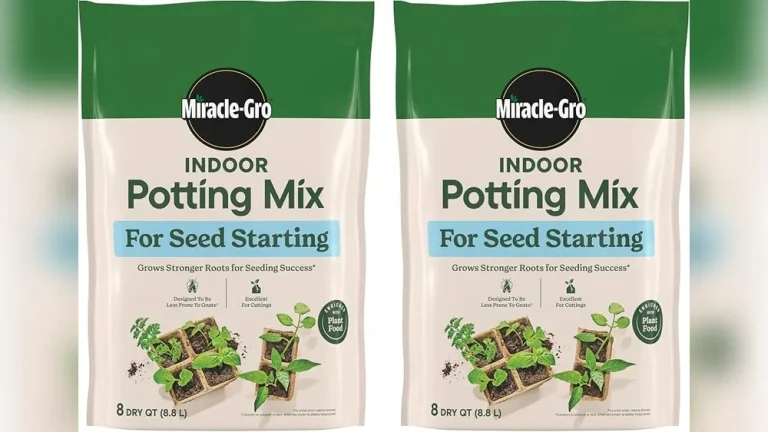
Buy a premium bagged mix when the planter is small, when the crop is sensitive to uneven conditions, or when you want a faster setup. Burpee Premium Organic Potting Soil Mix uses coconut coir and is OMRI Listed. Miracle-Gro Organic Outdoor Potting Mix is OMRI Listed. For a long-feed option, Miracle-Gro Potting Mix for Container Plants feeds for up to six months.
Quick picks by crop and container type
Tomatoes need a denser, more nutrient-rich blend than lettuce. Leafy greens want more moisture held in the root zone. Root crops need the loosest mix of the three so roots can expand without hitting clumps, stones, or a compacted layer. Deep planters can carry a little more compost than shallow boxes.
- Tomatoes and peppers: 50% potting mix, 30% perlite or pumice, 20% compost
- Lettuce, spinach, herbs: 70% potting mix, 20% perlite, 10% compost
- Carrots, beets, radishes: 45% potting mix, 35% aeration material, 20% fine compost
- Deep planters and small raised beds: start with the crop recipe, then reduce compost by 5% if the bed already stays damp
Best for tomatoes and peppers
Tomatoes and peppers feed hard and dislike uneven watering. A mix with more compost and a strong base of potting mix keeps nutrients available while still letting the root zone breathe. Raised bed mix can work here too, especially if it already includes compost and castings, but it should still be light enough to move water through.
Best for lettuce, herbs, and fast-growing greens
Greens grow quickly and have shallow roots, so they need steady moisture more than heavy feeding. Use a blend with more potting mix or coir and less compost than a tomato mix. Too much fertility can push soft growth and shorten harvest quality. A fine, even texture matters here more than bulk nutrients.
Best for carrots, beets, and other root crops
Root crops need a crumbly, stone-free medium that does not crust over after watering. Use less compost than a tomato blend if your compost is rich or sticky. The goal is a mix that stays loose to the bottom of the container, so roots can form straight and clean.
Best for deep planters and small raised beds
Deep planters can carry more compost than shallow boxes because the lower layers hold moisture longer. Small raised beds, especially those exposed to wind and full sun, usually need more moisture retention and less open air than narrow pots. Match the mix to the container depth, not just the crop name.
What container vegetables need from soil
Container vegetables need drainage, moisture retention, and a steady nutrient supply in a shallow root zone. The soil also has to stay open enough for air and keep its structure over a season. That is why I recommend a specialized soil mix for vegetables in containers [F1].
Drainage and air space
Perlite and similar materials create air pockets that keep roots from sitting in water. This matters most after heavy rain or when a planter is watered on a fixed schedule. Without enough drainage, roots slow down and the lower half of the bed can turn sour.
Moisture retention without waterlogging
Coconut coir and peat help a mix hold water between irrigations. Good potting soils should hold moisture without becoming waterlogged. That balance is the point: enough water to prevent wilt, not so much that the root zone stays sealed off from air.
Nutrient supply for a short root zone
Containers do not give roots much room to explore. Compost, castings, and fertilizer fill that gap. Compost adds organic matter and supports microbial activity. Earthworm castings provide a slow nutrient source. Mycorrhizae help roots take up nutrients more efficiently in premium blends.
Weight, shrinkage, and season-long structure
Heavy soil can make a planter hard to move and can compact under watering. Fine-textured mixes also shrink as organic matter breaks down. A good container soil keeps enough structure to avoid sinking several inches over one season, especially in beds that get watered often.
Which soil ingredients matter most?
The core ingredients are the same across most edible container mixes, but each one plays a different role. Potting mix and raised bed mix are the base. Coir or peat controls water balance. Perlite opens the mix. Compost, castings, and mycorrhizae add fertility and biology.
Potting mix and raised bed mix
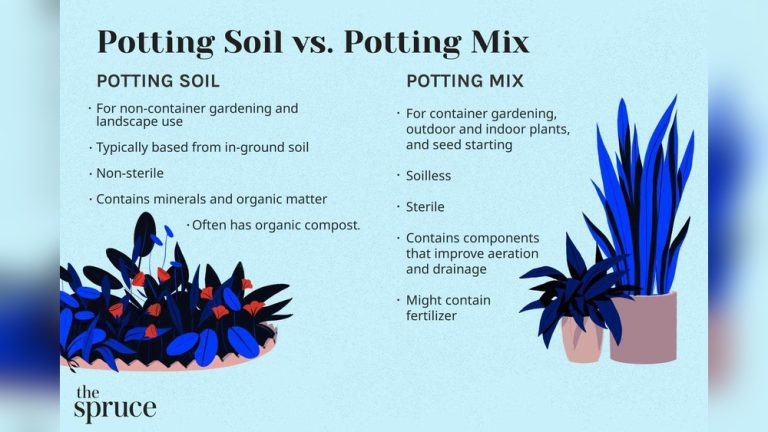
Potting mix is a light container medium made for pots and containers. It is built for drainage and aeration, and often includes peat or coconut coir. Raised bed mix is usually richer and can include compost and castings, which makes it useful in raised beds and larger containers.
Coconut coir versus peat moss
Coconut coir improves moisture retention and is a common peat alternative in container mixes. Peat-based blends can hold water well, but peat-free mixes are often easier to rewet if they dry out. That matters in hot weather, because a mix that repels water after drying becomes hard to recover.
Perlite and other aeration materials
Perlite improves drainage and adds air spaces. Pumice, expanded shale, and similar materials do the same job. In vegetable containers, aeration matters more than in many in-ground beds because there is less room for excess water to move away.
Compost and earthworm castings
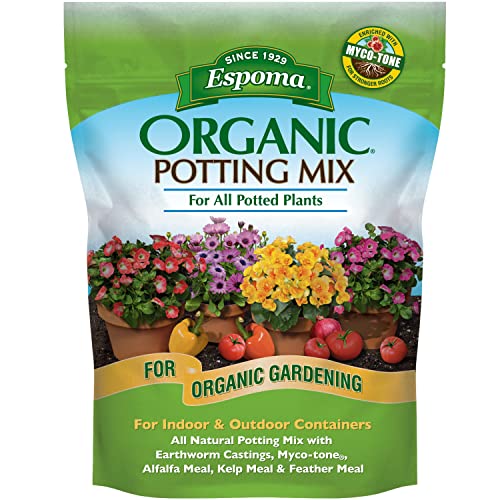
Compost adds organic matter and improves nutrient supply. Earthworm castings add a biologically active, slow nutrient source and are common in premium mixes. Espoma Organic Raised Bed Mix includes earthworm castings and mycorrhizae [F6] [F7].
Mycorrhizae and OMRI Listed options
Mycorrhizae are a root-symbiosis ingredient that can support nutrient uptake. Some brands add them to premium vegetable soils. For edible crops, OMRI Listed status is a useful filter when organic suitability matters. Burpee Premium Organic Potting Soil Mix is OMRI Listed [F3], and Miracle-Gro Organic Outdoor Potting Mix is OMRI Listed [F4].
How do I mix soil for tomatoes, greens, and root crops?
Use a different ratio for each crop. Tomatoes need more nutrients and more water-holding capacity. Greens need the most moisture retention. Root crops need the loosest blend and the least risk of clumping. These recipes are built for containers, not for field soil or native garden beds.
Tomato and pepper recipe
Mix 50% screened potting mix, 30% perlite or pumice, and 20% finished compost. If the compost is very dark and fine, keep it at the lower end of that range. If the planter sits in hot sun, coconut coir can replace part of the potting mix to slow drying.
Leafy green recipe
Mix 70% potting mix, 20% coconut coir or perlite, and 10% finished compost. Greens dislike swings in moisture, so this recipe leans toward water retention. If the container dries quickly, shift 5% from potting mix into coir rather than adding more compost.
Root crop recipe
Mix 45% potting mix, 35% perlite or another loose aeration material, and 20% fine, screened compost. Avoid chunky compost pieces and anything that forms lumps. Carrots and beets grow best in a uniform, open texture that does not force roots around obstacles.
How to adjust ratios for deep planters and shallow beds
Deep planters can use a bit more compost because they dry more slowly below the top layer. Shallow beds need more aeration and lighter compost loading because they heat up and dry faster. If the planter is only a foot deep or less, prioritize structure over fertility.
Can I use garden soil in containers for vegetables?
Garden soil usually does not belong in containers for vegetables. It compacts, drains poorly, and often creates a dense layer that shuts out air. In a pot or planter, that means weak roots, uneven watering, and a mix that turns heavy after a few wet-dry cycles.
Why garden soil compacts in pots
Field soil is built for the ground, where worms, roots, and natural drainage keep it open. In a container, gravity works against it. Water movement is limited, and the soil settles into a tight mass. That is why potting mix and raised bed mix exist as separate products.
What happens to roots and drainage
Roots in compacted soil hit resistance early and stop exploring. Drainage slows, oxygen drops, and the lower root zone can stay wet longer than the surface. The result is a planter that looks fine on top and fails underneath.
When field soil might be acceptable in a true in-ground bed
Field soil can be part of a true in-ground bed because it can connect with native drainage and soil life below. In a container, that connection is absent. If the planting area has an open bottom and direct contact with ground soil, the rules change, but that is no longer a closed container system.
Proof asset: container-bed recipe table and fill-cost example
The table below turns the crop formulas into approximate fillable volume ratios. For a 4×2 raised planter, a simple example assumes an 8-inch depth, which equals about 4 cubic feet of fill. That example uses bagged ingredients and compost so the total can be estimated before shopping.
| Crop type | Container-bed ratio | Best ingredient balance | Example use case |
|---|---|---|---|
| Tomatoes and peppers | 50/30/20 | Potting mix / aeration / compost | Deep patio planter, trellised box, heavy feeder |
| Leafy greens and herbs | 70/20/10 | Potting mix / coir or perlite / compost | Shallow bed, cut-and-come-again harvests |
| Carrots and beets | 45/35/20 | Potting mix / aeration / fine compost | Loose root zone, clean straight roots |
| Mixed crops | 60/30/10 | Potting mix / aeration / compost | General-purpose raised planter |
Example fill cost for a 4×2 raised planter: if the bed is 8 inches deep, it needs about 4 cubic feet of mix. Using the mixed-crop recipe, that works out to roughly 2.4 cubic feet of potting mix, 1.2 cubic feet of perlite or coir, and 0.4 cubic feet of compost. If you want to stretch a premium bagged mix, replace part of the potting mix with compost, but keep the aeration material in place.
- Measure the bed volume before buying.
- Pick the crop formula first.
- Use compost as the nutrient layer, not the whole fill.
- Keep perlite or another aeration material in every recipe.
- Moisten the mix before planting so dry pockets do not repel water.
How to choose the right bagged mix
Choose potting mix for smaller containers and raised bed mix for larger edible beds that need more organic matter. If the bag already includes compost, castings, or mycorrhizae, reduce how much extra you add. For edible crops, OMRI Listed bags are a good shortcut when organic input status matters.
Potting mix versus raised bed mix
Potting mix is lighter and usually better for pots, hanging tubs, and small planters. Raised bed mix is often better for deeper boxes and larger vegetables because it brings more bulk fertility. Coast of Maine planting soil is for vegetables and tomatoes, and Coast of Maine emphasizes moisture retention and drainage [F8] [F9].
Peat-based versus peat-free blends
Peat-based mixes often hold water well and stay fluffy when managed correctly. Peat-free mixes built on coir can rewet more easily and are often easier to handle after drying. Both can work for container vegetables if the aeration and compost are right. The mix matters more than the label.
When fertilizer should already be in the bag
Use an in-bag fertilizer charge for short-season crops or for a first planting in a new container. Miracle-Gro Potting Mix for Container Plants feeds for up to six months [F5], which can simplify the first part of the season. For long crops or heavy feeders, plan to add liquid feed later.
What OMRI Listed means for edible crops
OMRI Listed means a product has been accepted for organic use under that standard, which helps narrow choices for edible containers. It does not replace a good recipe. A bag can be organic and still be too wet, too dense, or too weak on structure for vegetables.
Frequently asked questions
What is the best soil mix for vegetable beds in containers?
The best mix is usually a light blend of potting mix, aeration material, and compost. A 60/30/10 recipe works well for mixed crops. It keeps enough moisture for roots while preserving drainage, which is the main difference between container soil and ordinary garden soil.
Can I use garden soil in containers for vegetables?
Garden soil is a poor choice for closed containers because it compacts and drains slowly. In a planter, that leads to dense roots and wet pockets. A container-specific mix is safer, especially for crops that need oxygen in the root zone and steady watering.
How much compost should I mix into container bed soil?
For most container beds, 10% compost is a good base amount. Tomatoes can take 20%, while leafy greens usually do better around 10%. If the compost is very fine and dark, keep it modest so the bed does not settle too quickly or hold excess water.
What makes a container soil mix drain well but still hold moisture?
The balance comes from pairing a water-holding base like potting mix or coir with an aeration ingredient such as perlite. Compost adds nutrient value and some moisture buffering. If the mix stays wet, add air space. If it dries too fast, add coir or more screened organic matter.
Are peat-free soil mixes good for container vegetables?
Yes, peat-free mixes can work very well for vegetables in containers when they contain coir, compost, and enough aeration material. They are often easier to rewet after drying, which helps in hot weather. The key is still drainage plus moisture retention, not the peat label.
Do I need fertilizer in container vegetable soil?
Usually yes, because containers do not have the same nutrient reservoir as in-ground beds. Some bagged mixes include starter fertilizer, and some premium products add castings or mycorrhizae. Even then, heavy feeders like tomatoes often need more feeding later in the season.