How to Test Soil pH at Home the Right Way for Better Results
According to How to pH Soil Test at Home (No Special Equipment Needed!) — pH is based on a scale from 0 to 14.
What you’ll need before you start



- Clean trowel, hand scoop, or soil probe
- Clean bucket for combining subsamples
- Distilled water for slurry tests
- Commercial soil pH kit, strips, or digital pH meter
- Buffer solution for meter calibration, usually pH 7.0 and pH 4.0, with pH 10.0 on some meters
- Red cabbage leaves, if you want a homemade color indicator
- Disposable cups or small containers
- Label and pen for marking samples from different garden zones
How to test soil pH at home accurately?
Use a calibrated digital meter or a fresh slurry test from a representative sample, not a handful from one spot. I match the method to the goal: quick screening, planting decisions, or a correction plan. For the cleanest reading, test damp soil, keep recent lime or fertilizer out of the sample, and compare the result to the crop’s preferred pH range.
What pH tells you about your soil
Soil pH runs from 0 to 14. A pH of 7 is neutral, below 7 is acidic, and above 7 is alkaline. Most soil pH falls between 4.5 to 9, and most crops do best around pH 6.2-7.2. Outside that zone, nutrients can become harder for roots to use.
How to test the sample at home
- Choose one method for the whole zone, so results stay comparable.
- Mix a soil slurry with distilled water if the kit, strip, or meter calls for it.
- Let solids settle when the method asks for a liquid reading.
- Calibrate the meter before use if you are using an electronic probe.
- Read the result once the color or display has fully stabilized.
What you’ll need before you start
Clean tools, distilled water, and a test method that matches your goal keep the reading from drifting. Tap water can bring its own minerals into the slurry, which can skew the result. I use distilled water because it keeps the test closer to the soil’s own chemistry.
When distilled water matters
Use distilled water for slurry tests, strip tests, and many kit instructions. Neutral water is the safest default when the goal is an at-home reading that reflects the soil, not the water supply. If the meter or kit gives a specific mixing ratio, follow that label exactly.
How do you collect a soil sample that actually means something?
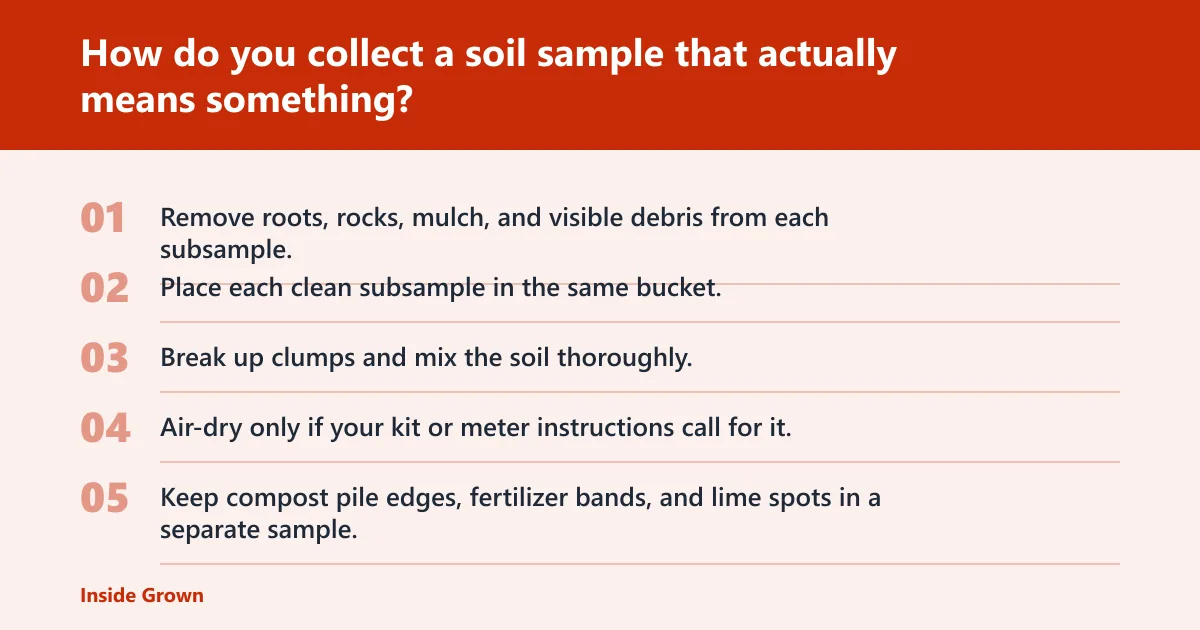
Take several small subsamples from the same bed or zone, then combine them into one mixed sample. For garden soils, sample the top 6 inches. Most home gardens may need only 4 or 5 samples, but larger beds or mixed conditions often need more points to avoid a misleading reading. (blogs.cornell.edu)
Sample depth for beds, lawns, raised beds, and containers
In-ground beds usually use the top 6 inches. Raised beds also need a shallow root-zone sample, not a scoop from the surface crust. Lawns are best sampled at turf rooting depth, while containers should be sampled through the potting mix column. Do not mix those zones together.
How to mix subsamples without contaminating the result
- Remove roots, rocks, mulch, and visible debris from each subsample.
- Place each clean subsample in the same bucket.
- Break up clumps and mix the soil thoroughly.
- Air-dry only if your kit or meter instructions call for it.
- Keep compost pile edges, fertilizer bands, and lime spots in a separate sample.
Is the vinegar and baking soda soil test reliable?
No. The vinegar and baking soda soil test gives a general sense of pH, but fizz only tells you that the soil may be on one side of the range. It does not give a precise number, and it is too blunt for planting decisions where a narrow pH window matters.
How to use it as a rough screen only
If vinegar fizzes, the sample may lean alkaline. If baking soda fizzes, the sample may lean acidic. If neither reacts much, the soil may be closer to neutral. That is enough to sort a bed into broad buckets. It is not enough to decide whether blueberries, vegetables, or lime-heavy clay will thrive there.
Strips, kits, red cabbage, and digital meters
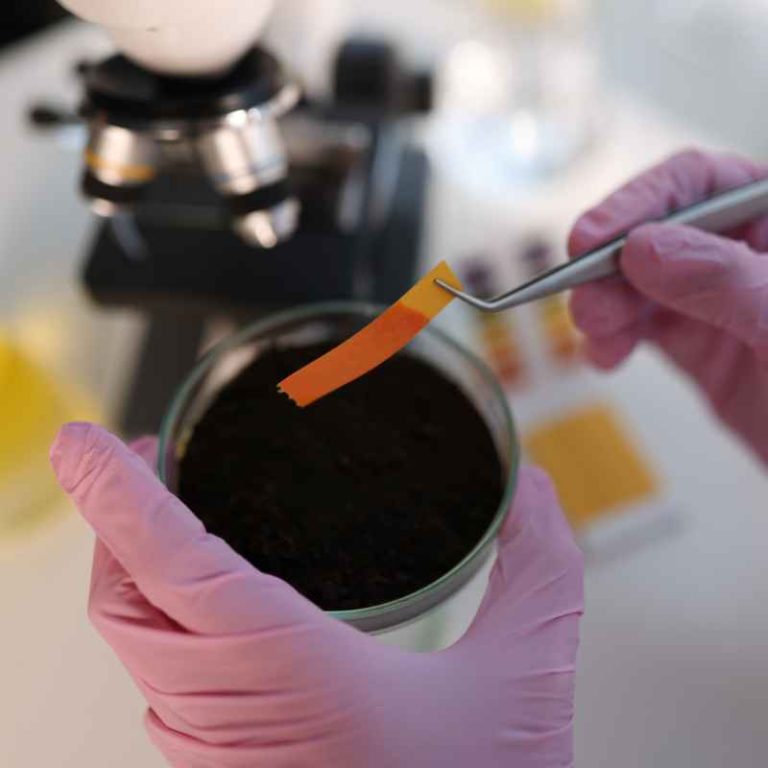
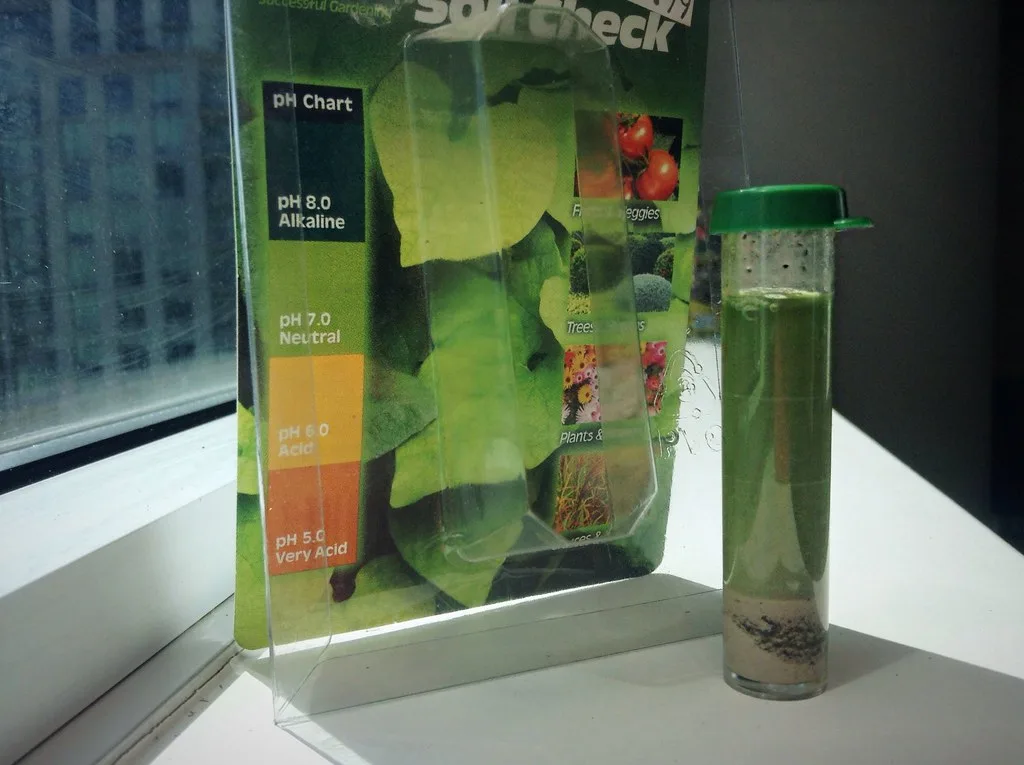
Commercial soil pH test kits usually use a reagent or powder and a color chart, often with strips or tubes. Red cabbage indicator gives more detail than a fizz test because the color shifts with acidity or alkalinity. A digital soil pH meter gives a number, but only after calibration with buffer solution and careful probe handling.
Which soil pH test should you use?
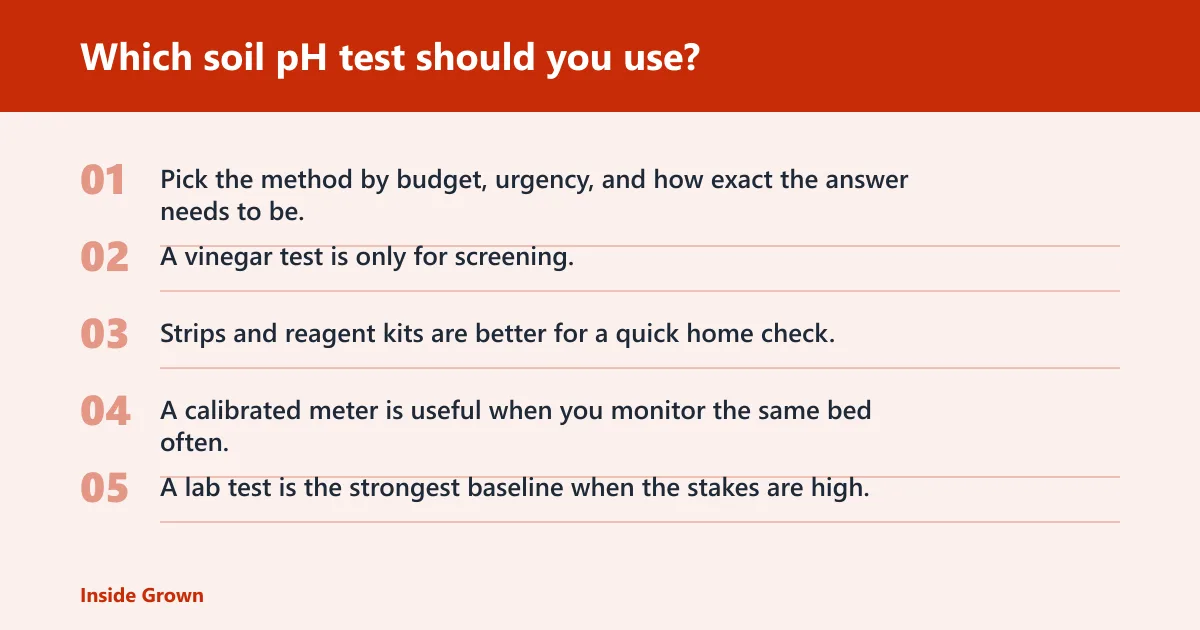
Pick the method by budget, urgency, and how exact the answer needs to be. A vinegar test is only for screening. Strips and reagent kits are better for a quick home check. A calibrated meter is useful when you monitor the same bed often. A lab test is the strongest baseline when the stakes are high.
| Method | Cost | Accuracy | Sample depth | Calibration needs | Turnaround time | Common failure points | Best-fit garden scenario |
|---|---|---|---|---|---|---|---|
| Vinegar and baking soda | Very low | Broad acidic, neutral, or alkaline only | Top 6 inches | None | Minutes | Wet soil, one-spot sampling, reading fizz as a number | Fast screening before buying anything |
| Red cabbage indicator | Low | Moderate for color shift, not exact | Top 6 inches | None | Minutes to hours | Weak color contrast, dirty slurry, rushed color reading | Home check when you want more than a fizz test |
| Commercial kit or strips | Low to moderate | Good for a home decision | Top 6 inches | Usually none | Minutes | Poor slurry ratio, old reagents, matching color in bad light | Vegetable beds and routine checks |
| Digital pH meter | Moderate | Good when calibrated; cheap units can be off by 1+ pH unit | Top 6 inches or slurry | Yes, often pH 7.0 and pH 4.0, sometimes pH 10.0 | Minutes | Dirty probe, skipped calibration, dry or compacted soil | Repeated checks in the same bed or pot |
| Cooperative extension lab test | Moderate | Best possible with about +/- 0.1 pH units | Top 6 inches | None for the user | Days to weeks | Bad sample collection before mailing | New garden baseline, major correction plan, or tricky soil |
When a meter is good enough
A digital meter works when it is calibrated right before use, the probe is clean, and the same sample zone is tested every time. It is a practical tool for tracking trends in one bed or pot. It is weaker in rocky, very dry, or highly mixed soil, and cheap meters can drift badly.
When a lab is the better call
Send soil to a cooperative extension lab when you need the most accurate baseline, when a bed is being remade, or when you plan a serious pH correction. Lab-grade results are the safest starting point before you add lime or sulfur across a large area. They also help explain why a DIY meter keeps wandering.
How deep should you sample soil for pH testing?
For garden beds, sampling depth is generally the top 6 inches. That root zone is where pH matters most for nutrient access and plant performance. In home gardens, 4 or 5 samples often cover a bed well enough, but separate zones should still be sampled separately when the soil changes.
Special cases: lawns, raised beds, containers, and in-ground beds
Sample lawns at turf rooting depth rather than the surface thatch. Raised beds need a composite sample from the mix inside the bed, not the path soil beside it. Containers should be sampled from the potting mix only. In-ground beds should stay separate from compost piles, gravel edges, and recently amended strips.
How often should you test garden soil pH?
Test before planting a new bed, then retest after liming, sulfur use, heavy composting, or repeated fertilizer applications. If a bed stays stable, yearly checks are often enough. A baseline lab test helps later DIY checks make sense, because the meter or strip has something solid to compare against.
How to set a useful testing rhythm
Test once before a major planting change. Test again after any serious amendment. For beds that receive the same crops every year, check at the same time each season so results are easier to compare. Fast-changing spaces, such as beds near compost or drip-fed fertilizer, need closer monitoring.
Common mistakes that throw off home pH readings
Wet soil, dirty tools, recent fertilizer, fresh lime, and mixed beds are the big troublemakers. They can push a sample away from the true root-zone condition. A reading from the edge of a compost pile or a soaked patch after rain often explains why the number looks wrong.
Bad calibration and bad water
Do not skip buffer solution calibration on a digital meter. Many meters use pH 7.0 and pH 4.0 buffers, and some add pH 10.0. Also avoid tap water for slurry work when distilled water is available. The water should not be the thing changing the reading.
If that didn’t work, try this next
- Retest the same zone with a fresh composite sample from at least 4 to 5 spots.
- Recalibrate the meter with new buffer solution before taking another reading.
- Send one sample to a cooperative extension lab if the home result still does not fit the crop or the soil history.
Prevention: Keep one sample zone per bed, and label it the same way every season. That makes trend lines usable, especially after lime, sulfur, or repeated compost additions.
What should you do with the result?
If the soil is too acidic for the crop, raise pH slowly and retest later. If it is too alkaline, correct it in small steps rather than dumping in amendments. Blueberries need acidic soil, while many vegetables do best near the middle of the range. Clay soils often hold changes longer, so move carefully.
Action thresholds for common garden scenarios
Vegetable beds often fit best in the middle band around pH 6.2-7.2. Blueberry beds need a lower reading, so a neutral result is usually not enough. Clay soils can mask what is happening deeper down, which is why a proper composite sample matters more than a quick surface scrape. Raised beds should be checked separately from in-ground soil.
Frequently asked questions
How do you test soil pH at home accurately?
Use a composite sample from several spots, mix it with distilled water if your method calls for a slurry, and test with a calibrated meter or a fresh kit. Keep recent lime, fertilizer, and compost out of the sample. That combination gives a reading you can use for planting decisions.
Is the vinegar and baking soda soil test reliable?
It is only a screening test. Fizz tells you the soil leans one way or the other, but it cannot give a usable number. Use it to decide whether you need a real test, not to plan liming, sulfur, or crop placement.
Should you use distilled water for a soil pH test?
Yes, for slurry tests. Distilled water avoids mineral interference that can nudge the reading away from the soil’s own pH. Tap water is fine for watering plants, but it is a poor choice when the point is measurement.
How deep should you sample soil for pH testing?
For garden soils, sample the top 6 inches. For home garden sampling, 4 to 6 inches is the useful root zone. Remove roots, rocks, mulch, and debris before mixing the sample, and keep lawns, raised beds, and containers separate.
What is the most accurate home soil pH test?
A calibrated digital meter used on a well-mixed slurry is the most exact home option. It still needs buffer solution calibration, clean probes, and a good sample. If you need the best possible baseline, a cooperative extension lab is still better.
Do cheap digital soil pH meters work?
They can work for rough tracking, but cheap digital meters can be off by 1+ pH unit. That is too much for sensitive crops or major soil corrections. Calibrate often, clean the probe, and verify doubtful readings with a kit or lab test.
When should you send soil to a lab instead of testing at home?
Send it when you need the most accurate baseline, when you are planning a large pH correction, or when home methods disagree with plant performance. A cooperative extension lab gives the strongest starting point before you invest in lime, sulfur, or a full bed rebuild.