Signs Your Garden Soil Drains Too Fast
Soil is likely draining too fast if water disappears from the root zone within minutes to a few hours, plants wilt again by midday after watering, and a 6-inch test hole empties much faster than about 1 inch per hour. Miss the real cause and you can overwater, keep chasing drought stress, and still lose plants. This guide shows how to tell true fast drainage from heat stress, shallow roots, compaction, and thin container mix.
Drainage rate is easiest to judge with a hole-and-refill test. Around 1 to 3 inches per hour is generally considered ideal. Less than 1 inch per hour may indicate poor drainage. More than 4 inches per hour may indicate excessively fast drainage.
What fast drainage means
Roots need water and air. Waterlogging reduces oxygen, but soil that drains too fast can still stress plants because roots lose access to moisture before they can use it.
What you’ll need
- Bucket or hose
- Trowel or narrow shovel
- Timer
- Ruler or tape measure
- Notebook for test results
Signs your soil may be draining too fast
Fast drainage usually shows up as soil that dries shortly after rain or watering, repeated wilting even after a soak, and water that seems to vanish before it wets the root zone. It can happen in sandy beds, containers, slopes, and thin top layers that never seem to hold moisture.
Check where the dryness starts. If the top inch is dusty while lower soil is still slightly damp, the issue may be evaporation or shallow roots rather than a drainage failure through the full profile.
Fast drainage or something else?
| Symptom | Likely cause | Quick field check | Best fix |
|---|---|---|---|
| Soil dries within a day after rain | Sandy bed with low water retention | Scratch below the surface; if it is dry 2 to 3 inches down, test drainage rate | Add compost or shredded leaves, then mulch |
| Plants wilt by midday after watering | Heat stress or shallow roots | Check the root zone at 4 to 6 inches, not just the surface | Water deeply and confirm roots can reach moisture |
| Container mix dries fast and feels light | Thin potting mix or root-bound pot | Lift the pot; if water runs through immediately, the mix may be too open | Repot with fresh container mix and water in stages |
| Bed dries faster after fresh compost was mixed in | Recently amended soil with uneven structure | Probe for dry pockets and wet pockets in the same bed | Water slowly and blend organic matter more evenly next time |
| Water runs off before soaking in | Slope or crusted topsoil | Watch where the water moves during the first minute | Use mulch, basins, or small contouring to slow runoff |
| One side of the yard dries out first | Droughty spot with full sun or wind exposure | Compare exposed areas with sheltered areas after watering | Increase mulch depth and group plants by water need |
| Plant stays healthy with little irrigation | Species that naturally prefer dry soil | Check the plant tag or species needs before changing the soil | Do not “fix” a dry-loving plant with wetter, heavier soil |
| Water disappears almost immediately after watering | Fast-draining soil plus coarse texture | Repeat the drainage test in two spots | Improve retention with compost, shredded leaves, or coconut coir |
Say your raised bed dries out two days after rain, but a neighboring in-ground bed stays moist. That often points to the elevated bed mix and exposure, not a sitewide drainage failure. The fix is usually mulch and better water retention in the bed, not more frequent overhead watering.
How to test soil drainage
A simple hole-and-refill test shows how quickly water moves through the soil profile. Digging the right hole and timing the drop gives a more useful answer than guessing from the surface, where heat and wind can mislead you.
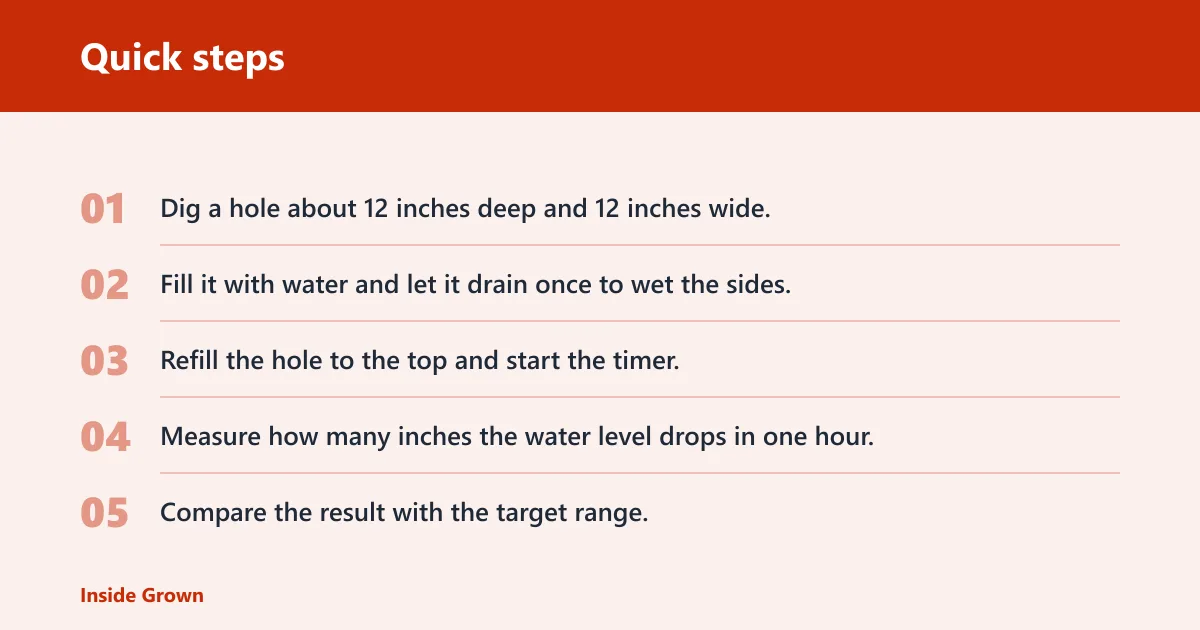
Steps
- Dig a hole about 12 inches deep and 12 inches wide.
- Fill it with water and let it drain once to wet the sides.
- Refill the hole to the top and start the timer.
- Measure how many inches the water level drops in one hour.
- Compare the result with the target range.
If the soil drops around 1 to 3 inches per hour, drainage is usually in a workable range. Less than 1 inch per hour points to poor drainage, often from clay, compaction, or a perched layer below the root zone. More than 4 inches per hour points to very fast drainage and low moisture retention.
If that didn’t work, try this next
- Retest in another spot at least a few feet away, because drainage can vary sharply across one bed.
- Check whether the hole sits on a slope, over compacted soil, or in a container mix.
- Add about 1 to 2 inches of compost or shredded leaves to the surface of in-ground beds, then retest after watering in.
- For containers, replace the mix rather than adding garden soil, which can make pots denser.
Why does your garden soil dry out so fast?
Fast drying usually comes from sandy soil, shallow rooting, slope, droughty exposure, or a soil profile that cannot hold enough water in the top layer. Sandy and rocky soils are often responsible for fast drainage, and they can dry shortly after rain.
Compaction can create the opposite problem elsewhere in the same yard. Squeezed-out air pockets reduce infiltration, and compacted soil can stop water from penetrating. Clay soil often holds water near the surface and drains slowly, which is why puddles can linger more than 24 to 48 hours.
Common causes and what they do
- Sandy soil: drains quickly and often needs more water retention.
- Clay soil: holds water near the surface and is linked to puddling and wet soil.
- Compacted soil: reduces infiltration after foot traffic or heavy equipment.
- Slope: sends water downhill before it can soak in.
- Shallow roots: leave plants reliant on the dry top layer.
- Container mix: dries faster than in-ground soil and needs separate watering.
Suppose a tomato bed on a slope wilts on hot afternoons, but the same variety in a level bed stays turgid. The slope may be losing water to runoff, while the level bed holds it long enough for roots to use. The fix is usually water timing and surface cover, not simply more volume.
How to make soil hold water better
Compost, shredded leaves, and aged manure can improve pore space and help sandy soil hold water longer. Organic matter also helps soil keep moisture in the root zone while leaving room for air. Mulch slows evaporation and cuts watering frequency in fast-draining beds.
Use raised beds only when in-ground drainage is severe. They can help where the root zone stays waterlogged, but they do not change how water moves through the native soil below. In containers, adjust the mix and watering schedule separately from in-ground beds.
Fixes by setting
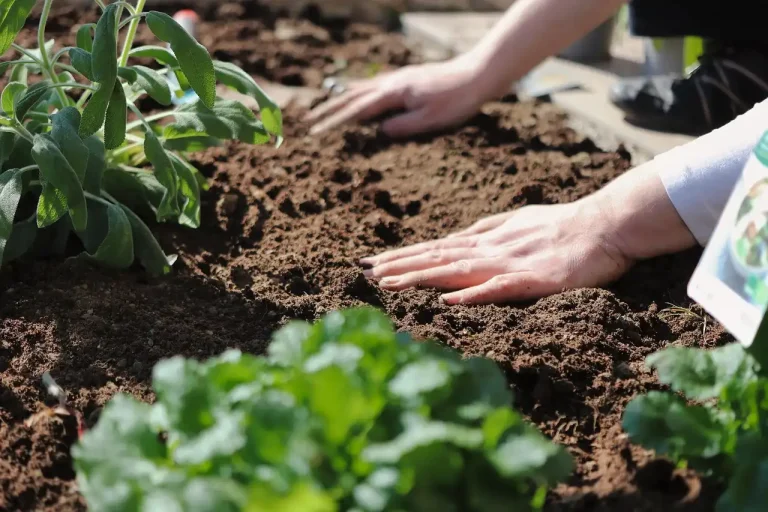
- In-ground sandy beds: work 1 to 2 inches of compost, shredded leaves, or aged manure into the top layer, then add mulch.
- Raised beds: top-dress with organic matter and use mulch, but check whether the native soil below is forcing water away or holding it up.
- Containers: refresh the potting mix, water in two passes, and do not add garden soil.
- Slopes and droughty spots: create shallow basins or use thicker mulch so water stays put long enough to soak in.
Organic matter helps most when the problem is low retention in sandy soil. It will not fix runoff from a steep slope or a compacted layer below the root zone. In those cases, correct the drainage pattern first.
Common mistakes
Watering more is not always the answer. Extra watering can hide a drainage issue for a day, then leave roots short of oxygen if the soil also has a slow layer below.
- Assuming every wilted plant is underwatered.
- Adding compost when runoff is the real problem.
- Using the same fix for containers and in-ground beds.
- Reading a dry surface as proof that the full root zone is dry.
- Ignoring a compacted layer created by foot traffic or equipment.
A small drainage issue can become a major foundation or mold problem in a few years, so persistent puddling near structures deserves attention fast.
Frequently asked questions
What is poorly drained soil?
Poorly drained soil stays wet too long after rain or irrigation. A practical warning sign is puddling that remains more than 24 to 48 hours. If water cannot move through the root zone, roots lose oxygen and the soil often feels slick, heavy, or sticky rather than loose.
How fast should garden soil drain?
About 1 to 3 inches per hour is generally considered ideal for many garden settings. Less than 1 inch per hour suggests poor drainage, while more than 4 inches per hour suggests excessively fast drainage. Use the hole-and-refill test to compare different beds.
Can sandy soil drain too fast?
Yes. Sandy soil often drains quickly and can dry shortly after rain. It usually benefits from more water-retention material, such as compost, shredded leaves, or aged manure, plus mulch to slow evaporation. The goal is better retention, not saturation.
How does it affect soil drainage?
Compaction reduces pore space, so water cannot move through easily. Foot traffic, repeated equipment passes, and working wet soil can squeeze out air pockets and create hard, crusted ground. If the test hole empties very slowly, compaction is a strong suspect.
Why is my garden soil so hard?
Hard garden soil usually points to compaction or a clay-heavy profile. Compacted soil feels dense and crusted because air pockets have been squeezed out. Clay soil can also feel hard when dry and then stay wet near the surface after watering.
How to make potting soil drain better
For containers, the fix is usually a fresh potting mix with better structure, plus careful watering in stages. If water runs through immediately or the mix dries in a day, repot into a container blend made for pots rather than adding garden soil or extra water.