When to Use Landscape Fabric Under Mulch
Use fabric under mulch only when you need separation or slope stability; in planted beds, skip it unless the site is low-maintenance and the fabric will not block future soil work. Put it in the wrong place and weeds grow through seams, roots hit a barrier, and cleanup gets harder. This guide explains where fabric helps, where it fails, and how to decide for beds, trees, and slopes.
Should you put fabric under mulch?
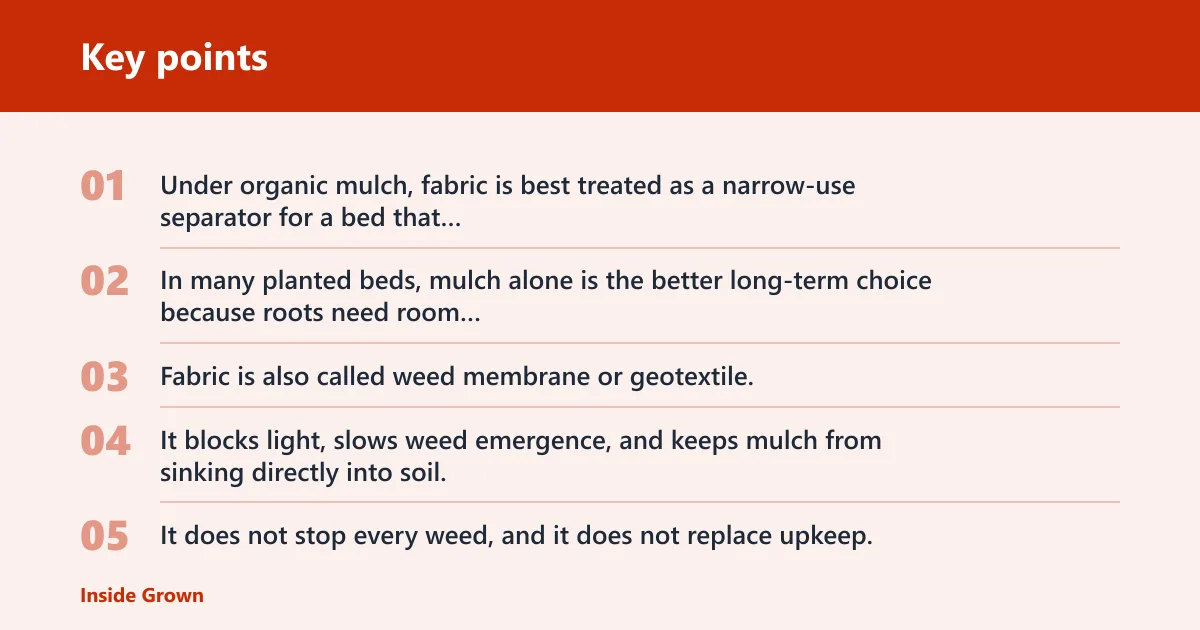


Only sometimes. Under organic mulch, fabric is best treated as a narrow-use separator for a bed that needs short-term weed suppression, cleaner mulch layers, or extra stability on a slope. In many planted beds, mulch alone is the better long-term choice because roots need room and the soil needs periodic renewal.
Fabric is also called weed membrane or geotextile. It blocks light, slows weed emergence, and keeps mulch from sinking directly into soil. It does not stop every weed, and it does not replace upkeep.
What fabric does and does not do
Fabric keeps surface materials from mixing with soil below. It can reduce the need to top up gravel, and one guide says it is useful under gravel paths and driveways. That same guide says it is not recommended under bark mulch in planted borders.
It is a separator first, not a cure-all. Wind-blown seeds can root in mulch on top, organic debris can build into a thin soil layer above the fabric, and old material can become hard to remove later.
When mulch alone is the better call
For shrub and perennial borders, mulch-only beds usually age better. Organic mulch suppresses weeds without fabric in many beds, breaks down over time, and can be refreshed without disturbing roots. That is a better fit where soil exchange and future planting matter.
A common first-timer mistake is putting fabric under a fresh perennial border and then covering it with a thin mulch layer. Within a season, debris collects on top, weeds root in that debris, and the fabric becomes part of the mess instead of a cleanup aid.
Fabric decision matrix
This table gives a bed-by-bed decision rule. Use it to match the surface material, the need for separation, and the amount of maintenance you can accept over 24 months. Where the goal is gravel or rubber mulch stabilization, fabric makes more sense than in planted mulch beds.
| Bed type | Recommended substrate | Fabric yes/no | Expected failure risk | Maintenance over 24 months |
|---|---|---|---|---|
| New shrub bed | Prepared soil with 2 to 3 inches of wood chips or bark mulch | No, unless the site slopes or needs temporary separation | Medium if fabric is used under planting holes and roots expand | Low to medium; top up mulch once or twice |
| Perennial border | Organic mulch only, or cardboard plus mulch during bed reset | No | High; fabric can block renewal and complicate division | Medium; mulch refresh and seasonal weeding |
| Tree ring | Mulch ring kept broad and shallow, with a clear trunk flare | Usually no; use only for a defined decorative ring on stable ground | Medium to high if buried too deeply or packed against the trunk | Low to medium; edge cleanout and mulch top-up |
| Rubber mulch play area | Rubber mulch over a prepared base that resists mixing | Yes, often useful for separation and stabilization | Low to medium if seams are secured and edges are contained | Low; inspect edges and redistribute loose material |
| Sloped bed | Mulch or stone with strong edge control and drainage awareness | Yes, often helpful for erosion control | Medium; runoff can expose seams and move mulch downhill | Medium; check staples, edges, and bare spots after storms |
How fabric works under mulch
Fabric belongs below the mulch layer, not above it. The usual sequence is cleared soil, fabric, overlaps, pins or staples, then mulch. That order matters because mulch is the visible wear layer, while fabric is the barrier beneath it.
Woven vs non-woven fabric
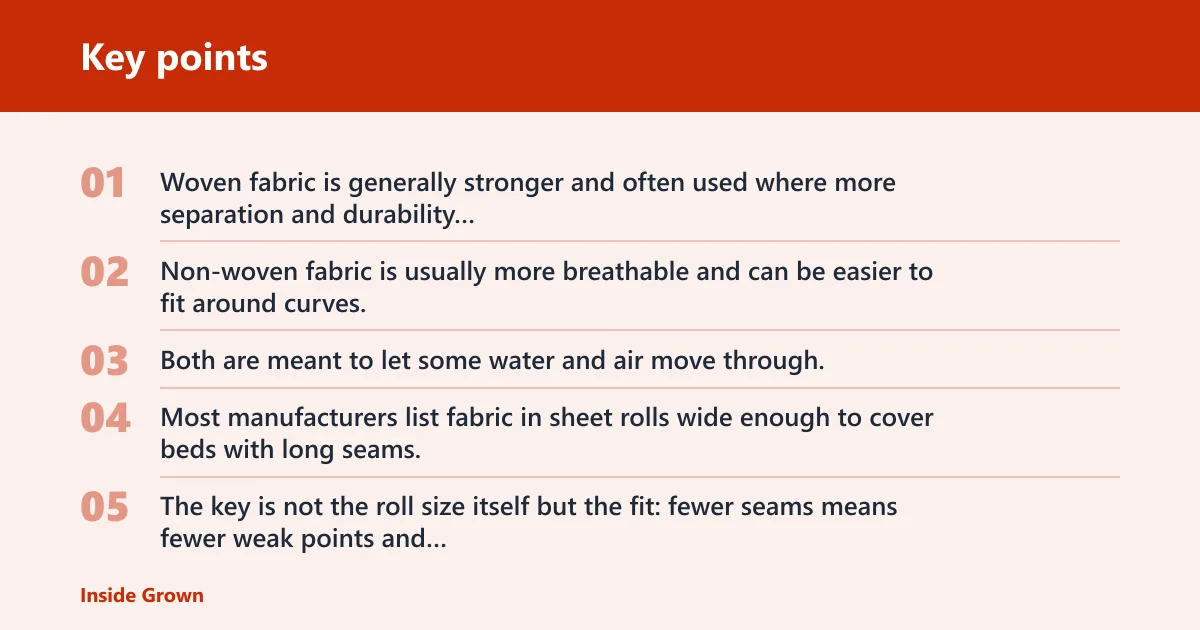
Woven fabric is generally stronger and often used where more separation and durability are needed, such as paths, gravel, or slopes. Non-woven fabric is usually more breathable and can be easier to fit around curves. Both are meant to let some water and air move through, but neither is a free pass for plant health.
Most manufacturers list fabric in sheet rolls wide enough to cover beds with long seams. The key is not the roll size itself but the fit: fewer seams means fewer weak points and less weed intrusion.
Water and air movement
Good fabric allows some permeability to water and air, but that does not mean it disappears under a bed. Pores can clog with fine debris and decomposed mulch. Once that happens, the surface can shed water unevenly and hold a crust of organic matter above the barrier.
Washington Rock notes fabrics are often petroleum based. That matters because exposed fabric can degrade under UV light and become brittle or difficult to pull up later.
Pins, overlaps, and edge control
Fabric staples or pins are usually U-shaped wire fasteners, commonly 4 to 6 inches long. Use more of them on slopes and windy sites. Overlap seams so soil and weeds do not punch through the gaps, and anchor edges so the fabric does not curl or creep under mulch.
Why mulch goes on top
Mulch sits on top because its job is surface cover. It shades the soil, moderates temperature, and hides the fabric from light. If mulch is placed under fabric, the barrier is in the wrong position and the bed will not work as intended.
Suppose a 6-by-12-foot shrub border gets fabric but only a thin dusting of bark over it. By the second growing season, wind-blown leaves collect in the bark, weeds root in that debris, and the exposed edges begin to lift. The failure starts at the edges, then spreads inward.
When does it make sense?
Fabric makes sense when separation matters more than soil renewal. That usually means gravel, some slopes, temporary pre-planting use, or a rubber mulch area that needs containment. In those cases, the material choice is about stability first and weed suppression second.
Gravel and stone areas
Under gravel or rock, fabric is often the better fit because it keeps stone from disappearing into soil. It can also reduce gravel replenishment and potholes, which is why some guides recommend it under gravel paths and driveways. In stone areas, the barrier is doing the job it was designed to do.
Slopes and erosion control
On a slope, fabric can help hold a surface layer in place while you build the bed. It does not stop runoff by itself, but it can reduce mixing between the top dressing and the soil below. Staples matter more here, because gravity and water work against the installation.
Temporary pre-planting installs
Temporary use is different from permanent use. If you need to suppress weeds before planting later, fabric can buy time on a prepared soil surface. It should be easy to remove, and it should not be treated as a permanent substitute for mulch and routine bed care.
Rubber mulch and play areas
Rubber mulch does not decompose like bark or wood chips, so it needs stabilization more than organic mulch does. Fabric is often discussed under rubber mulch in play areas and decorative beds because it helps keep the layer separated from soil and reduces sinking.
Do you need fabric under rubber mulch? Often yes, if the goal is to keep the rubber from mixing with the base layer. The key is containment: solid edging, well-prepared ground, and enough fasteners to keep the barrier from shifting.
What fails over time
Long-term problems usually start with material that lands on top of the fabric. Leaves, bark dust, and blown-in soil turn into a thin growing layer. Weeds then root above the barrier, even if they cannot push up from below.
Weeds on top of the fabric
Fabric blocks many weeds from below, but it cannot stop seed from landing on the mulch surface. Once debris accumulates, weeds germinate in that layer. The bed may look clean from a distance while still needing hand removal close up.
Mulch breakdown and debris buildup
Organic mulch breaks down and needs topping up. As it decomposes, it can form a soil-like layer on top of the fabric. That layer traps moisture and debris, which gives weeds a place to root and makes the surface harder to rake clean.
Root growth and cleanup problems
Roots do not always stop at fabric. They may spread around it, above it, or through openings where planting holes were cut. Later, if the bed needs renovation, pulling out old fabric can tear roots, disturb plantings, and leave fragments behind.
What are the long-term problems with fabric under mulch? The biggest ones are clogged pores, weed growth on top, root interference, and a cleanup job that gets harder each year. The barrier can outlive the bed design, which means the project that once looked tidy becomes the thing that must be removed.
UV wear and removal issues
If fabric is left exposed, UV wear speeds up deterioration. Edges fray, fasteners loosen, and the surface becomes brittle. Thin mulch cover makes that worse because the fabric is no longer protected from light or debris.
Installation basics before you lay fabric
Good installation starts before the roll comes out. Clear the bed, grade it, and make sure drainage will still work. Fabric cannot compensate for an uneven, weedy, or waterlogged base.
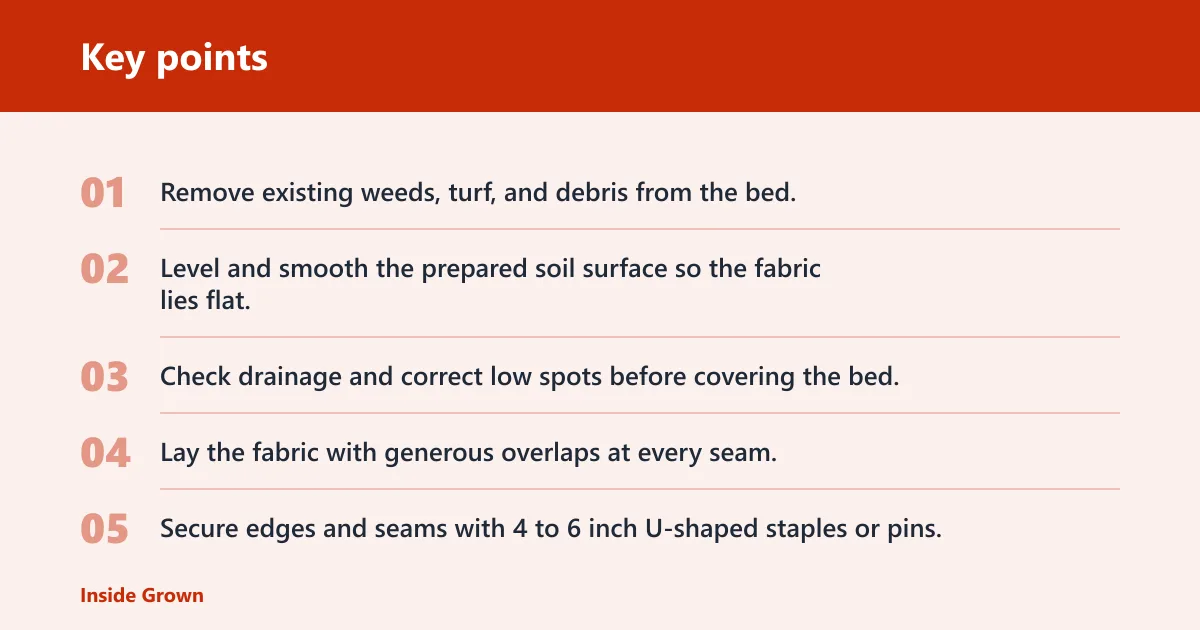
- Remove existing weeds, turf, and debris from the bed.
- Level and smooth the prepared soil surface so the fabric lies flat.
- Check drainage and correct low spots before covering the bed.
- Lay the fabric with generous overlaps at every seam.
- Secure edges and seams with 4 to 6 inch U-shaped staples or pins.
- Cover the fabric with enough mulch to protect it from light and debris.
What should you put down before fabric?
Put down clean, weed-free, smoothed soil first. Existing grass and weeds should be removed or killed before installation rather than covered directly in most cases. If the bed needs a reset, cardboard plus mulch can be a better short-term choice than fabric in planted areas.
Can you put fabric directly over grass?
Directly over living grass is usually a poor move. Grass can push through edges, seams, and pin holes, and the buried turf may keep growing for a while. It is better to remove or kill the grass first, then prepare the soil and install the barrier if the site truly needs it.
How much mulch should go on top?
Use enough mulch to cover the fabric fully and keep it from being exposed. Some guides call for 2 to 3 inches on top in planted areas that use fabric, but thin coverage is a problem because it leaves the barrier exposed to UV and debris. More is not always better if it buries stems or trunks.
Can you put fabric over mulch? No. Fabric belongs beneath the top layer, after soil prep and before mulch. Putting it over mulch reverses the system and leaves the mulch exposed while blocking the surface from doing its job.
Frequently asked questions
When should you use fabric?
Use it where the surface material needs to stay separate from the soil, such as gravel paths, rock cover, some slopes, and rubber mulch areas. It is also reasonable as a temporary layer before planting or for beds that will not need frequent digging or soil renewal.
Do you put mulch on top of fabric?
Yes. Mulch belongs on top of the fabric, not under it. That protects the fabric from UV wear, hides it from light, and gives the bed its finished surface. Without mulch cover, the fabric is more likely to fray, clog, and become hard to remove.
Is fabric a good idea under mulch around trees?
Usually not as a default. A tree ring can use fabric if the goal is to define a decorative area, but packed fabric around the trunk or buried under deep mulch can create maintenance and root-exchange concerns. A broad mulch ring with a clear trunk flare is often the safer option.
What type of fabric works best under mulch?
There is no universal best choice for planted mulch beds, because many of those beds do better without fabric. If you need it for a slope or stone area, woven fabric is often chosen for durability, while non-woven can fit curved beds more easily. Match the product to the site, not the other way around.