What Is Humus in Soil, and Why It Matters for Gardens
Humus is the dark, stable end stage of decomposed organic matter in soil; it holds nutrients and water, and a bed usually needs more organic matter when it has less than about 3–5% soil organic matter. Skip the distinction and you can keep adding fertilizer to soil that still drains poorly, compacts easily, and feeds roots badly. This guide explains how humus forms, why it matters, and how to tell when to add compost or fix a different soil problem.
This guide is part of our Soil science basics series.
What is humus in soil?


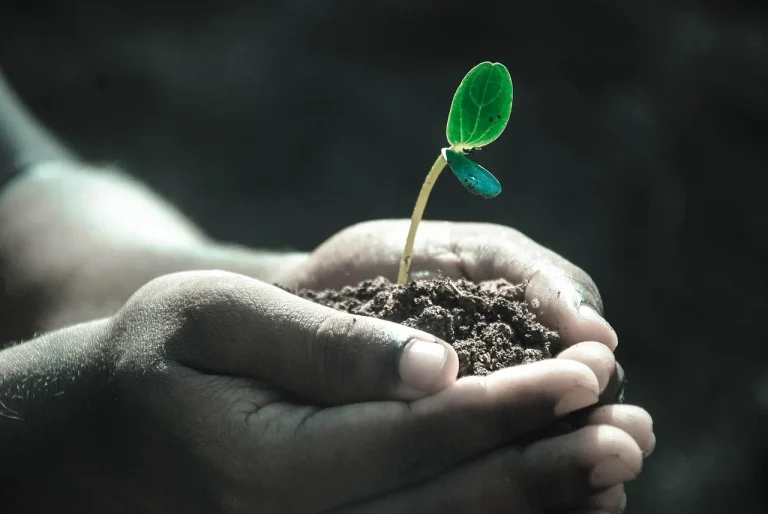
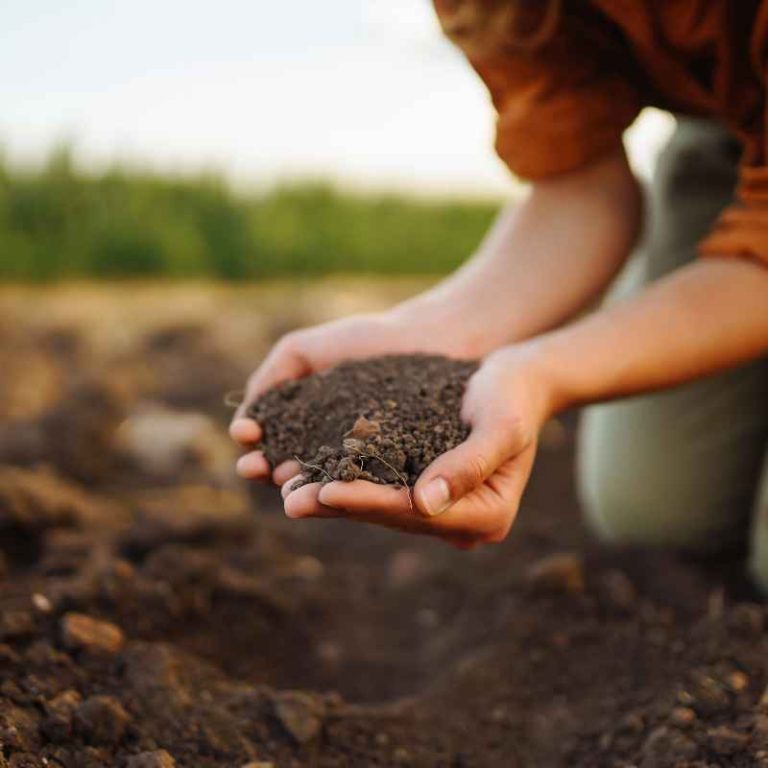
Humus is the dark, stable organic component of soil made from decomposed plant and animal matter. It is not fresh leaves or grass clippings still breaking down. In garden soil, humus is the long-term storage form of organic matter, usually concentrated in the top 4 to 12 inches of the soil profile.
Humus vs. fresh organic matter
Fresh organic matter includes fallen leaves, twigs, food scraps, clippings, insects, mushrooms, and other living or once-living material. Those inputs are raw material. Humus is what remains after decomposition has progressed far enough that the material becomes stable and no longer looks like the original residue.
That difference matters. A pile of shredded leaves on the surface is organic matter, but it is not humus yet. A soil bed can contain both at once: fresh residues at the surface and stable humus deeper in the topsoil.
What humus looks and feels like in garden soil
Humus has a loose, crumbly texture. It darkens soil, but color alone does not prove that a bed has good structure or enough humus. Very dark soil can still be compacted, soggy, or short on nutrients.
Where humus sits in the soil profile
Humus is found near the surface, mainly in the top 4 to 12 inches of soil. That is where roots, residues, worms, fungi, and bacteria are most active. It is also the layer most affected by digging, traffic, and erosion.
How does humus form?
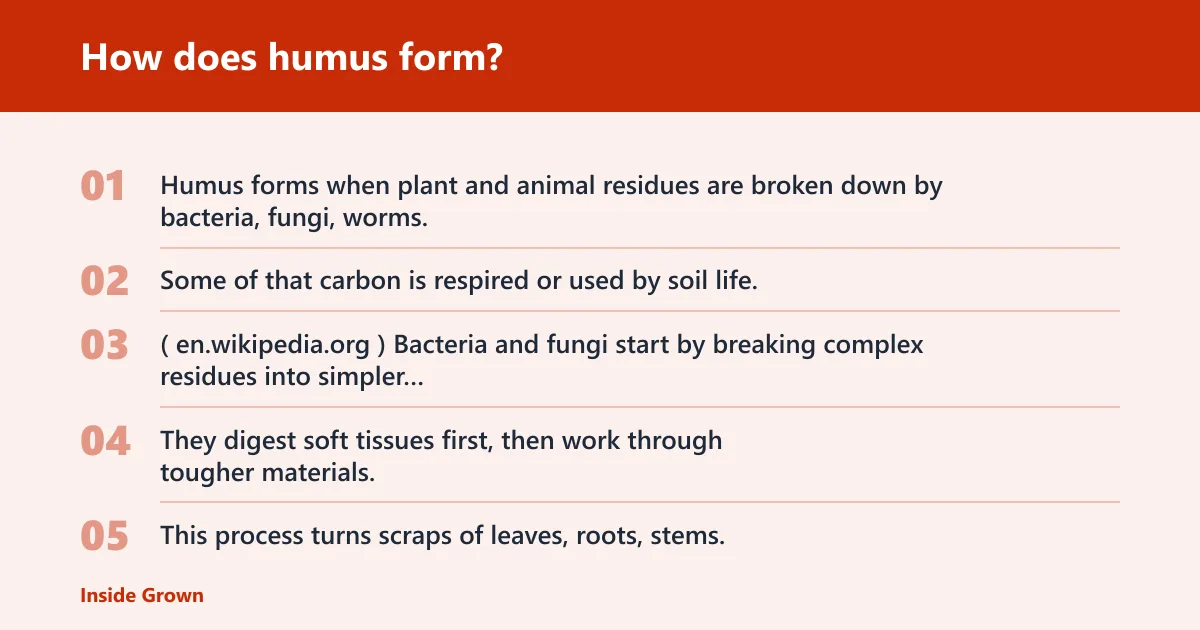
Humus forms when plant and animal residues are broken down by bacteria, fungi, worms, and other microorganisms until the remaining material becomes stable. Some of that carbon is respired or used by soil life, while the rest becomes part of soil organic matter that resists rapid decay. (en.wikipedia.org)
How bacteria and fungi break down residues
Bacteria and fungi start by breaking complex residues into simpler chemical compounds. They digest soft tissues first, then work through tougher materials. This process turns scraps of leaves, roots, stems, and food residues into smaller compounds that can be reused by soil organisms or become part of humus.
What worms and other soil organisms do
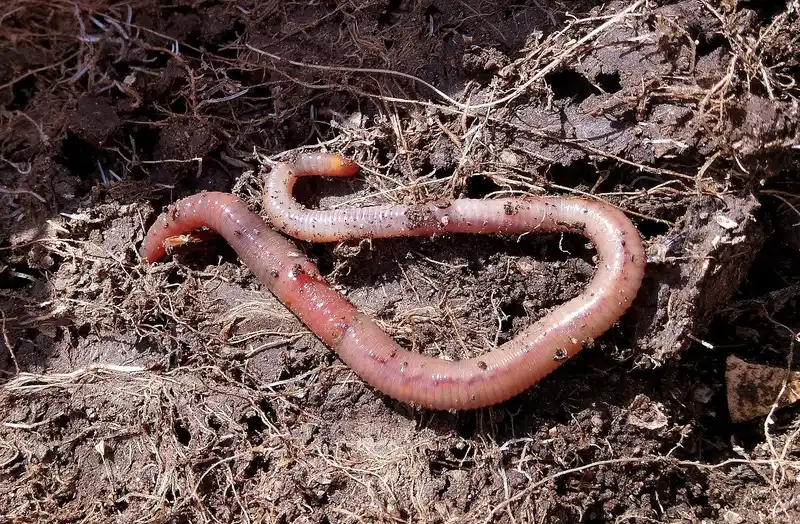
Worms shred residues, mix them with soil, and leave behind casts that are easier for microbes to work on. Other organisms keep breaking material into smaller pieces. The result is not instant soil improvement; it is a slow conversion from raw organic matter to stable humus.
Why some decomposed material becomes stable humus
Not every decomposed residue becomes humus in the same way or at the same speed. Some material is consumed quickly. Some becomes tied to mineral particles or protected inside aggregates, which helps it persist longer. That is why reduced tillage and steady organic inputs matter.
Why does humus matter for plant growth?
Humus matters because it helps soil cling into crumbs, opens pathways for air and water, and supports life around roots. It improves soil structure, feeds microbes, and contains nutrients, especially nitrogen in a plant-usable form. Plants grow better when roots can explore crumbly, biologically active soil.
Soil structure, aeration, and root movement
Humus binds mineral particles into crumbly aggregates. That improves soil structure, reduces erosion, and helps air and water move through soil to roots. Roots spread more easily in a bed that is loose and aggregated than in one that seals over or crusts after rain.
Water retention and water release
Humus increases the water storage potential of soil. It holds moisture on particle surfaces and in pores, then slowly releases water when soil dries. That buffering helps plants ride through short dry spells without making the soil stay wet for too long.
Nutrient supply and microbial activity
Humus contains important nutrients, especially nitrogen in a plant-usable form. It also supports microbial activity by giving soil organisms a stable habitat and food source. That biological activity helps make nutrients available over time instead of all at once.
Picture a 4-by-8-foot vegetable bed that turns dusty within two days after watering. If the soil is also light, crumbly, and full of roots that spread easily, low organic matter may be part of the issue. If the same bed is dark but still puddles and stays sticky, compaction may be the bigger problem.
How is humus different from compost?
Compost is a human-made process or product made from food scraps, yard waste, manure, and other organic inputs. Humus is the stable end stage of decomposition in soil. Compost can add organic matter, but not all compost is yet humus when you put it in the bed.
Compost as a source of organic matter
Finished compost can be spread on top of garden soil to feed the system that creates humus. It supplies partially to fully decomposed organic matter and supports soil life. Used as a top-dress, compost helps build the conditions that favor stable humus formation.
When compost is still actively decomposing
Some compost is still biologically active. It may heat, smell earthy but not fully finished, or still show recognizable bits of leaves and stems. That material can still improve the soil, but it is not the same as stable humus already integrated into the topsoil.
When compost behaves more like stable humus
Well-finished compost that has decomposed thoroughly behaves more like stable organic matter once it is mixed into soil and processed by microbes. Even then, it is best to think of compost as an input and humus as a longer-term soil state, not the same thing.
Does humus improve drainage and water holding?
Humus helps soil drain better while still holding moisture. It does not fix every drainage problem by itself. In heavy clay or compacted beds, humus helps most when paired with less disturbance, fewer footsteps, and better structure over time.
Why humus helps soil drain without drying out fast
When humus binds particles into stable aggregates, water can move through larger pores instead of sitting on a sealed surface. At the same time, smaller pores and particle surfaces hold usable moisture. That is why humus can improve both drainage and water retention at once.
What humus can and cannot fix in heavy or compacted soil
Humus cannot instantly undo deep compaction, perched water tables, or drainage blocked by dense subsoil. If a bed stays waterlogged after rain, the first problem may be physical, not nutritional. Dark color alone does not mean the soil will drain well.
How do you tell whether a bed needs humus, fertilizer, or relief from compaction?
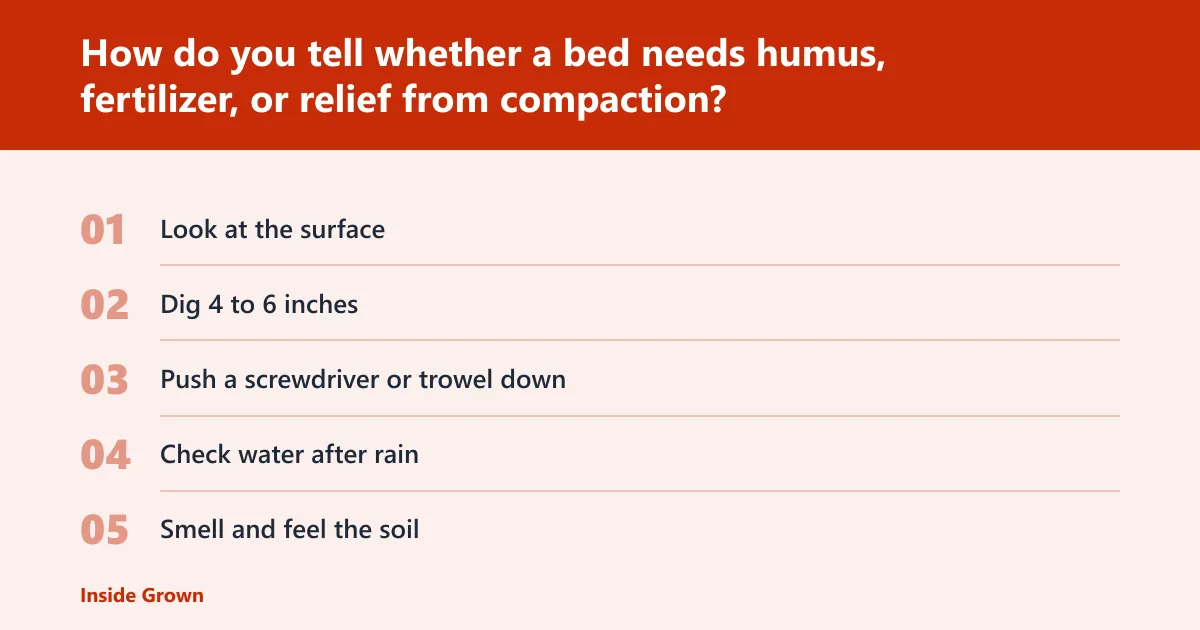
Start with visible clues and a few quick hand tests. Humus-poor soil usually looks light, dries fast, and breaks apart into loose, weak crumbs. Nutrient-poor soil can look normal but leave plants pale or stunted. Compacted soil feels dense, resists a trowel, and drains slowly.
A simple gardener decision checklist
- Look at the surface. Bare, crusted soil with little residue often points to low organic inputs.
- Dig 4 to 6 inches. If the soil is light and crumbly but plants are pale, nutrients may be lacking more than humus.
- Push a screwdriver or trowel down. Strong resistance suggests compaction.
- Check water after rain. Standing water or a slick, sticky layer points to drainage or compaction issues.
- Smell and feel the soil. Earthy, loose soil suggests better biological activity than sour, dense soil.
- Look at roots if possible. Short, bent, or shallow roots often signal compacted ground.
Best next amendment for each problem
| What you observe | Likely problem | Best next step |
|---|---|---|
| Soil is light, dusty, and low in residue | Humus-poor soil | Top-dress with compost, add leaf mulch, and keep soil covered |
| Plants are pale, growth is weak, but soil structure seems decent | Nutrient shortage | Use fertilizer based on crop needs or soil test guidance |
| Trowel hits hard resistance; water lingers on the surface | Compaction | Reduce traffic, loosen carefully, add organic matter, and avoid tilling wet soil |
| Soil stays muddy and smells sour after rain | Poor drainage | Improve structure, avoid overwatering, and address grading or subsoil issues if present |
Say your raised bed looks dark after a season of tomato harvests, but the plants wilt quickly and the soil turns hard between waterings. That bed may need more surface organic matter and less disturbance, not only more fertilizer. If the soil feels spongy but puddles after irrigation, drainage and compaction deserve attention too.
How do you add or preserve humus in garden soil?
To add or preserve humus, keep a steady supply of organic matter on and in the soil. Compost top-dressing, leaf mulch, cover crops, reduced tillage, and leaving grass clippings in place when appropriate all help. The goal is to feed soil life while protecting the existing top layer.
Compost top-dressing and mulch
Spread finished compost over the soil surface and let rain, worms, and microbes work it in gradually. Leaf mulch does something similar and protects the surface from heat, crusting, and erosion. These practices support the pathway from fresh organic matter to stable humus.
Cover crops and reduced tillage
Cover crops keep living roots in the soil and add residues when cut down. Reduced tillage helps preserve humus by limiting how often stable aggregates are broken apart. Less disturbance means soil life can keep building and protecting organic matter.
Leaving leaves or grass clippings in place
Leaving leaves on beds or grass clippings on lawns can return carbon and nutrients to the system. Use this only where the material will not smother desired plants or create disease pressure. The point is to keep organic material cycling in place instead of removing it from the site.
How often should humus be replenished in a garden?
Humus does not need a fixed universal schedule, because replenishment depends on disturbance, crop intensity, mulch cover, and how much organic matter leaves the bed. Heavily worked vegetable beds usually need inputs more often than mulched perennials, while lawns and low-till beds may lose humus more slowly.
What changes the pace of humus loss
Frequent digging, bare soil, and repeated harvest removal tend to speed loss of organic matter. Less disturbance, steady mulch, and cover crops slow that loss. Raised beds often need more attention than in-ground beds because their soil can dry, warm, and decompose organic matter faster at the surface.
Common bed types and practical timing
- Raised vegetable beds: add a thin layer of compost or other organic mulch regularly, often each season if the bed is intensively planted.
- Perennial beds: refresh mulch as it breaks down and keep roots covered year-round.
- Lawns: leave clippings in place when appropriate and avoid stripping away all organic residue.
- Heavily tilled beds: expect faster humus loss and plan for more frequent organic matter additions.
A common first-timer mistake is treating all dark soil as “healthy enough” and then adding fertilizer every season. If the bed is compacted, tilled often, or left bare, humus can keep dropping even while nutrients are being replaced. The soil may stay dark for a while and still lose structure.
What happens when garden soil loses humus over time?
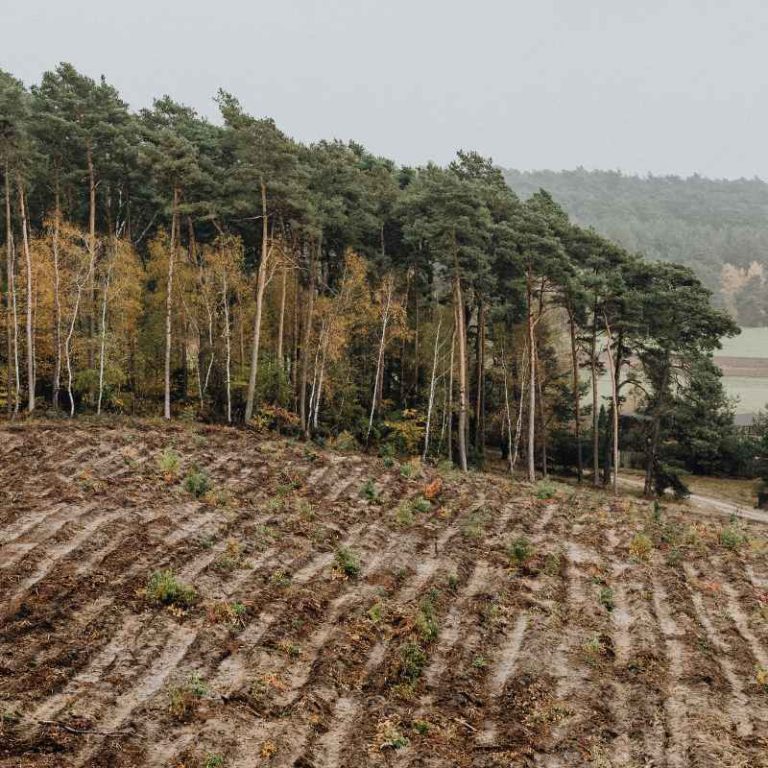
When humus declines, soil can become less stable, less crumbly, and less able to hold moisture without getting waterlogged. Roots face more resistance, erosion risk rises, and microbial activity often slows. The bed may still grow plants, but it works against them more often.
Common signs of humus loss
Soil that crusts after rain, dries into clods, or turns dusty quickly can be losing stable organic matter. Beds may need watering more often, and fertilizer may seem less effective because roots cannot explore the soil well. Plants then show stress even when nutrients are present.
Why dark soil alone can mislead you
Some soils look dark because of recent compost, surface residue, or wetness, not because they contain stable humus. The better test is how the soil behaves: does it crumble, drain, and hold enough moisture for roots? That tells you more than color alone.
How do worms and microbes create humus?
Worms and microbes create humus by breaking residues into smaller compounds and mixing them into soil where stable forms can build. Bacteria, fungi, and other microorganisms do the chemistry. Worms do the physical sorting. Together they turn raw residues into long-lasting soil organic matter.
Why this biology matters to gardeners
A soil with active worms and microbes is usually processing organic inputs more efficiently than a soil that is bare, compacted, or repeatedly disturbed. That is why leaf mulch, compost top-dressing, cover crops, and reduced tillage matter: they support the organisms that make humus.
Frequently asked questions
What is humus in soil?
Humus is the dark, stable form of organic matter in soil. It comes from decomposed plant and animal residues and usually sits in the top 4 to 12 inches. Its crumbly texture helps soil hold together while still letting roots, air, and water move through it.
How is humus different from compost?
Compost is a human-made process or product from organic scraps, yard waste, and manure. Humus is the stable end stage of decomposition in soil. Compost can add material that later becomes humus, but not all compost is fully stable when it is first applied.
Why does humus matter for plant growth?
Humus improves soil structure, supports root movement, and helps air and water move through the root zone. It also supports microbial activity and contains nutrients, especially nitrogen in a plant-usable form. That combination gives roots a better physical and biological environment.
Does humus improve soil drainage?
Yes, humus can improve drainage by helping particles form aggregates and opening pore space for water movement. It also helps soil hold moisture, so the bed does not dry out too fast. But humus cannot fix every drainage problem if compaction or dense subsoil is the main issue.
How do you add humus back to garden soil?
Use finished compost as a top-dress, keep leaves or other organic mulch on the surface, grow cover crops, and reduce tillage. These practices add organic matter and protect existing humus from rapid loss. Over time, worms and microbes process the material into more stable soil organic matter.
Can fertilizer replace humus?
No. Fertilizer supplies nutrients, but it does not rebuild soil structure, improve aggregation, or restore the organic matter that humus provides. A bed can have plenty of fertilizer and still drain badly, compact easily, or support weak root growth if humus is low.