Soil Texture vs Soil Structure: Gardeners’ Guide
Soil texture is the sand-silt-clay mix; soil structure is how those particles clump. If water drains in under a couple of hours, the texture may be fine and the issue may be structure or compaction. I have seen people waste a season fixing the wrong one, because clay that needs organic matter gets handled differently from hardpan that needs loosening. This guide shows simple field tests, common clues, and the right amendment or digging fix for each case.
This guide is part of our Soil science basics series.
| Factor | Soil texture | soil structure: what gardeners need to know | Winner |
|---|---|---|---|
| What it describes | Particle size distribution: sand, silt, and clay proportions. | How particles arrange into aggregates, peds, and pore space. | Tie |
| How fast it can change | Very slow; mineral particle sizes do not change in a season. | Can improve in a season with organic matter and better handling. | soil structure: what gardeners need to know |
| Best clue for gardeners | Feel: gritty, smooth, or sticky. | Behavior: crusting, puddling, runoff, root restriction. | soil structure: what gardeners need to know |
| What fixes it | Mostly classification, not amendment. | Organic matter, less traffic, dry-surface work, careful loosening. | soil structure: what gardeners need to know |
| Most common mistake | Adding compost expecting sand-to-clay conversion. | Calling every dense bed “clay” when compaction is the issue. | soil structure: what gardeners need to know |
| Why it matters for garden fixes | Texture tells you what the soil is made of. | Structure tells you how well roots, water, and air can move through it. | soil structure: what gardeners need to know |
| Water and nutrient behavior | Sand has large particles and relatively little surface to hold water or nutrients; silt is in the middle; clay has tiny particles and can hold more water and nutrients. | Open pore space helps water and air move; when pores are squeezed shut, drainage and root growth suffer. | soil structure: what gardeners need to know |
| Signs of trouble | Fast-draining beds can point to sand. | Puddling, crusting, sideways roots, visible footprints, and runoff point to poor structure or compaction. | soil structure: what gardeners need to know |
| Effect of compost | Compost will not turn sand into loam or change mineral particle sizes. | Compost can improve aggregation, water-holding capacity, and biological activity. | soil structure: what gardeners need to know |
| Compaction | Compaction can happen in sandy, loamy, or clay soil, but it does not change texture. | Compaction reduces pore space and can make a compacted loam drain worse than a well-structured clay. | soil structure: what gardeners need to know |
| Best-fit use in diagnosis | Useful for identifying sand, silt, clay, or loam by feel and ribbon test. | Useful for deciding whether the issue is crusting, puddling, runoff, or root restriction and what fix to use. | soil structure: what gardeners need to know |
What is the difference between soil texture and soil structure?


Soil texture is the mix of sand, silt, and clay; soil structure is the way those particles group together. Texture stays mostly fixed because it comes from mineral particle size. Structure changes more easily because management, organic matter, and biology can build or break aggregates, porosity, and aeration.
Texture is the material; structure is the arrangement
Sand is coarse, about 0.05 mm to 2 mm, and drains fast through open gaps. Silt is smaller, 0.002 mm to 0.05 mm, and feels smooth in the hand. Clay is very fine, tends to stick when wet, and can hold more water and nutrients, especially when the soil is not compacted. (en.wikipedia.org) (en.wikipedia.org)
Loam is the balanced mix many gardeners want, but loam still needs structure. A loam with poor aggregation can crust and pond after rain. A clay loam with good aggregates can work better than a loose sandy bed that dries out by afternoon.
Why the difference matters for garden fixes
Texture tells you what the soil is made of. Structure tells you how well roots, water, and air can move through it. If the problem is texture, compost will not turn sand into loam in one season. If the problem is structure, compost and better traffic control can make a real difference this year.
How can I tell if my garden soil is sandy, loamy, or clay?
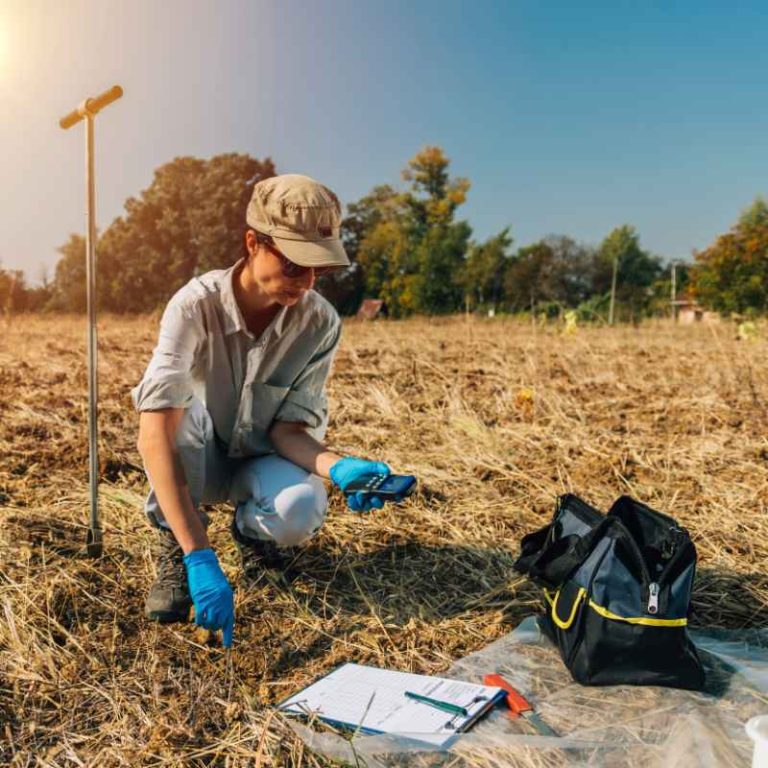
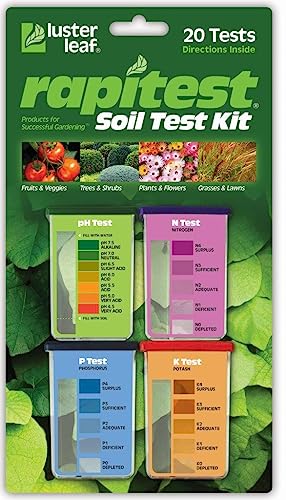
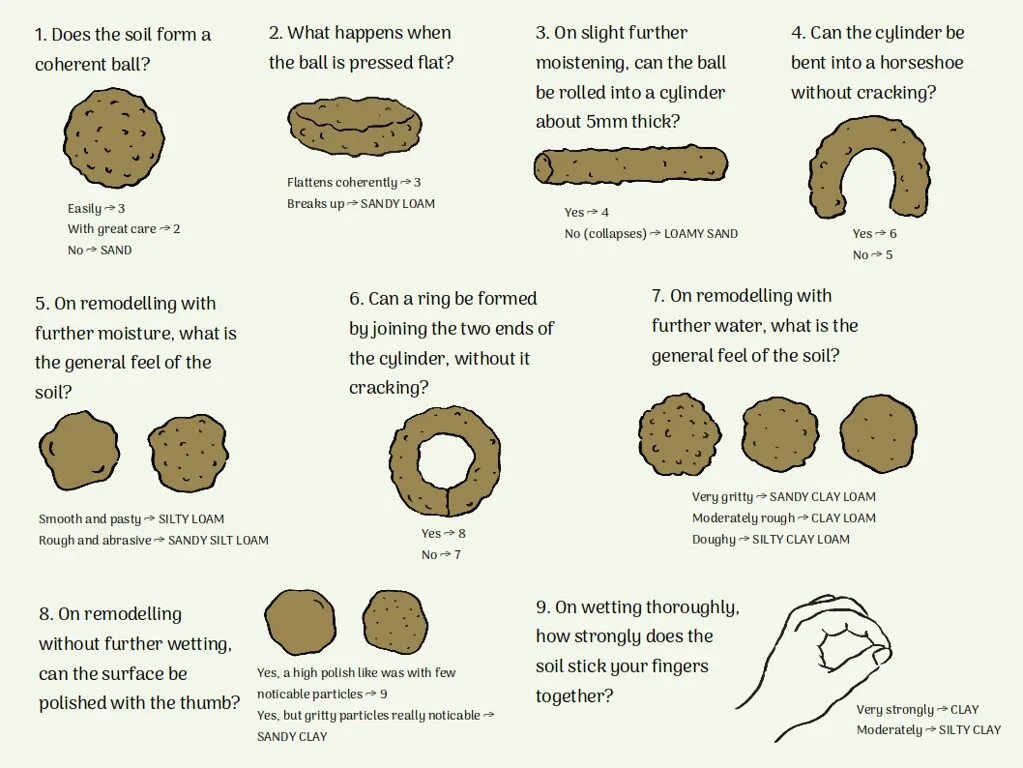
The quickest field read comes from feel and water behavior. Sandy soil feels gritty and drains quickly, often leaving a shovel clean in seconds. Silty soil feels smooth or floury. Clay feels sticky when wet and forms a stronger ribbon or ball. Loam sits between them, with a balanced feel and steadier moisture use.
Use the squeeze and ribbon check
- Moisten a small handful until it holds together.
- Squeeze it into a ball.
- Rub it between fingers for grit, silkiness, or stickiness.
- Try to press it into a ribbon between thumb and forefinger.
- Watch whether it falls apart, holds shape briefly, or ribbons easily.
A sandy sample falls apart fast and feels sharp. A loamy sample may hold together, but it should still break with pressure. A clay sample forms a ribbon and smears more easily. That simple feel test is usually enough to guide the next step.
Read the soil by how water moves
Fast-draining beds often point to sand or loose structure. Slow-draining beds can be clay, but they can also be compacted loam or compacted clay. If water sits on top after watering or rain, that can point to structure or compaction, not just to clay soil.
Why does some soil hold water and nutrients better than other soil?
Particle size and surface area do most of the work. Sand has large particles and relatively little surface to hold water or nutrients. Silt sits in the middle. Clay has tiny particles with a lot of surface area, so it can hold more water and nutrients, though that can become a drainage problem when pores are squeezed shut.
What sand, silt, and clay each do
Sand drains quickly and dries fast after a hot day. That can help in wet sites, but it makes watering and fertility management more demanding. Silt improves water holding compared with sand, yet it can crust after rain if structure is weak.
Clay stores water and nutrients well, but only when its pore space stays open. Once compacted, clay may hold water at the surface while roots struggle below. Loam often feels easier because it balances those traits, especially when organic matter helps keep the soil open.
When is the problem structure, not texture?
If the soil feels reasonable in hand but still puddles, crusts, or blocks roots, structure is likely the problem. Good texture can still fail if aggregates are weak or compaction has reduced pore space. That is why a clay bed can be workable one year and sealed shut the next after wet tillage or foot traffic.
Signs that point to poor structure
- Water pools after irrigation or rain.
- The surface seals or crusts after drying.
- Roots run sideways instead of down.
- Footprints stay visible in wet beds.
- Runoff happens before water soaks in.
Those clues point to poor porosity and weak infiltration. Soil structure can affect porosity, infiltration, and water retention. It can be improved or damaged by farming practices, and garden traffic does the same thing on a smaller scale.
Compaction is not the same as clay
Compaction reduces pore space. It can happen in sandy, loamy, or clay soil. A compacted loam may drain worse than a well-structured clay because the pore network has been squeezed out, not because the texture changed.
What are soil aggregates and why do gardeners care?
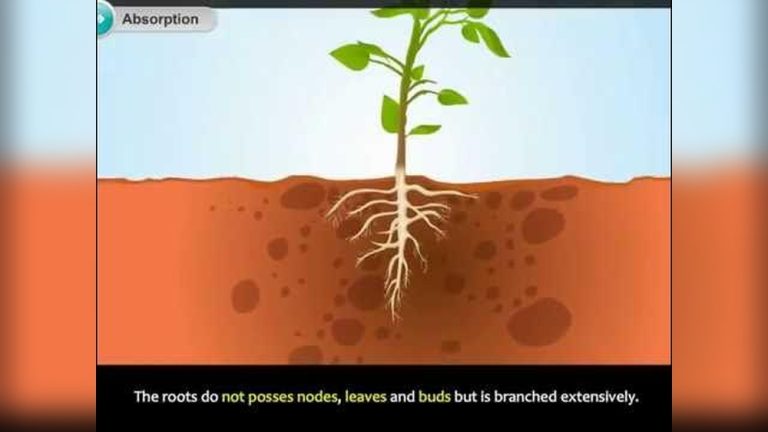
Aggregates are clumps of particles bound together by organic matter, roots, fungi, and other biological activity. They create pore space between the clumps, and that pore space is what lets air in and water move through. Strong aggregate structure usually means better root growth and easier watering.
Porosity, aeration, and infiltration
Porosity is the amount of pore space in the soil. Higher porosity usually means better aeration and faster infiltration, as long as the pores are not so large that water drains away too fast. Roots need oxygen as much as they need moisture. Without it, growth slows.
When structure is poor, roots hit resistance. Water may run off instead of soaking in. Even if the bed looks dark and fertile, the plant can still act drought-stressed because the roots are not reaching the water that is there.
What can compost change, and what can it not change?
Compost can help improve aggregation and water-holding capacity. It feeds microbes, supports root activity, and helps particles bind into stable clumps. What it cannot do is change mineral particle sizes. Compost does not change sand into clay or clay into sand.
Amendments that change feel versus amendments that change structure
Gardeners often confuse a softer hand feel with a changed texture. The feel may improve because the soil has more organic matter and better aggregation, not because the sand-silt-clay ratio changed. That distinction matters when choosing a fix.
Compost helps most in soils that need better aggregation, more biological activity, and more water buffering. It is a structure tool. It is not a particle-size tool.
How do I improve compacted clay soil without making it worse?
The safest path is to stop compaction first, then rebuild structure. Avoid working the soil when it is wet. Add organic matter on the surface or in narrow bands rather than grinding heavy materials into sticky clay. If the bed is hard but damp, wait.
Why sand is usually the wrong shortcut
Adding sand to clay sounds simple, but it can backfire if the mix is poor. In practice, sand can worsen the feel if it is not blended in the right proportion and with enough organic matter. It does not solve compaction by itself, and it can leave the surface crusty.
Best steps for compacted clay
- Keep feet and tools off wet beds.
- Let the soil dry to a workable state.
- Spread compost or other organic matter on top.
- Use broadforking or careful loosening only when the soil crumbles, not smears.
- Mulch and repeat traffic control through the season.
That sequence gives structure a chance to recover. It will not change clay into loam, but it can turn dense clay into a soil that drains and roots better.
How do I know if my soil needs more organic matter?
If the soil breaks into hard slabs, seals after rain, or loses moisture too quickly in sandy beds, organic matter is often low. Another clue is weak aggregation: the soil looks powdery when dry and smeary when wet, with few stable crumbs in between. Organic matter helps most when structure is poor.
What to watch for in the bed
- Crust after watering or rain.
- Thin, weak crumbs instead of stable aggregates.
- Fast drying in sandy soil.
- Poor infiltration even when the texture is not heavy.
- Surface runoff on slopes or packed paths.
Organic matter does not fix every problem. A bed with clay texture and severe compaction may need a season of careful traffic control before compost shows its best effect. A sandy bed may need repeated additions to improve water-holding capacity.
Diagnosis table: symptom, likely cause, best next action
Use this table before adding anything. The goal is to match the fix to the cause. A bed that drains too fast needs a different response from one that crusts, even if both look “bad” at first glance.
| Symptom | Likely cause | Best next action |
|---|---|---|
| Sandy bed dries fast, water disappears quickly, fertilizer leaches | Texture: high sand, low water and nutrient retention | Add compost regularly, mulch, and water in smaller doses more often |
| Loamy bed puddles after rain, crusts on top, roots stay shallow | Structure or compaction, not texture | Reduce traffic, loosen only when dry, add organic matter to rebuild aggregates |
| Clay bed is sticky when wet and brick-hard when dry | Texture plus weak structure, often with compaction | Protect from traffic, add compost, avoid working it wet |
| Water runs off before soaking in | Poor porosity from compaction or sealed surface | Break surface seal gently, mulch, and improve aggregate stability |
| Roots stop at a shallow layer | Compacted layer or hardpan | Loosen the layer when dry and stop repeated pressure on the same path |
How to read the table in three common beds
Sandy bed: If the bed drains too quickly and dries by noon, the texture is doing what sand does. The fix is about holding more water and nutrients, not trying to force a clay-like feel.
Loamy bed: If loam puddles or crusts, structure has likely been damaged. The texture may already be good enough, so the job is to rebuild aggregates and stop compression.
Clay bed: If clay feels sticky and drains poorly, the texture is part of the story. If it also stays dense after drying, compaction has probably joined in. Treat both, but do not assume all clay is doomed.
How does soil porosity affect plant roots and watering?
Porosity controls how air and water move through the bed. More usable pore space gives roots oxygen, room to expand, and access to moisture. Too little porosity leads to slow infiltration, soggy zones, and shallow roots. Too much large pore space can make water vanish too quickly in sandy soil.
What gardeners can do this season
Focus on structure first when the texture is already acceptable. Use compost, mulch, and lower traffic to improve aggregation. Focus on moisture management when the texture is very sandy. Focus on decompaction and dry-weather handling when the bed is dense or sealed.
Choose soil texture if the question is what the soil is made of. Choose soil structure if the question is how the soil behaves.
Texture wins when the goal is classification and long-term expectations. Structure wins when the goal is a faster improvement in drainage, aeration, root growth, and infiltration. In a single season, gardeners can change structure and reduce compaction much more than they can change texture.
If the bed drains in a short time but plants still struggle, think about structure or compaction. If the soil feels sandy, silky, or sticky in hand, think texture. If the bed crusts, puddles, or resists roots, think structure first. That order prevents wasted amendments and points the fix at the real problem.
Frequently asked questions
What is the difference between soil texture and soil structure?
Texture is the proportion of sand, silt, and clay. Structure is the way those particles group into aggregates with pore space between them. Texture describes the material itself. Structure describes how that material functions for roots, water, and air.
How can I tell if my garden soil is sandy, loamy, or clay?
Use a handful test. Sandy soil feels gritty and falls apart fast. Loamy soil holds together but still breaks with pressure. Clay soil feels sticky when wet and can form a ribbon. Water behavior helps too: fast drainage points toward sand, slower drainage toward clay or compaction.
Why does my soil feel crumbly but still drain poorly?
That usually means the texture is not the main issue. The soil may have decent particle mix but poor structure, weak aggregates, or compaction that has closed pore space. In that case, water cannot move freely even though the soil looks crumbly on the surface.
Can compost change soil texture or only soil structure?
Compost changes structure and biology, not mineral particle size. It helps particles bind into aggregates, improves water-holding capacity, and supports microbes. It does not change sand into silt or clay into loam. That is why compost is useful, but not magical.
How do I improve compacted clay soil without making it worse?
Stop traffic, avoid working the bed when it is wet, and add organic matter without mixing in heavy sand unless the plan is carefully engineered. Let the soil dry enough to crumble, then loosen gently if needed. Patience beats forcing wet clay apart.
What soil property matters most for root growth, texture or structure?
For immediate root growth, structure usually matters more because roots need pore space, oxygen, and passage. Texture sets the baseline for water and nutrient retention, but a good texture with bad compaction can still stop roots. The best gardens have workable texture and open structure.