How to Determine Soil Temperature Without a Thermometer
Determining soil temperature without a thermometer is a practical skill every gardener needs to know. It helps you decide when to plant seeds, transplant seedlings, and apply fertilizers without expensive tools.

YAMRON
YAMRON 4-in-1 Soil Moisture Meter Digital Plant…
- 【4 in 1 function】This is a 4-in-1 multifunctional soil tester.Our soil tester fastly to measure soil moisture, pH, temperature and…
- 【Large Screen & Backlight LCD Display】The Soil Tester uses a large LCD screen and white backlight to conveniently display and read…
- 【Quick Accurate measurement】The latest probe detection technology in 2024 can quickly and accurately measure the pH, moisture and…
As an Amazon Associate I earn from qualifying purchases.
Simply put, you can estimate soil temperature by using your bare hand, observing soil color and moisture, checking for earthworm activity, monitoring weed germination, and inserting a wooden stick. These methods give you a reliable range of 40°F–85°F (4°C–29°C) without any device.
Key Takeaways
- Soil temperature without a thermometer can be judged by touching the soil with the back of your hand for 10 seconds.
- Dark, moist soil warms faster than light, dry soil — a visual clue for temperature.
- Earthworms and insects appear when the soil reaches 50°F (10°C) or higher.
- Weed seeds like crabgrass germinate at consistent soil temperatures, acting as natural indicators.
- A wooden stick inserted into the ground feels warm or cool to the touch, offering a rough temperature range.
What You Need to Check Soil Temperature Without a Thermometer
Before you start, gather a few common items you probably already have. No special equipment is required — just your senses and some simple tools.
- Your bare hand (clean and dry)
- Garden soil (at the depth you plan to plant)
- A wooden stick or wooden spoon handle (about 6 inches long)
- A small trowel or shovel (optional, for deeper checking)
- Observation of local weed and insect activity
You also need a basic understanding of optimal soil temperatures for common crops. Cool-season crops (peas, spinach, lettuce) prefer 40°F–60°F (4°C–15°C), while warm-season crops (tomatoes, peppers, squash) need 60°F–85°F (15°C–29°C). Keep these ranges in mind as you test.
Important: Soil temperature varies with depth. Surface temperature can be 10°F–15°F different from 2–4 inches down. Always test at the depth where seeds or roots will sit.
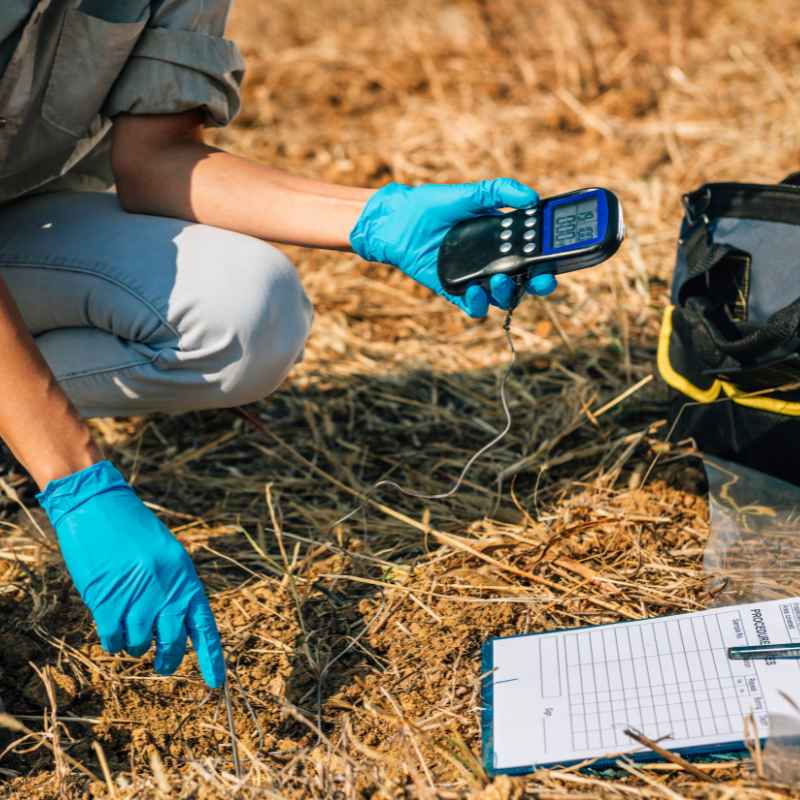
Step 1: Use the Hand Test (Soil Temperature by Touch)
Your hand is the simplest and most accessible tool. This method works best on bare, dry soil on a calm day with no wind chill.
Press the back of your hand firmly against the soil surface for 10 seconds. Your palm is less sensitive — the back of your hand gives a more accurate read.
- Place the back of your hand flat on the soil.
- Hold still for 10 seconds. Don’t press too hard, just enough for full contact.
- Pull your hand away and note the sensation: cool, neutral, warm, or hot.
- Compare with known reference points:
– Cool = below 50°F (10°C)
– Neutral = 50°F–60°F (10°C–15°C)
– Warm = 60°F–75°F (15°C–24°C)
– Hot = above 75°F (24°C)
Practice this test multiple times in different spots. Soil temperature can vary by a few degrees in shaded vs. sunny areas.
Over time, you’ll calibrate your hand to the ranges.
| Sensation | Estimated Temperature | Suitable Crops |
|---|---|---|
| Cool | Below 50°F (10°C) | Peas, lettuce, spinach |
| Neutral | 50°F–60°F (10°C–15°C) | Carrots, beets, onions |
| Warm | 60°F–75°F (15°C–24°C) | Tomatoes, peppers, beans |
| Hot | Above 75°F (24°C) | Melons, okra, sweet potatoes |
The hand test is quick and reliable once you’ve practiced it a few times. Combine it with other methods for the most accurate estimate of soil temperature without a thermometer.
Step 2: Observe Soil Color and Moisture
Soil color changes with temperature and moisture content. Dark soil absorbs more heat and warms up faster than light-colored soil. This visual cue can hint at the temperature range.
Check these signs in your garden:
- Dark brown or black soil — usually warmer because it absorbs more solar radiation. If it feels slightly warm to the touch, soil is above 60°F (15°C).
- Gray or tan soil — reflects more light, stays cooler. Typical of sandy or clay soils in early spring.
- Moist soil feels cool even on warm days. Wet soil takes longer to warm up due to evaporation.
- Dry, cracked soil — often a sign of high surface temperature (above 75°F).
Compare your soil’s color and moisture to nearby reference areas. If your garden soil is uniformly dark and dry, it’s likely warm enough for warm-season crops. If it’s still damp and light, wait another week.
Warning: Soil color can be misleading if the soil is compacted or has high organic matter. Always verify with another method before planting expensive seeds.
Step 3: Check for Earthworm and Insect Activity
Soil-dwelling creatures are excellent biological thermometers. Earthworms, ants, and beetles become active only when the soil reaches certain temperatures.
Dig a small hole about 3–4 inches deep and look for signs:
- Earthworms — appear when soil is above 50°F (10°C). They burrow deeper when it’s colder.
- Ants — become active at 60°F (15°C) and above. Ant mounds on bare soil indicate warm ground.
- Beetles and ground beetles — emerge when soil reaches 70°F (21°C). Common in midsummer.
- No visible insects — soil is likely below 50°F (10°C). Wait longer to plant.
According to the University of Minnesota Extension, earthworms stop feeding below 40°F (4°C) and are most active between 50°F–77°F (10°C–25°C). This makes them reliable indicators for spring planting.
If you see earthworm castings on the surface, the soil is warm enough for most cool-season crops. For warm-season plants, wait until ants and beetles are also active.
Step 4: Monitor Plant and Weed Germination
Weeds are nature’s soil thermometers. Certain weeds germinate only when the ground reaches a specific temperature. By watching which weeds appear, you can gauge readiness for your crops.
Keep a mental or written log of these common weed indicators:
- Shepherd’s purse — germinates at 40°F–50°F (4°C–10°C). Appears very early spring.
- Common chickweed — starts at 45°F–55°F (7°C–13°C). A sign to plant peas and spinach.
- Crabgrass — does not germinate until soil reaches 55°F–60°F (13°C–15°C) consistently. When crabgrass appears, you can plant warm-season crops.
- Purslane — requires 70°F (21°C) or higher. Its appearance means it’s safe to plant melons and okra.
The USDA reports that crabgrass seeds need five consecutive days with soil temperatures above 55°F (13°C) to germinate. Use this as a green light for tomatoes and peppers.
Tip: Pair weed germination with the hand test. If you feel neutral warmth and see crabgrass starting, your soil is right for planting beans and squash.
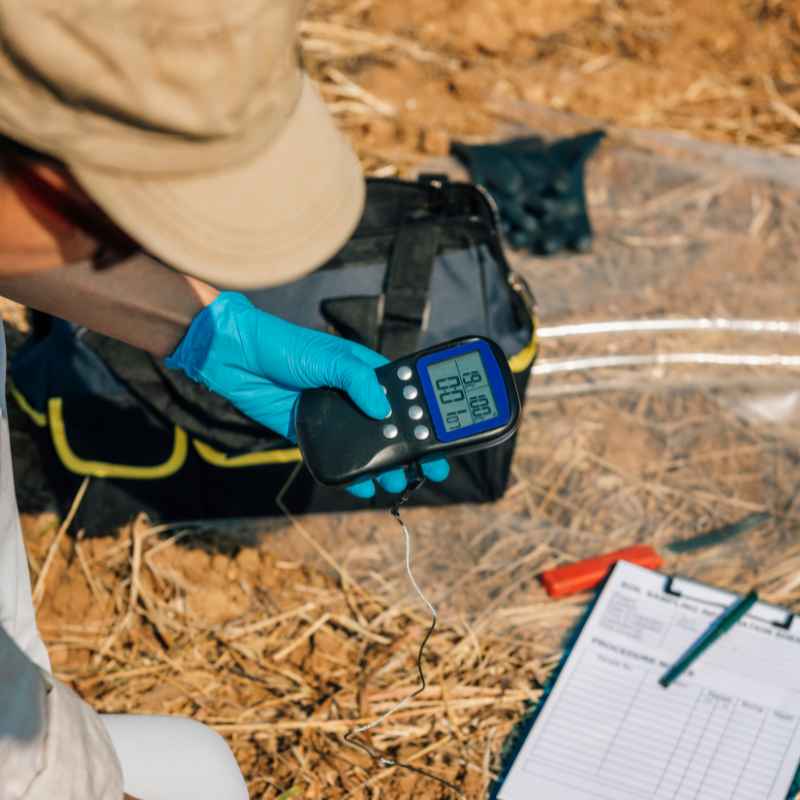
Step 5: Use a Wooden Stick or Probe
A simple wooden stick can act as a crude thermometer. Wood conducts heat slowly, so when you insert it into the ground and then touch it, you get a delayed but useful reading.
Follow these steps:
- Take a clean, dry wooden stick about 6–8 inches long (a chopstick, paint stirrer, or pencil works).
- Push it 3–4 inches into the soil where you plan to plant.
- Leave it for 1–2 minutes so it reaches equilibrium with the soil.
- Pull it out and immediately touch the buried portion to the back of your hand or your lips (the skin on your lips is very sensitive).
- Judge the temperature the same way as the hand test: cool, neutral, warm, or hot.
- This method works best when the air temperature is different from the soil temperature — for example, on a cool morning after a warm day. It compensates for surface temperature fluctuations.
- For deeper readings, use a longer stick or a metal rod (handle only). Metal conducts heat faster, so leave it in the ground for at least 2 minutes. Always touch the soil-contacted part, not the handle.
Probe Material
Equilibration Time
Best Use
Wooden stick
1–2 minutes
General bed testing
Metal rod (with handle)
2–3 minutes
Deep soil (6+ inches)
Plastic stake
3–4 minutes
Potted plants and raised beds - The probe method is especially helpful for checking deeper soil layers, which warm up more slowly. It’s one of the most accurate ways to determine soil temperature without a thermometer.
- Common Mistakes When Estimating Soil Temperature
- Even experienced gardeners make errors when relying on non-thermometer methods. Avoid these pitfalls to get a more reliable reading.
- Testing only the surface. Soil at 1 inch can be 10°F warmer than at 4 inches. Always test at planting depth.
- Using a cold or sweaty hand. Wash and dry your hand before testing. Wet hands give a false cool reading.
- Testing right after rain or watering. Wet soil feels artificially cool. Wait 24 hours after rain for accurate results.
- Checking in the afternoon. Soil temperature peaks in the late afternoon. Test in the morning (8–10 AM) for a more stable baseline.
- Relying on only one method. Always combine at least two indicators — hand test plus weed germination, for example.
- According to the Royal Horticultural Society, the biggest mistake is planting too early based on air temperature alone. Air can be warm while soil is still cold. Use these DIY methods to avoid that error.
Warning: Do not rely on the appearance of dandelions alone. Dandelions bloom based on day length, not soil temperature. They can be misleading for warm-season crops.
- Another common error is ignoring microclimates in your yard. South-facing beds warm up faster than north-facing ones. Soil near a brick wall or concrete path can be 5°F–10°F warmer.
- Test multiple spots.
- Frequently Asked Questions
- How accurate is the hand test for soil temperature?
- The hand test is accurate to within about 5°F–10°F once you practice. It’s most reliable for identifying ranges (cool, neutral, warm, hot) rather than exact numbers. For seed starting, range is usually sufficient.
- Can I use a meat thermometer for soil temperature?
- Yes, a meat thermometer can be used as an inexpensive soil thermometer. Insert it 3–4 inches deep and wait 2 minutes. Make sure the probe is clean and dry.
- Some meat thermometers have a range up to 220°F, but soil rarely exceeds 100°F.
- What weeds indicate that soil is warm enough for tomatoes?
- Crabgrass and purslane are the best indicators. Crabgrass germinates at 55°F–60°F (13°C–15°C), and purslane requires 70°F (21°C). Once you see both, your soil is warm enough for tomatoes, peppers, and eggplant.
- How deep should I test for seed planting?
- Test at the same depth you will plant the seeds. For most vegetables, that’s 1–2 inches deep. For transplants, test at 3–4 inches.
- Shallow testing can be off by 10°F or more compared to deeper soil.
- Does cloud cover affect soil temperature testing?
- Yes, cloud cover cools the soil surface. On cloudy days, surface soil can be 10°F cooler than on sunny days. Always test on a sunny day after a few days of consistent weather for the most reliable reading.
- Final Thoughts
- Knowing soil temperature without a thermometer is easy once you learn a few simple techniques. Use your hand, observe the soil, watch for weeds and insects, and probe with a stick. Combine two or more methods for the best guess.
- You’ll save money and plant at the perfect time every season.
Related pick: Check today's price on Amazon