How Does Contour Plowing Reduce Soil Erosion? Explained Simply
Soil erosion is a silent but relentless threat to agriculture, infrastructure, and the environment. Every year, billions of tons of fertile topsoil are swept away by wind and water, undermining crop yields and destabilizing ecosystems. In the face of this challenge, farmers and land managers are turning to time-tested methods that work with nature—rather than against it—to conserve the soil that sustains us all. One of the most effective and sustainable of these methods is contour plowing.
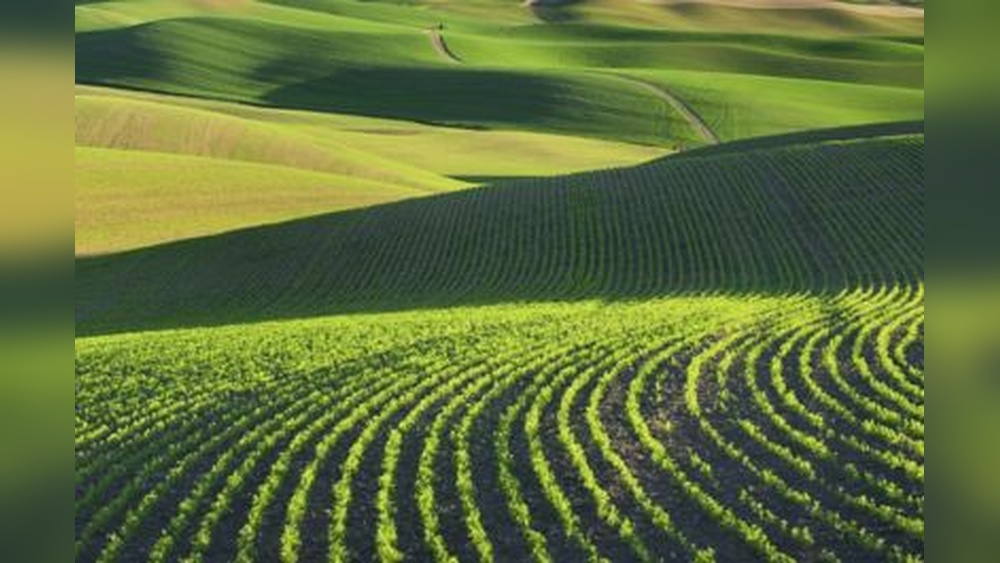
But how exactly does contour plowing reduce soil erosion? The answer is surprisingly straightforward, yet elegantly tied to both natural landforms and principles of physics. Instead of plowing fields in straight lines up and down a slope, contour plowing follows the natural curves, or “contours,” of the land.
This simple adjustment transforms the field into a series of gentle steps that slow down water, encourage absorption, and keep soil in place. Below, we’ll explore the science, history, and real-world impact of contour plowing, breaking down the process in clear terms and offering practical insights for land stewards everywhere.
Key Takeaways
- Contour plowing is a proven agricultural method that follows the natural contours of slopes to reduce soil erosion.
- This technique slows water runoff, increases water infiltration, and helps retain valuable topsoil.
- Contour plowing is more effective than traditional up-and-down slope farming, especially on hilly terrain.
- The method delivers both environmental and economic benefits, including higher crop yields and reduced need for fertilizers.
- Real-world case studies and scientific data confirm contour plowing’s effectiveness in diverse climates and regions.
- Implementation requires strategic planning, but long-term results benefit both farmers and the environment.
Credit: www.workybooks.com
Understanding Soil Erosion: Causes And Consequences
What Is Soil Erosion?
Soil erosion is the process by which the upper layer of soil is removed by natural forces such as water, wind, or tillage. This top layer, rich in organic matter and nutrients, is essential for plant growth. When soil is lost, productivity declines, and land can become barren over time. In many cases, this topsoil takes centuries or even millennia to form, but it can be lost within a single season if left unprotected. The erosion process can be gradual and hard to detect until the impacts become severe, making it a hidden but devastating problem.
Main Causes Of Soil Erosion
Several factors accelerate soil erosion, including:
- Heavy rainfall and surface runoff: Intense or prolonged rainfall produces large volumes of moving water that can detach and carry away soil particles, especially on exposed or sloped land.
- Wind in arid and semi-arid regions: When soil is dry, loose, and devoid of protective vegetation, wind can lift and move fine particles over long distances, causing dust storms and land degradation.
- Deforestation and loss of vegetation cover: Trees, shrubs, and grasses hold soil in place. Removing them for agriculture, logging, or development leaves soil exposed and vulnerable.
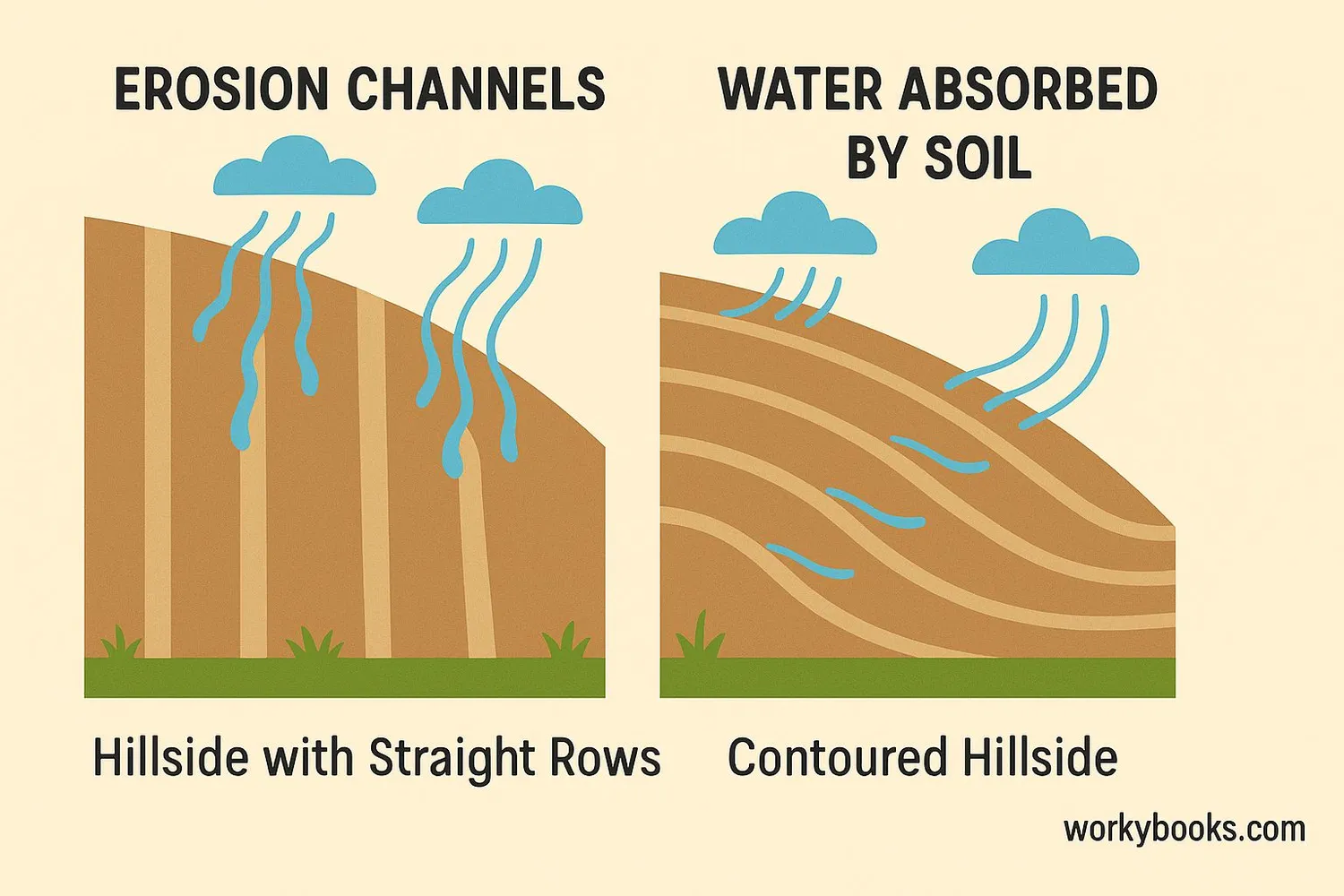
- Improper agricultural practices like conventional plowing up and down slopes: Plowing in straight lines up and down a hill creates channels that allow water to accelerate, increasing its erosive force.
- Overgrazing by livestock: Too many animals can strip land of vegetation, compact soil, and create bare patches that are easily eroded.
These causes can act alone or together, compounding the problem. For instance, deforestation followed by overgrazing and poor plowing practices can create a feedback loop of declining soil quality and increasing erosion.
Environmental And Economic Impacts
The consequences of unchecked soil erosion are severe:
- Reduced agricultural productivity: Loss of fertile soil means lower yields and increased reliance on fertilizers. As the soil layer thins, crops struggle to access nutrients and water, leading to stunted growth.
- Sedimentation of waterways: Eroded soil clogs rivers, lakes, and reservoirs, reducing water quality and capacity. This sediment can carry pesticides, fertilizers, and pathogens, harming aquatic life and making water treatment more costly.
- Loss of soil biodiversity: Microorganisms and nutrients are lost, degrading the soil structure. Healthy soil teems with life, including earthworms, fungi, and beneficial bacteria; erosion disrupts these communities.
- Economic loss: Farmers face increased costs for replacing lost nutrients, repairing gullies, and dealing with lower yields. In severe cases, fields may be abandoned, affecting rural economies and food security.
According to the Food and Agriculture Organization (FAO), nearly 75 billion tons of fertile soil are lost each year globally, costing the agricultural sector up to $400 billion annually in lost productivity (FAO). This scale of loss not only affects individual farms but also has ripple effects on local and global food supplies.
Conventional Farming And Erosion
Traditional plowing—especially when done up and down slopes—creates channels that accelerate water flow. This not only washes soil away but also leads to gully formation and further land degradation. Gullies can become deep and wide, rendering fields unusable and threatening infrastructure such as roads and buildings. In addition, conventional plowing tends to break up soil aggregates, making the surface more susceptible to both wind and water erosion. In contrast, methods like contour plowing harness the land’s natural shape to interrupt these destructive processes, distributing water more evenly and protecting soil integrity.
The Science Behind Contour Plowing
What Is Contour Plowing?
Contour plowing (also known as contour farming or contour tillage) is a soil conservation method where plowing, planting, and cultivation follow the natural contours of the land, rather than running perpendicular to them. The ridges created act as small barriers, slowing water runoff and encouraging it to seep into the ground. Unlike traditional methods, contour plowing requires farmers to closely observe the landscape, understanding subtle changes in elevation and slope.
How Contour Plowing Works
The principle is simple but powerful:
- Plowing along elevation lines: Farmers identify the lines of equal elevation (contours) across the slope. This step is crucial as it ensures that all subsequent field operations maintain the correct orientation.
- Forming ridges and furrows: Plowing follows these lines, creating ridges that run horizontally rather than vertically down the slope. These ridges can be enhanced by planting grass strips or cover crops, further reinforcing their effectiveness.
- Slowing water movement: As rainwater moves downhill, it encounters the ridges, which slow its speed and encourage infiltration. Instead of flowing quickly and eroding soil, water is gently guided across the field.
- Reducing soil displacement: The slower water has less energy, so it carries away less soil. Soil particles settle in place, and valuable organic matter remains available for crops.
This method is especially effective on slopes between 2% and 10%, where water runoff is a primary cause of erosion (USDA NRCS). On steeper slopes, contour plowing is often used in combination with terracing to maximize protection.
Scientific Principles Involved
Contour plowing leverages two key scientific principles:
- Hydrology: By interrupting the downslope flow of water, the method reduces the kinetic energy available to erode soil. Water that moves slowly has less capacity to detach and transport soil particles.
- Soil Physics: Slower water movement means more moisture is absorbed, reducing both surface runoff and soil loss. This not only conserves soil but also improves water use efficiency for crops.
Additionally, contour plowing helps maintain soil structure by minimizing the breakdown of aggregates and promoting the accumulation of organic matter in place.
Visualizing The Impact: Data Comparison Table
Below is a comparison of soil loss on sloped land using different plowing methods:
| Method | Average Soil Loss (tons/hectare/year) | Water Runoff (%) |
|---|---|---|
| Conventional Up-Down Slope Plowing | 30-45 | 35-50 |
| Contour Plowing | 10-15 | 10-20 |
| No-Till (for comparison) | 2-5 | 5-10 |
*Source: USDA NRCS, 2026*
These figures highlight how even a simple change in plowing direction can reduce soil loss by more than half, with further gains possible when combined with no-till or cover cropping.
Supporting Research
Multiple studies confirm the effectiveness of contour plowing. For instance, a study in the Loess Plateau of China found that contour tillage reduced soil erosion by up to 60% compared to conventional methods (ScienceDirect). Research from other regions, including the United States, Ethiopia, and India, consistently shows reductions in soil loss, improved crop yields, and increased soil moisture retention when contour plowing is practiced. Farmers often report not only tangible improvements in their fields but also greater resilience to extreme weather events, such as heavy storms or droughts.

Credit: livinghistoryfarm.org
How Contour Plowing Reduces Soil Erosion
Water Runoff Management
Contour plowing intercepts rainfall and channels water along gentle curves rather than allowing it to rush downhill. This slows the flow, reduces its erosive power, and gives water more time to soak in. Key benefits include:
- Reduced surface runoff: By breaking up the slope with ridges, contour plowing prevents water from gaining the speed necessary to carry away large amounts of soil.
- Minimized rill and gully formation: Rills (small channels) and gullies (larger eroded channels) form when water concentrates and accelerates. Contour plowing disperses water, spreading it more evenly and protecting the landscape.
- Improved groundwater recharge: More water is absorbed into the soil, increasing the recharge of underground aquifers.
In addition, contour plowing helps control the microclimate of a field by reducing the drying effects of wind and sun, further conserving soil moisture.
Soil Particle Retention
The ridges and furrows created by contour plowing act as mini-barriers. These:
- Trap soil particles that would otherwise be swept away, particularly during intense rain events.
- Allow organic matter to accumulate and decompose in place, enriching the soil with nutrients and improving its structure.
- Foster the growth of cover crops that further anchor soil, reduce weed pressure, and increase biodiversity both above and below ground.
Over time, these effects build upon one another, creating a more stable and productive growing environment.
Enhanced Water Infiltration
As water slows and pools behind ridges, it seeps deeper into the soil profile. This:
- Increases soil moisture available for crops, supporting healthy root development and reducing the risk of drought stress.
- Reduces the need for additional irrigation, which can lower costs and conserve precious water resources, particularly in arid or drought-prone regions.
- Helps build soil structure over time, improving the soil’s ability to retain water and nutrients.
Improved infiltration also means that less water is lost to evaporation or rapid runoff, making the most of every rainfall.
Reduced Nutrient Loss
When soil stays put, so do vital nutrients like nitrogen and phosphorus. Contour plowing helps:
- Maintain soil fertility by preventing the loss of both nutrients and organic matter.
- Lower fertilizer requirements, saving farmers money and reducing the risk of nutrient runoff into streams and rivers.
- Prevent downstream water pollution from runoff, supporting cleaner waterways and healthier ecosystems.
Real-world Example: Midwest Usa
Farmers in the Midwest United States have adopted contour plowing as a standard practice on sloping fields. According to the Iowa State University Extension, fields managed with contour plowing saw a 50% reduction in soil loss and a 25% increase in crop yields compared to conventional plowing (Iowa State Extension). In addition, some farms reported improved resilience to heavy rainfall events, with fewer washouts and lower replanting costs.

Credit: geopard.tech
Implementing Contour Plowing: Practical Steps And Considerations
Assessing Land Slope And Soil Type
Before adopting contour plowing, it is essential to:
- Survey the land: Use topographic maps, GPS, or laser levels to identify contour lines. Modern technologies such as drones and GIS mapping can provide highly accurate data, even for large or complex fields.
- Evaluate soil type: Some soils, like sandy or loose soils, may require additional measures such as strip cropping or terracing. Clay soils, which are more cohesive, can benefit greatly from contour plowing but may need attention to drainage.
Land with very steep slopes or extremely shallow soils may not be suitable for contour plowing alone and could benefit from a combination of conservation practices.
Field Layout And Equipment
The process involves:
- Marking contour lines: Use stakes or markers to indicate where to plow. Accurate marking is vital for long-term success, as even small deviations can create weak points where water may break through.
- Choosing the right equipment: Most modern plows and tractors can be adapted for contour work, but specialized implements may be available for creating more pronounced ridges or integrating cover crops.
- Maintaining consistency: Ensure that each pass follows the established contour, avoiding breaks that could channel water. This may require extra attention during turns and at the field edges.
Farmers may find that initial operations take slightly longer than conventional plowing, but with practice, the process becomes routine.
Maintenance And Upkeep
Regular monitoring is crucial:
- Repair breaches or breaks in ridges immediately to prevent water from channeling and undoing the benefits of contouring.
- Rotate crops and integrate cover crops to maintain soil health, control pests, and add organic matter.
- Adjust contours if significant land changes occur due to weather or use, ensuring that the system continues to function effectively.
Involving farm workers and family members in regular inspection and maintenance can help catch small issues before they become serious.
Potential Challenges
While contour plowing is effective, it does present some challenges:
- Initial planning and setup can be time-consuming, especially for those new to the practice or working with complex landscapes.
- Equipment operation may be more complex on curved lines, requiring skilled operators and occasional adjustments to machinery.
- Maintenance requires vigilance after heavy rains or harvest, as breaks in the contour can lead to localized erosion.
Despite these challenges, many farmers find that the long-term benefits—better yields, lower input costs, and improved land value—far outweigh the extra effort.
Integration With Other Conservation Practices
Contour plowing works best when combined with:
- Strip cropping: Alternating strips of crops and grasses along contours, which creates additional barriers to runoff and further reduces erosion.
- Terracing: Creating larger steps on steeper slopes, which can be integrated with contour plowing for maximum effect.
- Grassed waterways: Planting permanent vegetation in natural drainage paths to safely carry excess water off the field without causing erosion.
These combined methods can further reduce erosion and boost resilience. In some regions, government or NGO programs offer technical and financial assistance for implementing integrated conservation systems.
Comparing Contour Plowing With Other Soil Conservation Methods
Common Soil Conservation Techniques
Some of the most widely used methods include:
- Contour plowing
- Terracing
- No-till farming
- Strip cropping
- Grassed waterways
- Agroforestry
Each offers unique advantages and trade-offs. For instance, terracing provides the highest level of erosion control on steep land but requires significant labor and expense, while no-till farming is excellent for flat or gently rolling fields.
Effectiveness Comparison Table
| Method | Erosion Control (1-5) | Water Retention (1-5) | Implementation Cost |
|---|---|---|---|
| Contour Plowing | 4 | 4 | Low-Medium |
| Terracing | 5 | 5 | High |
| No-Till Farming | 5 | 4 | Low-Medium |
| Strip Cropping | 3 | 3 | Medium |
| Grassed Waterways | 3 | 5 | Medium |
| Agroforestry | 4 | 5 | Medium-High |
*1 = Low, 5 = High*
When Is Contour Plowing Best?
Contour plowing is especially advantageous:
- On slopes between 2% and 10%, where water runoff is significant but terracing is not yet necessary.
- Where rainfall is moderate to heavy, increasing the risk of water erosion.
- In regions with moderate to high erosion risk, such as newly cleared land or areas with seasonal storms.
- When resources for more extensive engineering (like terracing) are limited, making contour plowing an accessible first step in conservation.
Complementary Approaches
Contour plowing does not have to be a stand-alone solution. It is often paired with other methods for maximum effect. For example, terracing may be used on steep slopes, while no-till farming can be adopted to further reduce soil disturbance. In many conservation programs, a combination of three or more methods is recommended to address multiple types of erosion simultaneously.
Real-world Case Study: Kenya’s Highlands
In the highlands of Kenya, farmers faced chronic soil erosion and declining yields. By adopting a combination of contour plowing and grassed waterways, they cut soil loss by 70% and increased food security for thousands of households (World Bank). Community-based training programs helped farmers learn new techniques, share equipment, and monitor results, leading to widespread adoption and improved livelihoods.
Environmental And Economic Benefits Of Contour Plowing
Preserving Topsoil And Biodiversity
By reducing soil erosion, contour plowing helps:
- Maintain soil fertility and structure, which are crucial for long-term productivity.
- Support beneficial soil organisms and crop diversity, creating a healthier and more resilient agroecosystem.
- Reduce the spread of invasive species that thrive on disturbed soils, helping native plants and beneficial insects to flourish.
Healthy topsoil is the foundation of sustainable agriculture, and its preservation underpins food security for future generations.
Water Quality Improvement
Less soil loss means:
- Fewer sediments and pollutants reaching rivers and lakes, protecting aquatic habitats and reducing the cost of water treatment.
- Lower risk of algal blooms and fish kills downstream, as nutrient runoff is minimized.
- Enhanced ecosystem health for aquatic and riparian species, supporting biodiversity beyond the farm.
By keeping soil and nutrients on the field, contour plowing helps safeguard public and environmental health.
Climate Change Resilience
Healthy soils store more carbon and retain water longer, making farms more resilient to drought and heavy rains. Contour plowing is a key practice in climate-smart agriculture, helping to mitigate both carbon emissions and vulnerability to extreme weather (USDA Climate Hubs). In addition, by reducing the need for synthetic fertilizers (which are energy-intensive to produce), contour plowing lowers the overall carbon footprint of farming operations.
Economic Advantages
Contour plowing offers tangible benefits for farmers:
- Higher yields: By keeping soil and nutrients in place, plants have better access to the resources they need for growth.
- Reduced fertilizer and irrigation costs: Thanks to improved retention, farmers can apply less water and nutrients, saving money and time.
- Long-term land value: Prevents land degradation and abandonment, maintaining or even increasing the value of farmland for future generations.
In regions where land values are closely tied to productivity, soil conservation practices like contour plowing can have a major impact on farm finances.
Community And Societal Impact
Widespread adoption can:
- Improve food security, especially in regions prone to drought or land degradation.
- Stabilize rural economies by supporting productive, sustainable agriculture.
- Reduce disaster risk (such as landslides and floods), benefiting entire communities and reducing the need for emergency interventions.
Government agencies and NGOs often support contour plowing as part of larger rural development and environmental restoration programs, recognizing its benefits beyond the farm gate.
Case Study: Brazil’s Cerrado
In Brazil’s Cerrado region, contour plowing has been instrumental in transforming once-eroded hillsides into productive cropland. A 2019 study found that farms using contour plowing and other conservation practices increased their yields by 30% and reduced fertilizer inputs by 20% compared to conventional methods (Nature Sustainability). The increased productivity has supported local economies, improved livelihoods, and contributed to national food security, while also providing environmental benefits such as restored habitats for wildlife.
Step-by-step Guide To Starting Contour Plowing
1. Evaluate Your Land
- Identify sloped fields and measure the steepness (ideally 2-10% slope). If the slope is steeper, consider integrating terracing or other methods.
- Check soil type and drainage characteristics. Clay and loam soils are often ideal, but sandy soils may require additional stabilization.
2. Map Contour Lines
- Use GPS, laser levels, or a simple A-frame level to mark contour lines. Multiple lines may be needed across a single field, depending on its size and shape.
- Start at the highest point and work downslope, ensuring each contour is parallel to the next.
3. Prepare Equipment
- Adjust plows to follow curved lines; wheel settings may need to be changed for tight turns.
- Ensure tractors can handle tighter turns if needed. For small fields, animal-drawn plows or hand tools may suffice.
4. Plow Along Contours
- Begin plowing, always keeping equipment aligned with the marked contour. For best results, plow after a light rain when the soil is moist but not saturated.
- Avoid shortcuts that cut across contours, as this can create weak points and allow erosion to begin.
5. Maintain And Monitor
- Inspect fields after heavy rains, checking for breaches or eroded spots.
- Repair any breaks in ridges promptly, using hand tools or machinery as appropriate.
- Rotate crops and use cover crops to keep soil anchored, further enhancing the benefits of contour plowing.
6. Integrate With Other Methods
- Consider adding strip cropping, grassed waterways, or agroforestry for enhanced results. These practices work together to create a robust, resilient system.
Example Timeline Table
| Step | Estimated Time | Resources Needed |
|---|---|---|
| Land Assessment | 1-2 days | Survey tools, maps |
| Contour Mapping | 1-2 days | GPS, A-frame, markers |
| Equipment Setup | Half-day | Plow, tractor |
| Plowing | Varies by field size | Labor, fuel |
| Maintenance | Ongoing | Inspection, minor repairs |
This step-by-step approach ensures that even those new to contour plowing can implement the practice successfully, with ongoing support from agricultural extension services as needed.
Common Myths And Misconceptions About Contour Plowing
Myth 1: It’s Only For Large Farms
Fact: Contour plowing can be adapted for any field size. Smallholder farmers worldwide use contour plowing successfully, often with simple hand tools. Community groups and cooperatives can also work together to implement contour plowing across multiple small plots, sharing labor and equipment.
Myth 2: It’s Too Complicated Or Expensive
Fact: While planning is essential, the costs are typically lower than those of terracing or other large-scale engineering solutions. Returns on investment come quickly through improved yields and reduced input costs. Many farmers recoup their initial investment within just a few seasons due to increased productivity and lower expenses.
Myth 3: It’s Ineffective On Gentle Slopes
Fact: Even gentle slopes benefit from contour plowing. Soil conservation experts recommend it for any slope where water runoff is noticeable. On very mild slopes, the practice may be combined with no-till or cover cropping to maximize effectiveness.
Myth 4: It’s Outdated
Fact: Contour plowing is a modern conservation technique supported by research and widely promoted by agricultural extension services and organizations like the Natural Resources Conservation Service (NRCS) (USDA NRCS). Ongoing innovation—such as the use of precision agriculture tools—continues to improve contour plowing’s effectiveness.
Myth 5: It Works Alone
Fact: While highly effective, contour plowing is most powerful when combined with practices like cover cropping, crop rotation, and agroforestry. Integrated systems provide the best results for both productivity and conservation.
Frequently Asked Questions
What Is The Main Purpose Of Contour Plowing?
The main purpose of contour plowing is to reduce soil erosion on sloped farmland by plowing along the natural contours of the land. This slows water runoff, allows more water to be absorbed, and keeps valuable topsoil in place, supporting better crop growth and long-term land productivity.
Can Contour Plowing Be Used In All Types Of Soils?
Contour plowing is effective in a wide range of soils but works best in areas where water erosion is the primary concern. On sandy or very loose soils, it may need to be combined with other conservation measures, such as strip cropping or grassed waterways, to achieve the best results.
How Does Contour Plowing Compare To Terracing?
While both methods aim to reduce erosion, terracing involves physically reshaping the land into flat steps, which is effective but costly and labor-intensive. Contour plowing is less expensive and easier to implement, making it suitable for moderate slopes and resource-limited farmers. For steeper slopes, terracing may be required.
Is Contour Plowing Environmentally Friendly?
Yes, contour plowing is considered environmentally friendly. It preserves soil health, reduces water pollution, and enhances biodiversity. It also improves water retention and can help sequester carbon, contributing to climate change mitigation.
Are There Any Disadvantages To Contour Plowing?
The main disadvantages are the initial time and planning required and the need for ongoing maintenance. Curved plowing lines can be more challenging for machinery operators. However, these are generally outweighed by the long-term benefits in soil conservation and productivity.
Healthy soils are the foundation of food security, clean water, and resilient ecosystems. Contour plowing offers a simple, proven solution to one of agriculture’s oldest challenges: soil erosion. By following the natural lines of the land, farmers can slow water, save soil, and ensure that their fields remain fertile for generations to come. Whether you’re managing a large commercial farm or a small family plot, adopting contour plowing—often in combination with other conservation methods—delivers benefits for your crops, your bottom line, and the planet. For more in-depth guidance, consult resources from the Wikipedia: Contour Ploughing or your local agricultural extension office.