What Is Soil Drainage and Why Does It Matter?
Soil drainage is how fast water moves through and out of the root zone. If water still sits 24 to 48 hours after rain in a bed, some plants may lack oxygen and fail, though the impact depends on the plant and soil conditions. Poor drainage leads to root rot, stunted growth, and wasted plants. This guide shows how to read a wet site, test drainage, and decide whether to amend soil, redesign the bed, or plant species that fit the moisture you have.
What soil drainage means


Soil drainage is the movement of water through soil pores, then away from roots. Well-drained soil lets water pass through at a steady pace without pooling on top or vanishing so fast that roots dry out. The practical question is not whether soil holds water. It is whether water moves at a rate that keeps both moisture and air available where roots live.
Drainage and water-holding capacity are related, but they are not the same thing. A soil can hold useful moisture and still drain well. Another can drain so quickly that it leaves roots short of water soon after rain or irrigation. Good gardening decisions start by separating those two behaviors.
Why roots need oxygen as well as water
Roots need water, and they also need air around them. In waterlogged soil, water fills pore space and blocks oxygen exchange, which can slowly suffocate roots. That is why a bed that stays wet after rain can fail even when it never looks dry on the surface.
What controls drainage in soil

Drainage is shaped by particle size, pore space, soil structure, compaction, and site conditions. Smaller pores hold water longer. Larger pores drain faster. The same garden can include both kinds of behavior if one area is compacted, one is on a slope, and one sits in a low spot.
Soil pores and particle size
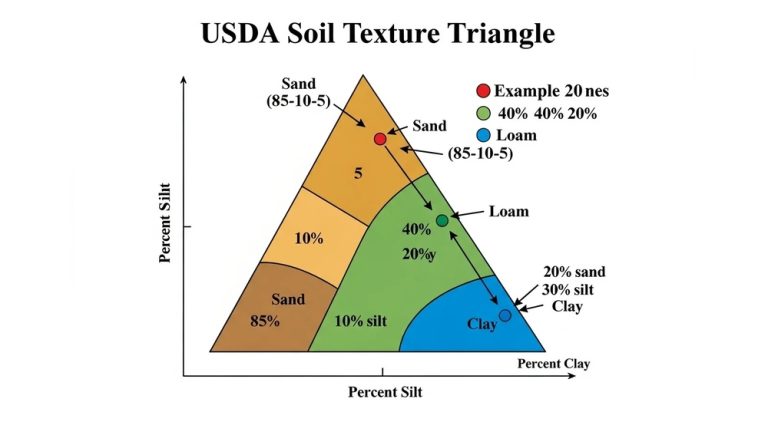
Soil pores are the spaces between particles. They control how water and air move. Smaller pores retain water longer, while larger pores drain faster. Texture matters because it sets the starting point for those pore sizes.
Clay soil tends to have very small particles and can have a high total pore space, but those pores are usually tiny, so it often drains slowly and can waterlog. Sandy soil has the largest particles and typically larger pores, so it drains quickly but can dry out fast.
Soil structure and compaction
Soil structure is the way particles clump into stable aggregates. Good structure creates a mix of pore sizes, which helps water move while still leaving air space. Over-tilling can damage that structure, especially when soil is worked wet and then left bare.
Compaction squeezes pore space shut and slows both water and oxygen movement. It often comes from walking or driving over soil, and it is common after construction. A compacted path edge may drain poorly even if the soil nearby is acceptable.
Site conditions that change drainage
Drainage is a site property as much as a soil property. Low spots collect runoff. Roof runoff can dump water next to foundations or beds. Hard surfaces such as driveways and patios send water downhill. A high water table can keep lower ground wet even when the surface soil looks fine.
Hardpan also matters. That dense layer blocks downward movement and can create a perched wet zone above it. In those spots, adding a little compost on top will not fix the bottleneck beneath.
Why drainage matters for plants
Drainage controls root health, nutrient uptake, and the timing of stress after rain or irrigation. Poor drainage often shows up as yellowing leaves, stunting, slow recovery after watering, and root rot. Fast drainage can look different: plants wilt quickly, soil crusts over, and irrigation disappears before roots can use it.
Suppose a perennial border on a gentle slope has one patch that stays wet while the rest dries normally. The wet patch is more likely tied to a low area or compacted layer than to the plant itself. In that case, the symptom map points to the site first and the plant second.
A common first-timer mistake is to see yellow leaves after rain and assume the bed needs more water. If the root zone stays soggy, the fix is usually drainage, not more irrigation. Read the soil before you change the watering schedule.
How do you test drainage at home?
A percolation test gives a quick read on how fast water moves through your soil. It is not a laboratory test, but it is useful for gardeners because it shows whether a bed is likely to hold too much water, drain at a workable pace, or dry out too fast. Repeated readings after full presoaking can be more reliable than a single quick measurement.
The 12-inch percolation test
- Dig a hole about 12 inches deep.
- Fill it with water and let it drain.
- Refill the hole with water a second time.
- Measure the water drop after 15 minutes.
- Multiply that drop by four to get inches drained per hour.
This test helps you compare spots in the same yard. A low area, a path edge, and a raised bed often read differently even on the same property.
What the result means
Most plants perform well in water that drains 1 to 3 inches per hour. Less than 1 inch per hour points to poor drainage. More than 4 inches per hour means the soil is very well-drained, which can be fine for dry-site plants but too fast for moisture-loving ones. (Iastate)
Drainage decision matrix
This table turns the test result into a first decision. It separates slow drainage from ideal drainage and from water moving too quickly, so you can choose amendment, redesign, or plant selection without guessing.
| Drainage outcome | Likely visible symptoms | Probable site or soil causes | Best first fix |
|---|---|---|---|
| Too slow | Puddling, yellowing, stunting, root rot, soil that stays slick or wet long after rain | Clay soil, compaction, hardpan, low spots, high water table, roof runoff, nearby hard surfaces | Add organic matter, reduce compaction, and check whether runoff or grading needs correction |
| Ideal | Moist soil after rain, no long puddles, steady plant growth, roots that do not sit in water | Balanced pore space, stable structure, moderate texture, decent surface flow | Maintain with mulch, avoid over-tilling, and protect the soil from compaction |
| Too fast | Rapid drying, crusting, wilting soon after watering, weak establishment in new beds | Sandy soil, steep slope, shallow bed, low organic matter, exposed border, heat from adjacent hardscape | Add organic matter, mulch, and consider plants that tolerate quick drying or a deeper bed |
| Garden setting | Common drainage issue | Recommended next step |
|---|---|---|
| Clay bed | Slow drainage and waterlogging | Spread 2 to 4 inches of compost over the surface and avoid working it when wet |
| Compacted path edge | Pore space squeezed shut | Loosen the top layer carefully, keep foot traffic off the area, and add organic matter |
| Low spot | Standing water after rain | Improve grading or drainage flow first; use wet-tolerant plants if the spot remains damp |
| Raised bed | Can drain too fast if the mix is coarse | Add compost and mulch to slow drying and improve water holding |
| Sandy border | Fast drainage and quick drying | Increase organic matter and choose plants suited to quick drainage |
How can you fix poor drainage?

Start with the cause, not the symptom. If the soil drains slowly because it is compacted or clay-heavy, organic matter is usually the best first amendment. If water is arriving from runoff, a low spot, or a high water table, soil amendments alone will not solve the problem.
Add organic matter instead of sand
Organic matter such as compost, manure, or shredded leaves improves aggregation, which increases water, air, and nutrient holding capacity while also helping drainage in poorly drained soil. For clay, the recommended amendment is organic material, not sand. Sand can make clay behave more like concrete if the mix is wrong.
As a surface amendment, compost should be spread 2 to 4 inches thick over the soil. For severe drainage problems, a single topdressing is rarely enough. Repeated additions over time usually make more sense than one heavy repair.
Reduce compaction without over-tilling
Compact soil drains poorly because pore space is compressed. That leaves less room for water and less room for oxygen. Gentle loosening can help, but aggressive tilling can damage soil structure and create a new cycle of compaction once the soil settles.
Use traffic control first. Keep people, carts, and mowers off wet beds. Where the area is small, broadforking or careful hand loosening can help. On larger sites, traffic patterns and surface runoff matter more than repeated tillage.
Use cover crops in annual beds
Cover crops are useful in vegetable gardens and annual beds because they increase organic matter and their roots can help break compacted soil over time. They are not an instant fix, but they can improve structure between crops while protecting the surface from crusting and erosion.
When raised beds or site changes make more sense
If a spot stays wet because of slope, a low depression, a hardpan, or a high water table, redesign may be the better move. Raised beds lift roots above saturated soil and can make a difficult site usable. Surface drains, swales, or rerouted downspouts may also be needed where runoff is the main driver.
Picture a 4-by-8-foot vegetable bed beside a downspout that dumps water after every storm. Compost will help the bed hold shape, but it will not stop roof runoff from saturating the same corner. The first fix there is to move the water away from the bed, then improve the soil.
When should you plant for the site you have?
Choose plants for the drainage you actually have when the site is too wet to correct fully or too fast-draining to hold moisture reliably. That is often the best option for low spots, shallow soils over hardpan, sandy borders, and areas with a high water table. Good plant choice can solve more problems than repeated amendment.
Low spots and high water tables
In low spots, water can collect after rain even if the surrounding soil is acceptable. If a high water table is part of the problem, the ground may stay wet for long stretches. In those cases, select plants that tolerate wet feet rather than forcing a dry-site planting into a wet site.
Fast-draining borders and sandy soils
Sandy soil drains quickly because it has larger particles and larger pores. That can be useful in some settings, but it also means water and nutrients move through quickly. In these beds, mulch, regular organic matter additions, and drought-tolerant plants often work better than frequent, shallow watering alone.
Frequently asked questions
What is soil drainage?
Soil drainage is how water moves through soil and away from the root zone. Good drainage means water passes through steadily without pooling or disappearing so fast that roots dry out. It is controlled by pore space, soil structure, compaction, and the site around the bed.
Why is drainage important for soils?
Drainage matters because roots need oxygen as well as water. If soil stays waterlogged, air space around roots shrinks and roots can suffocate, rot, or stop growing. Good drainage also helps prevent crusting, runoff problems, and repeated planting failures in the same area.
What does well-draining soil mean?
Well-draining soil allows water to move through at a steady rate without standing on top or draining away too quickly. For most plants, a desirable range is 1 to 3 inches per hour. That range usually keeps roots moist without leaving them in stagnant water.
What determines drainage in soil?
Drainage is determined by soil pores, texture, structure, compaction, and site factors such as slope, hard surfaces, low spots, gutters, and high water tables. Clay soil tends to drain slowly because it has small pores. Sandy soil tends to drain quickly because it has larger ones.
How does soil drainage affect plant roots?
Poor drainage keeps oxygen out of the root zone and can lead to root rot, yellowing, and stunted growth. Fast drainage can do the opposite problem, leaving roots short of water soon after watering. In both cases, the root zone fails to match the plant’s needs.
How do you test soil drainage at home?
Dig a hole about 12 inches deep, fill it with water twice, then measure the water drop after 15 minutes. Multiply that drop by four to estimate inches drained per hour. That result tells you whether the site is slow, suitable for most plants, or very fast-draining.
How can you improve soil drainage in a garden?
Start with compost or other organic matter, especially in clay soil. Spread it 2 to 4 inches thick over the surface, avoid over-tilling, and reduce compaction from foot traffic. If the problem comes from runoff, low spots, or a high water table, redesign or raised beds may be needed.
How do clay soil and sandy soil differ for drainage?
Clay soil has the smallest particles and can have a lot of total pore space, but many of those pores are very small, so it drains slowly and often waterlogs. Sandy soil has larger particles and larger pores, so it drains quickly but can dry out fast. One holds too much water; the other may lose it too quickly.
What is a good drainage rate for most plants?
Most plants perform well when water drains 1 to 3 inches per hour. Less than 1 inch per hour is poor drainage, and more than 4 inches per hour is very well-drained. Use those numbers as a planning guide, not a hard rule for every species.