NPK in Soil Explained for Beginner Gardeners
NPK means nitrogen, phosphorus, and potassium; fertilizer labels show each one as a percent by weight, and a soil test should guide your choice when one nutrient is low. Guessing wrong wastes money and can feed the wrong part of the plant. This guide explains NPK, how to read soil tests and fertilizer labels, and when compost may be the better fix.
What does NPK mean?
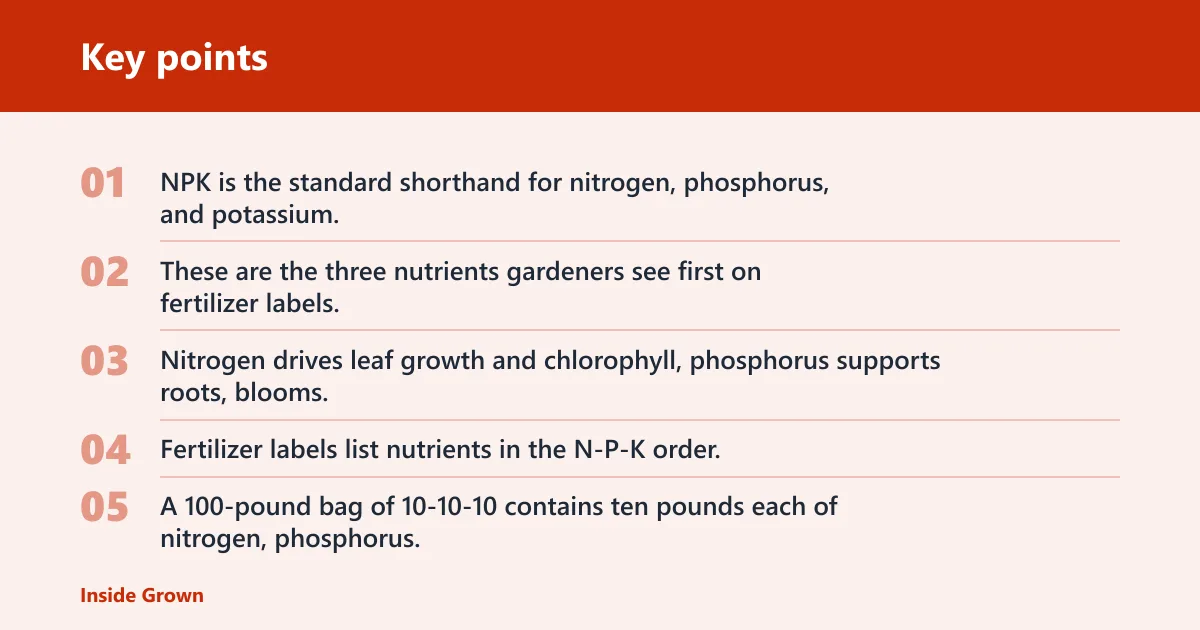

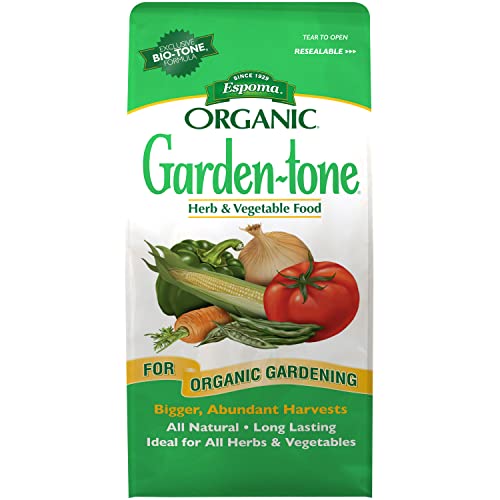

NPK is the standard shorthand for nitrogen, phosphorus, and potassium. These are the three nutrients gardeners see first on fertilizer labels, and each one does a different job. Nitrogen drives leaf growth and chlorophyll, phosphorus supports roots, blooms, and fruit set, and potassium helps plants keep water balance, build strong cells, and handle stress.
Why the order on a label matters
Fertilizer labels list nutrients in the N-P-K order, so a bag marked 10-10-10 always means nitrogen first, phosphorus second, potassium third. That order is standardized. A 100-pound bag of 10-10-10 contains ten pounds each of nitrogen, phosphorus, and potassium.
Most soils already contain potassium, so the third number is often the smallest. That does not mean potassium never matters. It means the label tells you what is in the bag, not what your soil is missing.
How do fertilizer numbers work?
The numbers on a fertilizer label are percentages by weight, not a direct recommendation for a garden. A 10-10-10 product has about 10% nitrogen, 10% phosphorus, and 10% potassium by weight. The ratio helps you compare products, but it does not diagnose a deficiency or tell you how much your soil already has.
What 10-10-10 and similar ratios mean
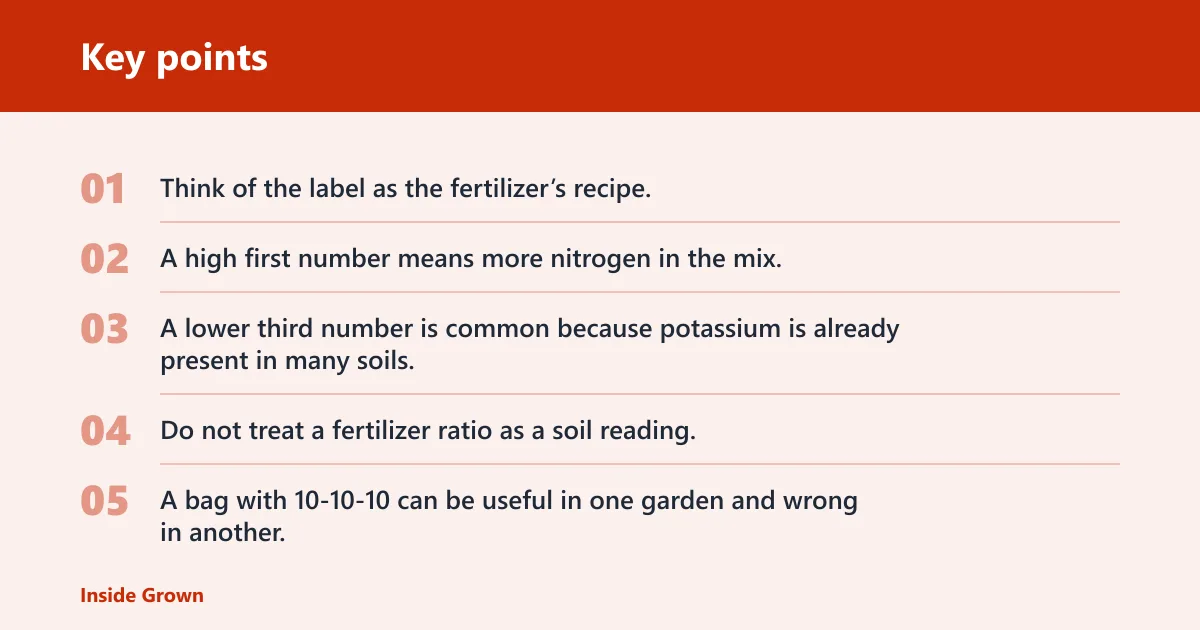
Think of the label as the fertilizer’s recipe. A high first number means more nitrogen in the mix. A lower third number is common because potassium is already present in many soils, but the right ratio still depends on your crop and your soil test.
Do not treat a fertilizer ratio as a soil reading. A bag with 10-10-10 can be useful in one garden and wrong in another. The label tells you the product analysis. It does not tell you whether the soil is low, normal, or high in any nutrient.
Why a ratio is not the same as a soil test result
A soil test measures the soil, while a fertilizer label describes the product you buy. That difference matters. If a test shows enough phosphorus already, adding more phosphorus because a bag looks “balanced” can be pointless or harmful over time.
Nitrogen fuels new leaves and deep green color. Because it sits at the center of chlorophyll, a shortage often shows first as older leaves turning pale or yellow, with growth slowing soon after.
Phosphorus supports root growth, flower formation, and fruiting. When supply is low, plants often stay small and older leaves may take on a purplish or reddish cast. Cold soil, packed soil, and weak light can cause similar symptoms.
Potassium supports vigor, water control, and strong cell walls. It helps plants cope with disease and stress. A shortage often starts as yellow leaf edges that later turn brown. The damage usually begins at the margins, not the center.
Starter soil interpretation table
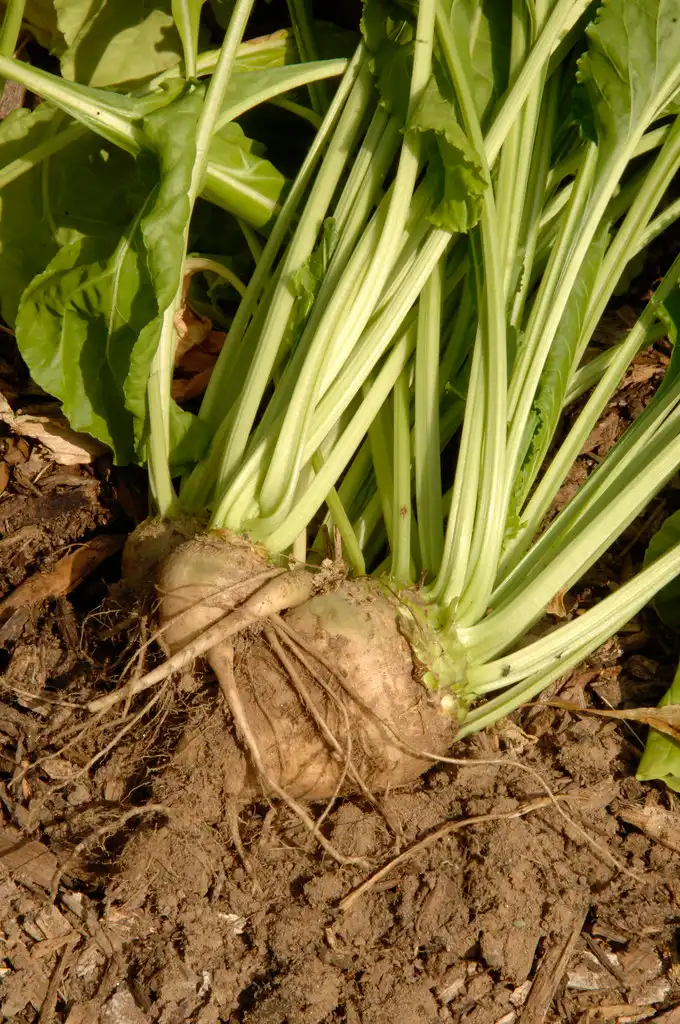
Use this table as a first pass, not a final diagnosis. Home soil tests can show low, normal, or high nutrient levels, but symptoms and test results should be read together. If the pattern is unclear, hold off on fertilizer until you check pH, watering, and root conditions.
| Nutrient | Low in a home soil test | Normal in a home soil test | High in a home soil test | Common plant symptoms | First action to take | Do not fertilize yet |
|---|---|---|---|---|---|---|
| N | Often below the crop’s recommended range | Inside the crop’s recommended range | Above the crop’s recommended range | Older leaves yellow first; growth slows | Apply a nitrogen source matched to the crop | If leaves are pale but soil is normal, check watering and root stress first |
| P | Below the crop’s recommended range | Inside the crop’s recommended range | Above the crop’s recommended range | Stunted growth; purplish or reddish older leaves | Use phosphorus only if the test calls for it | If plants are small in cold or compacted soil, test pH and rooting conditions first |
| K | Below the crop’s recommended range | Inside the crop’s recommended range | Above the crop’s recommended range | Leaf edges yellow, then brown; weak vigor | Choose a potassium source if the test is low | If edge burn appears during drought or salt stress, do not guess with fertilizer |
Do you need a soil test first?
Yes, if you want to avoid guessing. A soil test can tell you whether the soil is low, normal, or high in nutrients and may also include crop-specific fertilizer recommendations. Many home soil tests also report secondary macronutrients such as calcium, magnesium, and sulfur.
What a soil test can tell you
A good test separates what the soil contains from what the crop can use. That matters because low nutrient supply is only one reason plants struggle. The test can also flag pH problems, which affect nutrient availability even when the nutrient is present.
Say your tomatoes are yellowing and the soil test shows adequate nitrogen, phosphorus, and potassium. Fertilizer is not the first answer. pH, wet roots, or compacted soil may be blocking uptake.
How to test NPK in soil
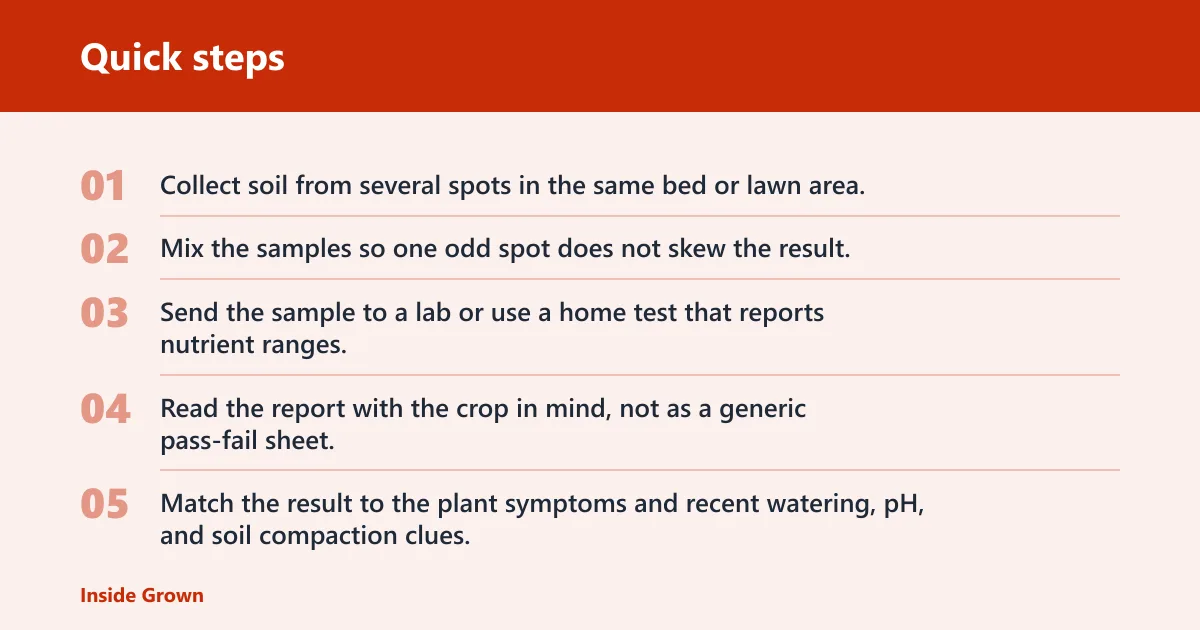
- Collect soil from several spots in the same bed or lawn area.
- Mix the samples so one odd spot does not skew the result.
- Send the sample to a lab or use a home test that reports nutrient ranges.
- Read the report with the crop in mind, not as a generic pass-fail sheet.
- Match the result to the plant symptoms and recent watering, pH, and soil compaction clues.
Home test strips can help with a rough check, but they do not equal a full nutrient diagnosis. They are better at flagging a possible issue than at telling you the exact fix.
How to test soil pH and NPK
Test pH alongside NPK because pH can block nutrient uptake even when the soil contains enough nutrients. A soil report that includes both gives you a better read on whether you need fertilizer, lime, sulfur, or simply better watering. When pH is off, adding more NPK may not solve the problem.
Should you fertilize now or wait?
Fertilize now only when the soil test shows a clear need or when symptoms match a specific shortage and other causes have been ruled out. Wait when the pattern is muddy. Compost is often the better next step for overall soil building, especially when the soil is low in organic matter rather than clearly short on one nutrient.
When low nutrients point to fertilizer
If the test says nitrogen is low and the plant is showing older-leaf yellowing, a nitrogen fertilizer makes sense. If phosphorus is low and the crop is at a stage where roots, blooms, or fruit matter most, a phosphorus correction may be useful. If potassium is low and leaf edges are browning, potassium is the likely fix.
When compost is the better next step
Organic fertilizers work with soil microbes and usually release nutrients more slowly. Common sources include blood meal, cottonseed meal, feather meal, and crab meal. These products usually carry lower NPK numbers than synthetic fertilizers, so they are better at steady feeding than at a fast correction.
Compost is also a safer choice when the issue looks like tired soil rather than a single shortage. It improves the soil environment while you keep watching the crop.
When pH, compaction, or watering should be checked first
If symptoms are mixed, do not rush to fertilizer. Yellow leaves can come from waterlogged roots, not just low nitrogen. Stunting can come from compacted soil. Purple tones can appear when cool soil slows roots. In those cases, fertilizer may miss the real problem.
A common first-timer mistake is to see pale leaves and reach for a high-nitrogen product immediately. If the bed has been soggy for days, the plant may need drainage and drying time instead.
Organic and synthetic sources
Organic fertilizers include blood meal, cottonseed meal, feather meal, and crab meal. They work with soil microbes and usually release nutrients more gradually. Synthetic fertilizers include ammonium nitrate, ammonium phosphate, superphosphate, and potassium sulfate. They are water-soluble and fast-acting, which makes them useful for quick correction.
How overapplication causes burn
Too much fertilizer can damage plants. Overapplying synthetic fertilizer can burn foliage and harm roots, especially if it is applied too close to stems or used at too strong a rate. If you need to correct a low nutrient reading, follow the soil test recommendation, not the biggest bag on the shelf.
Organic products can still overfeed a garden if misused, but their lower analysis and slower release make mistakes less sudden. Either way, the safest path is to match the product to the test.
Frequently asked questions
What is npk for plants?
NPK refers to nitrogen, phosphorus, and potassium, the main nutrients gardeners usually read first on fertilizer labels. Nitrogen supports leafy growth and green color, phosphorus supports roots and flowering, and potassium supports vigor and stress tolerance. The right choice depends on the soil, not just the plant’s name.
What is npk in fertilizer?
In fertilizer, NPK is the label analysis shown as three numbers in N-P-K order, such as 10-10-10. Those numbers are percentages by weight. They tell you what is in the product, not what your soil lacks, so they should be read with a soil test.
What do the numbers on fertilizer mean?
The numbers show the percentage by weight of nitrogen, phosphorus, and potassium in that order. So a 100-pound bag of 10-10-10 contains ten pounds each of those nutrients. The numbers do not tell you whether your soil needs that mix.
Can too much fertilizer burn plants?
Yes. Too much fertilizer can burn foliage and damage plants, especially synthetic products applied too heavily or too close to roots. If symptoms are already present, check watering, pH, and compaction before adding more fertilizer. A soil test is the safer guide when the cause is uncertain.