Why Do Some Croplands Suffer From Excessive Soil Salinity?
Excessive soil salinity silently destroys millions of hectares of farmland every year, reducing crop yields and threatening global food security. This post explains the primary causes, why certain croplands are more vulnerable, and how farmers can manage salt buildup effectively.
Simply put, excessive soil salinity occurs when soluble salts accumulate in the root zone beyond levels that most crops can tolerate. This buildup disrupts water uptake, damages plant cells, and leads to stunted growth or death.
Key Takeaways
- Excessive soil salinity is caused by natural factors (arid climate, salt-rich parent material) and human activities (irrigation with saline water, poor drainage).
- Croplands in dry regions with low rainfall and high evaporation rates suffer the most because salts are not leached away.
- Soil salinity reduces crop yields by up to 60% in severely affected areas, according to the FAO.
- Effective management includes leaching, salt-tolerant crops, and improved drainage systems.
- Early detection through soil testing and remote sensing can prevent irreversible damage.
What Is Soil Salinity and How Does It Develop?
Soil salinity refers to the concentration of soluble salts—primarily sodium, calcium, magnesium, potassium, chlorides, and sulfates—in the soil solution. When these salts exceed 4 dS/m (deciSiemens per meter) in the saturation extract, the soil is considered saline. Salinity develops through two main pathways:
- Primary (natural) salinization: Weathering of salt-rich parent rock, deposition by wind and rain, and saltwater intrusion in coastal areas. This accounts for about 30% of global saline soils.
- Secondary (human-induced) salinization: Irrigation with saline water, insufficient drainage, overuse of chemical fertilizers, and deforestation. This type now affects around 20–30% of irrigated lands worldwide.
The process accelerates in arid and semi-arid regions where evaporation exceeds precipitation. Water evaporates from the soil surface, leaving behind dissolved salts. Without enough rainfall to flush them deeper, salts build up in the topsoil.
| Factor | Contribution to Salinity |
|---|---|
| Arid climate + low rainfall | High evaporation concentrates salts rapidly |
| Irrigation with brackish water | Adds salts directly to root zone |
| Poor drainage | Prevents salt leaching below roots |
| Overuse of fertilizers | Adds potassium, nitrate, and chloride salts |
Table 1 shows the main factors and how each contributes to soil salt accumulation. Note that most human-induced factors are manageable with better practices.
What Are the Main Causes of Excessive Soil Salinity?
Understanding the root causes helps identify which croplands are at highest risk. The primary drivers fall into three categories: natural, agricultural, and climatic.
Natural Causes
- Salt-rich parent material: Soils derived from marine sediments or evaporite deposits are naturally high in salts.
- Saltwater intrusion: Coastal aquifers and river deltas experience saltwater pushing into freshwater aquifers, especially during droughts.
- Aeolian deposition: Wind can carry salt particles from dry lake beds or salt pans onto adjacent farmland.
Agricultural Causes
- Irrigation with saline water: Using groundwater with high total dissolved solids (TDS > 500 ppm) adds salt every irrigation cycle.
- Insufficient drainage: Without subsurface drains or adequate slope, salts remain in the root zone after irrigation.
- Excessive fertilizer use: High application rates of potassium chloride or ammonium-based fertilizers increase soil salt content.
Climatic Causes
- Low rainfall (<300 mm/year): Not enough water to leach salts below the root zone.
- High evapotranspiration: Hot, dry conditions pull water upward, concentrating salts at the surface.
Warning: In regions like the Aral Sea basin, up to 50% of irrigated land is now salt-affected because of decades of poor water management. The problem is accelerating due to climate change.
Why Do Some Croplands Suffer More Than Others?
The vulnerability of a cropland to excessive soil salinity depends on a combination of geographic, hydrologic, and management factors. Here are the key determinants:
- Irrigation history: Fields irrigated for decades without salt management accumulate salts year after year.
- Water quality: Using water with electrical conductivity above 0.75 dS/m increases risk rapidly.
- Soil texture: Clay soils hold salt longer than sandy soils because they have lower permeability.
- Topography: Low-lying areas collect salts from surrounding uplands, forming salt pans.
- Drainage infrastructure: Regions with tile drains or natural waterways remove salts; those without remain saline.
According to the FAO, about 1.5 billion hectares of land worldwide are affected by salt, and approximately 20% of irrigated croplands suffer yield losses due to salinity. The worst-hit croplands include:
| Region | % Irrigated Land Salt-Affected | Main Cause |
|---|---|---|
| Central Asia (e.g., Uzbekistan) | 60–70% | Poor irrigation & drainage |
| Indus Basin (Pakistan/India) | 30–40% | Saline groundwater & canal seepage |
| Murray-Darling Basin (Australia) | 15–25% | Natural salinity + irrigation |
Table 2 shows that global hotspots for salinization share common traits: dry climates, long irrigation histories, and limited fresh water.
What Are the Symptoms of Salinity in Crops?
Farmers often notice crop stress before they test the soil. Common visible signs include:
- Stunted growth: Plants appear smaller than normal, with fewer leaves and shorter stems.
- Leaf tip burn and yellowing: Older leaves turn yellow or brown at the edges (chlorosis and necrosis).
- Wilting even when soil is moist: Salts create a physiological drought that prevents root water uptake.
- White salt crust on soil surface: A sure sign of salt accumulation.
- Uneven crop emergence: Seedlings die or fail to germinate in saline patches.
- Reduced fruit or grain size: Yields drop significantly even if plants survive.
The USDA reports that salinity can reduce yields of sensitive crops like beans and strawberries by up to 60%, while moderately tolerant crops like barley suffer 20–30% losses at ECe levels of 6–8 dS/m.
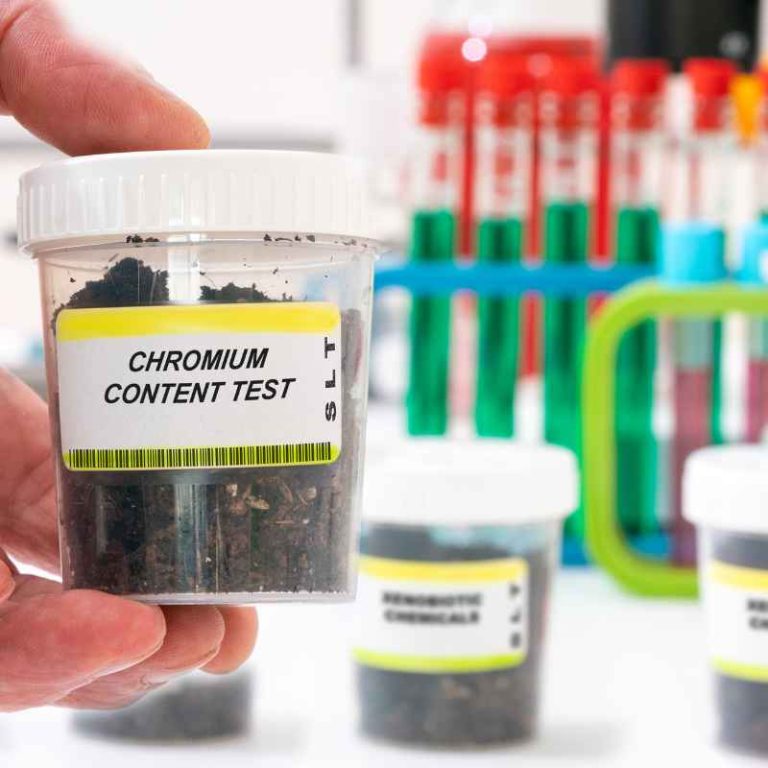
Tip: Use a portable EC meter to test soil salinity early in the season. Sample at 0–15 cm depth and 15–30 cm depth to see where salts are concentrated.
How Can Farmers Manage and Reduce Soil Salinity?
Managing excessive soil salinity requires an integrated approach that addresses both the cause and the symptoms. Here are the most effective strategies:
1. Leaching
Applying extra water to wash salts below the root zone. This works best when drainage is adequate and water quality is good. Leaching requirement (LR) is calculated as: LR = ECw / (5 × ECe) × 100.
For example, if irrigation water EC is 2 dS/m and target soil EC is 4 dS/m, LR = 2/(5×4) = 10% extra water.
2. Improving Drainage
Installing subsurface tile drains or deep open drains allows salty water to leave the field. In clay soils, mole drains or sand-slitting can improve permeability.
3. Use Salt-Tolerant Crops
Replace sensitive crops with tolerant ones. Common salt-tolerant species include:
- Barley (Hordeum vulgare) – up to ECe 8 dS/m
- Cotton (Gossypium hirsutum) – up to ECe 7 dS/m
- Sugar beet (Beta vulgaris) – up to ECe 6 dS/m
- Wheat (Triticum aestivum) – up to ECe 6 dS/m (some varieties)
- Date palm (Phoenix dactylifera) – up to ECe 4 dS/m
4. Gypsum Application
Gypsum (calcium sulfate) displaces sodium from clay particles, improving soil structure and allowing salts to leach more easily. Apply 2–5 tons/ha based on soil test.
5. Better Irrigation Practices
Use drip irrigation instead of flood to apply water precisely and reduce salt accumulation near the root zone. Mulching with organic matter also reduces evaporation and salt rise.
| Method | Effectiveness | Cost |
|---|---|---|
| Leaching | High (if drainage ok) | Low (water cost) |
| Tile drainage | Very high | High (installation) |
| Gypsum amendment | Moderate-high (sodic soils) | Moderate |
| Salt-tolerant crops | Depends on variety | Low |
Table 3 compares key management methods. No single solution works alone—combining leaching with crop selection and drainage gives the best results.
What Are the Long-Term Impacts of Excessive Soil Salinity?
If left unchecked, excessive soil salinity leads to permanent land degradation. The effects are both economic and environmental:
- Yield decline of 30–60% on affected fields, pushing farmers to abandon land.
- Loss of soil biodiversity: Salts kill beneficial microbes, worms, and insects that maintain soil health.
- Groundwater contamination: Leached salts can pollute aquifers, making water unsuitable for drinking or irrigation.
- Desertification: Once salt crusts form, vegetation disappears, and wind erosion creates dust storms.
The World Bank estimates that salinization costs the global economy $27 billion annually in lost agricultural production. In countries like Pakistan, the annual loss is $1.2 billion. Without intervention, saline-affected areas could double by 2050.
Important: Prevention is far cheaper than remediation. Regular soil testing and using high-quality irrigation water can stop salinity before it becomes severe. Many national agricultural extension services offer free or low-cost soil EC testing.
Frequently Asked Questions
What is the difference between soil salinity and sodicity?
Soil salinity refers to the total concentration of soluble salts, while sodicity refers to the proportion of sodium relative to other cations. Sodic soils have poor structure and dispersion, whereas saline soils mainly cause osmotic stress. Both can occur together.
Can excessive soil salinity be reversed?
Yes, but it takes time and investment. Leaching, drainage improvements, and gypsum application can reduce salt levels. However, if salinization has gone on for decades, restoration may take 3–10 years of continuous management.
How does salt affect plant growth exactly?
Salts reduce the water potential of the soil solution, making it harder for roots to absorb water. Additionally, high sodium and chloride ions are toxic to plant cells, damaging enzymes and photosynthesis. Growth slows, and leaves show burn symptoms.
Which crops are most sensitive to soil salinity?
Sensitive crops include beans, carrots, strawberries, onions, and many fruit trees (citrus, avocado). They suffer yield losses at ECe levels as low as 2 dS/m. Tolerant crops like barley, cotton, and sugar beet can withstand higher levels.
Is rainwater enough to leach salt from soil?
In humid regions with rainfall above 600 mm/year, natural leaching often keeps salinity low. But in arid areas, even occasional heavy rains may not be enough because salts have accumulated deeper in the profile. Artificial leaching with high-quality water is usually needed.
Final Thoughts
Excessive soil salinity is a growing threat that stems from both natural conditions and poor agricultural practices. Croplands in dry regions with saline irrigation water and limited drainage are most at risk. The good news is that proactive management—leaching, salt-tolerant varieties, and drainage improvements—can restore productivity and prevent further damage.
Start with a simple soil test today to know where your fields stand.