How to Mix Native Soil with Imported Topsoil
Mix imported topsoil into about the top 4 to 6 inches of native soil, or a bit deeper only if both layers are loosened together, so roots do not hit a drainage break. If you pile it on top or leave a sharp seam, water can perch above the interface and roots may stay shallow. This guide gives depth-based mixing steps, ratio ranges for different soils, and the checks that tell you when to blend more deeply.
Yes, but only when the goal is to improve the soil profile, not to stack two separate layers. Topsoil is the mineral soil layer plants root into, and it works best as fill, grading material, or a base layer under beds and lawns. Native soil is the soil already in place, and it often needs improvement rather than full replacement.
When to blend native soil instead of replacing it
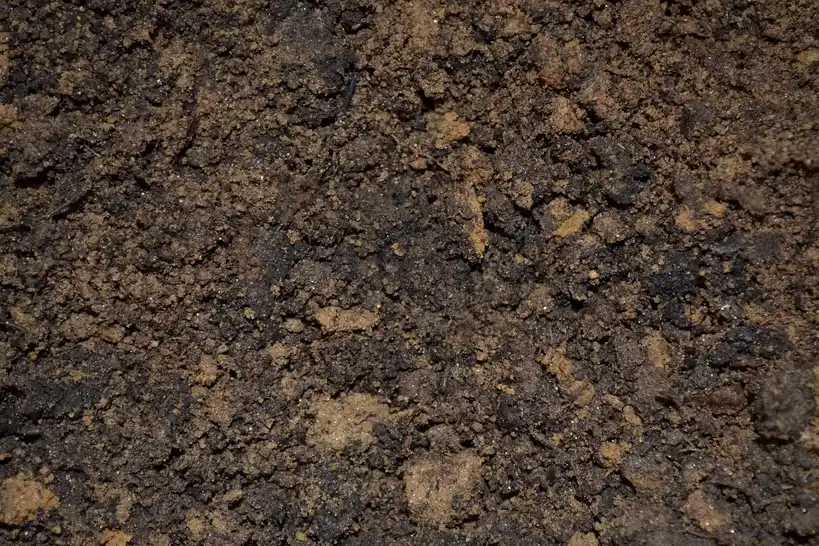

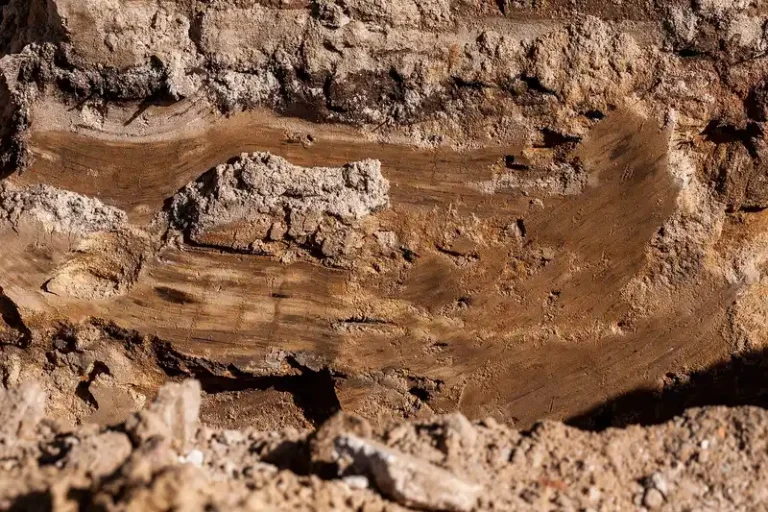
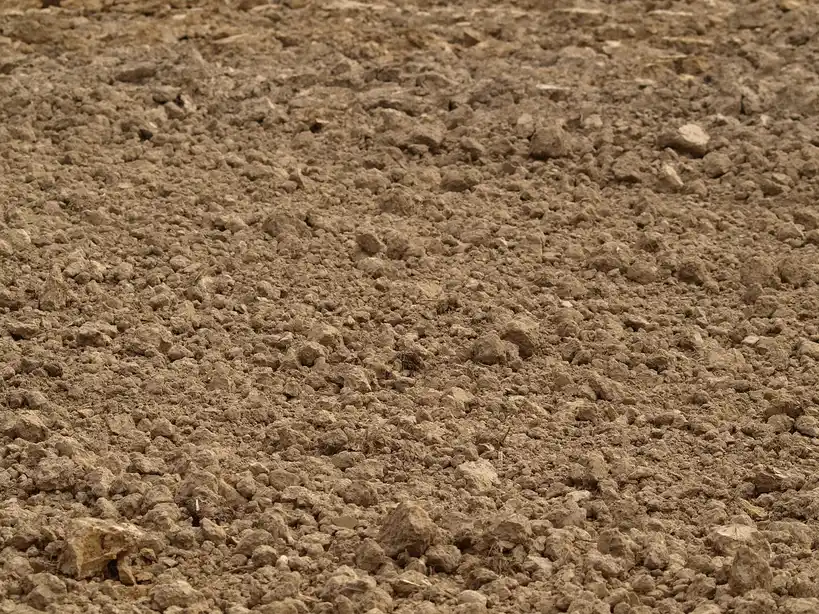
That matters because a clean seam between soil types can stop water from moving evenly. A sandy imported layer over fine clay can drain too fast at the top while the clay below stays wet. The reverse can hold water on top of the interface. Blend the materials so the texture changes gradually.
Compost helps feed and condition soil, but it is not a structural soil. Garden soil is a pre-mixed planting medium for in-ground beds and planting zones, and it is usually richer and more moisture-retentive than plain topsoil. Raised-bed mix goes further and may include topsoil, organic matter, and sometimes grit.
When blending helps plant roots
Blending helps most when the native soil is workable but thin, low in organic matter, or slightly uneven. It also helps in fresh beds where you need a root zone with more volume than the existing ground provides. In those cases, imported topsoil can extend the workable layer without creating a hard boundary.
When replacement is the better call
If the site is contaminated, full of rubble, or holding water after a drainage test, replacement may be safer than blending. A wet site needs inspection before major soil work because pooling can suffocate roots. Mixing more soil into a poorly draining layer can make the problem harder to fix.
Why a sharp soil layer causes trouble
A sharp interface can slow percolation, especially where textures differ a lot. Fine particles can clog pore spaces at the boundary and form a perched water layer. Roots then linger near the surface instead of growing through the profile. A gradual blend avoids that abrupt change.
Soil mixing table
| Site condition | Recommended ratio | Working depth | Finish method | When to use it |
|---|---|---|---|---|
| Clay soil | 70/30 native soil to topsoil, with compost added in place | Top 4 to 6 inches | Loosen, spread, then shovel-and-rake blend | Use when the clay drains slowly but is not saturated or contaminated |
| Sandy soil | 70/30 native soil to topsoil, then add compost | Top 4 to 6 inches | Blend evenly and finish with a light rake | Use when the site drains too quickly and needs more moisture holding |
| Compacted soil | Amend in place first; blend only after loosening | Top 6 to 8 inches if loosening is possible | Break up the layer, then mix in lifts | Use when roots, foot traffic, or machinery have sealed the surface |
| Low spot fill | 50/50 native soil to topsoil | Fill in lifts, then blend the top zone | Compact lightly, water, then top up after settling | Use when leveling a yard dip or shallow depression |
| New planting bed | 50/50 native soil to topsoil in the root zone | About 20 cm or more of workable bed depth | Blend deeply, water, then re-level after settling | Use when building a bed for shrubs, perennials, or mixed planting |
Use this table as a starting point, not a rule for every site. If the native soil is badly compacted, contaminated, or saturated, do not force a blend. Improve the ground first or replace the problem layer. A ratio only works when the base layer can accept it.
How do you mix native soil with imported topsoil?
Start by checking drainage, clearing the area, and spreading the imported soil in shallow lifts. Then blend the top 2 to 4 inches with a shovel and rake so the new material ties into the existing profile. The aim is a gradual transition, not a distinct top layer.
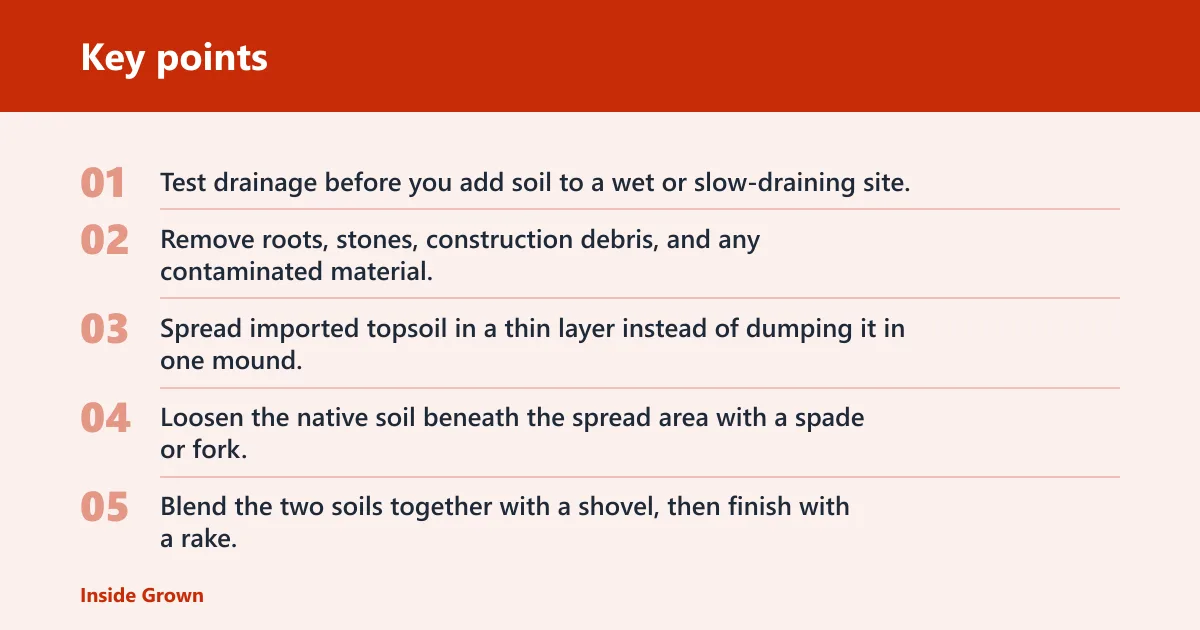
- Test drainage before you add soil to a wet or slow-draining site.
- Remove roots, stones, construction debris, and any contaminated material.
- Spread imported topsoil in a thin layer instead of dumping it in one mound.
- Loosen the native soil beneath the spread area with a spade or fork.
- Blend the two soils together with a shovel, then finish with a rake.
- Water lightly so the mix settles, then re-level the surface.
Check drainage before you start
A drainage test should come before major imports on wet ground. If water sits after rain or irrigation, adding more soil can hide the symptom without fixing the cause. Slow drainage changes the ratio choice too. A bed that already holds water may need amendment in place, not extra fill.
Remove debris, roots, and contaminated soil
Native soil often contains stones, old roots, construction scraps, or low-quality fill left from earlier work. Remove those materials before mixing. If contamination is suspected, stop and treat the area as a replacement job. Importing topsoil over a bad base just buries the problem.
Spread the imported soil in lifts
Do not dump the full depth at once. Spread the new soil in lifts, then blend each lift into the top of the native soil. Thin lifts are easier to mix evenly and reduce the chance of a sealed layer forming below the surface.
Blend the top 2 to 4 inches with a shovel and rake
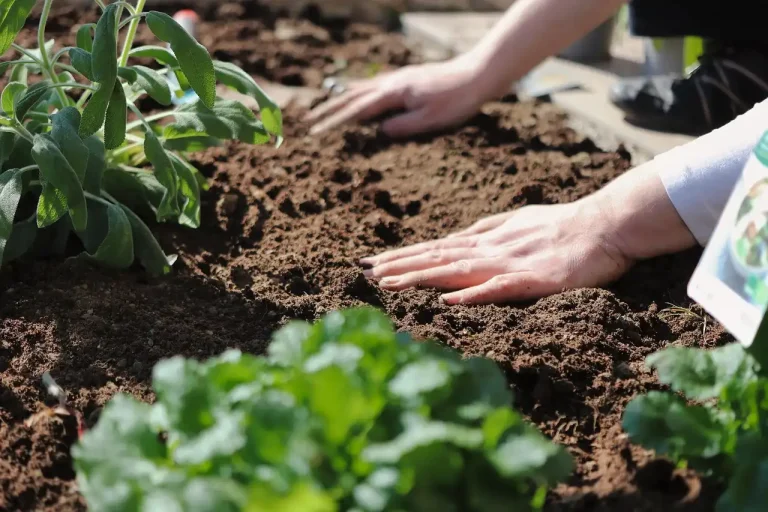
Shovel and rake blending is the key manual method for even texture in the top zone. Turn the material over, slice through clumps, and pull the mix back across the bed. That gives you a gradual transition instead of a stacked layer. For lawns, keep the working layer thin enough to avoid burying grass crowns.
Picture a front bed with heavy clay underfoot and a 6-inch delivery of light topsoil spread on top. If the two layers stay separate, rain can puddle at the seam. If you loosen both and blend the upper zone, water moves more evenly and roots can work through it.
How much topsoil should I add?
Use depth, not just area, to plan the volume you need. The right amount depends on whether you are topdressing a lawn, leveling a low spot, or building a new bed. For established turf, keep the layer thin. For new beds, aim for enough depth to support roots after settling.
Match the depth to the planting goal
For lawns, guidance differs by task. Thin topdressing layers of about ¼ to ½ inch are commonly used on established turf because they help avoid smothering the grass. RHS says lawns need at least 10cm of topsoil. New beds need about 20cm or more.
Depth matters more than area when you estimate how much soil to order. A small bed with a deep fill can need more volume than a broad shallow topdressing area. If you are building a new bed, plan for settling after watering. The surface usually drops a bit once the mix consolidates.
Allow for settling after watering
Do not finish at the exact target height and call it done. Watering tightens the mix and reveals low points. Add soil in stages, water, and then re-level the surface. That is especially important in low spots and new beds, where a soft fill can sink after the first soak.
What should you add with the topsoil?
Add compost when the goal is to feed and condition soil, not to build structure by itself. Use garden soil for in-ground beds and planting zones when you want a richer, more moisture-retentive planting medium. Use raised-bed mix when the whole bed needs a new fill and you want a blend made for that purpose.
Use compost to feed and condition
Compost is decomposed organic matter. It improves the biological side of the mix and helps soil hold nutrients and moisture. It should be part of the blend, not the only material. A soil profile still needs mineral particles from native soil or topsoil to hold shape and support roots.
Use garden soil for planting zones
Garden soil is a pre-mixed medium for in-ground planting. It is usually denser and holds more moisture than lawn soil, and it is positioned for beds rather than bulk grading. If you are planting shrubs, perennials, or mixed borders, a topsoil-plus-garden-soil blend can be a better fit than plain topsoil alone.
Use raised-bed mix when the whole bed needs a new fill
A raised-bed mix can include topsoil, organic matter, and sometimes grit. It costs more than plain topsoil, but it is designed for full-bed filling where the native ground will not support the planting zone well enough. Use it when you are creating a bed from scratch, not when you only need a surface blend.
Avoid drainage problems
The main mistake is creating a perched water layer. The next mistake is burying lawns or crowns too deeply. Keep any topdressing thin on established turf, and blend imported soil into the existing profile rather than leaving a sharp seam. If drainage is poor, correct that first.
Do not bury established plants too deep
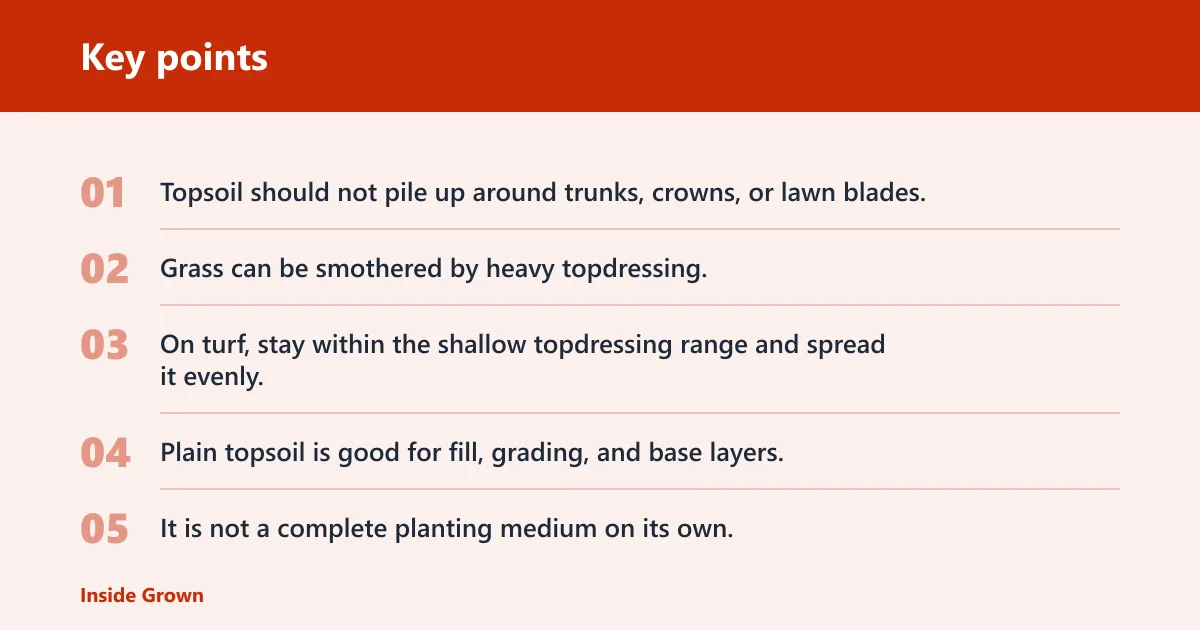
Topsoil should not pile up around trunks, crowns, or lawn blades. Grass can be smothered by heavy topdressing, and plants can suffer if the crown stays buried. A thin finish works better than a thick cap. On turf, stay within the shallow topdressing range and spread it evenly.
Do not use the wrong soil type for the job
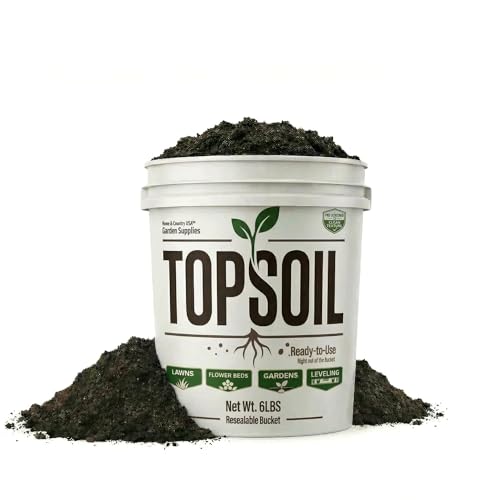
Plain topsoil is good for fill, grading, and base layers. It is not a complete planting medium on its own. Soil quality varies by source, and texture can be inconsistent, so check what you are buying. In the UK, bought-in topsoil is named under BS 3882, and BS 3882:2015 covers multipurpose and specific-purpose topsoils.
Suppliers may label products differently, but the use should still match the job. If the area needs structure and moisture balance, a planting blend may be better than plain fill soil. If the area needs bulk fill or leveling, topsoil is the right starting point.
Should you remove the native soil first or mix it in place?
Mix in place when the native soil is usable and the issue is a weak top layer, low organic matter, or a shallow planting zone. Remove and replace when the existing soil is contaminated, full of debris, or draining so poorly that blending will not fix it. The soil condition decides the method.
Say your 3-by-4 metre bed sits on compacted clay with a shallow puddle after rain. A full swap may be overkill if the clay is only tight at the top. If the same bed contains broken brick and construction fill, replacement is the better call.
Frequently asked questions
Can you mix topsoil with native soil?
Yes. Blend topsoil into the top 4 to 6 inches of native soil, or a little deeper if you loosen both layers together. That keeps roots from hitting a hard seam and lowers the chance of perched water at the boundary between soil types.
What ratio of topsoil to native soil is best for beds?
For many beds, 50/50 works well in the root zone. For clay or sandy ground that still drains acceptably, 70/30 native soil to topsoil is a safer starting point. If the soil is saturated, contaminated, or badly compacted, do not guess a ratio. Fix the base first.
Should I add compost when mixing topsoil and native soil?
Yes, if the goal is to feed and condition the mix. Compost improves moisture and nutrient handling, but it is not a structural soil. Use it with topsoil and native mineral soil, not as a replacement for either one.
Can you turn topsoil into garden soil?
You can move topsoil toward a garden-soil mix by adding compost and, where needed, other planting amendments. That still does not make every batch ideal for every bed. Garden soil is a planting medium, while plain topsoil is better for fill and base work.
What tools do I need to blend soil evenly?
Use a shovel or spade for turning the material and a rake for leveling the surface. A garden fork helps in compacted ground. The aim is to mix the upper zone evenly after spreading the imported soil, not to churn the entire site deeper than needed.