How to Tell if Your Garden Soil Is Sandy, Loamy, or Clay
Use three quick checks: the squeeze test, ribbon test, and jar test; if two line up, use that texture class, and if they conflict, treat it as mixed soil and use judgment. I have seen bad calls on texture lead to overwatering, root stress, and beds that crust, drain poorly, or dry out too fast. This guide shows how to run each test at home and how to read mismatches so you can tell sandy, loamy, and clay soils apart.
What you’ll need



- A handful of slightly damp soil from the planting depth you want to judge
- A clear jar or Mason jar with a tight lid
- Water
- A drop of dish soap
- A ruler
- A small spade or trowel
- A notebook or the worksheet below
How can I tell if my garden soil is sandy, loamy, or clay?
Start with the squeeze test, then confirm with the ribbon test and jar test. Sandy soil feels gritty and breaks apart fast, loamy soil makes a soft ball that crumbles, and clay soil feels sticky, ribbons well, and drains slowly. Use all three, because rocks, mulch, and dry clods can throw off any single test.
Why soil texture matters before planting
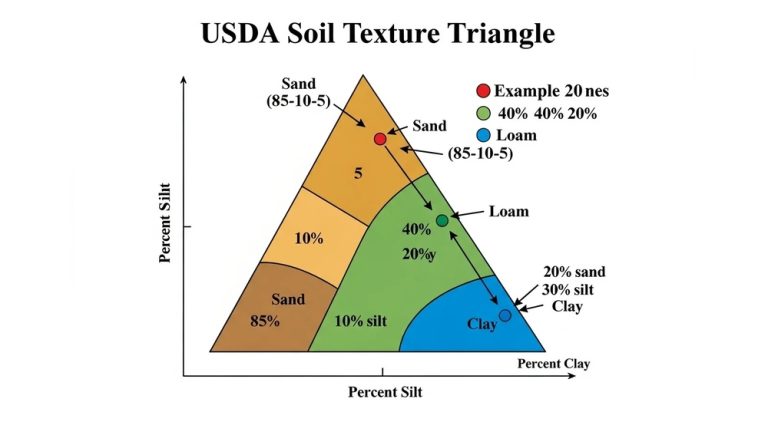
Soil texture is the mix of sand, silt, and clay particles. That is different from soil structure, which is how those particles cling together into clumps. Texture controls drainage, water storage, root penetration, and how often a bed needs watering.
Loam is the gardener-favored texture because it holds moisture and still drains well. One common loamy range has less than 52 percent sand, between 7 and 27 percent clay, and between 28 and 50 percent silt.
Texture vs. structure: what you are actually identifying
Texture stays fairly consistent unless you bring in new soil or mix in a large amount of amendment. Structure can shift with compaction, organic matter, and foot traffic. A bed can be clay soil with decent structure, or sandy soil with poor structure, and those problems need different fixes.
Start with the squeeze test
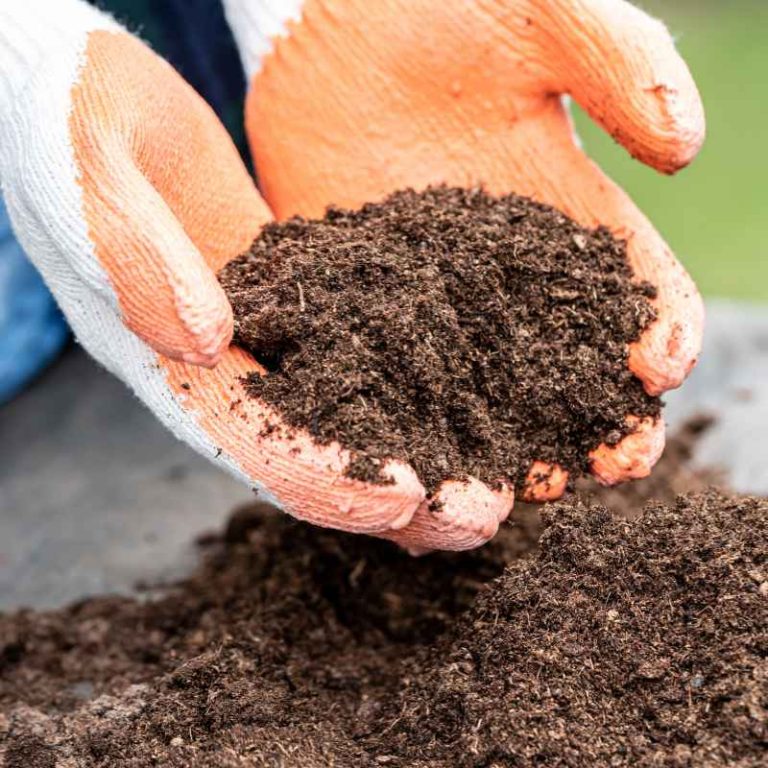
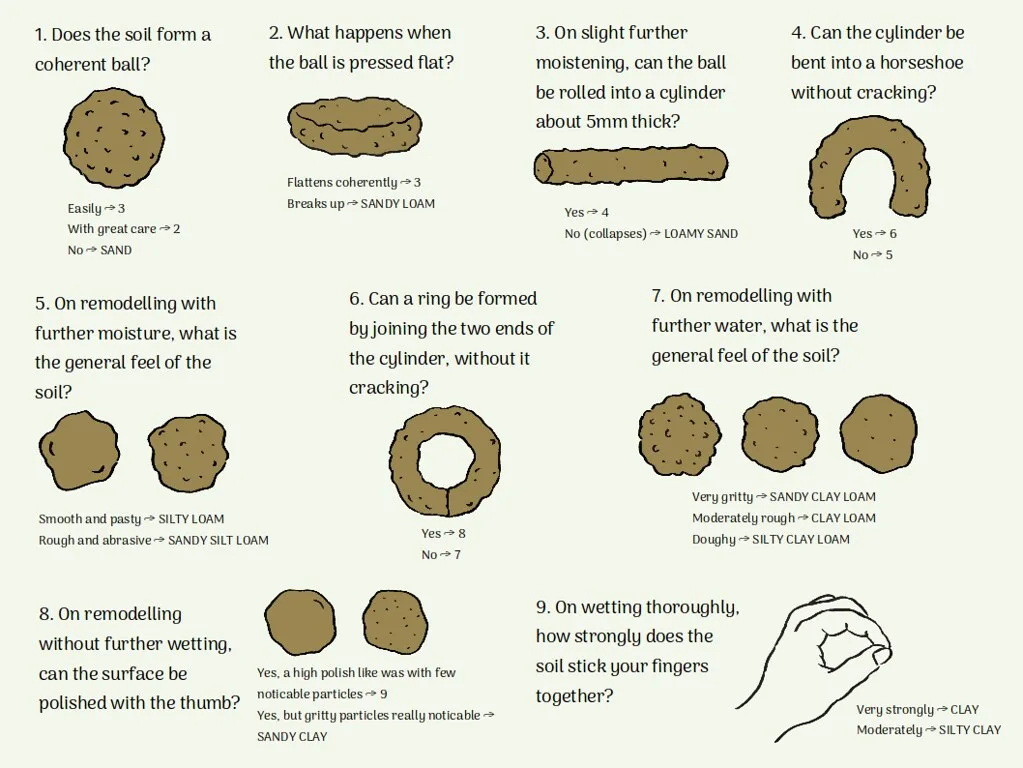
Use the squeeze test first because it is fast and works on a small sample of slightly damp soil. Sandy soil usually will not hold a ball shape, loamy soil forms a soft ball that breaks apart when pressed, and clay soil packs into a firm mass that can feel dense and sticky.
- Take a handful of slightly damp soil from just below the surface.
- Press it into a ball in your palm.
- Pinch the ball between thumb and forefinger.
- Note whether it falls apart, holds briefly, or stays together hard.
What each hand feel means in plain terms
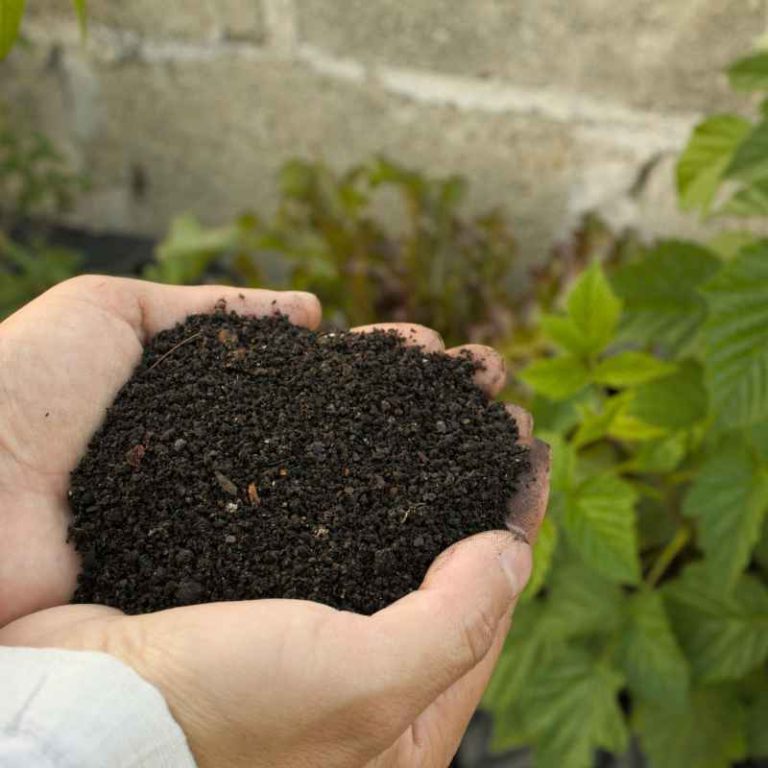
Sandy soil feels coarse and gritty. It falls apart quickly when squeezed and tends to drain quickly, with low water-holding capacity. Loamy soil feels softer and smoother, with enough body to hold together for a moment before crumbling. Clay soil feels smooth, dense, and often sticky when wet.
If the sample is very dry, every soil can act sandy. If it is muddy, every soil can act clay-heavy. Slight dampness gives the best first read.
What ribbon length means clay soil?
Long ribbons point toward clay. If soil rolled between thumb and forefinger makes a ribbon longer than a couple of inches, clay content is likely high. Short ribbons usually point to loam or silt loam, while soil that will not ribbon at all is often sandy or very low in clay.
How to roll the soil between thumb and forefinger
- Moisten a pinch of soil until it holds together.
- Roll it into a small cigar shape.
- Press it gently from the end with your thumb and forefinger.
- Measure the ribbon as it forms.
What ribbon length says about clay content
A ribbon that breaks almost immediately usually means sandy soil or a sandy loam. A short ribbon suggests loam or silt loam, where silt fills gaps between coarse sand and fine clay. A long ribbon, especially one beyond 2 inches, points toward clay soil. Clay also tends to feel sticky when wet and can become rock-hard when dry.
How do I do a jar test for soil texture?
Fill a clear jar one-third full with soil, add water and a drop of dish soap, shake hard, and let it settle. Sand drops first, silt settles next, and clay last. Read the layers after the sample has had time to separate, then estimate each layer’s share of the total height.
How long should I let a soil jar settle?
Give the jar enough time for the layers to form clearly. The first change happens in minutes, but a clean read often takes much longer. A practical range is from a few minutes to about two days, with the most useful result showing up after the water clears and the top layer goes from cloudy to clearer.
Estimate sand, silt, and clay from the jar
Measure the thickness of each layer and divide by the total settled soil depth. Sand forms the bottom layer. Silt settles above sand and is important in loam because it fills the middle range between coarse sand and fine clay. Clay forms the top, slowest-settling layer.
| Test | Sandy soil | Loamy soil | Clay soil |
|---|---|---|---|
| Squeeze | Will not hold a ball shape | Soft ball forms, then crumbles | Firm ball holds together well |
| Ribbon | No ribbon or a very short one | Short ribbon, often under 2 inches | Long ribbon, more than 2 inches |
| Jar | Large sand layer, little clay | Mixed layers with clear sand, silt, clay balance | Thick clay layer, fine particles stay cloudy longer |
| Drainage | Very fast | Moderate | Slow |
How do you know if your soil drains too fast or too slowly?
Use the hole test after the texture tests. Dig a hole about a foot deep, saturate it overnight, then measure how long the water takes to drain. Fast drainage usually points toward sandy soil; slow drainage often points toward clay. Drainage alone does not name texture, but it helps confirm the pattern.
Set up the 12-inch hole test
- Dig a 12-inch-deep hole in the bed.
- Fill it with water and let it drain once.
- Refill it and leave it overnight to saturate the sides.
- Refill it again and time the drain-out.
Convert drain time into inches per hour
Measure how many inches of water drop in one hour. Faster than expected drainage often means coarse soil. Very slow drainage suggests fine particles, heavy compaction, or both. If water lingers after a full day, treat the bed as slow-draining until the texture tests prove otherwise.
Use the worksheet when results conflict
When tests disagree, trust the ribbon and jar over a single squeeze test. The squeeze test is a quick screen, but rocky soil, very dry soil, and heavily amended soil can mislead it. If two tests point the same way, use that class. If they split, call the bed mixed soil and manage for the wetter side.
One-page soil ID worksheet
| Test | Your result | What it usually means | Confidence |
|---|---|---|---|
| Squeeze | Ball / crumbly ball / no ball | Loam / sandy loam / sandy | Low to medium |
| Ribbon | 0 in / under 2 in / over 2 in | Sandy or loamy / loam or silt loam / clay | Medium to high |
| Jar | Sand %, silt %, clay % | Texture mix by settled layers | High |
| Drainage | Inches per hour | Fast / moderate / slow movement of water | Support check |
When results conflict: troubleshooting
- Rocky bed: Screen out stones and retest a finer handful.
- Very dry soil: Mist it lightly, wait 10 minutes, then repeat the squeeze and ribbon tests.
- Heavily amended soil: Take samples from two depths and compare native subsoil with the top layer.
- Mulch-rich surface: Remove the top organic layer before sampling.
Common mistakes that lead to the wrong soil ID
The biggest mistake is testing soil at the wrong moisture level. Too dry, and even clay crumbles. Too wet, and even loam smears like clay. Another mistake is confusing compaction with clay texture. Dense soil can drain slowly because it is packed, not because it is clay-heavy.
Is loam just a mix of sand, silt, and clay?
Yes, but not any random mix. Loam has a balance that gives it a soft hand feel, decent drainage, and enough moisture retention for roots. Silt matters because it sits between sand and clay in particle size and often makes loam feel smoother and more fertile than straight sand.
If that didn’t work, try this next: sample at a second depth and repeat the jar test. If the top few inches are heavily amended but the subsoil is tight clay, the bed is mixed rather than uniform. For mixed beds, plan planting and watering around the slowest-draining layer.
Prevention: avoid overworking clay soil when it is wet. That smears the particles and can make structure worse even when texture has not changed.
Frequently asked questions
How can I tell if my garden soil is sandy, loamy, or clay?
Use three checks in order: squeeze, ribbon, and jar. Sandy soil will not hold a ball, loamy soil makes a soft ball that crumbles, and clay makes a long ribbon. If the jar and ribbon agree, trust that result over the squeeze test alone.
What does sandy soil feel like in my hand?
It feels gritty and coarse, almost like tiny grains that do not cling together. A squeezed sample falls apart quickly and usually will not hold a ball shape. In the garden, that usually means fast drainage and low water-holding capacity.
How do I do a jar test for soil texture?
Put soil, water, and a drop of dish soap in a clear jar, shake hard, then let it settle. Sand sinks first, silt settles next, and clay last. Measure the layers once the water clears enough to read them.
How long should I let a soil jar settle?
Long enough for separate layers to form clearly. The process starts in minutes, but a cleaner read often needs much longer, up to 48 hours. If the top water stays cloudy, give it more time before estimating layer height.
What ribbon length means clay soil?
A ribbon longer than 2 inches points toward clay soil. Short ribbons suggest loam or silt loam. If the sample will not ribbon at all, sandy soil is more likely, especially when the squeeze test also refuses to make a stable ball.
Can I identify soil type without sending a sample to a lab?
Yes, for most home garden decisions. The squeeze, ribbon, jar, and drainage tests usually get close enough to choose watering and amendment strategy. If several tests conflict badly, repeat them on a second sample or send one for lab confirmation.