How Heat and Drought Affect Soil in Summer
Summer heat and drought can dry topsoil quickly, sometimes within hours on hot, windy days; clay may shrink and crack, while sandy soil often loses water fastest, so check the top 2 inches before watering. If you miss that shift, roots lose contact with moisture and leaves wilt, growth slows, and plants can die back. This guide explains how heat and drought affect soil in summer and what to do about it.
How does summer heat change soil?
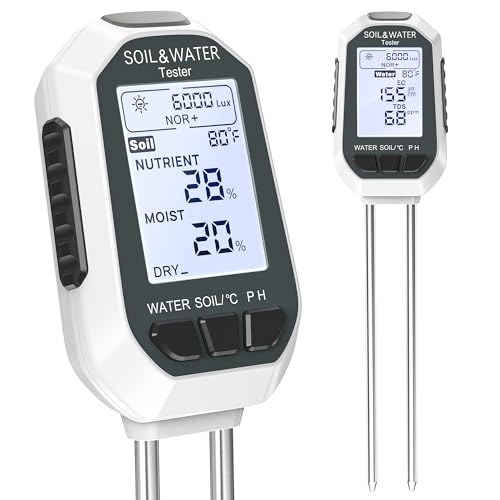


Summer heat changes soil from the surface down by warming the top layer first, increasing evaporation, and drying the root zone later. USDA NRCS explains that soil moisture depends on how water moves into, through, and out of soil pores, so hot, exposed ground can lose usable water quickly even when deeper layers still hold some moisture.
How does surface heat start drying the profile?
Soil temperature can rise faster than large water bodies because soil holds less heat and its surface is exposed to sun and wind. As the surface warms, evaporation speeds up and the upper pore spaces lose water first, according to USDA NRCS soil-water principles on infiltration and soil moisture. Bare ground dries faster because there is no canopy or mulch to slow the heat load.
Evapotranspiration also climbs in hot weather. FAO references on evapotranspiration note that wind, air temperature, humidity, and vegetation all affect how much water leaves soil and plants, so a dry, windy afternoon can pull water from the top few inches quickly.
Why does the root zone lag behind topsoil?
Topsoil usually dries before deeper root-zone soil because the upper layer exchanges heat and moisture with the air most quickly. Deeper soil can still hold water after the surface looks dusty or crusted, especially where roots extend well below the top few inches. That stored water keeps plants going through short hot spells.
Deep watering sends moisture into that lower zone, where it lasts longer and where roots can follow it. Light, frequent watering keeps moisture close to the surface, where it disappears first. USDA NRCS guidance on soil moisture and infiltration supports watering that reaches the active root zone rather than just the topsoil.
How does drought change soil moisture?
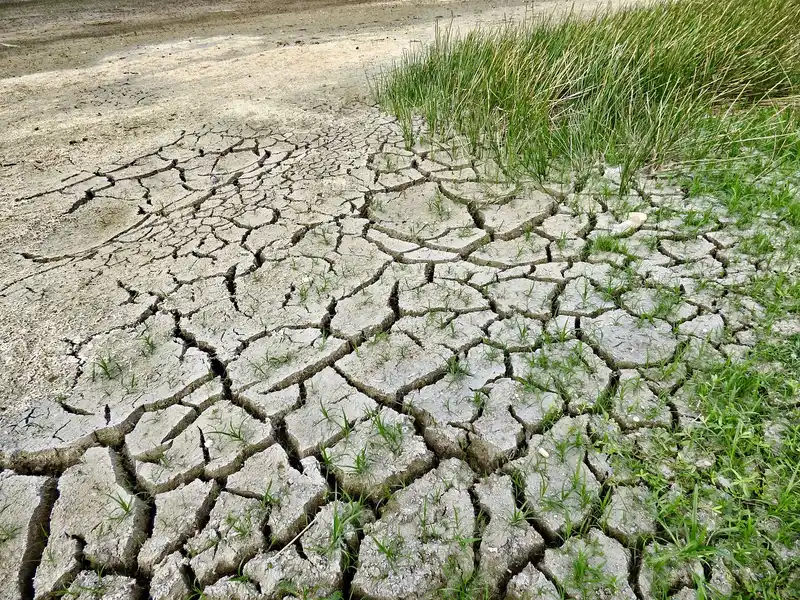
Drought lowers soil moisture, which is the amount of water held in soil pores. NOAA/NIDIS and the US Drought Monitor track these moisture deficits because as pores empty, the soil stores less water for roots, dries more unevenly with depth, and becomes harder for plants to use even before leaves show obvious damage.
What happens to pore water during drought?
Soil moisture is the water held in soil pores, and those pores are the storage space plants depend on. During drought, water drains away, evaporates, or is taken up by roots faster than it is replaced by rain. The result is less accessible water in the root zone and more stress near the surface.
Soil moisture is central to the water, energy, and carbon cycles, so dry soil changes more than plant appearance. It also affects drought and flood forecasting, which is why field checks and sensor data both matter.
How does depth change moisture loss?
Moisture loss is rarely uniform. The topsoil can dry out first, while deeper layers remain usable for days or longer depending on soil texture, slope, root structure, compaction, and vegetation cover. Those factors change how much water enters the soil, how fast it drains, and how much stays available.
Suppose a flower bed has a dry, crusted surface but the soil 4 inches down still feels cool and damp. That usually means surface evaporation has outpaced deeper drying. The plant may still recover if the root zone is protected, but the surface needs mulch and deeper watering, not a quick splash.
Why do plants struggle after the soil looks dry?
Plants often begin to struggle after the surface looks dry because roots start losing contact with moisture in the active root zone. The visible signs can lag behind the soil change. Wilting, browning, slowed growth, and dormancy are common responses, but the soil problem usually begins first.
A common first-timer mistake is to assume the soil is fine just because the surface looks dry and dusty, even though the heat has already baked moisture out of the root zone. By then, the upper soil has often been dry long enough for roots to shrink back from it, which makes recovery slower.
Why does soil heat faster than water?

Soil heats faster than water because water stores and moves heat more evenly, while soil has air spaces, minerals, and a thinner surface layer exposed to sun and wind. NASA and IPCC climate materials also note that warming raises atmospheric demand for water, which can amplify soil drying when hot conditions persist.
How does heat storage differ in soil versus water?
Water resists temperature swings better than soil. Soil temperature rises quickly because the surface absorbs solar energy directly, and there is less mass to buffer the change than in ponds, streams, or wet ground. Dry soil can heat even faster than moist soil because water in the pores helps absorb and redistribute heat.
That is why a dry path, garden bed, or bare row can become hot enough to keep the upper inch drying through the day, while nearby water stays comparatively stable.
How do wind, humidity, and evapotranspiration interact?
Evapotranspiration is the water loss from soil to atmosphere through evaporation and transpiration. FAO extension sources explain that warm air, low humidity, and wind all speed it up. When those conditions line up, soil water leaves faster, leaves lose water faster, and the surface dries before deeper layers can replenish it.
Sunny, warm, dry, or windy weather removes water from plants and soil. That is why the same bed can seem fine in the morning and sharply drier by late afternoon.
Why does bare ground dry faster?
Bare soil takes the full heat load. Without grass blades, leaves, or mulch to shade it, the top layer warms more quickly and loses water faster. Longer grass blades shade the soil and help it stay cooler, which slows drying and protects surface roots.
Mulch helps in beds and around shrubs. It cuts evaporation and insulates soil temperature, which helps hold moisture during summer heat.
Why do sandy, loamy, and clay soils behave differently?
Soil texture changes how much water soil can hold, how fast it drains, and how quickly it heats. Sandy soil dries fastest, loamy soil usually holds moisture more evenly, and clay soil stores more water but can shrink, crack, and seal at the surface when it dries hard. USDA NRCS guidance on infiltration and water storage explains why texture changes soil moisture behavior.
How does sandy soil behave in summer heat?
Sandy soil has larger pores, so water moves through it quickly and the stored moisture disappears fast in hot weather. It often shows drought stress early because the root zone loses water before plants can use much of it. Frequent shallow watering is especially wasteful here because it wets only the upper layer.
On sandy soil, the symptom is fast drying and the action is deeper, slower watering plus mulch. Do not fix sandy beds with repeated light sprinkling, because that keeps water near the surface and leaves the active root zone short of moisture.
How does loamy soil behave in summer heat?
Loamy soil usually gives the best balance of drainage and storage. It can hold enough moisture for roots while still allowing air to move through the profile. In heat, it dries more slowly than sand but faster than heavy clay after long dry periods, so it still needs deep, steady watering during hot spells.
On loam, the symptom is more gradual moisture loss and the action is steady deep watering with surface cover. Do not fix loamy beds by overwatering on a schedule that ignores depth, because that can keep the top layer wet while the root zone still needs a slow soak.
How does clay soil behave in summer heat?
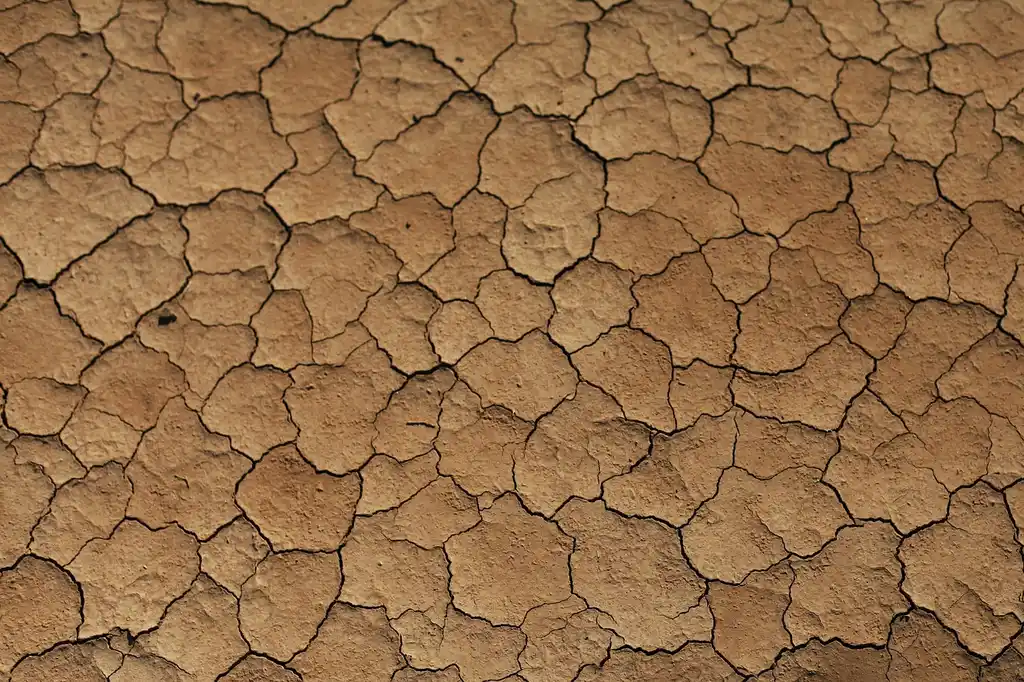
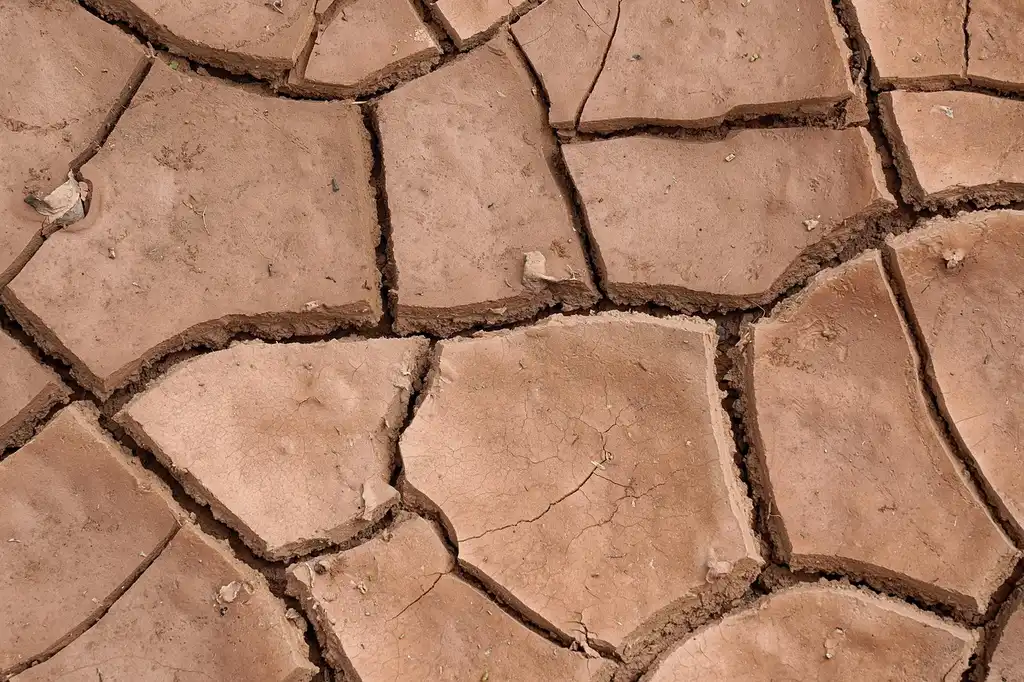
Clay soil holds a lot of water, but it releases it slowly and can dry in a hard, cracked pattern. As it dries, it may shrink enough to pull away from roots or crack open at the surface. That means the soil may still contain moisture in deeper pockets while the top looks severely dry.
On clay, the symptom is cracking, sealing, and slow intake, and the action is slow application so water can soak below the cracks. Do not fix clay with a light sprinkle or a fast hose stream, because both tend to leave the lower root zone dry.
What soil damage should you look for?
Look for soil damage that shows the drying process itself: crusting, water repellency, and runoff. Those signs tell you the soil is no longer absorbing water well, which can leave the root zone dry even after watering or rain. USDA NRCS infiltration guidance helps explain why damaged surface structure can block water entry.
What is crusting and surface sealing?
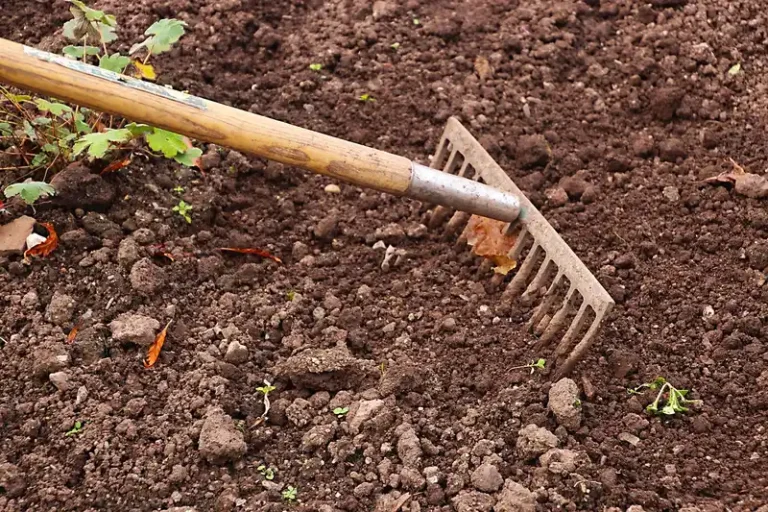
Crusting happens when the topsoil bakes into a hard layer that blocks infiltration and seedling emergence. It is common after repeated heat, raindrop impact, or overworking the surface. A crusted bed may look wet after watering and may still leave the root zone dry underneath.
What is hydrophobic dry soil?
Very dry soil can become water-repellent, especially near the surface. Water beads up, runs off, or sits in patches instead of soaking in. This is a failure case many gardeners miss because the bed appears watered, but the water never reaches the roots in time.
What does runoff that never soaks in mean?
If water races away from the bed or pools on top, infiltration is failing. Compaction often makes this worse because dense soil reduces pore space, limits root access, and blocks downward movement of water. Overcultivation can also worsen the problem by breaking structure and leaving the surface open to crusting.
What does a summer soil checklist look like?
This checklist helps you separate ordinary daytime stress from soil drying that needs action. Use it before adding more water, because the right fix depends on where the moisture loss is happening. It also separates sandy, loamy, and clay behavior so you can avoid the wrong response for your soil type.
| Visible symptom | Likely soil-process cause | Best next step | Do not fix this way |
|---|---|---|---|
| Top 1 to 2 inches look pale and dusty, but deeper soil is still cool | Topsoil is drying faster than the root zone | Check moisture 3 to 4 inches down before watering | Do not give a small surface sprinkle |
| Leaves wilt by midday, then recover by evening | Temporary heat stress with usable deeper moisture | Wait and recheck early the next morning | Do not overwater on the first wilt signal |
| Water beads on the surface or runs off | Hydrophobic dry soil or surface sealing | Apply water slowly in repeated passes | Do not blast the area with a fast hose stream |
| Hard crust forms after drying or rain | Surface sealing plus poor infiltration | Loosen only the upper crust lightly, then mulch | Do not overcultivate the whole bed |
| Bed dries in a day on sandy soil | Low water storage and rapid drainage in sandy soil | Water more deeply and mulch the surface | Do not rely on frequent shallow watering |
| Surface cracks open in clay soil | Clay shrinkage during moisture loss in clay soil | Water slowly so it can soak below the cracks | Do not add only a light sprinkle |
| Soil feels tight, dense, and hard to probe | Compaction limits infiltration and root access in loamy or clay soil | Improve traffic patterns and add organic cover | Do not keep tilling the same area |
How do you protect soil during a hot, dry spell?
Protect soil by getting water into the root zone, covering the surface, and reducing compaction. Deep watering, mulch, and careful soil care work together because each one slows moisture loss from a different part of the drying cycle. USDA NRCS infiltration guidance and FAO evapotranspiration principles both support this layered approach.
Water deeply. Established lawns should be watered deeply and less frequently rather than with small daily amounts. Aim to wet the active root zone, not just the topsoil, because deep watering encourages roots to grow farther into the soil.
Water early. Early morning watering reduces evaporation and gives water more time to move downward before the day heats up. That matters most during windy or very hot weather, when afternoon watering can lose a lot of moisture before it soaks in.
Add mulch evenly. Keep a mulch layer over exposed soil so the surface stays cooler and loses less water. Leave a small gap around stems or trunks so the mulch does not hold moisture against them, but cover the bare soil everywhere else.
Reduce compaction. Avoid repeated foot traffic, heavy equipment, and needless cultivation in dry weather. Dense soil limits infiltration and root access, so a compacted bed can stay dry even when it is watered.
Check depth before acting. Probe below the crust and topsoil before deciding the bed is dry all the way through. If the lower soil is still moist, wait; if the root zone is dry, water slowly until moisture reaches that layer.
Picture a 4-by-8-foot vegetable bed after three hot, windy days. The surface is pale and crusted, but a finger probe at 4 inches still feels slightly cool. That bed needs mulch and a slower, deeper soak, not three light waterings spread across the day.
Frequently asked questions
How is soil affected by drought?
Drought lowers soil moisture, dries the topsoil first, and leaves less water in the root zone. As pores empty, infiltration can slow, crusting can increase, and roots lose easier access to stored water. NOAA/NIDIS and the US Drought Monitor track these changes because the result is stress before the soil looks completely dry on the surface.
How does temperature affect soil?
Higher temperature raises soil temperature, speeds evaporation, and can dry the surface much faster than deeper layers. Warm, windy, low-humidity weather also increases evapotranspiration, so soil water leaves both the soil and the plants more quickly. That is why hot spells can change soil conditions in a single day.
How hot does drought make the soil?
Drought itself does not create one fixed soil temperature. It makes the surface heat up faster and stay hotter in sun because dry soil loses the cooling effect of evaporation. Bare, dry topsoil can become much warmer than shaded or mulched soil, while the root zone stays cooler for longer.
How does drought affect farming?
Drought affects farming by reducing soil moisture, slowing root growth, and making water harder to deliver where crops need it. Sandy fields dry first, compacted fields absorb less water, and clay may crack or repel water at the surface. Drought monitoring uses soil moisture observations, modeling, and remote sensing to track those shifts at field scale.
How does climate change affect droughts?
Warming can intensify drought by increasing evaporation demand and drying soils faster between rainfall events. IPCC and NASA climate findings both support the link between higher temperatures and stronger drying pressure. That does not mean every dry spell is new, but hotter air and more frequent heat extremes can make the same rainfall total produce a drier soil profile.
How does climate affect soil formation?
Climate affects soil formation by shaping weathering, organic matter buildup, and the speed of water movement through the ground. Warm, wet conditions generally speed chemical change, while repeated drying and heating can leave soils more compacted, crusted, or less able to hold moisture. Over time, that changes structure, texture balance, and root-zone behavior.
How do hot soil and air conditions damage crops and plants?
Hot soil and hot air damage crops and plants by increasing water loss faster than roots can replace it. Leaves may wilt during the day, growth can slow, flowers and fruit can drop, and young roots can struggle in overheated surface soil. FAO evapotranspiration guidance shows why the combination of heat, wind, and dry air increases plant stress quickly.
How does the environment respond when drought dries the soil?
Drought can reduce soil moisture, limit plant cover, and increase surface heat, which then changes habitat conditions for insects, microbes, and wildlife. The soil may become crusted, less permeable, and less able to support roots or seedlings. Over time, these shifts can affect erosion, runoff, and the local water cycle.