How to Prepare Soil for Evergreen Trees
Prepare soil for evergreen trees by testing drainage first, then match the soil fix to your site. If water still sits in a planting hole after about 4 hours, improve drainage before planting. A common rule of thumb is to dig the hole about 2 to 3 times as wide as the root ball, but no deeper. Poor prep traps roots, slows establishment, and can kill the tree. This guide shows how to handle clay, sand, and drainage risk, choose amendments, shape the planting hole, and care for the tree after planting.
Which evergreen should you plant?

Start with the growing zone, then check sun, mature size, and soil conditions before you buy. Most evergreen trees need full sun to partial sun, about 4 to 8 hours daily, and most need well-drained soil. Common types include arborvitae, spruce, pine, juniper, cypress, cedar, and holly.
Match the tree to your local growing zone before planting. A ZIP code lookup is a common way to confirm suitability, and zone-specific selection affects success. Trees.com notes that evergreen types vary widely, and narrow arborvitae fit tight side yards where wider trees would crowd paths, fences, or foundations.
Keep mature height and width in mind now, not later. Evergreens should be planted away from sidewalks, power lines, and other structures. A tree that fits the spot on day one can still fail if its roots, crown, or water needs do not suit the site.
Evergreen soil prep checklist
| Soil type | Drainage test result | Target soil condition | Amendments to use | What to avoid in the planting hole | After planting |
|---|---|---|---|---|---|
| Normal soil | Water drains within 4 hours | Loose, evenly moist, not compacted | Light compost mixed into the backfill if the soil is low in organic matter | Large amounts of manure, fertilizer in direct contact with roots, and a deep pocket of loose amendment | Water deeply, then add 2 to 3 inches of mulch, keeping it off the trunk |
| Heavy clay | Water stays in the hole beyond 4 hours | Improved surface drainage, no standing water, firm but not sealed soil | Widen the planting area, loosen a broad ring outside the hole, and blend in modest organic matter near the native soil | A “bathtub” hole lined with slick clay, thick compost only in the hole, and compacted sides | Water slowly, monitor drainage after rain, and mulch lightly to moderate moisture |
| Sandy soil | Water drains very fast, often within minutes | Moisture-holding soil that still drains freely | Compost or well-aged manure in modest amounts to improve water retention | Fill the hole with loose sand, excess fertilizer, or coarse material that dries out quickly | Water more often during establishment and refresh mulch to slow evaporation |
Use that checklist as a pre-plant filter, not a rescue plan. If drainage is poor, fix the site before planting. If the soil is sandy, aim for moisture retention without sealing the ground. If the soil is normal, resist the urge to “improve” it so much that roots hit a sharp change in texture.
How do you know if soil drains well enough?
Do a simple yes or no drainage test before you dig the full planting hole. If water remains in the test hole after about 4 hours, the site likely does not drain well enough for most evergreens. That warning matters because poor drainage raises the risk of root decline and planting failure.
- Dig a test hole about as deep as the root ball will sit and roughly 12 inches wide.
- Fill it with water and let it drain fully once.
- Fill it again and watch how long the water remains.
- If standing water is still there after 4 hours, choose a different spot or correct drainage before planting.
Read the result before you dig the final hole. A slow-draining spot often needs a broader fix than a bag of compost. In clay soil, water may perch above dense layers. In compacted ground, roots struggle to spread, even if the surface looks fine.
Picture a planting hole that still has water in it the next morning. An evergreen placed there will sit with oxygen-starved roots, and that can lead to yellowing needles, weak growth, and failure to establish. A better site starts with drainage, not with fertilizer.
What soil is best for evergreen trees?
Well-drained soil is the first requirement, then texture and pH matter. Most evergreen trees need well-drained soil, and many grow best in acidic soil, below pH 7. A soil test should identify pH, organic matter, and shortages before you fertilize.
Drainage affects whether roots can breathe. pH affects nutrient uptake. If the soil is too alkaline, an evergreen may struggle to use nutrients even when the ground contains them. That is why a soil test comes before fertilizer, not after symptoms appear.
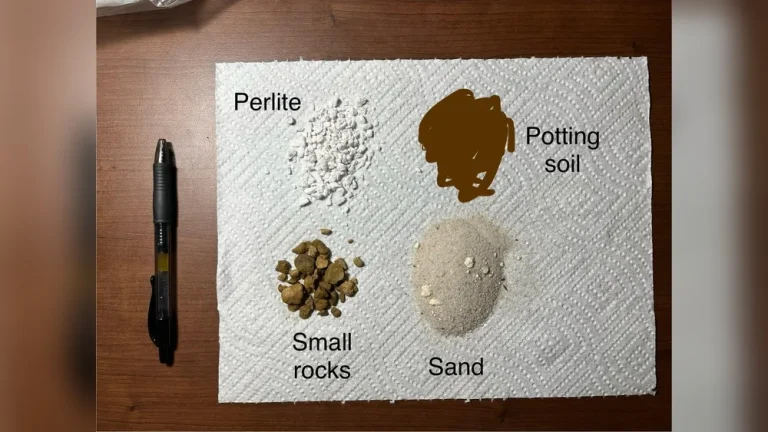
Organic matter helps soil health and root growth, but it should be added carefully. Compost or manure can improve long-term soil vitality, yet overdoing it in the planting hole can create a pocket that stays wetter or drains differently from the surrounding soil. Roots can circle or stall at that boundary.
How do you improve clay or sandy soil?

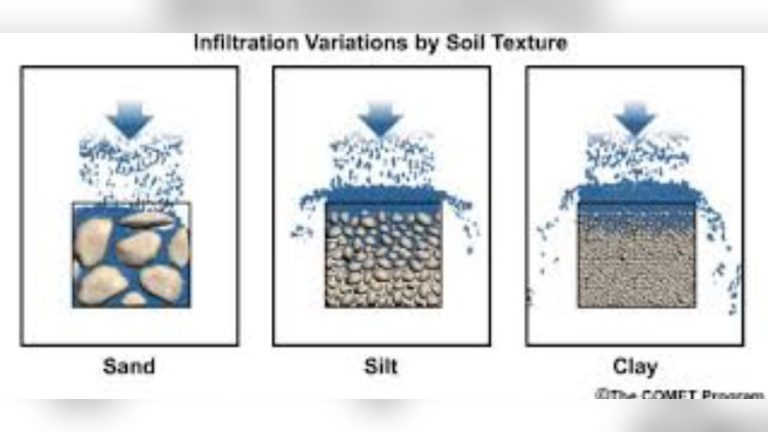
Heavy clay and sandy soil need different fixes. Clay needs better movement of air and water. Sandy soil needs better water retention without becoming dense. In both cases, the goal is a planting area that supports roots instead of creating a sharp, hostile edge around the root ball.
Heavy clay
Open the soil without creating a bathtub. If you dig a smooth-sided hole in dense clay and fill it with lighter material, water can collect in the hole because the surrounding clay drains slowly. Broaden the disturbed area, loosen the soil beyond the hole, and use only modest organic matter mixed into the native soil.
Do not pack the hole with thick layers of compost, manure, or topsoil. That can create a texture mismatch, and roots often stop at the boundary. If the site drains poorly even after loosening, pick a better location or raise the planting area.
Sandy soil
Hold moisture without making the soil dense. Sandy soil drains fast, so a small amount of compost or well-aged manure can help it hold water and nutrients longer. Keep the amendment modest so the backfill still drains freely.
Say your site has loose sand that dries by afternoon after a summer rain. A young cedar planted there may need more frequent watering during establishment, plus mulch to slow evaporation. The goal is not to create a heavy soil. It is to reduce water loss.
Where compost helps and where it does not
Compost helps most when it is used sparingly, mixed into a broad area, and matched to the soil type. It is useful for improving long-term soil vitality, especially where organic matter is low. It is less useful as a thick plug under the root ball or as a full replacement for native soil in the hole.
Avoid filling the planting hole with layers of amendment alone. That can cause settling, water movement problems, and root loss at the edge of the amended zone. The safest approach is usually a modest amendment strategy, plus correct hole size and careful watering.
How deep should you dig for an evergreen tree?
Dig wide, not deep. The hole should be wider than the root ball, but the planting depth should stay at grade. Root-ball stability matters more than staking the trunk, and the trunk should not be held rigidly just to keep the tree upright.
Set the tree so the top of the root ball sits level with the surrounding soil or slightly above it if drainage is questionable. Then backfill with the native soil or a light amendment mix suited to the site. Once the soil is settled, the tree should stand firmly on its own.
Planting too deep is a common failure point. Roots need oxygen near the surface, and buried trunks can stay too wet. Planting too high is also a problem if the root ball dries out. Aim for the original root flare to remain near the soil surface.
Planting sequence
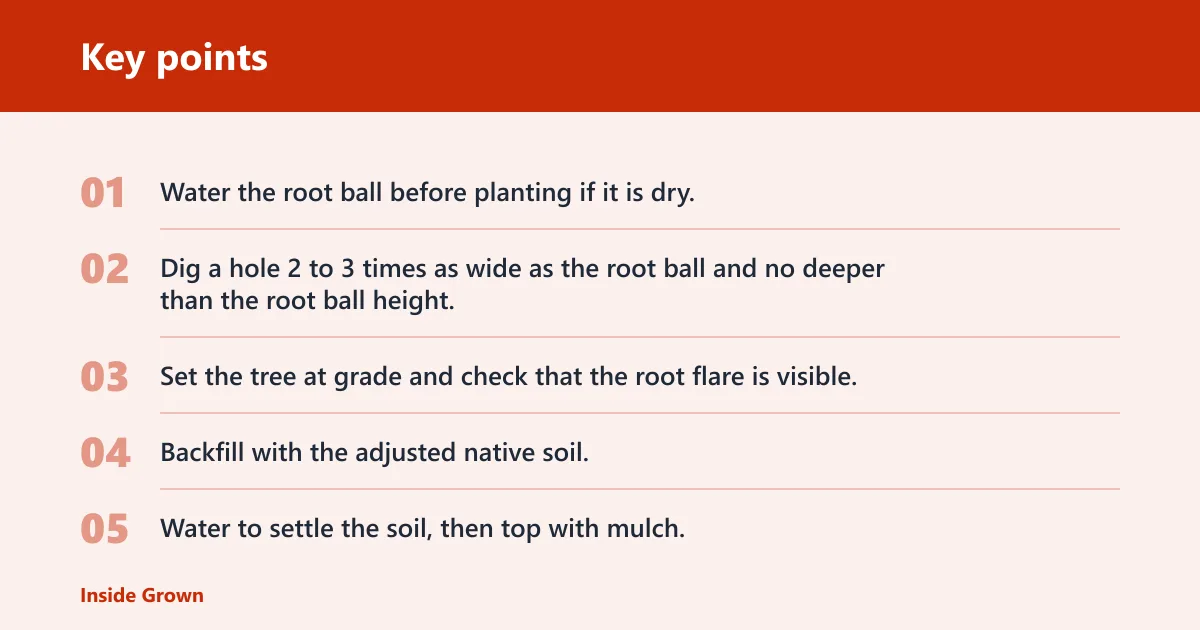
- Water the root ball before planting if it is dry.
- Dig a hole 2 to 3 times as wide as the root ball and no deeper than the root ball height.
- Set the tree at grade and check that the root flare is visible.
- Backfill with the adjusted native soil.
- Water to settle the soil, then top with mulch.
For balled-and-burlapped trees, handle the root ball gently and keep it intact while setting the depth. For container-grown trees, loosen circling roots before planting so they do not keep growing in circles after transplanting. In both cases, the planting hole should support the root ball, not bury it.
What should you add, and what should you avoid?
Add only what the soil test and site conditions justify. Compost, manure, or a slow-release fertilizer can help, but not as automatic first steps. Avoid concentrated fertilizer, excess compost, and loose organic matter that creates a sharp soil-texture boundary inside the hole.
Starter fertilizers can improve soil, but use them with caution and only after checking pH and nutrient needs. Pure Home Gardens recommends slow-release fertilizers and notes reduced runoff benefits. That matters because a feeding product dumped into the hole can move beyond the root zone or burn new roots.
Do not add gravel at the bottom of the hole as a drainage fix. Do not pile amendments under the root ball. Do not create a “better soil” pocket surrounded by a worse one. The roots eventually have to grow into the surrounding soil, so the whole planting area needs to make sense.
Water after planting, then mulch. The Tree Center says newly planted trees should be watered and protected with mulch. Keep mulch about 2 to 3 inches deep and pull it back from the trunk so moisture does not sit against the bark. Mulch conserves moisture and protects soil structure.
Should you fertilize an evergreen tree when planting? Usually only after a soil test points to a real need. If the soil is already balanced, fertilizer at planting can do more harm than good. A slow-release option is safer than a quick, concentrated feed when fertilization is actually warranted.
Frequently asked questions
How do you prepare soil for evergreen trees?
Test drainage first, then check pH and organic matter before you amend anything. If the hole still holds water after 4 hours, fix drainage before planting. Then dig a hole wider than the root ball, set the tree at grade, water it in, and mulch around it.
Do evergreen trees need well-drained soil?
Yes. Most evergreen trees need well-drained soil, and poor drainage raises the risk of planting failure. Roots need oxygen as well as water, so soggy ground can be as harmful as drought. If water lingers in the test hole, choose another spot or improve the site first.
Should I add compost before planting an evergreen tree?
Compost can help, but only in modest amounts and only when the site needs it. It improves long-term soil vitality and can help sandy or low-organic-matter soil. Avoid thick layers in the planting hole, because they can create uneven drainage and root problems.
How deep should I dig when planting an evergreen tree?
Dig no deeper than the root ball and make the hole 2 to 3 times as wide. The tree should sit at the same height it grew in the nursery, or slightly high if drainage is uncertain. Wider holes help roots spread. Deeper holes invite settling and poor aeration.
When is the best time to plant evergreen trees?
Plant in early spring or fall, before or after frost threat. That timing reduces stress while roots begin to establish. Avoid planting when the soil is frozen or when heat and drought will make water management difficult during the first weeks after planting.
How do I know if soil drains well enough for an evergreen tree?
Dig a test hole, fill it with water, refill it after the first drain, and check again after 4 hours. If water is still standing, the soil drains too slowly for most evergreens. Good drainage should leave the hole mostly empty, not ponded.
How much mulch should I use around an evergreen tree?
Use 2 to 3 inches of mulch around the tree, then keep it off the trunk. Mulch conserves moisture, protects soil, and helps moderate temperature swings. Too much mulch can hold excess moisture against the bark and invite rot or pests.