How Does Particle Size Relate to Soil Permeability?
Soil permeability is a cornerstone concept in environmental science, agriculture, civil engineering, and hydrology. The way water, air, and nutrients move through soil directly impacts crop yields, groundwater recharge, infrastructure design, and pollution control. At the heart of this process lies a deceptively simple factor: particle size . The size of individual soil particles—sand, silt, and clay—plays a profound role in determining how easily water passes through the soil profile.
Understanding the relationship between particle size and soil permeability is crucial for professionals and enthusiasts alike. Whether you’re designing a drainage system, managing farmland, or restoring wetlands, the ability to predict and manipulate soil permeability can spell the difference between success and failure. This article unpacks the science behind soil particle size, its effects on permeability, and offers actionable insights backed by real-world data, research, and practical examples.
Key Takeaways
- Particle size is the most significant factor influencing soil permeability.
- Soils with larger particles (sand) are more permeable than those with smaller particles (clay).
- Permeability affects water drainage, root growth, infrastructure stability, and contaminant movement.
- Soil management practices can modify permeability for specific purposes.
- Real-world case studies illustrate the impact of particle size on agriculture, construction, and environmental remediation.
The Science Of Soil Particle Size
Soil Texture And Its Classification
Soil is a complex mixture of minerals, organic matter , water, and air. The mineral component is classified based on particle size into three main categories:
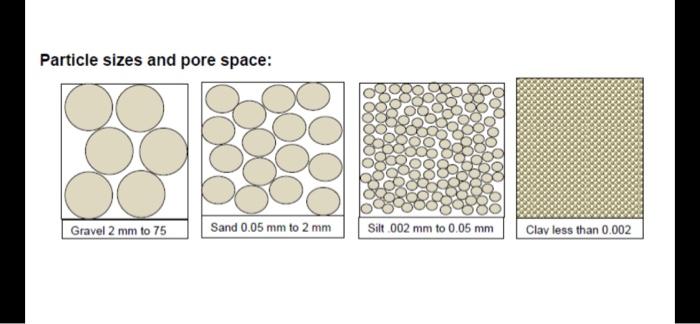
- Sand (0.05–2.0 mm)
- Silt (0.002–0.05 mm)
- Clay (<0.002 mm)
The proportion of each determines the soil texture, which is fundamental in predicting soil behavior. Sandy soils feel gritty, silty soils are smooth, and clay soils are sticky.
Soil texture affects nearly every aspect of soil behavior, including permeability, nutrient retention, susceptibility to erosion, and compaction tendency. For example, sandy soils, owing to their coarse texture, often have poor nutrient-holding capacity but excellent aeration and drainage. In contrast, clay soils, with their fine particles, excel at retaining nutrients and water but are prone to compaction and poor drainage.
The U.S. Department of Agriculture (USDA) provides a soil texture triangle—a tool that helps classify soil type based on the relative proportions of sand, silt, and clay. This classification is essential for agronomists, engineers, and environmental scientists to communicate soil properties and predict behavior under different land management scenarios.
Particle Size Distribution And Soil Structure
Particle size distribution refers to the percentage of sand, silt, and clay within a soil sample. This distribution influences how particles pack together, affecting soil structure. Well-graded soils (a mix of sizes) usually have lower permeability due to tighter packing, while poorly graded soils (uniform size) tend to be more permeable.
Soil structure goes beyond simple particle size. It describes the arrangement of soil particles into aggregates or peds. Aggregated soil with a granular or crumb structure can have much higher permeability than a compacted or massive structure, even if the particle size distribution is similar.
For instance, a loam soil with well-formed aggregates may transmit water more effectively than a sandy soil that is heavily compacted.
The diversity of particle sizes in a soil impacts the total pore space and the pore size distribution. Larger particles create larger pores (macropores), while smaller particles fill gaps, reducing the number and size of macropores. This interplay directly influences how water and air move through the soil, affecting both permeability and aeration.
Measurement Techniques
Several methods are used to determine particle size:
- Sieving for sand and gravel: This mechanical method uses a stack of sieves with progressively smaller mesh sizes to separate soil particles by size. The mass retained on each sieve gives the proportion of each size class.
- Hydrometer analysis for silt and clay: Since silt and clay particles are too small for sieving, hydrometer analysis leverages the rate at which particles settle in a column of water, based on Stokes’ Law.
- Laser diffraction for advanced soil studies: This modern technique involves passing a laser beam through a soil suspension and analyzing the diffraction pattern, enabling highly precise particle size distribution analysis across a wide range of sizes.
Accurate measurement is essential for soil classification and predicting permeability. Many laboratories also use combined approaches, starting with sieving for coarser fractions and hydrometer or laser methods for finer particles. This ensures a complete understanding of soil texture, crucial for engineering, agriculture, and environmental assessments.

Credit: www.researchgate.net
How Particle Size Influences Soil Permeability
The Permeability Equation
Soil permeability is defined as the ability of a soil to transmit water and air. The classic Darcy’s Law describes flow through porous media:
Q = K × A × (δh/l)
Where:
- Q = discharge (volume/time)
- K = permeability coefficient
- A = cross-sectional area
- Δh = hydraulic head difference
- L = length of flow path
The permeability coefficient (k) is heavily influenced by particle size.
Darcy’s Law forms the basis for most groundwater flow and soil drainage calculations. The permeability coefficient is not just a function of particle size but also of pore connectivity, soil structure, and the degree of compaction. However, among these factors, particle size stands out as the single most influential property because it determines the scale and continuity of the pore network through which water flows.
Sand Vs. Silt Vs. Clay
| Soil Type | Particle Size (mm) | Typical Permeability (cm/s) | Water Movement |
|---|---|---|---|
| Sand | 0.05–2.0 | 10-2 to 10-3 | Rapid |
| Silt | 0.002–0.05 | 10-4 to 10-5 | Moderate |
| Clay | <0.002 | 10-6 to 10-7 | Slow |
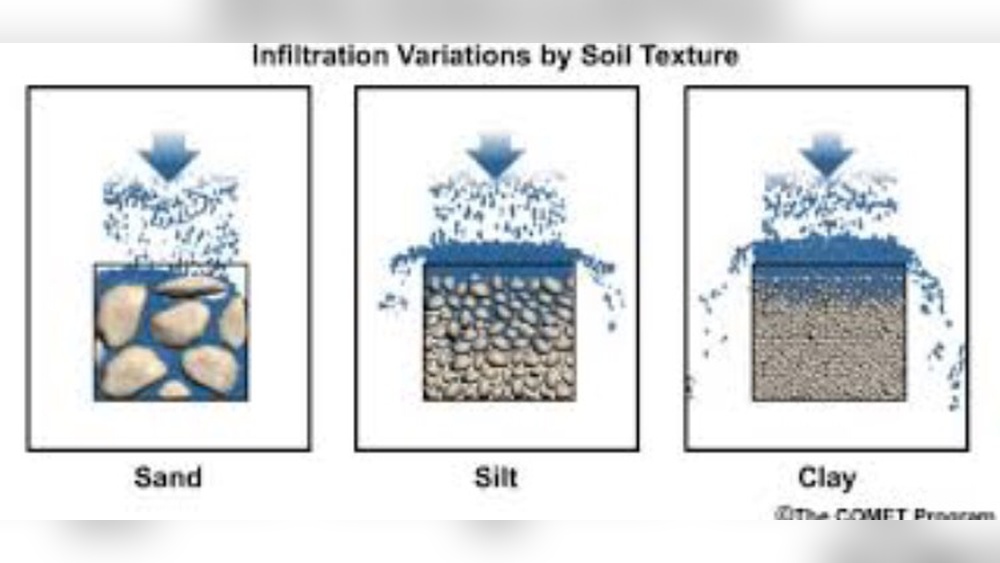
Sand has the largest particles and pore spaces, enabling rapid water movement. Clay, with the smallest particles, forms tiny pores that restrict flow.
The dramatic differences in permeability between these soil types underlie many of the practical challenges in agriculture and engineering. For example, sandy soils can drain a 2-inch rainfall event in hours, while clay soils may retain surface water for days.
Silty soils, intermediate in particle size, often provide a balance between drainage and water retention but are prone to compaction and crusting, which can reduce permeability over time.
Pore Space And Connectivity
Permeability is not just about the size of the particles but also the size and connectivity of the pore spaces between them. Larger particles create larger, well-connected pores, while smaller particles pack tightly, reducing pore size and connectivity.
The continuity of pore spaces is critical. In sandy soils, pores are both large and interconnected, allowing water to move freely in response to gravity. In clays, pores are so small that water movement is dominated by capillarity and can be extremely slow. Moreover, the presence of organic matter or soil aggregates can create secondary macropores, further influencing permeability.
Biopores created by plant roots or earthworms can also improve connectivity in otherwise dense or fine-textured soils. In agricultural management, encouraging biopore formation is a common strategy for improving water infiltration and aeration in clay-rich soils.
Particle Shape And Arrangement
- Rounded particles tend to create more open pores and higher permeability. Roundness reduces interparticle friction, allowing for greater pore space.
- Angular particles pack more tightly, reducing permeability. The edges and points of angular particles fit together more closely, leaving less space for water movement.
In natural settings, river sands are often rounded due to abrasion during transport, resulting in higher permeability. In contrast, glacial tills or crushed rock may consist of angular particles, leading to dense packing and lower permeability despite similar average particle sizes.
Example: Sandy Loam Vs. Clay Loam
A sandy loam typically has a permeability of 1.0 × 10⁻² cm/s, while a clay loam may have a permeability of 1.0 × 10⁻⁶ cm/s—a difference of 10,000 times. This dramatic contrast demonstrates the practical impact of particle size.
For instance, in a field with sandy loam soil, a 1-inch rainfall may infiltrate within minutes, making it ideal for crops sensitive to waterlogging but requiring frequent irrigation. On a neighboring field with clay loam, the same rainfall might take a day or more to infiltrate, causing temporary flooding but providing longer-term moisture retention for deep-rooted crops.

Credit: link.springer.com
Real-world Examples And Case Studies
Agricultural Drainage
In Iowa, USA, farmers on sandy soils observed rapid drainage after rainfall, minimizing waterlogging and allowing timely field operations. Conversely, in the Mississippi Delta, clayey soils led to prolonged standing water, requiring artificial drainage systems.
The difference in permeability often dictates crop selection and management practices. For example, corn and soybeans thrive on well-drained soils in Iowa, while rice, which tolerates saturated conditions, is the dominant crop in the clay-rich soils of the Mississippi Delta.
Farmers in clay regions often invest in subsurface tile drains or surface ditches to remove excess water and improve field accessibility.
Urban Construction
The construction of highways in Florida relies on permeable sandy soils for rapid drainage, reducing the risk of flooding. In contrast, building on clay-rich soils in Houston, Texas, necessitates extensive engineering to manage poor drainage and prevent foundation damage.
In Florida, the high permeability of sandy soils simplifies stormwater management and reduces the need for complex drainage infrastructure. However, it also poses challenges in maintaining pavement stability during prolonged droughts, as the soil can dry out and lose strength.
In Houston, expansive clay soils require deep foundations and engineered drainage systems to prevent heaving, cracking, and long-term settlement of structures.
Environmental Remediation
A study by the EPA found that contaminated groundwater moved much faster in sandy soils than in clay-rich soils, impacting the design of remediation strategies. Permeability assessments are central to predicting contaminant plume movement.
In one case, an industrial spill in a sandy aquifer led to rapid contaminant migration, necessitating the installation of extraction wells and reactive barriers. In contrast, similar spills in clay-rich regions resulted in slow-moving plumes, allowing more time for natural attenuation but complicating the cleanup due to limited accessibility and slower remediation rates.
Wetland Restoration
Restoration projects in California’s Central Valley use particle size analysis to ensure wetland soils maintain appropriate permeability for water retention and wildlife habitat.
Wetlands require a delicate balance of permeability: enough to allow periodic water exchange, but low enough to maintain saturated conditions for wetland vegetation and habitat. Restoration ecologists often blend soils or add clay liners to achieve target permeability, supporting both biodiversity and water management goals.
Credit: www.chegg.com
Soil Permeability And Water Movement
Infiltration Rates
Infiltration rate is the speed at which water enters the soil. Sandy soils may have rates exceeding 30 mm/hour, while clay soils often fall below 5 mm/hour.
Field tests using double-ring infiltrometers consistently show that sandy soils can absorb rainfall rapidly, reducing surface runoff and erosion. Conversely, clay soils, especially when compacted, are prone to surface crusting, leading to runoff and increased erosion risk during storms. Maintaining or improving infiltration rates is a primary concern in soil conservation and sustainable agriculture.
Drainage And Flooding
High permeability prevents waterlogging and flooding, but can also reduce water availability to plants. Low permeability can cause prolonged puddling, impacting crops and infrastructure.
In urban areas, poorly permeable soils increase the risk of flash flooding, as stormwater cannot infiltrate quickly and instead flows overland into drainage systems. In agricultural settings, slow-draining soils may require artificial drainage, but overdrainage of sandy soils can lead to nutrient loss and reduced crop yields during dry periods.
Groundwater Recharge
Soils with large particles facilitate groundwater recharge, enabling aquifers to refill after precipitation. Fine-textured soils slow this process, affecting regional water supply.
Recharge rates are critical in areas dependent on groundwater for drinking water or irrigation. Infiltration galleries and recharge basins are often located on sandy soils to maximize aquifer replenishment. In contrast, clay-rich areas may experience limited recharge, leading to groundwater depletion or the need for supplemental water sources.
Table: Infiltration Rates By Soil Type
| Soil Type | Average Infiltration Rate (mm/hr) | Drainage Characteristic |
|---|---|---|
| Sandy | 30–60 | Excellent |
| Silty | 10–30 | Moderate |
| Clayey | 1–5 | Poor |
These figures highlight the implications for land use planning, irrigation scheduling, and flood risk assessment. For example, urban planners often require infiltration testing before approving new developments to ensure stormwater can be managed effectively.
Water Retention And Root Growth
Soil permeability also determines how much water is retained. Highly permeable soils drain quickly, often requiring frequent irrigation. Poorly permeable soils retain water, but may impede root growth due to lack of oxygen.
Excessively rapid drainage in sandy soils may lead to drought stress and nutrient leaching, particularly for shallow-rooted crops. In contrast, waterlogged clay soils can develop anaerobic conditions, stunting root growth and increasing the risk of root diseases. Crop selection, irrigation methods, and soil amendments are all adjusted based on these fundamental differences.
Impact On Soil Management And Engineering
Agricultural Practices
Farmers adapt their methods based on soil permeability:
- Sandy soils: Frequent irrigation, rapid drainage, risk of nutrient leaching.
- Clay soils: Drainage improvement, careful irrigation, risk of waterlogging.
In sandy soils, growers may use drip or sprinkler irrigation to maintain consistent soil moisture and apply fertilizers in smaller, more frequent doses to minimize leaching losses. In clay soils, raised beds, deep tillage, and subsurface drainage are common practices to improve aeration and root development.
Cover cropping and organic amendments can help build soil structure and moderate permeability over time.
Civil Engineering And Infrastructure
Engineers must assess permeability before construction:
- High permeability: Good for drainage, challenging for stable foundations.
- Low permeability: Poor drainage, potential for flooding, but stable for heavy structures.
Soil permeability influences decisions about foundation type, depth, and design. For instance, permeable soils may require pilings or mat foundations to transfer building loads to more stable layers. In road construction, permeability affects the design of sub-base and drainage layers to prevent water accumulation and frost heave.
Landfill And Containment Design
Permeability is critical in landfill design. Clay liners are used because of their low permeability, preventing leachate from contaminating groundwater.
In hazardous waste sites, engineered barriers often combine compacted clay layers with synthetic liners to achieve target permeability levels as low as 1 × 10⁻⁹ cm/s. Regular testing ensures that liners maintain integrity and that any leakage is detected early. These measures protect groundwater and surface water resources from pollution.
Example: Building Foundations
A 2026 study by the American Society of Civil Engineers found that structures built on sandy soils required additional support to prevent settlement, while clay soils needed drainage systems to avoid water accumulation.
The study highlighted that while sandy soils offer good drainage, they are susceptible to differential settlement, especially under variable moisture conditions. In contrast, clay soils, though more stable under load, swell and shrink with moisture changes, necessitating careful water management and robust foundation designs.
Modifying Soil Permeability: Techniques And Strategies
Soil Amendments
- Adding sand to clay soils increases permeability by creating larger pore spaces and improving drainage.
- Adding organic matter improves structure and moderate permeability by promoting aggregation and biopore formation.
- Compaction reduces permeability, often used in construction to create impermeable layers, such as in roadbeds or landfill liners.
In agriculture, gypsum is sometimes applied to clay soils to improve aggregation and permeability. Conversely, in sports fields or golf courses, topdressing with sand maintains surface permeability, supporting rapid drainage during heavy rains.
Drainage Systems
- Tile drains and ditches are installed in low-permeability soils to remove excess water and maintain field operability.
- Permeable membranes are used in landscaping and green infrastructure to enhance drainage while preventing soil erosion and subgrade contamination.
Modern drainage systems often combine surface and subsurface components, integrating smart sensors to monitor soil moisture and optimize water management in real time.
Vegetation Management
- Deep-rooted plants can improve soil structure and permeability by creating biopores and breaking up compacted layers.
- Cover crops protect against erosion, maintain pore space, and contribute organic matter, all of which enhance permeability.
Agroforestry systems, for example, leverage the rooting habits of trees to improve water movement and soil health on degraded or compacted lands.
Example: Remediation Of Industrial Sites
At a contaminated site in New Jersey, engineers mixed sand with existing clay soil to increase permeability and expedite the cleanup process, as documented by the EPA.
This approach allowed for more efficient delivery of treatment agents and faster contaminant removal, shortening the remediation timeline and reducing costs.
Data-driven Insights: Particle Size And Permeability Relationships
Statistical Correlation
Research shows a strong inverse correlation between particle size and soil permeability. A meta-analysis published in the Journal of Hydrology found:
- Correlation coefficient (r) = -0.88 between clay content and permeability
- Correlation coefficient (r) = +0.93 between sand content and permeability
These relationships are consistent across a wide range of soil types and climatic conditions, supporting the use of particle size distribution as a predictive tool for soil permeability in both field and laboratory settings.
Laboratory Testing
Permeability tests such as constant head and falling head methods quantify the relationship. In a comparative study:
| Sample | Sand (%) | Clay (%) | Measured Permeability (cm/s) |
|---|---|---|---|
| A | 80 | 5 | 1.2 × 10⁻² |
| B | 40 | 25 | 4.5 × 10⁻⁴ |
| C | 10 | 60 | 2.1 × 10⁻⁶ |
These results highlight the exponential decrease in permeability as clay content increases and sand content decreases. Such data inform decisions in irrigation design, infrastructure planning, and environmental protection.
Global Soil Data
According to the Food and Agriculture Organization (FAO), areas with sandy soils have higher aquifer recharge rates, while clay-rich regions are prone to waterlogging, affecting millions of hectares globally (FAO Soils Portal).
Globally, the distribution of soil permeability shapes patterns of land use, population density, and economic development. For example, the Sahel region of Africa, with its sandy soils, supports pastoralism and groundwater-dependent agriculture, while the dense clays of the Mekong Delta in Vietnam require extensive canal networks for water management.
Comparing Particle Size And Soil Permeability Across Regions
North America
- Midwest (Sandy soils): High permeability, rapid drainage, frequent irrigation.
- Southern US (Clay soils): Low permeability, extensive drainage systems.
The Corn Belt of the Midwest is characterized by glacial outwash and alluvial soils with high sand and silt content, supporting some of the world’s most productive agriculture. The Deep South, by contrast, features expansive clay soils that require careful water management to prevent crop loss and infrastructure damage.
Europe
- Netherlands (Sandy soils): Managed permeability for flood control.
- Eastern Europe (Clay soils): Challenges with waterlogging and agriculture.
The Dutch have engineered their sandy soils for both flood protection and agriculture, constructing elaborate dike and canal systems. In Eastern Europe, heavy clay soils have historically limited crop production and required significant investment in drainage infrastructure.
Asia
- India (Alluvial soils): Varied permeability; sand-rich areas support high-yield crops.
- China (Loess soils): Silty texture, moderate permeability.
The Ganges and Brahmaputra river basins in India feature soils with variable particle size distributions, influencing everything from rice cultivation to groundwater recharge. In China, loess soils are highly erodible but provide moderate permeability, supporting both dryland and irrigated agriculture.
Table: Regional Soil Permeability
| Region | Dominant Soil Texture | Average Permeability (cm/s) | Key Challenge |
|---|---|---|---|
| Midwest USA | Sandy Loam | 1 × 10⁻² | Water retention |
| Southern US | Clay | 1 × 10⁻⁶ | Drainage |
| Netherlands | Sand | 1 × 10⁻² | Flood risk |
| Eastern Europe | Clay | 1 × 10⁻⁶ | Waterlogging |
These regional differences underscore the necessity of tailoring land management, agricultural practices, and engineering solutions to local soil properties.
The Role Of Soil Permeability In Environmental Sustainability
Contaminant Transport
High permeability enables rapid movement of contaminants, requiring careful management in sandy soils. Low permeability slows contaminant spread but can hinder remediation.
For example, nitrate leaching from fertilizers is a major concern in sandy agricultural regions, leading to groundwater contamination and requiring buffer zones, cover crops, and precise nutrient management. In clay-rich areas, pollutants may persist near the surface, posing risks to surface water and requiring different remediation approaches.
Ecosystem Health
Permeability supports root development and microbial activity. Extremely low permeability can suffocate roots and reduce biodiversity.
Soils with optimal permeability foster diverse soil biota, which in turn support nutrient cycling, plant health, and ecosystem resilience. In wetlands, low permeability is essential for hydrophytic plant communities but must be balanced to prevent complete anoxia.
Water Conservation
Managing permeability is key to sustainable agriculture and water conservation. Practices such as mulching and controlled irrigation depend on understanding soil properties.
In arid regions, optimizing soil permeability helps maximize the efficiency of scarce water resources. Techniques such as conservation tillage, compost addition, and mulching can reduce evaporation and improve infiltration, promoting water use efficiency and drought resilience.
Example: Sustainable Farming In Africa
Farmers in Kenya have adopted soil management techniques to optimize permeability, improving crop yields and reducing erosion, as reported by the World Bank.
Adoption of agroecological practices such as intercropping, cover cropping, and organic amendments has enhanced soil structure, increased permeability, and mitigated the impacts of both drought and heavy rainfall, supporting food security and environmental health.
Frequently Asked Questions
What Is Soil Permeability And Why Is It Important?
Soil permeability is the ability of soil to allow water and air to pass through its pores. It’s crucial for agriculture, construction, and environmental management because it affects drainage, plant growth, groundwater recharge, and contaminant movement.
How Does Soil Particle Size Affect Permeability?
Larger particle sizes (like sand) create bigger pore spaces, increasing permeability. Smaller particles (like clay) pack tightly, reducing pore size and permeability. Therefore, sandy soils are more permeable, while clay soils are less permeable.
Can Soil Permeability Be Changed Or Improved?
Yes. Soil permeability can be modified through practices such as adding sand or organic matter, installing drainage systems, or planting deep-rooted vegetation. These methods improve pore space and water movement.
What Tests Are Used To Measure Soil Permeability?
Common tests include the constant head and falling head permeability tests, as well as field infiltration tests. These methods quantify how quickly water moves through soil.
Why Is Soil Permeability A Concern For Environmental Remediation?
High permeability can enable contaminants to spread quickly through soil and groundwater. Understanding and managing permeability is essential for designing effective remediation strategies and protecting water resources (Wikipedia).
Soil permeability is a fundamental property shaped by particle size, with far-reaching consequences for agriculture, infrastructure, and environmental sustainability. By mastering the interplay between particle size and permeability, professionals and land managers can optimize soil performance for a range of applications, from boosting crop yields to safeguarding water supplies. For further reading, consult resources such as the USDA Soil Texture Guide, Journal of Hydrology, and Agriculture and Agri-Food Canada. By leveraging this knowledge, we can create resilient systems that thrive amidst changing environmental demands.