How to Amend Soil Before Planting Shrubs for Better Growth
Amend the whole planting bed 4 to 6 inches deep with 2 to 3 inches of compost before you plant shrubs, and avoid filling only the planting hole with rich soil. Skip that step, or make a rich pocket, and roots can circle in the hole while water pools around them. This guide shows how to judge your soil type, spread amendments across the bed, and plant shrubs without drainage problems.
What you’ll need before you amend soil


- Soil test kit or a lab sample
- Shovel, garden fork, and wheelbarrow
- Organic matter such as compost, well-rotted manure, or shredded bark
- Mulch for after planting
- Measuring tape or a shovel handle for checking depth
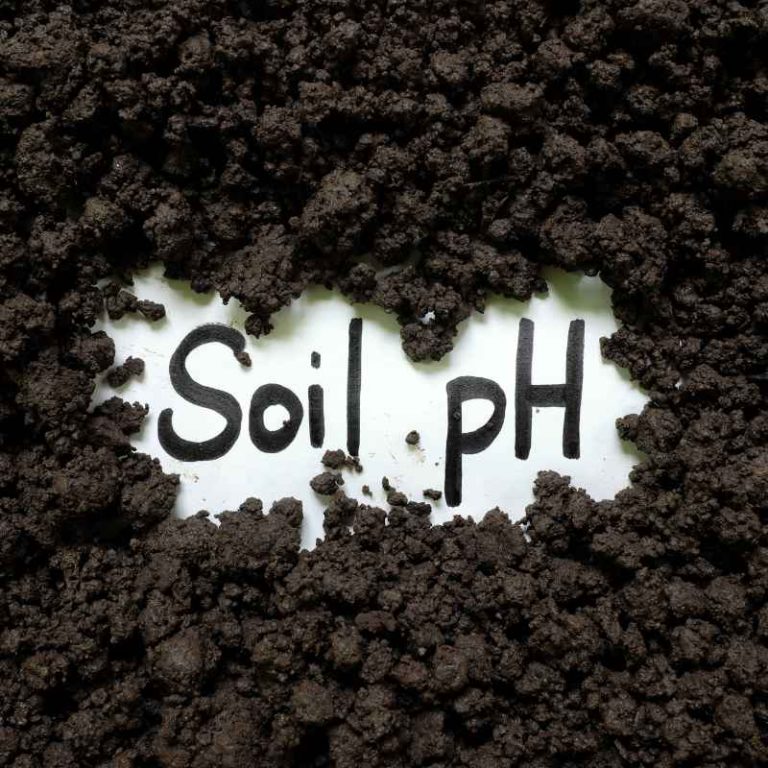
📊 Most shrubs prefer a slightly acidic to neutral pH range around 6.0 to 7.0. Source: Should You Amend Soil When Planting Shrubs? A Comprehensive Guide.
How to tell whether your bed needs amendment

Amend the bed only when the soil needs a structural fix, not because it looks dark or crumbly on top. Clay soil, sandy soil, compacted soil, and already-amended beds each call for a different response. Aim for better structure, drainage, and water-holding capacity across the root zone, not a rich pocket around the hole.
Clay soil
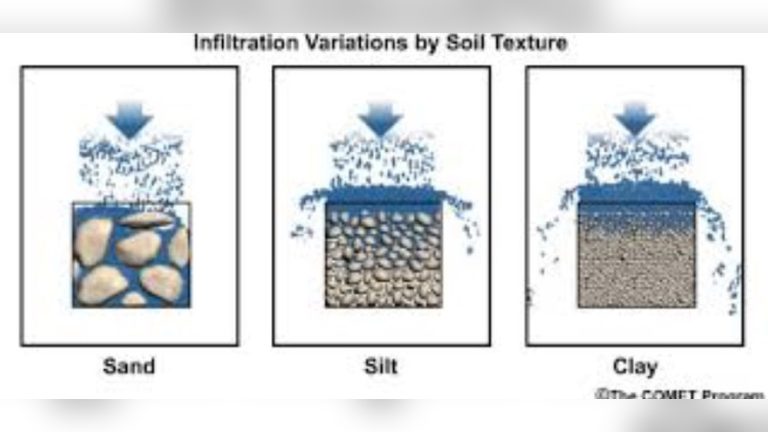
Clay soil is made of very fine particles and often feels sticky when wet and hard when dry. It can hold many nutrients, but it limits air and water movement, which is a common failure case for shrubs. If water sits after rain, the bed likely needs more organic matter and better structure.
Sandy soil
Sandy soil has relatively large particles and often drains well, but it may not hold many nutrients and can dry quickly. Shrubs in sand often need more water-holding capacity, not deeper planting or fertilizer alone. Organic matter helps sand retain moisture and gives roots more time to use water and nutrients.
Compacted soil
Compacted soil has poor air movement and limits root spread. If a shovel bounces off the surface or water runs off instead of soaking in, the bed needs loosening and organic matter worked across the planting area. Do not dig a rich pocket under the shrub and call that a fix.
Already-amended soil
If the bed already drains well, holds moisture without staying soggy, and tests near the shrub range, leave most of it alone. Over-amending can be as harmful as under-amending. A shrub bed that already behaves like loam may need only planting-hole prep, correct depth, and mulch.
How to amend soil for planting shrubs?
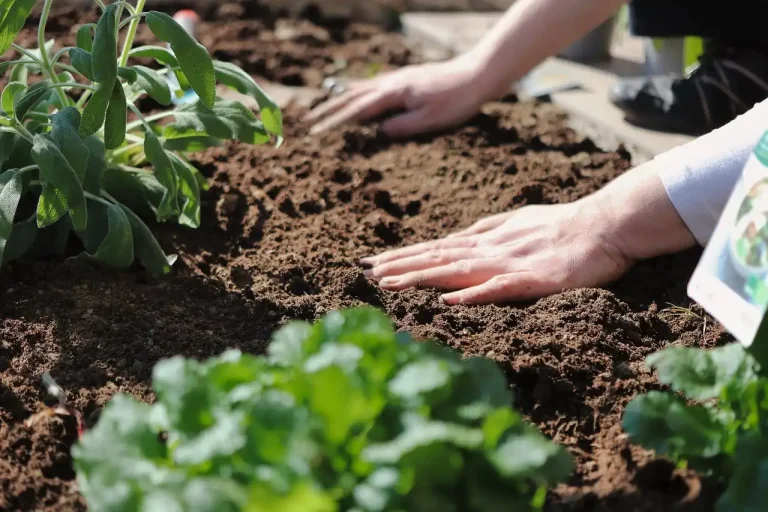
Work the whole bed, not just the planting hole, then set the shrub so the root flare stays at or above grade. Mix organic matter through the root zone, use a soil test to decide on lime or sulfur, and keep the hole wider than the root mass so roots can move outward.
- Test the soil first and note pH and nutrient status.
- Spread 2 to 3 inches of compost, well-rotted manure, or shredded bark over the bed.
- Work the amendment 4 to 6 inches deep across the future root zone.
- Dig the planting hole two to three times wider than the root mass.
- Set the shrub so the root flare is visible and never deeper than it grew before.
- Backfill with the amended bed soil, water deeply, then mulch the surface.
How much compost should you mix in?
A bed-wide layer is usually better than a pocket at the bottom of the hole. For many shrub beds, about 2 to 3 inches of compost mixed into the top 4 to 6 inches can add organic matter and help improve structure without creating a separate soil layer that may trap water. Stop when native soil still forms most of the bed.
In clay, use the higher end of that range if drainage is slow and the bed is open enough to work evenly. In sandy beds, compost helps more with water-holding capacity than with drainage, so the same 2 to 3 inch layer still makes sense. In already-good loam, a lighter amendment may be enough.
Why bed-wide mixing beats pocket amendments
Amending only the planting hole can create a container effect. Water and roots stay inside the amended pocket instead of moving into the surrounding soil. The shrub may root in a circle, then struggle when it hits the native soil wall. A wider amendment zone avoids that abrupt change.
Should you amend soil when planting shrubs?
Yes, when the bed needs structural change. No, when the existing soil already drains and holds moisture well enough for shrubs. The right decision depends on the whole bed, not the planting hole alone. A soil test guides pH and nutrient changes, while texture and drainage tell you whether to add organic matter.
Do shrubs need different soil in clay vs sandy beds?
Yes. Clay beds usually need better aeration and drainage, while sandy beds usually need better water and nutrient retention. Most shrubs prefer a slightly acidic to neutral pH range around 6.0 to 7.0, but pH correction should follow a test. Lime raises acidic soil pH, and sulfur lowers alkaline soil pH.
Why pH is not the same as structure
A soil can have the right pH and still drain badly. It can also drain well and still be low in nutrients. Changing pH does not fix clay structure, and fertilizer does not turn sand into a moisture-holding bed. Treat those as separate decisions.
How to amend clay soil for planting shrubs?
Clay soil needs improved structure more than extra fertilizer. Work compost or another organic matter through the whole shrub bed, not just the hole, because clay can hold nutrients but limits air and water movement. Do not add sand to clay soil; that can make it worse. Keep the planting hole wide and shallow enough that the root flare stays visible.
Picture a new shrub set into a tight clay bed beside a downspout. If only the hole is loosened, water can sit in that soft pocket after a storm. Mixing the amendment across the bed gives water more paths to move and helps roots spread outward instead of circling.
How to prepare soil for planting shrubs?
Start with the bed, not the plant. Remove weeds, test the soil, spread organic matter, and work it evenly into the future root zone. Then dig a hole wider than the root ball, check depth with a shovel handle, and plant at grade or slightly high so the root flare is not buried.
- Clear the bed of weeds, roots, and debris.
- Test pH before adding lime or sulfur.
- Spread compost, manure, or shredded bark over the bed.
- Mix amendment into the top 4 to 6 inches of soil.
- Dig a hole two to three times wider than the root mass.
- Set the shrub with the root flare at or above grade.
Shrub soil amendment decision checklist
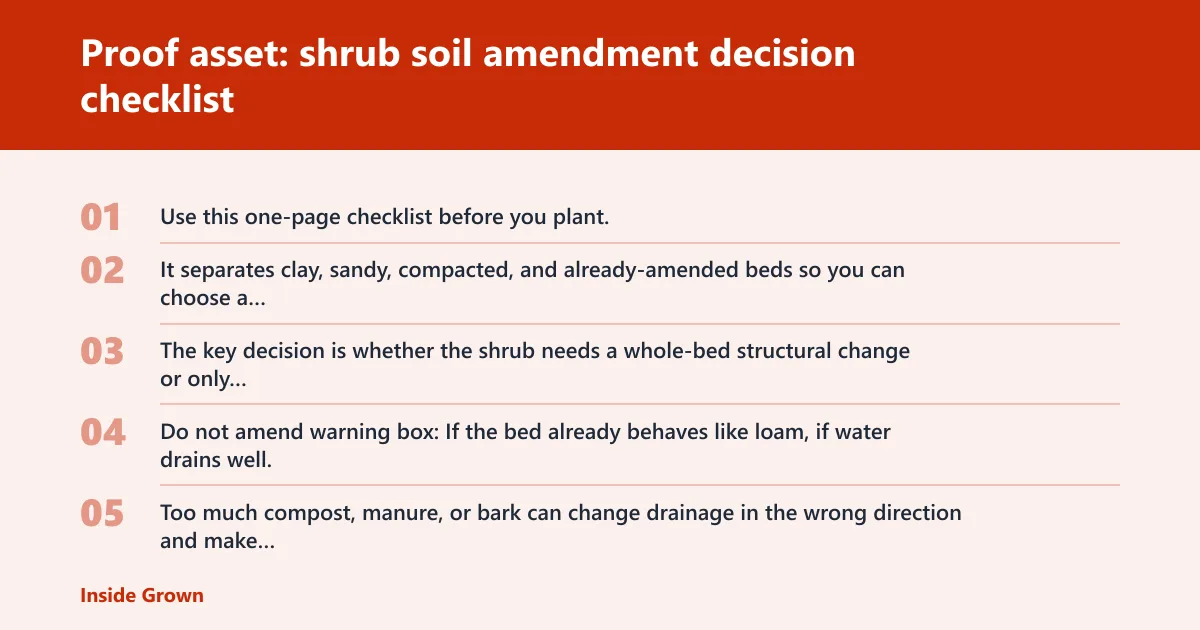
Use this one-page checklist before you plant. It separates clay, sandy, compacted, and already-amended beds so you can choose a bed-wide fix or leave the soil alone. The key decision is whether the shrub needs a whole-bed structural change or only careful planting and mulch.
| Scenario | What you see | What to do | What to avoid |
|---|---|---|---|
| Clay | Slow drainage, tight structure, puddles after rain | Mix 2 to 3 inches of organic matter into the top 4 to 6 inches across the bed | Do not add sand to clay |
| Sandy | Water disappears fast, soil feels loose and dry | Mix 2 to 3 inches of compost or shredded bark through the bed for moisture retention | Do not rely on fertilizer alone |
| Compacted | Poor air movement, hard surface, shallow roots | Loosen the top layer and add organic matter across the root zone | Do not create a small amended pocket |
| Already-amended | Good drainage, steady moisture, workable texture | Leave the soil mostly alone, then plant at the correct depth | Do not over-amend |
Do not amend warning box: If the bed already behaves like loam, if water drains well, and if a soil test does not call for pH correction, stop before adding more material. Too much compost, manure, or bark can change drainage in the wrong direction and make planting problems worse.
Why amending only the hole can backfire
Amending only the hole can backfire because the shrub may treat that pocket like a container. Roots stay in the richer soil, water lingers there, and the plant can fail when roots reach the denser native soil. The safer move is to amend the bed broadly so roots have one continuous growing area.
Suppose a 3-gallon shrub goes into a hole filled with compost-heavy soil while the surrounding bed is hard clay. The roots may circle inside the hole, then stall at the edge. A bed-wide amendment avoids that sharp boundary and encourages outward root growth.
Common mistakes when preparing shrub soil
The most common errors are planting too deep, using the wrong amendment, skipping a soil test, and piling mulch against the stem. Each one can slow establishment or cause rot. If the shrub fails to settle, check depth first, then drainage, then whether the soil change was made in the bed or only in the hole.
- Do not bury the root flare; keep it at or above grade.
- Do not use sand to “fix” clay soil.
- Do not change pH without a test.
- Do not mulch against stems or trunks.
- Do not fill a hole deeper than the plant grew previously.
After planting, spread mulch over the surface to protect the soil and slow moisture loss. Keep it a few inches back from stems and trunks. Up to 25% of the root ball can sit above surrounding soil level if needed, and a shovel handle can help confirm planting depth against grade.
Can you amend soil after planting shrubs?
Yes, but only carefully and mainly at the surface. After planting, you can top-dress with mulch and, if needed, lightly add compost over the bed around the shrub without burying the stem. You should not dig deep around established roots or rebuild a planting hole full of rich soil after the fact.
Frequently asked questions
How to amend soil for planting shrubs?
Spread 2 to 3 inches of compost or another organic matter over the whole bed and work it into the top 4 to 6 inches before planting. Then dig a hole two to three times wider than the root mass and keep the root flare at or above grade.
How to amend clay soil for planting shrubs?
Mix organic matter through the planting bed to improve drainage and air movement. Clay soil holds nutrients well but limits water and oxygen movement, so a bed-wide amendment works better than a rich planting pocket. Avoid adding sand, and test pH before changing lime or sulfur.
Should you amend soil when planting shrubs?
Amend when the bed needs structural improvement, such as poor drainage, fast drying sand, or compaction. Skip heavy amendment when the soil already behaves like loam. The decision should be based on the whole bed, not on a single planting hole.
How to prepare soil for planting shrubs?
Test the soil, clear the bed, spread organic matter, and mix it across the root zone. Then plant in a hole wider than the root ball, never deeper than the plant grew before, and finish with mulch that stays off the stem or trunk.
What should I add to soil before planting shrubs?
Compost is the default organic matter, with well-rotted manure or shredded bark as other options. Use lime only if a soil test shows acidic soil that needs raising, and sulfur only if the test shows alkaline soil that needs lowering. Do not use random fertilizer as a substitute.
How much compost should I mix into shrub planting soil?
A practical target is 2 to 3 inches of compost mixed into the top 4 to 6 inches of the bed. That gives enough organic matter to improve structure without creating a separate pocket. In already-good loam, use less and let native soil do most of the work.