How to Use Mulch to Protect Landscape Soil
A common rule of thumb is to use about 2 to 4 inches of mulch for most beds, keeping it about 3 to 6 inches away from stems and trunks, and to match the material and depth to the soil issue you want to address. Skip that step, and soil heats up faster, dries out sooner, and erodes or fills with weeds more easily. This guide covers mulch depth, placement, and material choice for moisture retention, temperature control, weed suppression, and erosion control.
What mulch protects


Mulch shields bare soil by slowing water loss from the surface, softening raindrop impact, blocking light from weed seeds, and buffering roots from heat and cold. Organic mulch also breaks down over time and returns nutrients to the top layer of soil. The right layer depends on whether you are trying to hold moisture, limit weeds, reduce splash erosion, or slow runoff on a slope.
What you’ll need
- Mulch material: wood chips, straw, chopped leaves, compost, gravel, stones, tumbled glass, or river rock
- Gloves and a rake
- Shovel or pitchfork for moving material
- Hand hoe or weeding tool
- Measuring tape or marked stick for depth checks
- Wheelbarrow or buckets for transport
- Pruners for trimming back low stems if needed
Bed prep before you start
Remove active weeds, fallen debris, and thick thatch before you spread anything. Mulch works far less well over established weeds, and a clean surface makes it easier to keep the final depth even. Check plant crowns, trunks, and stems first so you can leave clear space around them.
How to mulch correctly
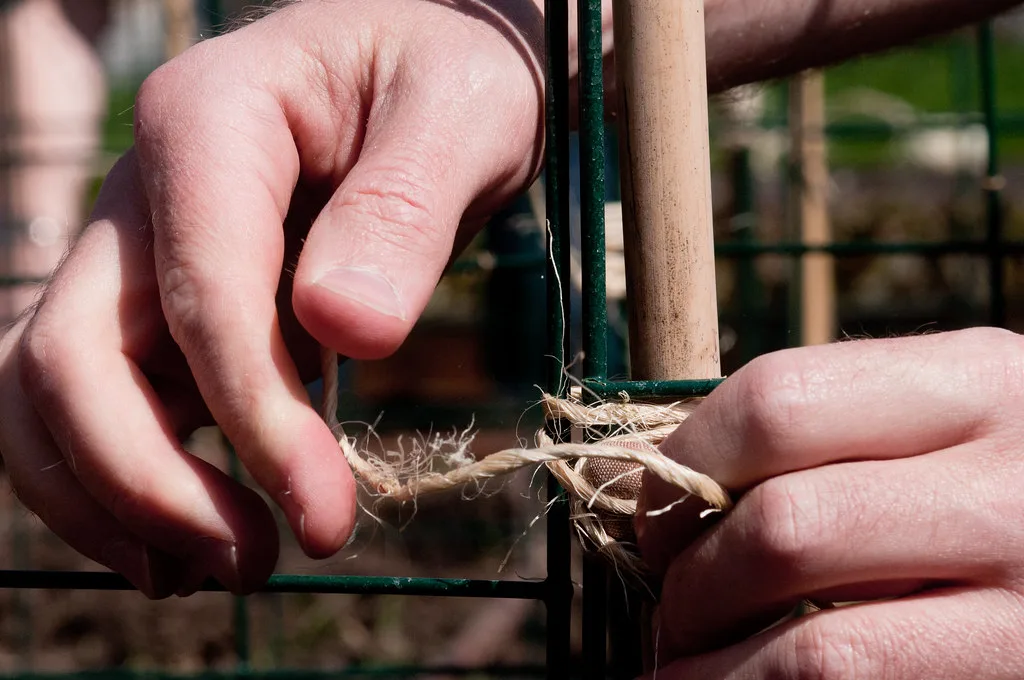
Start by clearing weeds, then place mulch from the drip line outward and keep it off trunks, stems, and crowns. Build depth for the problem you want to solve, not for looks. Check it again later, because loose mulch often settles after watering or wind.
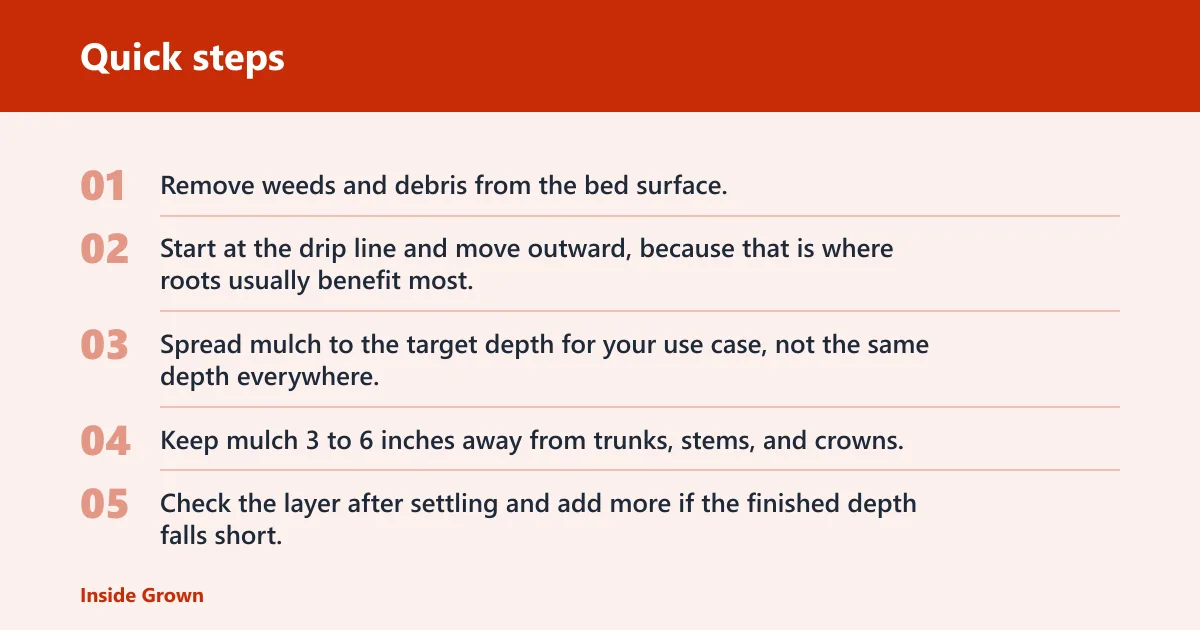
- Remove weeds and debris from the bed surface.
- Start at the drip line and move outward, because that is where roots usually benefit most.
- Spread mulch to the target depth for your use case, not the same depth everywhere.
- Keep mulch 3 to 6 inches away from trunks, stems, and crowns.
- Check the layer after settling and add more if the finished depth falls short.
Set the depth for the problem
A general summer layer can be 1 to 2 inches deep. For weed control, mulch can be 2 to 4 inches thick. Winter vegetable beds can take 4 to 6 inches. The settled depth matters more than the loose depth, because a fluffy layer may look full at first and then settle into something thin. (Wikihow)
Say your front bed dries out fast in full sun. A wood-chip layer that starts at 3 to 4 inches and settles to a still-useful depth will hold moisture better than a thin sprinkle, while still leaving air at the soil surface. In a shady bed, the same bed may need less cover because evaporation is slower.
Check settling and top up later
Different materials settle at different rates. Wood chips settle less than leaves or straw, so they usually need less initial height. Leaves or straw can be piled 6 to 8 inches high because they compress more quickly. Organic mulch should be replaced or topped up every year as it breaks down.
Which mulch should you use?

Use organic mulch when your main goal is soil protection and soil health. Use inorganic mulch when the goal is mainly decorative or when you need a long-lasting surface in a low-traffic area. For many beds, wood chips are the safest default because they settle moderately, protect soil well, and are easy to renew.
Organic mulch for soil protection
Organic mulch includes wood chips, straw, grass clippings, chopped leaves, and compost. It holds moisture in the top few inches of soil, blocks weed seeds from getting light, and buffers roots from temperature swings. As it breaks down, it adds nutrients to the soil surface. That makes it the better choice when soil health matters more than permanent appearance.
Inorganic mulch for decorative areas
Inorganic mulch includes gravel, stones, tumbled glass, and river rock. These materials can hold moisture near the soil and moderate root temperature, but they are less effective than organic mulch for weed control and root protection. They make more sense around tough shrubs, dry edges, or beds where the goal is appearance and low turnover.
Wood chips for most beds
Wood chips are a strong middle ground for beds because they spread well, settle less than leaves or straw, and give steady soil cover. A common starting point is 3 to 4 inches, especially where you want a durable layer that does not vanish after a few rains. Keep the finished depth airy enough for oxygen to reach the soil.
How deep should mulch be?
Use depth as a tool, not a default. Sunny beds usually need more cover than shady ones, and erosion-prone spaces need more careful placement than flat beds. The right layer still needs to breathe; if the final settled depth seals the soil surface, roots suffer.
General coverage depth
For mixed beds, 1 to 2 inches is a fair summer target when the soil already holds moisture reasonably well. That amount reduces evaporation and splash without burying low stems. It is also easier to refresh later than a very thick initial layer.
Weed-control depth
For stronger weed suppression, 2 to 4 inches gives better light blockage. If the bed already has persistent weeds, remove them first and then mulch. A thin layer over active weeds usually fails because shoots push through or roots keep growing underneath.
Seasonal depth for vegetable beds
Winter vegetable beds can use 4 to 6 inches to shield soil from cold and slow moisture loss. That depth is most useful after beds are cleaned and crops are set in place. In spring, check whether the layer is still letting water and air through before adding more.
Adjusting for sun, shade, slope, and wind
Fine Gardening recommends 4 to 6 inches in sunny areas and 2 to 3 inches in shade. Slopes and windy sites often need a denser material or a slightly thicker starting layer because light mulch can shift or blow. On erosion-prone beds, aim to keep the surface covered without clogging drainage paths.
Picture a slope beside a driveway where rain runs hard after storms. A loose leaf layer will move, while wood chips or another heavier mulch will stay put better and slow splash. On a flat shady bed, the same thickness may be too much.
How do you keep mulch in place?
Keep mulch in place by matching material to the site and avoiding a depth that invites movement. Heavier mulch performs better on slopes and in wind, while lighter mulch needs more frequent checks. Water should still have a path through and around the bed instead of flowing over a sealed mat.
Use the right depth on slopes
On slopes, spread in smaller sections and check for slippage after watering. A stable layer is usually better than a very thick one that slides downhill. If the bed is steep, wood chips or gravel can hold position better than fluffy leaves or straw.
Choose heavier material for windy areas
Windy beds need mulch that resists lift. Wood chips, stones, and river rock are generally reported to stay put better than chopped leaves or straw. If you prefer organic material, expect to refresh and tuck it back more often after dry, breezy weather.
Keep water flow paths open
Do not build mulch dams that block runoff entirely. On sloped beds, keep the layer even and avoid piling material against borders, stems, or drain inlets. The goal is to slow water long enough to soak in, not to force it over roots or into one bare channel.
Common mistakes
The biggest failures are too much depth, mulch touching plant bases, and covering weeds instead of removing them. Too-fine mulch can mat down and stop air movement. Too-light mulch can blow away, while too-deep mulch can hold too much moisture and stress roots.
- Mulch piled against trunks or stems: This can trap moisture, encourage rotting, and raise fungal disease risk. Leave a clear ring around the base and think “doughnut,” not “volcano.”
- Mulch placed over active weeds: Weeds should be removed first. A cover layer on top of established weeds often hides the problem instead of solving it.
- Mulch that is too deep or too fine: Thick, matted layers can block oxygen and water movement. Use the settled target, not the loose pile height.
- Ignoring settling and bare spots: Leaves and straw settle more than wood chips, so the bed can go thin fast. Check after rain and refill exposed spots before weeds return.
Mulch application decision table
| Soil problem | Recommended mulch type | Starting depth | Settled depth target | Common mistake to avoid |
|---|---|---|---|---|
| Drying | Wood chips or composted organic mulch | 3 to 4 inches | 2 to 3 inches | Leaving the layer thin enough to dry out quickly |
| Weed pressure | Wood chips, chopped leaves, or straw after weed removal | 4 to 6 inches for fluffy material | 2 to 4 inches | Mulching over established weeds |
| Splash erosion | Wood chips or heavier organic mulch | 3 to 4 inches | 2 to 3 inches | Using very fine mulch that mats or washes away |
| Slope runoff | Wood chips, stones, or river rock in stable beds | 3 to 4 inches | 2 to 3 inches | Building a loose layer that slides downhill |
| Temperature swings | Organic mulch for plant roots | 2 to 4 inches | 1 to 3 inches | Piling it against crowns, trunks, or stems |
Frequently asked questions
How to mulch around plants
Leave the root flare, crown, or stem base exposed and ring the plant with mulch instead of burying it. A clear gap around the base lowers rot risk and helps air move at soil level. For small plants, use a shallower layer so the stem stays visible.
Does mulch improve soil?
Organic mulch does. Wood chips, straw, grass clippings, chopped leaves, and compost break down over time and add nutrients near the soil surface. That process is gradual, so top up the layer each year rather than waiting for it to disappear.
Mulch vs rock for landscaping
Choose mulch when soil protection is the goal and rock when the bed is mainly decorative or very stable. Organic mulch is better for weed suppression and root protection. Rock lasts longer, but it does less for soil improvement and is usually less forgiving around young plants.
How to re mulch beds
Check depth each season, rake aside matted material, and add enough to restore the settled target. For wood chips, that may mean another inch or so after the layer has thinned. For leaves or straw, expect more frequent touch-ups because they settle and break down faster.