How to Build Healthy Soil for a Front Yard Garden Bed
Test the soil, loosen the top layer, add a few inches of compost, and mulch lightly; avoid deep tilling unless drainage is poor. Skip that, and compacted, nutrient-poor soil can leave plants stunted, cause runoff, and make the bed look patchy. This guide gives the order for improving biology, drainage, and upkeep without hurting curb appeal.
What you’ll need before you start
- Soil test kit or lab sample bags and a clean trowel
- Shovel, hand trowel, and a 5-gallon bucket
- Clear container or coffee can for a drainage test
- Finished compost
- Topsoil, if you need to raise grade in low spots
- Garden soil, only if you are building a new or rebuilt bed
- Wood chips or shredded bark mulch
- Gloves and a rake
What healthy front-yard soil looks like
Healthy front-yard soil is loose enough for roots to spread, fertile enough to support growth, drains well enough to avoid standing water, and has enough biological activity for worms and microbes. Front-yard beds also need to stay neat, because they sit next to sidewalks, driveways, and curb lines.
The target is not “dark dirt.” It is a stable root zone with pore space, moderate moisture, and a surface that resists crusting. Compost builds that structure over time. Mulch protects it.
Why front-yard beds need a different mindset
Lawn care often favors repeated disturbance and shallow feeding. Beds for shrubs, perennials, or small trees do better when the soil is changed once, then covered and left alone. Frequent digging breaks aggregates, squeezes out air space, and can worsen compaction from pedestrian traffic.
How to assess existing front yard soil
Start by identifying whether you have compacted native soil, imported fill, or a mix of both. Compacted native soil usually sits hard beneath a thin workable layer. Low-quality imported fill often has construction debris, a gray or streaky look, or drains unevenly. That difference changes the fix.
Look for these signs before you buy anything: water pooling after rain, crusting after watering, roots staying shallow, and soil that sheds rather than absorbs. Worms are a good sign. Sparse worms usually mean low organic matter, repeated disturbance, or both.
Simple texture check
Rub a moistened handful between your fingers. Sandy soil feels gritty and falls apart. Silt feels smooth and floury. Clay feels sticky and can ribbon between thumb and finger. Most yard soils are mixed, and mixed soil usually responds best to compost plus surface mulch.
Step 1: Test drainage and soil texture
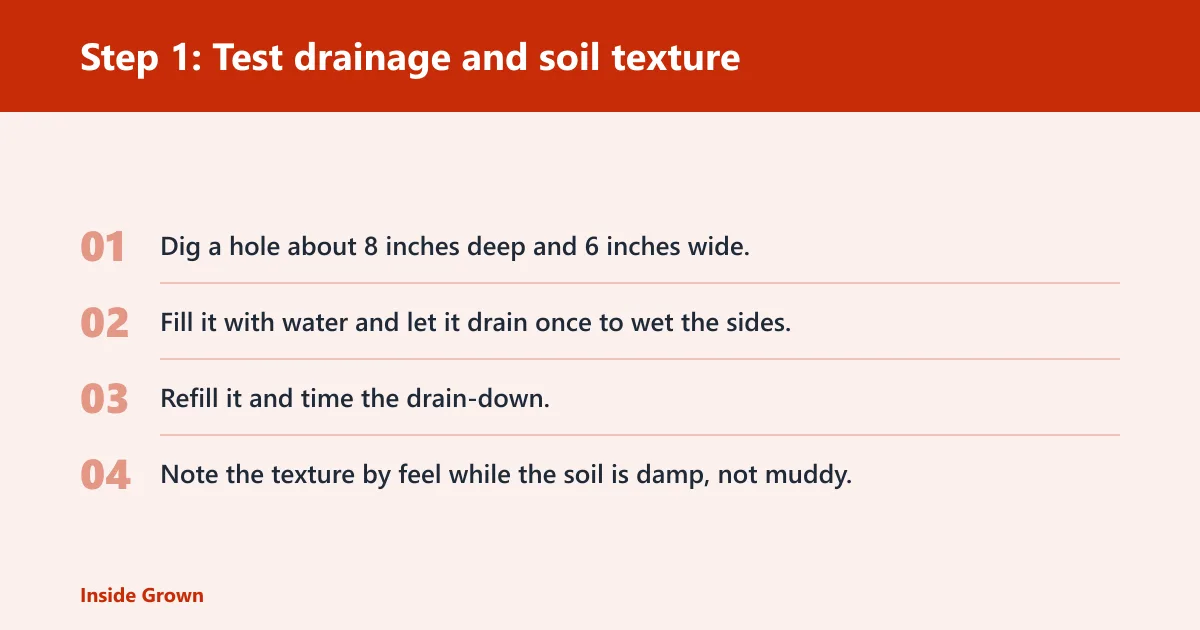
- Dig a hole about 8 inches deep and 6 inches wide.
- Fill it with water and let it drain once to wet the sides.
- Refill it and time the drain-down.
- Note the texture by feel while the soil is damp, not muddy.
A hole that drains within a couple of hours is usually workable for many garden plants. If water is still sitting there after several hours, that usually suggests slow drainage. Overnight standing water means you may need plant choices that tolerate wet feet, raised beds, or physical drainage correction.
If drainage is slow
Compost helps structure, but it does not fix a perched water table or a sealed subsoil layer. If water hangs in the hole, start with plants suited to wetter soil or consider raising the bed. Adding more compost alone can improve the top layer while the root zone still stays saturated.
| Drainage result | What it usually means | Best next move |
|---|---|---|
| 1–2 hours | Good drainage for most beds | Add compost and mulch |
| 2–4 hours | Moderate drainage, often compacted | Loosen top layer and add compost |
| Over 4 hours | Slow drainage | Choose wetter-tolerant plants or raise the bed |
What do I add to front yard soil before planting?
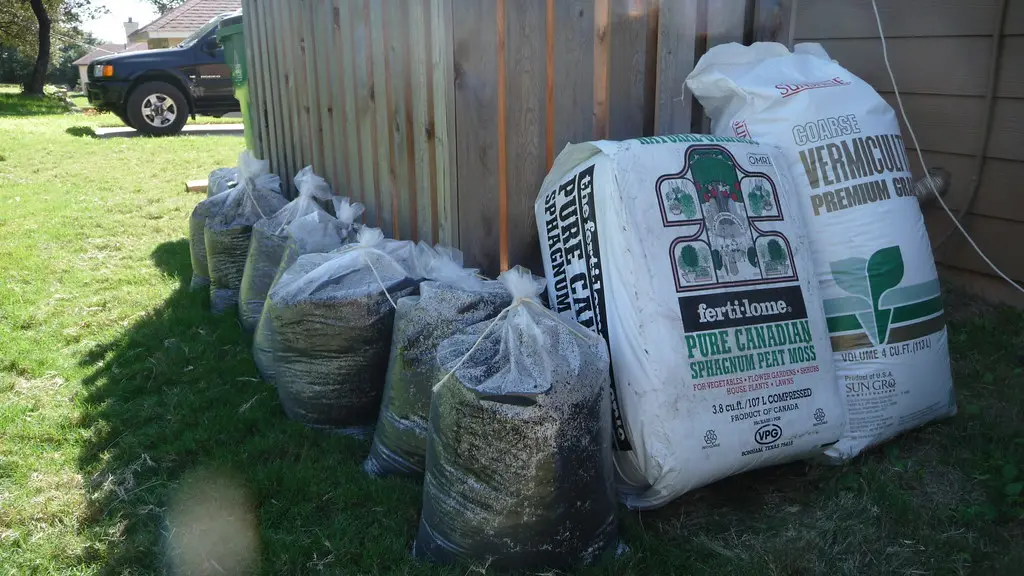
Use compost as the main organic matter amendment, topsoil only to correct low grade, and garden soil only for a new or rebuilt bed that needs a pre-blended fill. In an existing bed, compost is the default choice because it feeds biology and improves structure without burying the native soil.
For an existing bed, a rough target is to mix a modest amount of compost into the loosened top layer of soil. That is enough to improve moisture retention, nutrient holding, and aggregation without turning the bed into an artificial layer.
When to use each material
Compost: primary amendment for almost all existing beds. It adds organic matter, supports soil life, and helps clay open up while helping sand hold water.
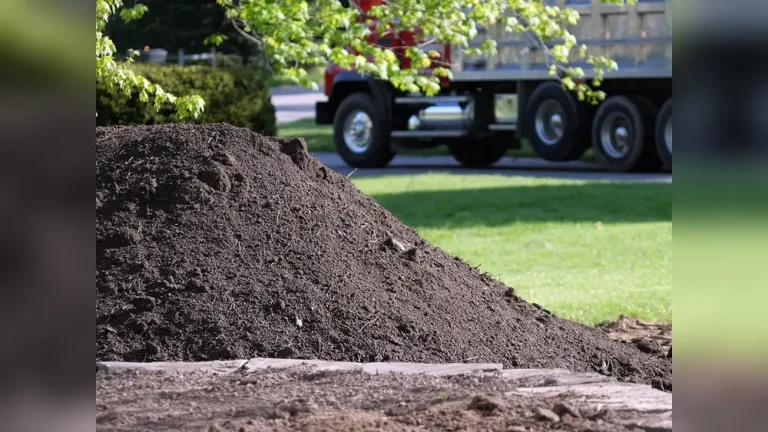
Topsoil: useful for topping up low spots or regrading a bed edge. It should not be used alone as a planting medium because quality varies and it often lacks the biology compost provides.
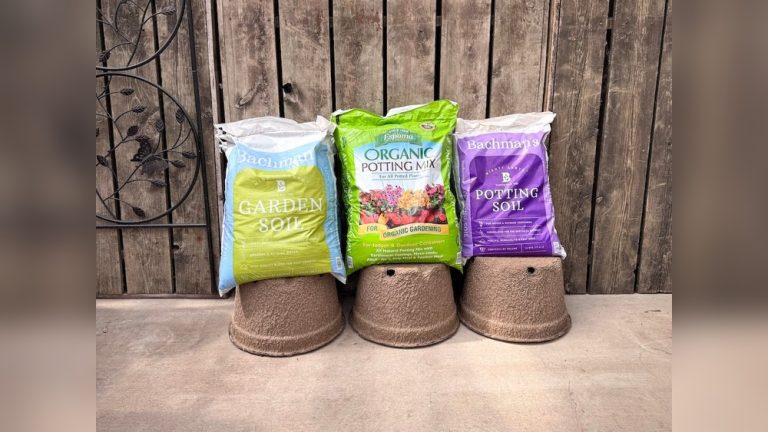
Garden soil: a blended product that can make sense for new beds, major rebuilds, or planters. In an existing front-yard bed, it is usually less useful than compost because it can create a distinct layer above native soil.
Step 2: Fix compacted soil without overworking it
- Wait until the soil is moist but crumbles, not sticky.
- Loosen only the top 6 to 8 inches with a fork or shovel.
- Stop if you hit a dense, wet layer that smears.
- Spread compost over the surface and rake it in lightly.
Soil structure depends on aggregates and pore space. When you smash or churn wet soil, those spaces collapse. That reduces oxygen, slows root growth, and makes the next rain sit on top instead of moving through the bed.
Suppose a 4-by-10-foot bed beside a walk has a crusted surface and no worms. Loosen the top layer, add compost, and mulch it. Do not rototill the bed after a storm; that usually leaves clods, not structure.
If that didn’t work
If the bed still feels dense after one season, repeat the compost top-dressing and reduce traffic across the area. For persistent compaction, a broader fix may be needed: shallow broadforking in dry weather, a raised edge, or a redesign that keeps feet off the root zone.
How much compost should I mix into garden soil?
A practical target is to spread a few inches of finished compost over the bed and mix it into the top layer of soil. That usually lands near a 20% to 30% blend by volume in existing beds. Clay can take the full range; sandy soil often benefits from the higher end.
Do not keep piling compost year after year until the bed becomes mostly compost. Too much can create a nutrient imbalance, settle unevenly, or leave the root zone too loose for some plants. The goal is improvement, not replacement.
Match the fix to soil type
Clay: use compost plus mulch, and keep traffic off the bed. Clay benefits most from better aggregation and pore space.
Sand: use compost to improve water- and nutrient-holding. Mulch matters here because it slows drying.
Mixed native soil: a moderate compost layer is usually enough, especially if drainage is acceptable.
How do you know your soil is ready for planting?
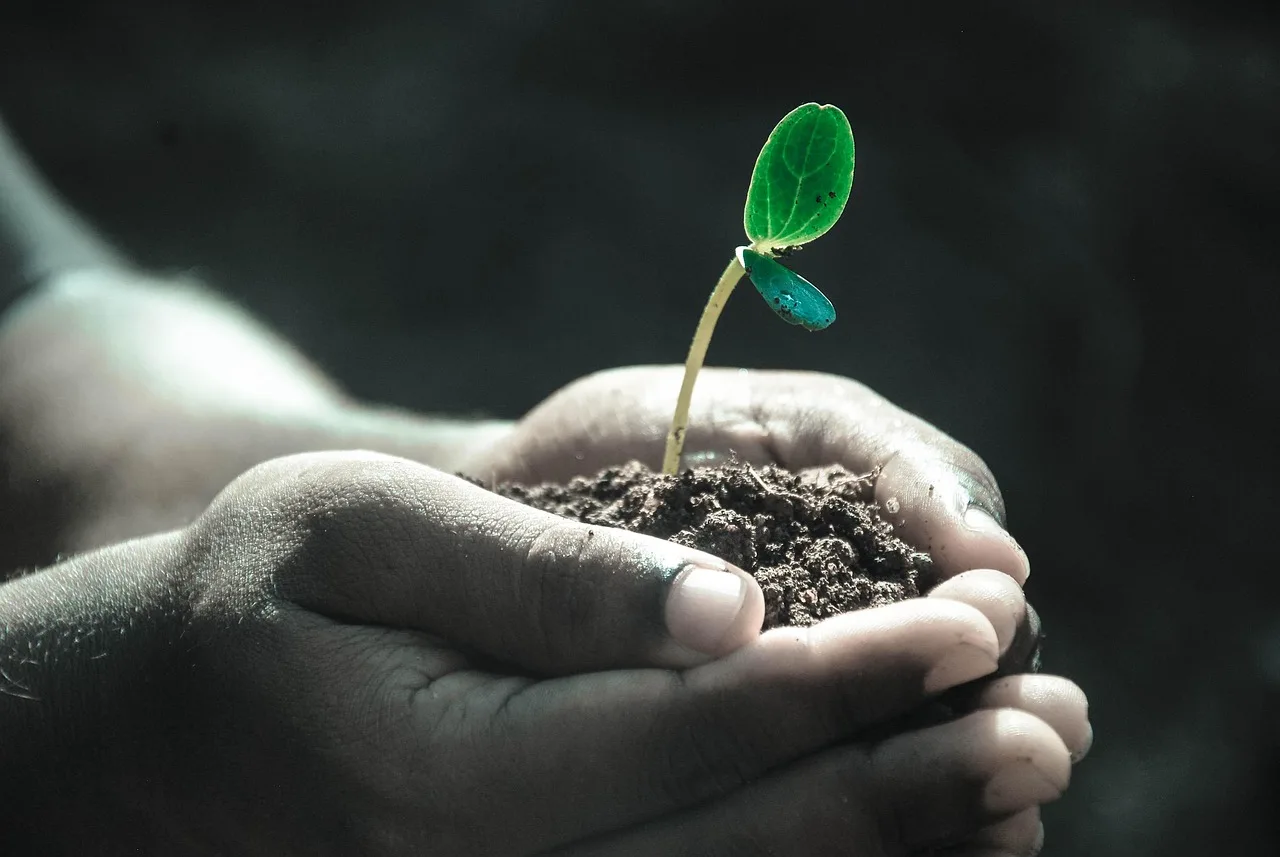
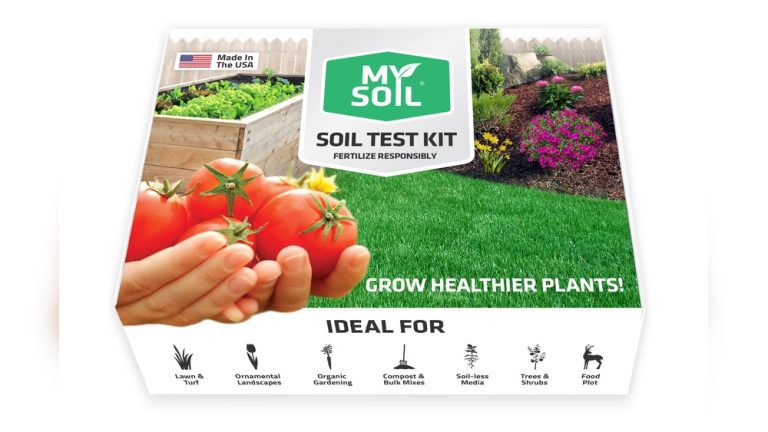
Use a home test kit for basic pH and nutrients if you need a quick read, or send a sample to a lab if the bed is large, the soil was imported, or you suspect contamination. Healthy planting soil should also show active earthworms and a crumbly feel, not a sealed crust.
pH matters because plants absorb nutrients best only within a workable range. Many ornamentals and vegetables are happiest around mildly acidic to near-neutral soil, roughly 6.0 to 7.0, but some crops prefer different ranges. Adjust pH only after testing, not by guesswork.
When to adjust pH and when not to
If the test is close to your target, leave it alone and focus on organic matter. pH changes move slowly and can cause more trouble than they solve. If the result is clearly off, follow the product label or lab recommendation and retest later in the season.
A lab test is especially useful in older front yards, near road edges, or where historic fill may be present. Garden soil and house dust have both been studied as exposure media for lead uptake in mining areas such as Stratoni, Greece, which is a reminder to test suspect soil before planting edible crops.
Front-yard soil makeover checklist and decision tree
- Run a drainage test first.
- If water drains in over 4 hours, change the plant list or raise the bed.
- Check compaction by digging a small hole and probing with a fork.
- If the soil is dense, loosen only when dry enough to crumble.
- Spread 2 to 3 inches of compost over existing beds.
- Top up low edges with topsoil, then blend compost into the upper layer.
- Use garden soil only for a new or rebuilt bed that needs a uniform fill.
- Finish with 2 to 3 inches of mulch, kept a few inches away from stems and trunks.
Decision tree by soil type
| Soil type | Main problem | Best fix |
|---|---|---|
| Clay | Slow drainage and compaction | Loosen gently, add compost, mulch, and avoid traffic |
| Sand | Fast drainage and weak nutrient holding | Use more compost, then mulch to slow moisture loss |
| Mixed native soil | Uneven fertility or modest compaction | Moderate compost blend and routine mulching |
| Imported fill | Variable quality, poor structure | Test first, then rebuild the top layer or replace selectively |
Common mistakes
Adding compost to a drainage problem and calling it fixed is the biggest one. Compost improves structure, but it cannot rescue a bed that stays saturated for hours. Another common mistake is using topsoil or garden soil as a permanent shortcut instead of building the native soil underneath.
Working wet soil, burying plant crowns, and skipping mulch also backfire. If the surface dries into a crust, roots lose oxygen and water runs off. Keep mulch at 2 to 3 inches, and do not pile it against stems or trunks.
How long does it take to build healthy soil?
Noticeable improvement can start in one season, but strong front-yard soil usually takes a few years of steady composting, careful watering, and low disturbance. The fastest gains come from fixing drainage, loosening compaction, and protecting the surface with mulch. Biology builds as organic matter accumulates.
Retest pH and nutrients every 1 to 3 years, or sooner if plants show repeated yellowing, poor growth, or unusual dieback. Healthy soil is built in place, not rushed.
Frequently asked questions
how to make a good garden soil
Start with a drainage test, then add 2 to 3 inches of finished compost to the top 6 to 8 inches of soil. Follow with 2 to 3 inches of mulch. If the bed stays wet for hours, fix drainage or change the plant list before adding more organic matter.
how to make good soil for gardening
Use compost as the main amendment and keep disturbance low. A home pH kit is enough for a basic check, but a lab test is better if the bed is large or the fill is unknown. Good gardening soil also needs stable pore space, not just fertility.
how to make the best garden soil
The best garden soil is built for the site, not copied from a bag label. Match the fix to clay, sand, or mixed native soil, then protect it with mulch. If drainage is poor, raise the bed or choose plants that tolerate slower percolation.
how to make garden soil healthy
Feed the soil life with finished compost, keep mulch on top, and avoid turning wet soil. Worms are a helpful sign, but they appear only when moisture, oxygen, and organic matter stay balanced. Re-test pH and nutrients occasionally instead of guessing.
What do I add to front yard soil before planting?
For an existing bed, add compost first. Use topsoil only to correct low areas, and use garden soil only when you are rebuilding the bed from the ground up. If water stands after rain, solve drainage before planting, because amendments alone will not cure saturation.
How do I improve compacted soil in a front yard garden?
Loosen the top layer when the soil is dry enough to crumble, then stop digging. Spread compost on top and mulch after planting. If the area is still dense after a season, reduce foot traffic and consider a raised bed or shallow broadforking.