How to Choose Between Organic and Conventional Seeds
Choose organic seeds when you need organic certification, want the cleanest fit for a low-spray system, or are saving seed from an organic crop. Choose conventional seeds when the variety, germination rating, or price fits your setup better. The right choice comes down to crop risk, paperwork, and budget limits.
Certification rules and production differences
Organic seeds come from plants grown under certified organic standards. Conventional seeds come from plants grown with standard agricultural practices. The same cultivar can be sold in both forms, so compare the variety name, germination rate, and treatment status before you pay extra for the label.
What organic seed certification means
Organic seed certification applies to the growing process, not to a different seed genetics category. In the U.S., the crop must meet USDA NOP rules, and certified organic production uses approved methods during the transition period; in Europe, EU organic rules apply. The parent plants are grown without synthetic pesticides, herbicides, or chemical fertilizers.
That matters for resale, market claims, and any planting system that needs certified organic inputs. It does not mean every organic packet is automatically a better fit for every garden bed. Seed quality still comes down to the lot, the cultivar, and how the seed was handled after harvest.
What conventional seed production means
Conventional seeds are produced with traditional farming practices and may use synthetic fertilizers, pesticides, and herbicides. That does not necessarily make the seed a different cultivar. It often means the grower had more tools for weed, disease, and fertility management during production.
For home gardeners, the practical question is simple: does the packet give you the best mix of variety, germination, and price for your site? If it does, conventional seed can be the smarter buy.
Why the same variety can appear in both forms
The cultivar name matters because genetics are unchanged by the production method. A tomato, lettuce, or cucumber variety can be sold as organic seed and as conventional seed. If you only compare labels, you can miss a better choice with stronger vigor, a better disease package, or a fresher lot.
That is why the variety name belongs beside the certification claim, not below it. A packet can be organic and still be a poor fit for your season length or pest pressure.
Choose by crop pressure
Crop risk should drive part of the decision. If disease pressure is high, if pests are persistent, or if your season is short, the best seed is the one that establishes reliably in your conditions. Organic systems can be harder for pest-prone crops, so the planting site and crop matter as much as the label.
When disease or pest pressure should push your choice
If you grow a crop that gets hammered by early blight, damping-off, flea beetles, or similar pressure, choose the seed that gives the best establishment odds. That may be an organic packet, but it may also be a conventional packet with better seed treatment, fresher stock, or a stronger germination rating.
Say your spring is cool and wet, and you want cucumbers in a bed that held disease the year before. A packet with a known current-season lot and stronger germination can matter more than the production label if the seedlings need to emerge quickly and outgrow stress.
When seed treatment matters more than the label
Check whether the seed is untreated, pelleted, or treated. That detail often matters more than the organic claim for performance in difficult conditions. Untreated seed can be fine for easy germinators. Pelleted seed can make tiny seed easier to sow. Treated seed may help with disease prevention and handling, depending on the crop and the treatment.
Organic certification does not tell you whether a packet is untreated or coated. Those are separate label details. For crops that are expensive, slow to germinate, or hard to thin, the treatment and coating information can matter more than the logo.
When short seasons or poor emergence change the calculus
Short seasons punish weak emergence. If a crop needs a fast, even start to finish on time, higher labeled germination can save you from reseeding. That is especially true for small vegetable plots, direct-sown greens, and any crop where missing a planting window costs the harvest.
Organic seed can still be the right choice in a short season. But if the organic option has a weaker lot or lower germination rating, a conventional packet with better seed quality may be the better buy.
Do organic seeds germinate better than conventional seeds?
Not by category. Germination depends on the lot, storage, freshness, and handling, not on whether the seed was produced under organic or conventional rules. Compare the labeled germination percentage first. Higher germination can reduce reseeding and thinning, which matters most for costly, slow-germinating, or short-season crops.
How to compare labeled germination rates
Look for the germination percentage on the packet or supplier listing. If two packets are the same cultivar, the one with the higher labeled germination is usually the safer bet for direct sowing. A few points of difference can matter when a failed row means wasted time and a missed planting window.
For home gardeners, that number is one of the most useful checks on the packet. It is more actionable than a vague claim about being “premium” or “high quality.”
Why freshness and lot quality matter
Seed lot documentation can help when you are buying from a supplier or online. For conventional seed, a lot-specific Certificate of Analysis is often the useful quality record. The checks that matter most to a gardener are germination, purity, and traceability. Those are the basics that tell you whether the packet is worth planting.
Freshness matters because older seed can lose vigor even when the variety is unchanged. If a seller lists the current growing season or provides lot details, that is useful. If the listing is vague, treat that as a warning sign.
When higher germination saves money
Higher germination can justify a higher packet price when the crop is slow to sprout or expensive to replace. One extra reseeding round can wipe out any savings from a cheaper packet. That is why the cheapest seed is not always the lowest-cost choice.
Picture a small raised bed planned for lettuce succession planting. If one packet has a stronger labeled germination rate and the other is uncertain, the better lot can pay off in fewer gaps, less thinning, and less time spent resetting the bed.
What label details should you check?
The decision gets easier once you look past the word “organic” or “conventional.” Check the certification mark, the treatment status, the cultivar name, the germination percentage, and any lot or traceability information. Those details tell you more about performance than the broad category alone.
- Confirm the certification standard. In the U.S., look for USDA Organic or NOP language on certified organic seed. In Europe, check for EU organic compliance. For resale or market claims, the label needs to match the standard you are actually using.
- Check whether the seed is untreated, pelleted, or treated. This is especially important for disease-prone crops, tiny seed, and direct sowing. Coatings can change handling and spacing.
- Look for the varietal name. The cultivar can be sold in both organic and conventional form. Compare traits, not just labels.
- Find the germination percentage. Higher numbers can reduce reseeding and thinning.
- Look for lot numbers or documentation when available. That helps with traceability and quality checks, especially on online orders.
Seed decision matrix
| Buyer scenario | Best seed type | What to check on the label | Trade-offs to accept |
|---|---|---|---|
| Home garden | Choose the seed with the best cultivar fit and germination rate, organic or conventional | Variety name, germination percentage, untreated vs treated, current lot details | You may skip an organic premium if the conventional lot is fresher or stronger |
| Organic certification | Organic seed first, unless an equivalent organic option is not available | USDA NOP or regional organic mark, certification wording, lot traceability | Organic packets often cost more and may have fewer variety choices |
| Tight budget | Conventional seed, especially if untreated and high-germination | Germination percentage, pack count, lot freshness, treatment status | You give up the organic certification claim and may need to inspect listings more closely |
| Pest-prone crop | The seed that gives the strongest establishment, which may be treated conventional seed | Treatment status, germination, disease notes, crop-specific handling advice | You may accept a non-organic packet to improve stand establishment |
| Seed-saving goal | Open-pollinated organic or conventional seed | Open-pollinated label, cultivar name, purity, any hybrid warning | Organic status does not guarantee seed-saving traits |
Our picks by need
Certified organic tomato start: SWEET YARDS Organic Matt’s Wild Cherry Tomato Seeds

- USDA Organic seeds
- Heirloom, non-GMO tomato variety
- Two seed packets included
This is a straightforward pick when you want a certified organic tomato packet with an heirloom, non-GMO, open-pollinated variety. The two-packet format also gives you more planting flexibility for succession sowing or a second try if one tray underperforms.
Drawback: the listing is narrow. It is a tomato-only packet, so it does not solve the broader “which seed type should I buy?” question for other crops, and it is less useful if you need a larger mixed order.
Mixed tomato choice: Sow right Seeds classic tomato Seed Collection

- Five individual tomato varieties
- Includes classic garden favorites
- Instructions included on each packet
Choose this if your goal is variety, not certification. The five-packet set covers classic tomato types, and the included instructions help if you want a simple garden starter without sorting through individual listings.
Drawback: it is not listed as organic, so it is not the right pick for a certified organic plan. It is better as a conventional benchmark when you want multiple tomato types and a lower-friction buy.
Certified organic leafy greens: Sereniseed certified organic leafy greens lettuce Seeds collection

- USDA Certified Organic by Oregon Tilth
- Ten varieties in one collection
- Grow guide included
This is the strongest fit for gardeners who want multiple certified organic greens in one order. The listing also names USDA Certified Organic by Oregon Tilth, which matters when certification language needs to be specific and verifiable.
Drawback: a mixed greens collection can be less targeted than a single-variety packet if you are chasing one crop behavior, such as uniform head lettuce or a specific harvest window.
Organic cucumber for direct sowing: Purely organic Products LLC organic cucumber seeds Marketmore 76
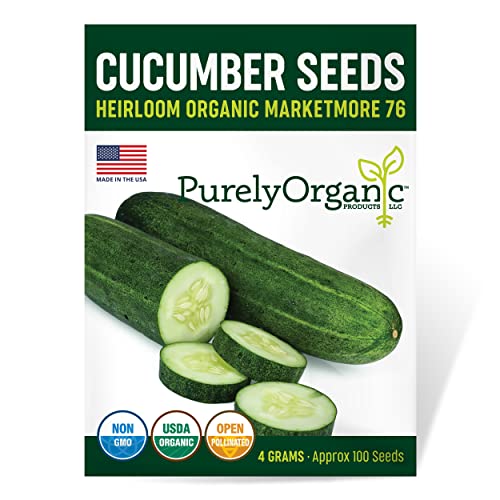
- USDA Organic cucumber seeds
- Open pollinated and heirloom
- Packed for the current growing season
This is a good match when you want a certified organic cucumber with an open-pollinated, heirloom variety. The “packed for the current growing season” note is useful because freshness matters a lot for cucumbers and other direct-sown crops.
Drawback: it is a single-variety packet, so it offers less experimentation than a mixed set. It is also tied to one crop, which makes it less flexible if you are still deciding what to plant.
Mistakes to avoid
Do not assume organic seed is automatically better. It may be the right fit for certification or a low-spray system, but a conventional packet can be the better buy when the variety, germination rate, or lot quality is stronger.
Do not ignore seed treatment. An untreated or coated packet can change performance more than the organic claim, especially for direct sowing and difficult crops. If the label does not say what you need to know, check the listing before you buy.
Do not buy on label alone. The same cultivar can exist in both organic and conventional form, so compare the actual variety traits, the germination percentage, and the seed lot information. If you are buying for resale or a certified crop plan, verify the standard that applies to your region.
Do not treat every crop the same. Lettuce, tomatoes, cucumbers, and specialty crops can have very different risk profiles. A packet that is fine for one garden bed may be the wrong choice for a high-pressure site or a short season.
When conventional seed is the better buy
Conventional seed is the better buy when the label gives you a stronger result for less money or less risk. That often means a better germination rate, a fresher lot, a useful treatment, or a cultivar that fits your season more cleanly than the organic option.
Budget-sensitive planting
If you are planting a large bed or several successions, the price gap can matter. Organic products often sell for 20-50% higher than conventional counterparts, so the premium is real. When the crop is easy to grow and the conventional packet has strong quality marks, the lower-cost choice can be the practical one.
High-risk crops and difficult sites
In a bed with heavy pest pressure, poor drainage, or short warmth, establishment matters more than ideology. Conventional seed may offer better handling or protection for that site. That is especially true when the packet gives you a stronger documented lot and a better chance of getting a stand.
Cases where untreated conventional seed is enough
For many home garden crops, untreated conventional seed is enough. If you do not need organic certification, and the seed is the right cultivar with a strong germination rate, there is no reason to pay extra for a label that does not change the planting outcome.
Frequently asked questions
What is organic and conventional farming?
Organic farming uses certified organic methods and avoids synthetic fertilizers and pesticides. Conventional farming uses standard agricultural practices and may use synthetic fertilizers, pesticides, and herbicides. For seed buyers, the point is not philosophy. It is whether the production standard fits your crop, budget, and certification needs.
What is the difference between organic and conventional seeds?
Organic seeds come from plants grown under certified organic standards, while conventional seeds come from plants grown with traditional farming practices. The same cultivar can appear in both forms, so the production method changes the label and certification status, not the plant’s genetics.
Are organic seeds better than conventional seeds?
Sometimes, but not always. Organic seed is the right choice when you need certification or want a low-spray fit. Conventional seed can be better when the variety is stronger, the germination rate is higher, or the packet costs less for the same planting result.
Are organic seeds non-GMO?
Organic certification and non-GMO are separate claims, though many organic seed listings also state non-GMO. If that matters for your planting plan or market claim, read the packet carefully. Do not assume one label automatically covers the other.
Can I save seeds from organic plants?
Yes, if the variety is open-pollinated and you follow the crop’s isolation and selection rules. Organic status does not make a plant seed-saving friendly by itself. Hybrid seed, whether organic or conventional, may not come true from saved seed.
Do organic seeds cost more than regular seeds?
Often, yes. Organic products often sell for 20-50% higher than conventional counterparts, and some crops carry an even larger premium. That extra cost can make sense when certification matters, but it is worth paying only when the organic label solves a real need in your garden.