How to Rescue Seed Trays with Poor Germination
Rescue a seed tray by checking three things first: moisture, warmth, and seed age. If most cells still meet those needs, keep the tray; if fewer than half are likely viable, reseed the empty cells. Ignoring poor germination wastes space, delays planting, and can let weak sprouts get crowded out. This guide shows how to diagnose the cause, judge which cells are worth saving, and fix the tray without starting over.
What you’ll need
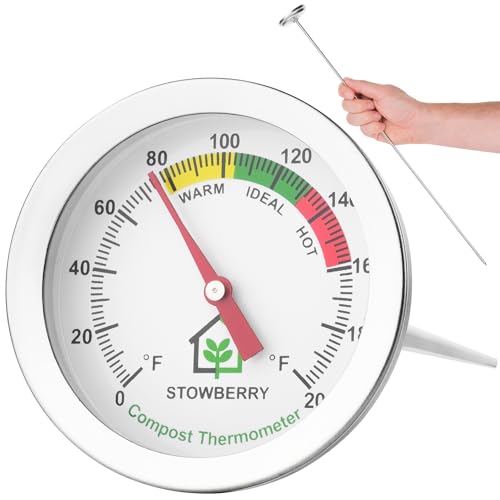


- A probe thermometer for root-zone readings
- Fresh seed-starting mix with good moisture retention and airflow
- A clean seed starting tray and matching humidity dome
- 3% hydrogen peroxide for sanitizing reusable trays
- Small labels
- A spray bottle
- A sterile tool for pricking out seedlings
- A heat mat, if the crop needs warmer germination
Why are my seeds not germinating in trays?
The quickest fixes are usually the water level and the root-zone temperature. If the mix is too dry, too wet, or the root zone sits below the crop’s preferred range, germination stalls. Old seed, shallow cover that dried out, crusted surface, and dirty mix can also stop a tray that looked fine at sowing.
Check moisture before anything else
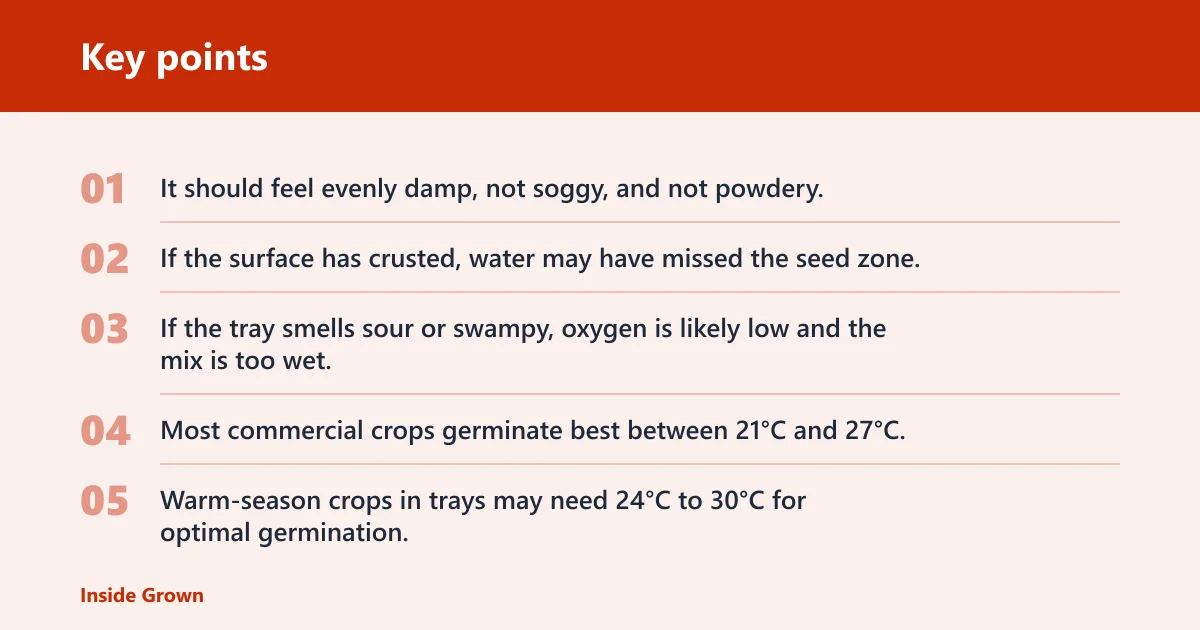
Press a fingertip into the mix. It should feel evenly damp, not soggy, and not powdery. If the surface has crusted, water may have missed the seed zone. If the tray smells sour or swampy, oxygen is likely low and the mix is too wet.
Check root-zone temperature next
Most commercial crops germinate best between 21°C and 27°C. Warm-season crops in trays may need 24°C to 30°C for optimal germination, while cool-season leafy greens and brassicas can prefer 13°C to 21°C. Heat above 35°C can stress some seeds and slow or stop sprouting.
Check age, cover, and sanitation
Old seed often gives patchy results. Tiny seed may also fail if it was covered too deeply or the surface dried after sowing. Reused mix, dirty trays, and low airflow increase damping-off risk, especially when the tray stays wet for days.
How do I save seed trays with patchy germination?
Keep the strong cells, rescue the weak ones, and do not treat every empty cell the same way. If the tray is clean and the mix is still suitable, patchy germination usually means a few cells need reseeding, a few need more warmth, and a few should be left alone.
Step 1: diagnose the tray
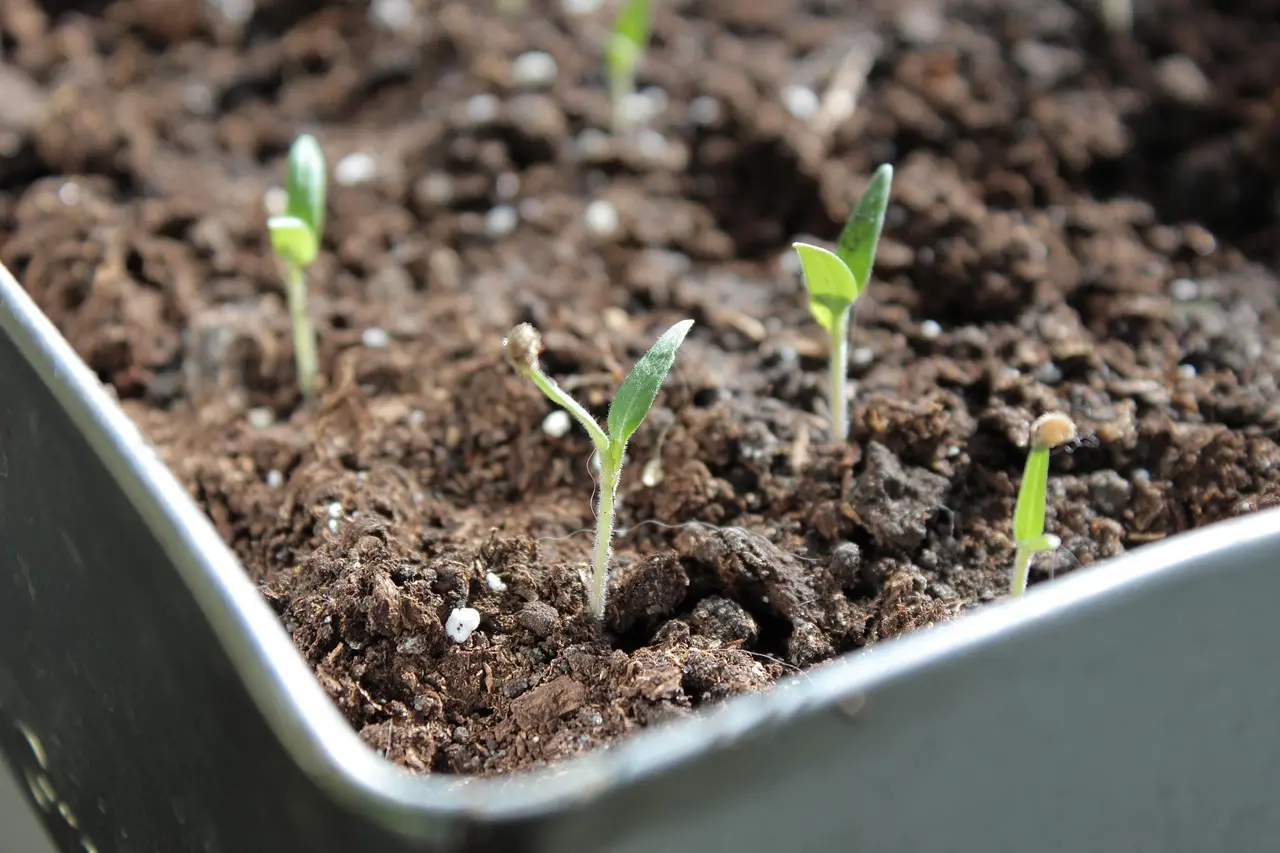
- Inspect each cell for swelling seed, a white root tip, or a green hook.
- Look for algae, mold, or a crusted top layer.
- Smell the tray for sour or swampy odors.
- Note which cells are empty and which have weak sprouts.
Step 2: correct moisture and airflow
- If the mix is soggy, remove the dome and let the surface dry until it is only damp.
- Vent the dome when condensation stays heavy on the lid.
- Move air gently with a nearby fan, but do not blast seedlings.
- Water from below if the surface has crusted and the seed zone is still dry.
Step 3: fix temperature and coverage
- Place the tray on a heat mat if the crop needs warmth.
- Set a probe thermometer in the center cell to read the root zone, not the room.
- Add only enough fresh mix to restore the original cover depth for the crop.
- For a shallowly exposed seed, add about 1/8 inch of fresh seed-starting mix, then recheck after watering.
Suppose a flat of peppers in medium-depth cells sits on a cool windowsill and only three cells sprout after a week. The fix is usually not more seed in every cell. Move the tray to steady warmth, check the center-cell temperature with a probe, and reseed only the blank cells that still look viable.
Should you reseed, repot, or start over?
Use the number of empty cells to decide. If fewer than half the cells are likely viable, reseed the empty ones and move on. If most cells are empty but the mix is clean and the crop is still worth saving, reseed the whole flat. Scrap the tray when contamination or rot is spreading.
Use empty-cell counts as a cutoff
For a tray that is mostly bare, reseeding the whole flat is usually faster than nursing a scattered few. If a tray has a few good seedlings and many empty cells, keep the survivors and fill only the gaps. If mold, sour smell, or damping-off is widespread, do not keep patching it.
Keep strong seedlings, not weak clutter
Healthy seedlings should have firm stems and active growth. Weak, yellow, or collapsed sprouts take up space and often fail later. If a cell has a strong seedling and one failed seed, leave the healthy plant and ignore the dead one.
Seed tray rescue checklist
Use this table to match the symptom to the next move. The goal is to separate recoverable cells from trays that are better reseeded, repotted, or scrapped.
| Symptom | Likely cause | Fix | Next action |
|---|---|---|---|
| Crusted surface | Top layer dried out after sowing | Moisten from below and restore shallow cover | Reseed only if seed is still visible and ungerminated |
| Sour smell | Anaerobic, too-wet mix | Remove dome, dry back, and increase airflow | Scrap the tray if the smell persists |
| Algae on the surface | Light plus constant moisture | Vent more and let the top layer dry slightly | Repot only the healthy seedlings |
| Empty cells with hard seed coat | Old seed or poor moisture contact | Reseed with fresh seed and correct moisture | Reseed |
| Leggy sprouts | Low light after emergence | Move to brighter light and hold the dome open | Repot if stems can be buried safely |
| Damping-off | Fungal or mold disease | Remove affected cells, sanitize tools, and dry the tray | Scrap contaminated mix |
| Wilted seedlings with wet mix | Poor drainage and low oxygen | Stop watering, vent the dome, and improve drainage | Repot survivors into fresh mix |
| Swollen seed but no sprout | Temperature too low or cover too thick | Warm the tray and reduce cover to crop depth | Reseed if the seed has rotted |
| Patchy sprouting in one corner | Uneven heat or watering | Rotate the tray and check center-cell temperature | Reseed gaps only |
| Collapsed seedlings | Damping-off or very soft stems | Discard the affected cells and sanitize the tray | Scrap the batch if many cells are hit |
How do I tell if my seed-starting mix is too wet?
A mix is too wet when it stays glossy, smells stale, or feels heavy enough to squeeze water from it. Good mix should hold moisture and still let air through. Reused mix often holds pathogens and raises damping-off risk, so fresh mix is safer for rescues.
Watch for the feel, smell, and surface
If the top stays dark and slick for days, the tray is probably overwatered. If the surface turns green with algae, the humidity is too high and airflow is too low. If a light squeeze produces dripping water, back off fast.
Dry it down without starving the seed
Remove the dome first. Then let the tray sit until the surface loses its shine, while the lower mix remains slightly damp. For tiny seeds, do not let the tray dry to dust; they need even moisture more than deep watering.
A common first-timer mistake is assuming a patchy tray needs the same watering schedule as the sprouted cells instead of checking moisture and reseeding the empty spots. Tiny lettuce seed in shallow cells can fail because the cover was too deep or the top dried out, while tomato seed in deeper cells may be fine and only needs more warmth.
When should I move a tray to a heat mat?
Move the tray to a heat mat when the crop prefers warmer germination and the root zone is below target. Use a probe thermometer in the center cell to verify temperature there, because the surface and room air can differ from the root zone.
Match the crop to the temperature
Warm-season crops often need 24°C to 30°C. Cool-season greens and brassicas usually do better at 13°C to 21°C. If a tray of warm-season seed is sitting below that range, a heat mat can speed the first true roots without soaking the mix.
Use the mat with ventilation in mind
A humidity dome helps early germination by holding warmth and humidity, and transparent domes make that easier to see. Vent it as soon as condensation stays heavy, and remove it once sprouting is underway and the crop no longer needs the extra humidity.
How do I sterilize seed starting trays before reusing them?
Clean trays before reuse, especially after mold, algae, or damping-off. A practical sanitizing method uses 3% hydrogen peroxide and lets it sit for 20 minutes. That is for tray cleaning, not for soaking seed. Rinse and dry the tray before refilling it.
Use a simple cleaning sequence
- Remove all old mix and roots.
- Wash the tray with plain water to remove residue.
- Apply 3% hydrogen peroxide to all cell surfaces.
- Let it sit for 20 minutes.
- Rinse, dry, and refill with fresh mix.
Keep reusable trays in better shape
Reusability matters because flimsy trays warp and crack more easily. Look for rigidity, drainage holes, and compatibility with standard 1020 trays, domes, and heat mats. A standard 1020 tray is just over 10 by 20 inches, so matching accessories matters.
How do you use seed sprouting trays without overcrowding?
Do not overfill cells or crowd seeds into one spot. Use one crop per tray when possible, keep the sowing depth crop-specific, and choose cell size based on the plant. Shallow cells are about 1 to 1.5 inches deep, medium-depth cells are about 1.5 to 2.5 inches deep, and deep cells are 2.5 inches or deeper.
Choose cell depth for the crop
Shallow cells suit fast crops that move on quickly. Deeper cells are recommended for stronger transplants, especially for crops such as tomatoes and peppers that stay in the tray longer. The deeper root zone can reduce transplant shock because roots have more room before pot-up.
Keep the tray compatible with the rest of the setup
Choose a tray that fits the dome and heat mat you already use, and avoid warped flats that leave cells unevenly watered. A rigid tray also helps keep the root zone more even across the flat.
Common mistakes
Overwatering after a failed sowing is the fastest way to make a weak tray worse. Water only enough to restore even moisture, then recheck the root zone and the tray smell.
Leaving the dome closed too long can trap too much humidity. Vent early, and remove it when the crop is up enough to handle room air.
Reusing contaminated mix or dirty trays spreads the same problem into the next sowing. Scrub and sanitize the tray, then start with fresh mix.
Ignoring crop differences causes avoidable losses. Tiny seed, slow germinators, and warmth-loving species do not all need the same depth, heat, or humidity.
Frequently asked questions
Should I reseed a tray that only sprouted a few cells?
Yes, if the tray is clean and the remaining cells still have a chance. Reseed the empty cells once the temperature and moisture are corrected. If the mix is contaminated, remove the good seedlings, discard the rest, and start with fresh mix.
What temperature is best for germinating seeds in trays?
Most commercial crops germinate best between 21°C and 27°C. Warm-season crops in trays may need 24°C to 30°C, while cool-season greens and brassicas can prefer 13°C to 21°C. If temperatures climb above 35°C, some seeds can slow down or pause germination.
How do I prevent damping off in weak seedlings?
Use fresh mix, clean trays, and good airflow, and avoid keeping the surface wet for long periods. Poor drainage is described as the number one cause of damping-off disease in seedlings. If a cell collapses or smells off, remove it at once and sanitize the tray before reuse.