How to Plant Seeds for a Fall Garden
Count backward from your average first frost date. A common rule of thumb is to sow cool-season fall crops so they reach harvest in about 30 to 70 days, and to add about 7 to 14 days if soil is still hot or dry. Miss that window and you get bolting, tiny roots, or a bed that never fills in before cold weather. This guide gives you a backward-planning checklist for choosing fall seeds, sorting them by frost date, soil temperature, and days to maturity.
How fall seed planting works


Start with your first frost date
Fall planting starts with your first expected frost date, but that date is only the baseline. Local microclimates matter too, especially near fences, walls, pavement, low spots, and exposed slopes. A sheltered yard can stay workable longer than a windy one, while a cold pocket can lose usable days faster than the map suggests.
Use days to maturity as your second filter
Seed packets list days to maturity, and that number tells you how long a crop needs from sowing to harvest under typical conditions. For fall, treat it as a planning number, not a promise. Cooler days slow growth, so a one- to two-week buffer fits many beds better.
Adjust for fall slowdown
The fall factor is simple: shorter days and cooler air slow growth after germination. The Almanac recommends adding a one- to two-week fall growth buffer, and you can add 7 to 10 days for staggered harvests. That extra time matters most for roots and leafy crops that need to size up before weather turns cold.
What you’ll need
- Seed packets with days to maturity
- Your average first frost date
- Local weather or extension forecast notes
- Watering can, hose, or drip line
- Mulch for moisture control
- Row covers
- A cold frame, if you use one
- Labels or a notebook for sowing dates
When should you sow fall seeds?
Read the packet, then count backward from your first frost date and add a cool-weather buffer. For many crops, the right window differs from spring sowing because late-summer soil can germinate quickly, but autumn growth slows soon after emergence. Warm-climate gardens may key more to heat and day length than frost alone.
Read packet days to maturity first
Use the packet number as the base. If a crop lists 40 days to maturity and your frost date leaves 45 days, that sounds workable only on paper. A safer plan is to subtract 7 to 14 days for slower fall growth, then sow earlier if the crop is sensitive to stress or needs room to size up.
Add a fall buffer
The Almanac recommends a one- to two-week buffer, and that is a practical floor for many cool-season sowings. If you want staggered harvests, add 7 to 10 more days. That extra room can keep a bed from maturing all at once, which matters for lettuce, radishes, and quick salad greens.
Account for warm soil and local climate
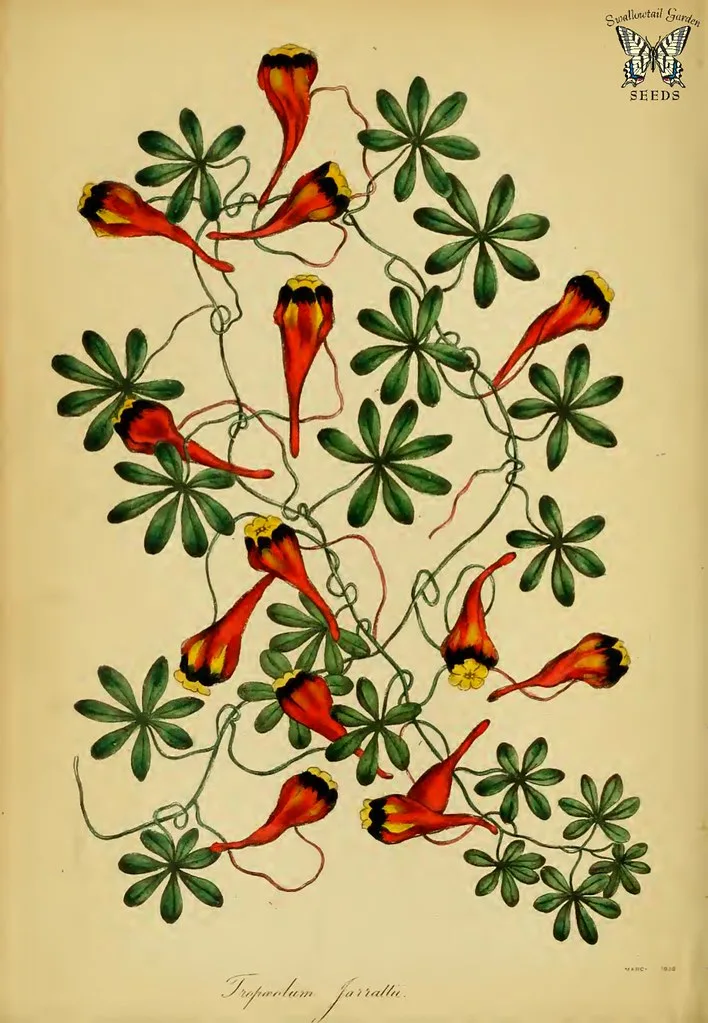
Warm late-summer soil can speed germination even while air temperatures begin to drop. Epic Gardening notes that some crops can be planted when average daily temperatures fall below 85°F, including arugula, mizuna, and nasturtiums. In warmer regions, the challenge may be heat stress and day length rather than frost, so you may sow earlier than a northern frost calendar suggests.
Which fall crops should you plant first?
Start with crops that can still finish on time and tolerate cooler weather. Quick leafy greens and roots go first when the calendar is tight. Brassicas and peas often need earlier sowing because they need more days before harvest, while some frost-tolerant crops can stay productive longer under cover.
Quick greens and roots
Looseleaf lettuce, arugula, mizuna, radish, and baby turnips are the best first picks when your window is short. The same source says many leafy greens can be sown until about 6 to 8 weeks before first frost. Almanac says looseleaf lettuce can be ready in 30 to 45 days, which makes it a practical fall crop for many beds.
Brassicas and peas
Kale, broccoli, cauliflower, and peas need more lead time. The same source says kale, broccoli, and cauliflower can be started 12 to 14 weeks before first frost. If your window is smaller than that, choose transplants for brassicas instead of seed, or shift to faster greens and roots.
Frost tolerance changes the priority
Cool-season crops often taste better after a light frost, and some keep growing with protection. Carrots are a good example: Epic Gardening says they can be sown 10 to 12 weeks before first frost, and also notes they can be planted even closer to frost because they are frost-hardy. That makes them useful in both early and late fall beds.
How do you plant seeds for a fall garden?
Clear the summer crop, loosen the surface, sow at the right depth, and keep the seed zone evenly moist. Fall planting is usually direct sowing for roots and many greens, while larger brassicas often start better as transplants. The main goal is steady germination without crusting, heat stress, or dry pockets.
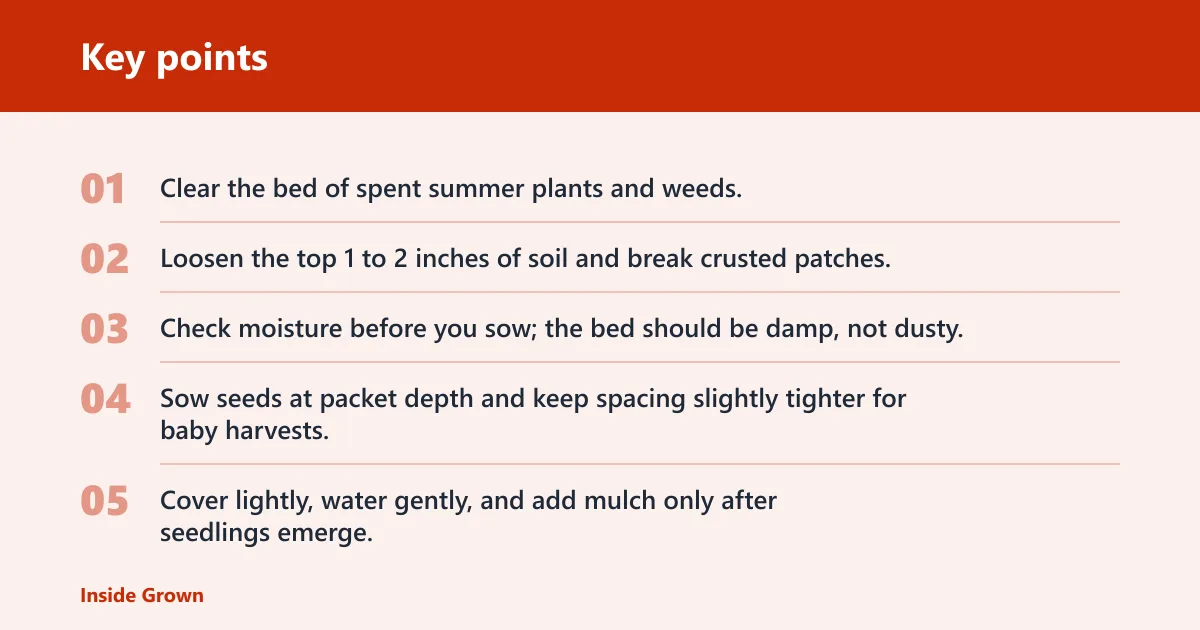
- Clear the bed of spent summer plants and weeds.
- Loosen the top 1 to 2 inches of soil and break crusted patches.
- Check moisture before you sow; the bed should be damp, not dusty.
- Sow seeds at packet depth and keep spacing slightly tighter for baby harvests.
- Cover lightly, water gently, and add mulch only after seedlings emerge.
- Set row cover or a low tunnel in place if frost is near.
Use direct sowing where it fits best
Direct sowing works well for quick-turn greens, radishes, carrots, beets, and peas because it reduces transplant delay. It also fits crops that dislike root disturbance. For brassicas, a transplant can buy time if the remaining season is short, which is often better than waiting for a seedling to catch up.
Watch seed depth and spacing
Fall beds still need the same basic depth rules, but spacing can shift depending on your harvest goal. For baby greens, sow a bit denser than for full-size plants, then thin after emergence. For roots, keep rows clear enough for straight growth and easier thinning, because crowded roots can stay small or fork.
Prevent late-summer failures
Heat stress, uneven germination, and crusting soil are common fall problems. If the surface dries hard after watering, lightly loosen the top layer with your fingers or a hand rake and rewater. If seedlings emerge and then stall, check soil moisture and shade first; late-summer heat can interrupt establishment even when the sowing date looked right.
Say your bed is a 4-by-8-foot section that was just cleared of beans, and you sow carrots on a hot, dry afternoon. If the top inch dries into a crust overnight, the next irrigation needs to be gentler and more frequent, not deeper. The goal is an evenly moist seed zone until sprouts are established.
Fall seed sowing planner
Use this table as a backward-count template. Short-season gardeners should favor crops with lower numbers and quicker emergence. Long-season gardeners can stretch into brassicas and slower roots, especially if row covers or a cold frame will carry the crop later into the season.
| Crop type | Days to maturity | Recommended sowing window before first frost | Direct-sow | Priority score for short-season gardeners | Priority score for long-season gardeners |
|---|---|---|---|---|---|
| Looseleaf lettuce | 30 to 45 | 6 to 8 weeks | Yes | 5 | 4 |
| Arugula | 20 to 40 | 6 to 8 weeks | Yes | 5 | 4 |
| Radish | 25 to 35 | 6 to 8 weeks | Yes | 5 | 3 |
| Carrot | 50 to 70 | 10 to 12 weeks | Yes | 3 | 5 |
| Beet | 50 to 60 | 8 to 10 weeks | Yes | 4 | 5 |
| Kale | 55 to 70 | 12 to 14 weeks | Yes | 2 | 5 |
| Broccoli | 60 to 80 | 12 to 14 weeks | No, start or transplant | 1 | 4 |
| Pea | 50 to 70 | 8 to 10 weeks | Yes | 3 | 4 |
Common mistakes
Most fall planting problems come from waiting too long, watering inconsistently, or treating every crop the same. A sowing date that works for lettuce may fail for carrots or brassicas, and a bed that looked fine in summer can crust, dry, or overheat after the previous crop comes out.
Waiting too long after summer harvest
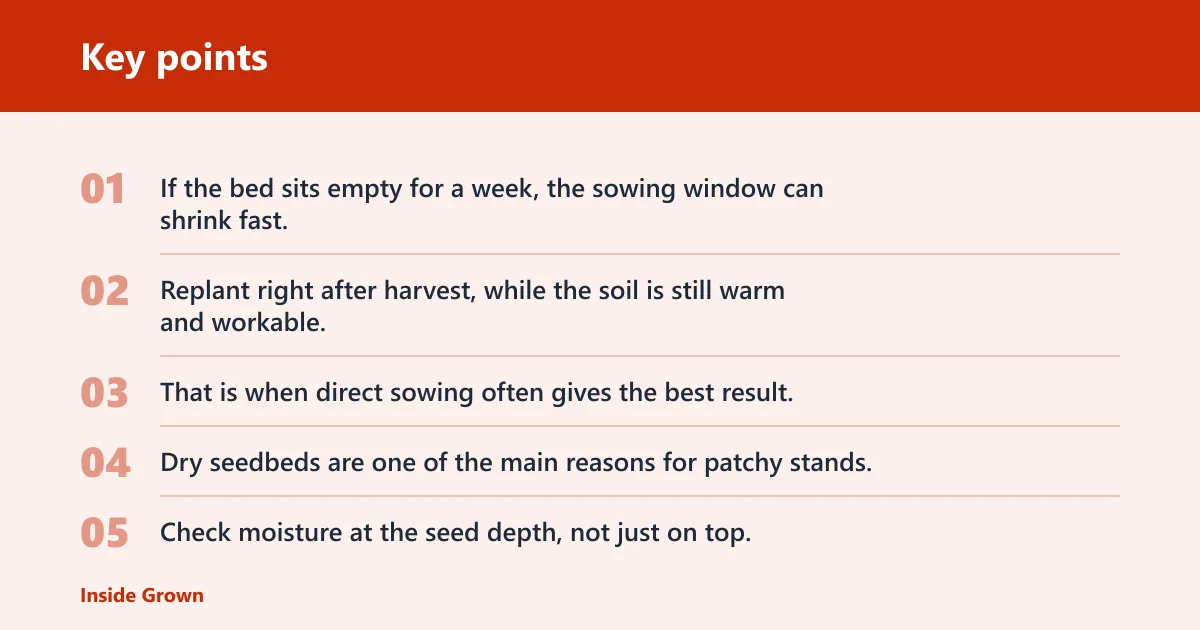
If the bed sits empty for a week, the sowing window can shrink fast. Replant right after harvest, while the soil is still warm and workable. That is when direct sowing often gives the best result, especially for greens and roots that need quick establishment.
Skipping water checks
Dry seedbeds are one of the main reasons for patchy stands. Check moisture at the seed depth, not just on top. If the surface dries between waterings, use a fine spray or drip line and keep the zone evenly moist until germination finishes.
Planting every crop the same way
Leafy greens, roots, brassicas, and peas do not all need the same plan. Some are best direct sown, while others are better as transplants when time is tight. A cold frame can extend frost-tolerant crops, and row covers can push harvest later without changing the sowing date.
Ignoring season extension
Row covers protect seedlings from early frost and help hold a few extra weeks of growth. Cold frames do the same job with more shelter, and they are especially useful for salad greens, spinach, and other cool-weather crops. If your frost date is close, use that cover from the start instead of waiting for cold weather to arrive.
Picture a raised bed in a mild autumn where nights drop quickly but daytime heat still lingers. A sowing that needs 10 weeks may still work if you add a low tunnel and choose a faster cultivar, while the same bed without cover may stop short of harvest. The cover changes the math.
Frequently asked questions
What can you plant in a fall garden?
Leafy greens, roots, brassicas, and peas are the main groups. Looseleaf lettuce, arugula, radish, carrot, beet, kale, broccoli, cauliflower, and pea all fit fall planning, but they do not share the same sowing window. Some are best direct sown, while others are better transplanted.
What to plant now for a fall garden
Plant the crops that still fit your remaining days before frost. If you are within 6 to 8 weeks, quick greens and radishes are the safest bets. If you have 10 to 14 weeks, carrots, beets, kale, and some brassicas can still make sense with good moisture and season extension.
When to plant seeds for a fall garden
Count backward from your average first frost date, then subtract the seed packet’s maturity time and add a fall buffer. For many cool-season crops, that means sowing 1 to 2 weeks earlier than the packet math alone suggests. Warm-climate gardens may follow heat instead of frost if nights stay mild.
What should I plant in a fall garden?
Choose cool-season crops first, then sort by speed. Looseleaf lettuce, arugula, and radishes are reliable when time is tight. Carrots, beets, kale, broccoli, cauliflower, and peas need more planning, so they belong in beds with earlier sowing dates or added protection.
When and what to plant for a fall garden
Use the first frost date to set your outer limit, then choose crops by maturity and temperature needs. Sow the fastest crops first if your window is short, and transplant brassicas if the season is already narrowing. In warmer climates, watch daytime heat and shortening light as closely as frost.