How to Plant Seeds in Peat-Free Seed Starting Mix
Pre-moisten peat-free seed starting mix until it feels like a wrung-out sponge, then fill cells loosely, sow seeds at the packet depth, cover as needed, and keep moisture even through germination. If you skip the pre-wet step, dry pockets and uneven wetting can slow sprouting and leave seedlings patchy or unstable. This guide shows the exact sowing workflow for peat-free mixes, including moisture control, seed depth, and aftercare.
Why soilless media beats garden soil for new plants
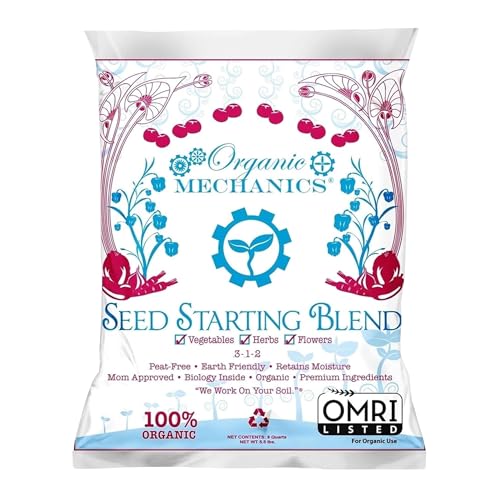


Peat-free seed starting mix is a soilless or low-nutrient medium made for germination. It is lighter and airier than regular potting soil, and it is designed to hold moisture without smothering delicate roots. University extension guidance also favors sterile, soilless media for starting seeds because it lowers disease pressure and gives seedlings a cleaner start. University of Minnesota Extension, University of New Hampshire Extension
Do not use garden soil for sowing. It is too heavy and compact for young roots, and it can contain weeds and microbes that interfere with germination. Seed starting mix gives seeds the fine texture they need while still leaving room for air around the roots.
Common ingredients
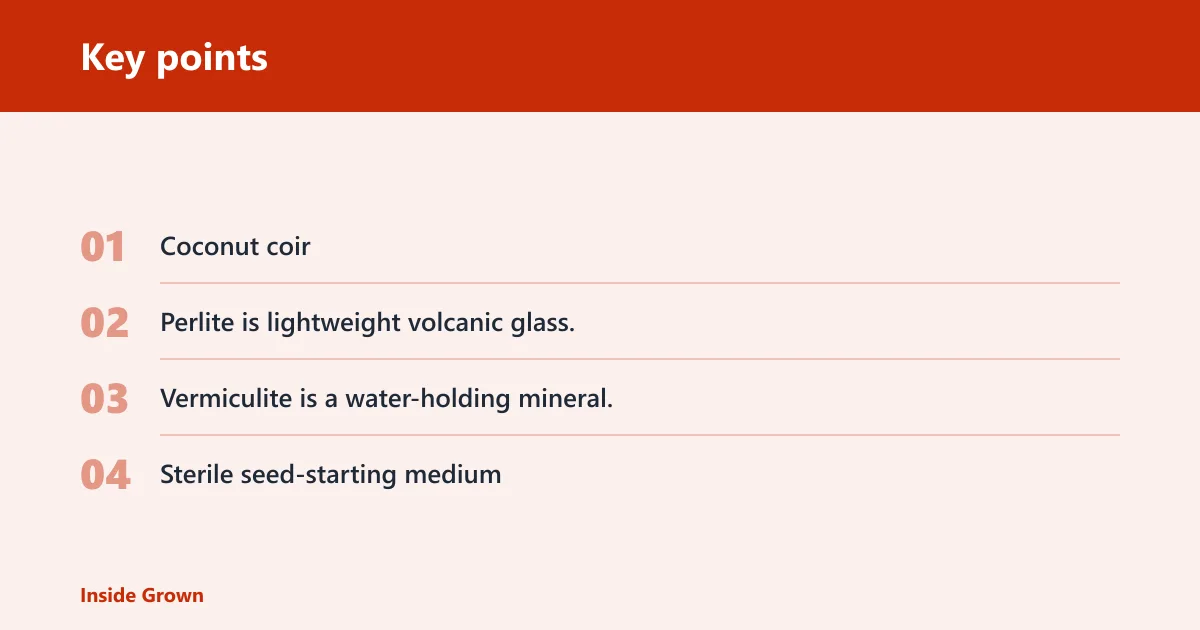
- Coconut coir is a renewable peat alternative. It is commonly used in seed-starting blends because it holds moisture well while still allowing air into the root zone. It often comes compressed, so it needs rehydrating before use. Michigan State University Extension
- Perlite is lightweight volcanic glass. It improves drainage in seed-starting mixes and creates air pockets that help oxygen reach roots.
- Vermiculite is a water-holding mineral. It helps balance moisture in soilless mixes, especially when you want steadier dampness around germinating seeds.
- Sterile seed-starting medium keeps nutrient levels low and helps reduce the risk of damping off in young seedlings. University of Maryland Extension
At germination, seeds need water, oxygen, and contact with a fine medium. They already carry the food reserve needed to sprout, so a low-nutrient mix is the right starting point. That is also why a peat-free, soilless blend is usually better than garden soil for trays and cell packs.
What do you need to start seeds in peat-free mix?
Answer: You need a tray or container with drainage, a peat-free seed starting mix, clean water, and a way to water gently. Labels and a humidity dome can help, but the most important part is a mix that has been pre-moistened before sowing. That step makes watering more even and reduces the chance of dry pockets. University of Minnesota Extension
- Seed starting tray or container with drainage holes
- Peat-free seed starting mix
- Clean water
- Spray bottle, watering can with a fine rose, or a bottom-watering tray
- Labels and marker
- Humidity dome or clear cover, if you use one
- A spoon, scoop, or bowl for rehydrating compressed coir
Do you need to wet peat-free seed starting mix before sowing?
Answer: Yes. Pre-moisten it first so the mix wets evenly before the seeds go in. Aim for a uniform feel like a wrung-out sponge: damp throughout, never dripping, and with no dry pockets. This matters especially in coir-based mixes, which can wet unevenly if they are filled dry and watered later. Michigan State University Extension
Fill a bucket or tub, add the dry mix slowly, and mix until it feels evenly damp throughout. Break up clumps with your fingers. If a dry core remains inside compressed coir, it can stay dry after sowing and leave roots in uneven moisture.
- Put the dry mix in a clean tub.
- Add water gradually while turning the mix.
- Squeeze a handful. It should hold together, then crumble with one tap.
- Fill cells or pots loosely to the top.
- Tap the tray once or twice to settle the mix, then top up only until level.
Do not press the mix down firmly. Leave it fluffy enough for air movement, then settle it lightly so seeds sit at a consistent depth.
How deep should seeds go in peat-free mix?
Answer: Most seeds are planted about 2 to 3 times their width, but the seed packet should guide the final depth. Very small seeds often stay on the surface and need only a fine dusting of mix, vermiculite, or none at all if the packet says to surface-sow. Large seeds need a bit more cover, but the mix should still stay light, not packed. packet depth
Check the packet first. Some crops, including lettuce, snapdragon, and many herbs, germinate better with light or barely any cover. Others, such as beans or squash, need a deeper slot. The rule changes with seed size, not with the container.
- Make a shallow planting hole or furrow.
- Drop in the seed at the packet depth.
- Cover only if the crop needs cover.
- Press the surface very lightly with fingertips, not your palm.
Picture a 10-cell tray of tomato seeds on a bright windowsill. If the mix was not pre-moistened, one corner can stay dry while the rest looks wet. That corner often sprouts later, or not at all, because the seed sits in a dry pocket instead of steady moisture.
How do you water peat-free seed starting mix evenly?
Answer: Use bottom-watering once the tray is established and mist only when the surface seed needs very gentle moisture. Peat-free mixes can dry unevenly on top, especially coir-heavy blends, while lower layers stay damp. Bottom-watering helps rewet the full cell without displacing seed or crusting the surface. University of Minnesota Extension
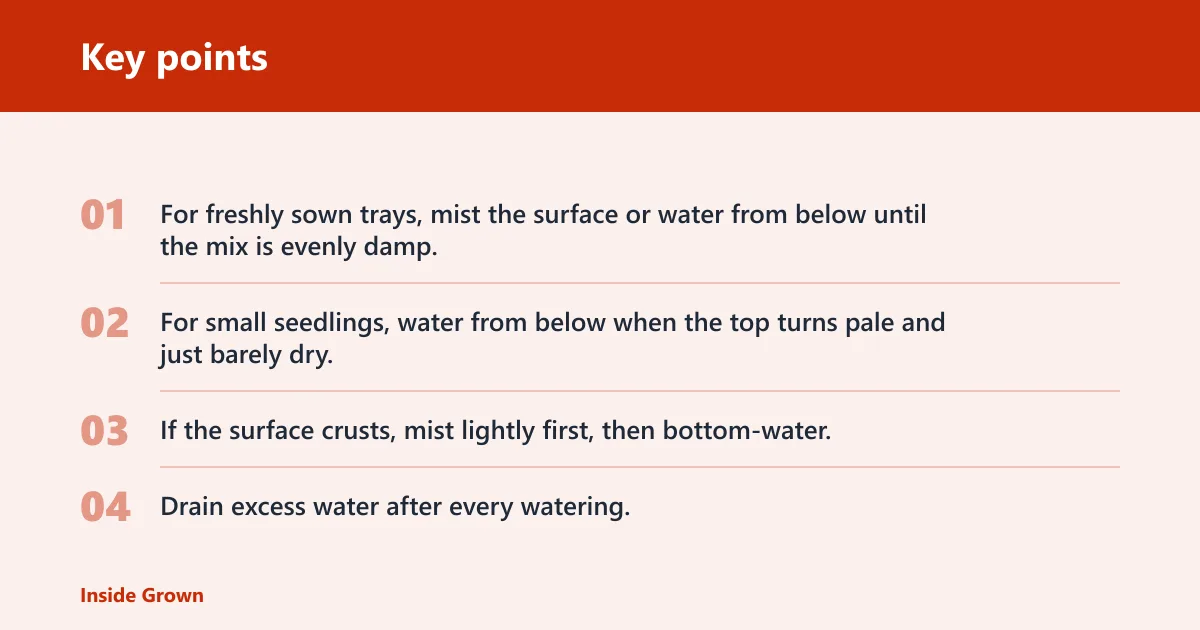
Set the tray in water for a few minutes, then drain it well. Mist for surface-sown seeds or for the first watering after sowing fine seed, but do not rely on misting alone once the tray is established.
- For freshly sown trays, mist the surface or water from below until the mix is evenly damp.
- For small seedlings, water from below when the top turns pale and just barely dry.
- If the surface crusts, mist lightly first, then bottom-water.
- Drain excess water after every watering.
A common first-timer mistake is watering the top every day while the lower half stays soggy. That pattern invites damping off and weak roots. Keep airflow moving around the tray, and let the uppermost layer dry slightly between waterings without letting the whole cell go dry. Damping off is most likely when seedlings sit in cold, wet media with poor circulation. University of Maryland Extension
What problems happen with peat-free seed starting mix?
Answer: The most common issues are dry pockets, crusting, soggy cells, poor germination, algae, damping off, salt buildup, and transplant shock. Most of them trace back to moisture management, container drainage, or sowing depth rather than the mix itself. The table below shows quick fixes and prevention steps.
Peat-Free seed starting Mix: 8 common problems and fixes
| Symptom | Likely cause | Immediate fix | Prevention |
|---|---|---|---|
| Dry pockets in some cells | Dry coir was not fully rehydrated | Soak the tray from below for about 10 to 15 minutes, then remix any cells that are still dry. | Pre-moisten in a tub before filling |
| Top crusts over | Surface dried too fast | Mist once, then bottom-water | Use a humidity cover until sprouting starts |
| Cells stay soggy | Too much water or poor drainage | Drain the tray fully and increase airflow | Use containers with drainage holes |
| Poor germination | Uneven moisture or wrong depth | Reseed the cell at the packet depth | Fill evenly and check seed depth for each crop |
| Green algae on the surface | Constant surface moisture and light | Let the top dry a bit and remove the algae layer | Water from below and reduce cover time after sprouting |
| Seedlings collapse at the base | Damping off | Remove affected seedlings and dry the surface faster | Use sterile mix, clean trays, and more airflow |
| White crust or slow growth | Salt buildup from fertilizer or hard water | Flush the cell with clean water once, then drain well | Hold fertilizer until true leaves appear |
| Wilt after potting up | Transplant shock | Water in immediately and keep out of direct harsh sun for a day | Move seedlings before roots tangle or circle |
When should you fertilize seedlings in peat-free mix?
Answer: Wait until the first true leaves appear before feeding, unless a crop-specific recommendation says otherwise. Seedlings do not need fertilizer at germination, and too much too early can raise salt levels and stress fine roots. Extension guidance generally recommends starting dilute fertilizer only after seedlings are established. University of Minnesota Extension, University of New Hampshire Extension
Do not add fertilizer too soon. Seeds do not need rich nutrition at germination, and extra feed can increase salt buildup. If a crop needs feeding, wait until the first true leaves appear, then use a very dilute feed.
Do not wait too long to pot up. When roots start filling the cell, move seedlings into potting mix before they become crowded. That lowers transplant shock and helps the roots keep growing without a pause.
When should seedlings be moved from seed starting mix to potting mix?
Answer: Move seedlings when they have true leaves and roots are reaching the edges of the cell, but before they become root-bound. Potting mix is denser and more nutritious than seed starting mix, so the shift makes sense once the seedling can handle more feed and space.
Lift each seedling gently by the leaves or plug, not the stem. Plant it into potting mix at the same depth unless the crop benefits from deeper planting, and water it in right away.
Can you use peat-free seed starting mix in peat pots?
Answer: Yes, and many gardeners do, but peat pots need a little extra attention because their sides dry faster than the center. Keep them supported in a tray, pre-moisten the mix before filling, and watch moisture closely at the pot wall. The pot itself can wick water away from the edges, so the sides may dry first.
Peat pots work best when they sit snugly in a tray so they do not tip or dry unevenly. If the pot walls begin to get stiff and pale before the center dries, bottom-water and let the pots soak briefly from below. Pre-soaking the peat pots themselves can also help them absorb water more evenly before filling.
Transplant carefully with peat pots. Some gardeners plant the whole pot, but thick or dry walls can slow root growth if they do not break down quickly. Tear or score the sides if the pot is holding its shape too long, and make sure any rim stays below the soil line so it does not pull moisture away from the seedling root ball.
Frequently asked questions
How do you start seeds in peat-free seed starting mix?
Pre-wet the mix first, fill the tray loosely, sow at the packet depth, and water lightly from above or below depending on the seed size. Keep the mix evenly moist, not soggy, until germination. The fastest failures usually come from dry pockets or a mix that was packed too tightly.
How deep should seeds be planted in peat-free mix?
Most seeds go about 2 to 3 times their width deep. Very small seeds are often surface-sown and only pressed in lightly. If the packet gives a depth, follow that instead of guessing, because depth affects oxygen, moisture, and emergence speed.
Should peat-free seed starting mix be packed down or left fluffy?
Leave it fluffy, then settle it lightly with a tap. Hard packing reduces air space and can slow root growth. The goal is a stable surface with enough structure to hold moisture, not a compressed plug.
Do seedlings need fertilizer in peat-free seed starting mix?
Not at germination. Seeds already carry what they need to sprout. Start feeding only after true leaves appear, and then use a dilute fertilizer if the crop needs it. Too much feed too early can raise salt levels and stress fine roots.
Why is my peat-free seed starting mix drying out so fast?
Coir-heavy mixes can dry quickly on the surface, especially under bright light or warm air. Check the full cell before adding water, then bottom-water when needed. A humidity cover helps only until sprouting begins; after that, airflow matters more than a sealed top.
How do you prevent damping off in seed starting mix?
Use sterile mix, clean containers, drainage holes, and steady airflow. Avoid overwatering and let the surface dry slightly between waterings. Damping off is common when seedlings sit in cold, wet media with poor circulation, so moisture control matters as much as cleanliness. University of Maryland Extension