How to Plant Root Crop Seeds Without Crowding Them
Sow root crop seeds about 1/2 to 1 inch apart for carrots and parsnips, and about 1 inch apart for beets and turnips, then thin to the crop’s final spacing after germination. If you seed too densely or skip thinning, roots compete, stay small, twist, or fork. This guide gives crop-by-crop sowing spacing and the exact fixes for clumps, doubles, and uneven sprouting.
Why root crops crowd easily


Root crop seed packets are easy to overfill because many of the seeds are tiny, irregular in shape, or both. A few extra seeds in one spot can leave you with a crowded patch instead of a clean row, especially for carrots, which are very small and often drop in clusters rather than one at a time.
Tiny seed size and uneven drop
Carrot and parsnip seed are the hardest to space evenly by hand. Beet and turnip seed are larger, but they still often land too close together when you pour from a packet. That is why the sowing method matters as much as the thinning step.
Why crowding distorts roots
When roots compete for the same narrow strip of soil, they split around stones, bend around neighbors, or stop sizing up. Crowding also limits water and nutrient access. The result is usually a crop that looks healthy aboveground but gives you small, forked, or misshapen roots below.
Which crops are most sensitive?
Carrots and parsnips are the most sensitive because they rely on a long, straight root. Beets and turnips are more forgiving, but they still need room to size up cleanly. Radishes are quick, yet they also get woody or pithy if they are packed too tightly or left too long.
Root crop spacing cheat sheet
Use this table as a planting guide, then adjust slightly for the exact variety on the packet. Final spacing varies by cultivar, but the goal stays the same: give each seedling enough room for a single, usable root and enough airflow to dry the soil surface after watering. University extension guides commonly recommend direct sowing root crops, keeping the seedbed evenly moist, and thinning early for a clean stand (Illinois).
| Crop | Sowing depth | In-row spacing target | Final spacing target | Thinning trigger | Rescue action for clumps |
|---|---|---|---|---|---|
| Carrot | About 1/4 inch | 1/2 to 1 inch apart at sowing | 2 to 3 inches apart | After true leaves form and seedlings are a few inches tall | Thin now; if the row is solidly crowded, reseed the thin spots after thinning |
| Beet | About 1/2 inch | 1 inch apart at sowing | 3 to 4 inches apart | Once seedlings are established and about 2 inches tall | Thin now; keep the strongest seedling in each cluster |
| Turnip | About 1/2 inch | 1 inch apart at sowing | 2 to 4 inches apart | When seedlings have true leaves and the roots begin to swell | Thin now; reseed any gap that opens wider than the final spacing target |
| Parsnip | About 1/2 inch | 1/2 to 1 inch apart at sowing | 3 to 4 inches apart | After slow seedlings are clearly up and have true leaves | Thin now; do not disturb nearby seedlings more than needed |
| Radish | About 1/2 inch | 1 inch apart at sowing | 1 to 2 inches apart | Very early, once seedlings are established and have their first true leaves | Thin now; a dense patch usually stays crowded if left alone |
Row spacing: plan for about 12 to 18 inches between rows so you can weed, water, and thin without stepping on the bed. Wider rows also reduce root-to-root competition across the bed, which matters when you are growing several kinds of roots in one space.
Say your carrot row looks empty in the first week and you are tempted to pour extra seed into the open spots. Stop there. Carrots often germinate unevenly, and the later seedlings can fill in naturally. Adding more seed now usually creates a second crowd of seedlings that is harder to thin cleanly.
How should you prepare the bed?
Give root crops loose, deep, well-draining soil before you think about spacing. Compaction causes the same problems as crowding: short roots, forks, and stunting. Raised beds help when native soil drains slowly or stays cold into spring, because they shed excess water faster and warm sooner.
Aim for loose, deep soil
Many roots do best in soil that is at least 12 inches deep, free of rocks and debris, and easy to push through. If the bed is cloddy or packed down, even well-spaced seeds can still make poor roots because the plant meets resistance as soon as the root starts to size up.
Why raised beds help
Raised beds are useful when native soil drains slowly or stays cold into spring. They let excess water move away faster, which lowers the risk of crusting and waterlogging. They also make it easier to build the deep, fine soil texture that carrots and parsnips need for straight growth. For a fuller bed-prep sequence, see raised-bed soil prep.
Check drainage before sowing
Water a small section and watch how fast it disappears. If puddles stay on the surface or the top layer hardens into a crust, root seeds may struggle to emerge. Break up clods, remove stones, and level the surface so the seed can make even contact with soil.
How do you sow seeds without overdoing it?
For small root seed, the goal is controlled placement, not a thick broadcast. Tiny seeds need a light hand because one extra shake from the packet can triple the planting density. Larger root seed is easier to space, but it still benefits from a measured drop instead of a heavy scatter. Direct sowing is the standard approach for these crops because their roots are easily disturbed when transplanted (Illinois); for a step-by-step method, see direct sowing.
Pinch-sowing tiny seeds
Pinch a few carrot or parsnip seeds between thumb and forefinger and release them one at a time as you move down the row. This is slow, but it prevents the worst clumps. It also makes later thinning less brutal because you are not starting with a solid band of seedlings.
Mixing small seed with dry sand
Dry sand can help you see where the seed lands and spread tiny seed more evenly. Mix only a small amount at a time so the blend stays uniform. This works well for carrots and parsnips when you want to sow a short row without overloading one section.
Using pelleted seed or a seeder
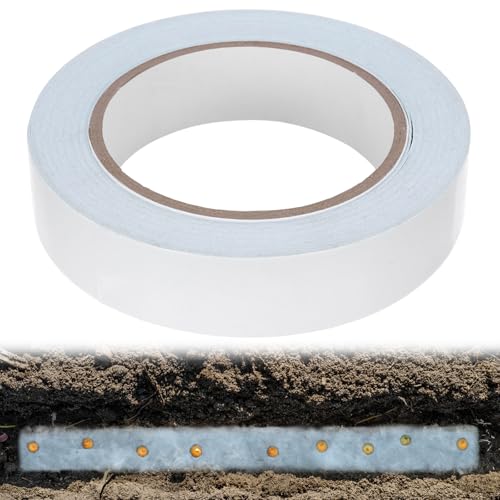
Pelleted seed and precision seeders are optional tools, not requirements. They can make spacing easier, especially for beginners or for long rows, but they are not a substitute for final thinning. If you use them, still follow the crop’s spacing target and do not assume every pellet will come up alone.
Suppose you are planting a 6-foot beet row and the seeds fall in pairs every 2 inches. That is still too tight for final growth. Thin the pairs after they establish, keep the stronger seedling, and do not leave both plants just because the row looks “full enough.”
How do you keep seed rows from crowding?
Mark the row before planting, keep the line straight, and cover seed to the right depth for the crop. A straight row makes it easier to judge spacing later, and the right cover depth helps germination stay even instead of producing a dense patch at one end and a gap at the other.
Mark row spacing before you sow
Set rows about 12 to 18 inches apart. That spacing gives you room to thin, weed, and water without stepping into the bed. It also keeps adjacent rows from competing too quickly for the same pocket of moisture and nutrients.
Cover lightly and firm gently
Carrot seed needs a very light cover, about 1/4 inch. Beet, turnip, and parsnip seed are usually covered about 1/2 inch deep. After covering, firm the soil gently so the seed touches moist soil without being buried too deeply or packed into a hard layer. Depth and row-spacing targets like these are consistent with extension guidance for cool-season root crops (Illinois).
Water without washing seed together
Keep the soil evenly moist after sowing, but water gently. A hard stream can drag seed into a pile and create a clump. A fine spray or careful soak settles the soil without moving the seed out of place. Mulch can help hold moisture once the seedbed is settled.
When seedlings come up too close
Thin after true leaves form, not at the cotyledon stage. That timing matters because the seedlings are sturdier and easier to judge. Once they are a few inches tall, you can see which ones are strongest and remove the extras with less risk of upsetting the rest of the row.
Thin after true leaves form
Thinning reduces competition for water, nutrients, and space. For beets and turnips, wait until the seedlings are established. For carrots and parsnips, wait until the plants are large enough to hold steady, then leave the straightest, healthiest seedling in each space.
Snip instead of pulling
Use small scissors or pinch the stem at soil level instead of yanking seedlings out. Pulling can disturb the roots of the seedlings you want to keep, especially in a tight row. Snipping leaves the remaining roots where they are and avoids extra gaps in the bed.
When to reseed a gap
If a gap is wider than the crop’s final spacing target, reseed it. If the gap is within the normal spacing range, leave it alone. For carrots, that often means leaving a few uneven spaces in place rather than overfilling them, because a clean gap is better than a crowded root later.
A common first-timer mistake is to keep every beet seedling because the row looks uneven after thinning. That usually backfires. A few well-spaced plants will bulk up better than a solid line of weak competitors. If you are unsure what to remove, use this guide: thinning seedlings.
Root crop moisture and timing
Keep the bed evenly moist after sowing, then back off before it gets soggy. Many root seeds germinate best in cool to moderate soil, so timing matters as much as watering. Early spring and late summer or fall sowing usually fit that pattern better than midsummer heat.
Keep soil evenly moist after sowing
Dry soil can stall germination, and wet soil can rot seed or crust over as it dries. The goal is steady moisture in the top layer until the seedlings are up. Mulch can help conserve water after emergence, especially in raised beds that dry faster.
Cool-season windows for spring and fall
Cool-season timing works especially well for carrots, beets, turnips, and parsnips. For fall harvest, Illinois Extension advises sowing root crops by the second week of August. That timing gives many crops enough time to size up before colder weather slows growth. For more season-by-season timing, see cool-season planting calendars.
Avoid waterlogging and crusting
Too much water can suffocate seed and create a crust that blocks emergence. If the soil surface seals after rain or heavy watering, seedlings may come up unevenly and clump where the crust cracked open. Light watering and good drainage reduce that risk.
Frequently asked questions
How do I plant root crop seeds without crowding them?
Set rows 12 to 18 inches apart, sow each crop at its target depth, and use a controlled drop instead of broadcasting heavily. Carrots and parsnips need the most restraint because their seed is tiny. Then thin after true leaves form so each plant has room to make a single clean root.
How far apart should I plant carrot seeds?
For carrots, sow seeds about 1/2 to 1 inch apart, then thin to the final spacing listed for the variety. Cover them very lightly, about 1/4 inch deep. Loose, deep soil matters here more than with many other crops because carrots fork easily in compacted ground.
How deep should I sow beet and radish seeds?
Beet seed is usually planted about 1/2 inch deep. Radish seed is also commonly covered at about 1/2 inch. Keep the soil moist but not soggy, because both crops germinate best when the seed stays in steady contact with damp soil without being buried too deeply.
How do I thin root crop seedlings without damaging roots?
Wait until the seedlings have true leaves, then use scissors to snip the extras at soil level. Do not pull them out. Snipping avoids tugging on the roots of nearby seedlings and gives the remaining plant a better chance to keep a straight root in loose soil.
Can I broadcast root crop seeds and still avoid overcrowding?
Broadcasting makes overcrowding more likely, but it can work with a very light hand and a fast follow-up thin. Small seed mixed with dry sand helps, and pelleted seed can make spacing easier. Even then, you still need to thin once seedlings are established, especially for carrots and parsnips.
When should I sow root crops for a fall harvest?
For a fall harvest, sow when the crop still has time to size up before cold weather slows growth. Illinois Extension advises sowing root crops by the second week of August. That window fits many cool-season roots well and gives you a better chance at even germination and usable roots.
Do root crops need to be direct-sown or started indoors?
Root crops are usually best direct-sown, and Illinois Extension says not to transplant them. Transplanting can disturb the taproot or create forked roots, especially in carrots and parsnips. Direct sowing keeps the root in place from the start and gives you a cleaner final shape.
How do I keep root crop seedlings from getting deformed?
Start with loose, deep, well-draining soil, then keep the row from getting crowded. Remove weeds early, keep moisture even, and thin at the right stage. Deformed roots usually come from a mix of crowding, compaction, stones, uneven watering, or leaving seedlings too close together.
How to plant seeds that have sprouted
Handle sprouted seed gently and place the root end down in fine, moist soil at the crop’s normal depth. Cover lightly and keep the soil damp, not wet. Sprouted seed is fragile, so direct sowing into a prepared bed is usually safer than moving it around after germination has started.
Can seeds grow without soil?
Some seeds can germinate on a moist medium or in hydroponic setups, but root crops are not the best candidates for a soil-free shortcut. Carrots, beets, turnips, and parsnips need a stable, deep medium for the root to form properly. Without that support, the crop is more likely to deform.