How to Plant Seeds in Hanging Baskets Successfully
To plant seeds in hanging baskets successfully, sow 2 to 4 seeds per cell or small pocket, use fine-textured compost, cover only as the packet directs, and keep the basket evenly moist until germination. Miss that moisture window and seeds dry out fast, especially in hanging baskets that warm and dry more quickly than ground containers. This guide covers seed choice, sowing methods, watering, thinning, and fixes for weak or patchy seedlings.
What seeds work best in hanging baskets?

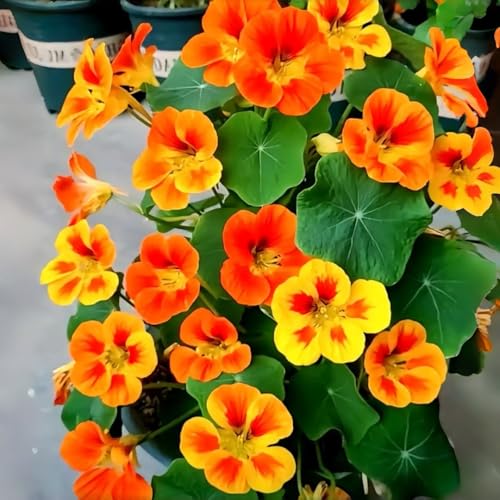

Start with trailing or compact plants, then match them to the basket’s sun exposure and watering pattern. For baskets, the best seed choices are plants that stay manageable, spill over the edge, or tolerate tighter spacing: nasturtium, sweet pea, black-eyed Susan vine, impatiens, coleus, herbs, lettuce, compact tomatoes, and chilies.
Sun matters. Full-sun baskets suit nasturtium, compact tomatoes, chilies, and many herbs. Partial shade opens the door for impatiens, coleus, lettuce, and some trailing flowers. Shade-tolerant choices help where a basket hangs under an eave or on a north-facing wall.
Choose trailing, compact, or edible plants
Trailing plants make the basket look full because they spill over the rim and soften the sides. Compact plants work inside the basket body and keep the center from becoming crowded and thin. Edible plants can work well too, but only if the basket is large enough and the crop stays small.
A 14-inch basket can suit compact herbs and chilies. A 14-inch basket can also suit compact tomatoes if watering and support are managed carefully.
Match seed choice to sun exposure
Match the seed packet to the light you actually have. A sunny south-facing basket needs plants that handle heat and faster drying. A sheltered shade basket can carry moisture-loving flowers or leafy edibles. A windy exposed spot needs tougher, faster-germinating seeds and a tighter watering routine.
Choose the right basket and liner
Use a strong basket at the right size before you sow anything. Hanging baskets often work well at around 14 inches in diameter, and the structure has to support wet compost, a liner, and the mature weight of seedlings and water. Many baskets are lined with coir, sphagnum moss, or plastic.
Fill the basket with a moisture-retentive potting mix or compost, and stop just below the rim. The mix can be combined with slow-release fertilizer or water-retaining crystals if the packet allows it. That extra moisture-holding capacity matters because baskets dry quickly and need daily checks.
Pick a liner that drains well
A plastic liner needs drainage holes. Coir and sphagnum moss liners drain naturally, but they still need a basket structure that lets excess water escape. If the liner is plastic, drainage holes prevent stagnant water around young roots.
Side planting holes can be cut about halfway up the basket. The basket can be filled to just below the level of the side holes. That gives seedlings room to root while still leaving space for top sowing.
Why basket strength matters
Wet compost is heavy. Add the weight of a liner, water, and growing plants, and a weak hanger or thin rim becomes a problem. A sturdy basket matters from day one, because moving it after germination can disturb roots and knock delicate seedlings sideways.
How do you sow seeds in the basket?
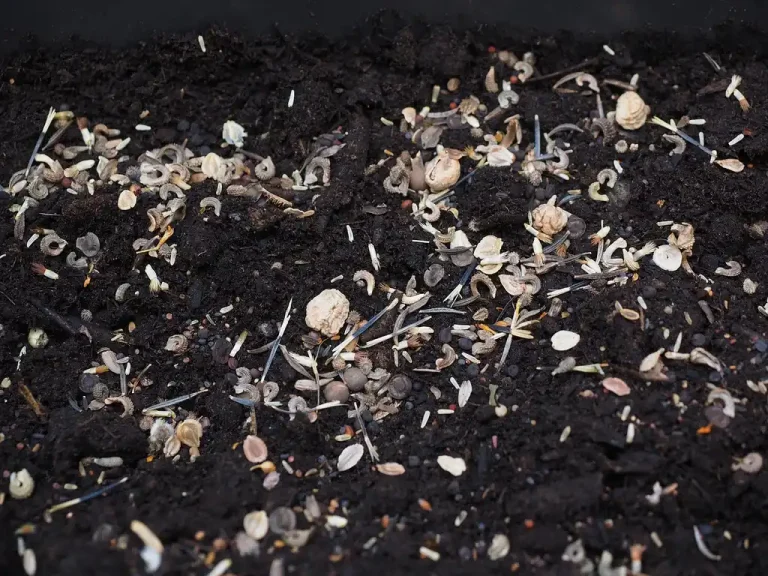
Fill the basket with moist potting mix to just below the rim, then sow seeds at the packet depth or in a shallow pocket suited to seed size. Press them in lightly so they make contact with the mix, and label the basket before you water. The goal is stable moisture, not buried seed.
For mixed plantings, place taller or upright seedlings near the center and trailing types near the edge. That keeps the basket balanced and helps later growth spill over the rim instead of crowding the middle.
Sow at the correct depth
Use practical depth ranges rather than a single number, because seed size varies. Nasturtium and sweet pea should be covered by the packet’s recommended amount, lettuce and coleus usually need only a light dusting, and very fine impatiens seed can be surface-sown or barely covered. Larger seed can go a little deeper, but still only to the packet direction.
A common first-timer mistake is pressing delicate seed too far beneath the potting mix in a hanging basket, where it struggles to emerge. That often leads to patchy emergence, because the seed uses up its energy before it reaches light.
Firm in lightly and keep the surface even
After sowing, press the mix gently so seed-to-compost contact is good. Do not pack the basket hard. A firm surface helps moisture rise into the seed coat, but compacted compost slows root growth and sheds water from the top.
Should you sow directly or start in modules?
Direct sowing works best for larger, faster-germinating seeds that dislike root disturbance. Module starting works better for delicate seed, slow germinators, and any plant you want to space precisely before it goes into the basket. Move seedlings only after hardening off.
For hanging baskets, this choice matters more than it does in a ground bed. The container dries faster, so a slow seed that sits bare in the basket for weeks is at greater risk of washout, drying, and damping-off.
Direct sowing for sturdy seed
Direct sowing suits nasturtium, sweet pea, lettuce, herbs with bigger seed, and some annual flowers. These can often be sown where they will grow, which avoids transplant shock and saves space on a windowsill or shelf.
Module starting for delicate seed
Module starting suits impatiens, coleus, black-eyed Susan vine, and other seeds that germinate unevenly or need closer control. Modules also help when you want to stagger the basket fill, because you can place stronger seedlings into gaps after the first flush is established.
Move seedlings after hardening off
Plants should be hardened off for a week or two. Leave them outside during the day, then bring them in overnight until temperatures are mild enough for them to stay out. That transition reduces shock when the basket finally sits in full sun, wind, or cooler night air.
Hanging basket seed checklist
Use this checklist to compare basket size and exposure before sowing. It gives you a simple decision table for the main scenarios beginners run into: sunny south-facing positions, sheltered shade, and windy exposed spots. It also keeps sowing depth, germination timing, thinning, and watering aligned with the site.
| Scenario | Basket size | Exposure | Seed type | Sowing depth | Expected germination window | Thinning point | Watering frequency |
|---|---|---|---|---|---|---|---|
| Sunny south-facing | At least 14 inches | Full sun, hot rim | Direct-sow larger seed or start modules for tender types | Surface to shallow cover, per packet | About 7 to 14 days for many quick seeds | First true leaves | Daily checks; twice daily in hot weather |
| Sheltered shade | At least 14 inches | Partial shade to shade | Module-start for delicate seed, direct-sow for lettuce and many herbs | Fine seed on the surface, small seed lightly covered | About 10 to 21 days for slower types | When seedlings can be lifted by a leaf pair | Daily checks; once daily if evenly cool |
| Windy exposed spot | At least 14 inches | Full exposure, rapid drying | Module-start for fragile seed, direct-sow only if quick and sturdy | Very shallow cover, then press in gently | About 7 to 14 days if moisture stays steady | As soon as seedlings touch each other | Daily checks; twice daily in heat or wind |
- Use moist compost, not dry mix.
- Sow lightly and avoid crowding the seed pocket.
- Keep the basket near cover until germination is underway.
- Thin early enough to stop stems from stretching.
- Water before the surface dries out.
How do you keep seedlings alive after sowing?
Water before the surface dries out, protect the basket from washout, and thin crowded seedlings before they compete too hard for light and water. Containers dry faster than ground soil, and hanging baskets dry the fastest of all because air moves around every side.
Baskets can dry out quickly and need daily checks. In hot weather, baskets may need watering twice a day. A saucer can act as a small water reservoir, but it is only a buffer, not a substitute for watering.
Stop washout and damping-off
Water gently so seed does not float or shift. A rose on the watering can or a light hand at the rim helps. If the surface crusts, mist lightly rather than blasting the mix. Damping-off is more likely when the surface stays soggy and air movement is poor, so keep the basket moist, not swampy.
Thin crowded seedlings at the right stage
Close planting creates a full display, but overcrowding still needs to be avoided. Thin when the seedlings can be handled cleanly, usually after the first true leaves. Keep the strongest plants and remove the weak or crowded ones so the basket fills without stalled growth.
Say your basket is a 14-inch south-facing tomato basket with three seedlings at the rim and one in the center. If the center seedling stretches and the rim seedlings crowd it, thin before stems tangle. That keeps the load balanced and lowers collapse in wind.
Watch for collapse in heat or wind
Suppose a shaded basket germinates evenly, then gets moved to an exposed patio for a windy afternoon. The seedlings can lean or break even if the compost is still damp. That is a sign to shelter the basket for a few days and water more often until roots anchor better.
When should you plant hanging baskets outside?
Move hanging baskets outside after frost risk has passed and the seedlings have been hardened off for a week or two. For summer baskets, plant after frost risk has passed. For winter hanging baskets, plant between September and November. The right timing depends on local temperatures as much as the calendar.
Keep the basket in its final outdoor spot only after the seedlings can handle the light, wind, and day-to-day drying there. A sheltered setup is easier in the first week than a bright, exposed hook.
Frequently asked questions
How do you start hanging baskets from seed?
Start by deciding whether to sow direct or raise seedlings in modules first. Larger, faster seeds can go straight into the basket, while delicate or slow seed often does better in modules. Harden seedlings off for a week or two before moving them outside full-time.
What seeds are best for hanging baskets?
Good basket seeds include nasturtium, sweet pea, black-eyed Susan vine, impatiens, coleus, herbs, lettuce, compact tomatoes, and chilies. Start with trailing or compact plants, then match them to sun or shade and to how often you can water.
How deep should you sow seeds in a hanging basket?
Sow by seed size rather than a fixed number. Very fine seed is usually surface-sown or barely covered, small seed gets a light dusting, and larger seed can be covered a little more. Follow the packet when it gives a narrower range.
How often should you water hanging baskets after sowing?
Check them daily at a minimum. In hot weather, they may need watering twice a day. The basket surface should stay evenly moist through germination, but the mix should still drain freely so roots do not sit in stagnant water.
Can you grow vegetables or herbs in hanging baskets?
Yes. Leafy herbs, lettuce, compact tomatoes, and chilies can all work if the basket is large enough and the light matches the crop. A 14-inch basket can hold up to five leafy herbs, or two to three chilies.