How Many Carrot Seeds Should You Sow in One Spot?
Sow a small number of standard carrot seeds per spot, or use one pelleted seed; if germination seems shaky, sow a few extra seeds and thin them later. Too many seeds waste work, and too few leave empty gaps you cannot easily patch later. This guide covers per-hole rules for beds, rows, bands, and containers, plus thinning and backup sowing.
This guide is part of our Planting quantity guide series.
What you’ll need


- Standard carrot seed or pelleted carrot seed
- Loose, stone-free soil or a raised bed
- Watering can with a fine rose, or a mist nozzle
- A ruler, dibber, or finger for marking spots
- Fine compost or sifted soil for covering seed
📊 Carrot seeds may take 7 to 21 days to sprout. Source: How to Plant Carrot Seeds: A Seed to Harvest Guide.
What you need to know before sowing carrots
Carrot seed is tiny, direct-sown only, and usually needs thinning after emergence. It sprouts slowly, often in 7 to 21 days, so I keep the seedbed evenly moist the whole time. Transplanting usually fails because carrots hate root disturbance.
Why carrot seed size changes your sowing plan
Small seed is hard to place one at a time. That is why the practical rule changes by seed type: use 2–3 standard seeds per spot, 1 pelleted seed per spot, and 4–5 seeds only when germination is doubtful. The aim is one strong plant, not a clump.
Which carrot types fit beds, rows, and containers
Imperator and Nantes types are often grown for longer, straighter roots, while Chantenay, Danvers, Amsterdam, and Paris Market suit shorter or rounder harvests. Longer varieties need deeper loose soil. Shorter types handle containers better, but all of them still need room after thinning.
When direct sowing beats any other method
Carrots are best direct sown outdoors, not started inside. That matters most in beds and containers where roots need open soil from day one. Raised beds are a strong choice for carrots in clay soil because the loose layer stays deeper and drains better.
How many carrot seeds should I put in one hole?
Put 2–3 standard carrot seeds in one hole, or 1 pelleted seed if you are using coated seed. If the seed is old, the bed has crusted before, or germination has been poor, sow 4–5 seeds as insurance and plan to thin to one plant later.
Standard seed: sow 2 to 3 seeds per spot
Standard seed is the default. It is cheap, tiny, and easy to overdo, so 2–3 seeds per spot gives a buffer without creating a thick tuft. If all sprout, thin the extras early so the best seedling keeps the space.
Pelleted seed: sow 1 seed per spot
Pelleted carrot seed is coated in organic clay, which makes it easier to see and place. That makes single-seed sowing practical. It does cost more than standard seed, so the tradeoff is placement control, not better germination by itself.
Poor-germination beds: use insurance sowing, then thin hard
If the bed is crust-prone, the seed is old, or the weather is erratic, sow a heavier backup cluster. Keep the cluster small. A tight clump is easier to thin than a blank space is to repair after the first flush fails.
How deep and how far apart should you sow?
Plant carrot seed about 1/2 inch deep, and keep the final spacing in mind before you drop the seed. Too deep can prevent emergence. Too shallow can let the surface dry out before the seed finishes sprouting.
Set the depth first
Make the hole or furrow about 1/2 inch deep, then cover lightly with fine soil or compost. Press the surface so the seed touches moist soil. That contact matters more than packing the bed hard.
Space for the final plant, not the sprout cluster
Do not plan around the first clump of seedlings. Plan around the finished carrot. Smaller varieties can stand closer than large storage types, but every row still needs thinning to one plant at the end. Crowding makes small, forked roots.
Use rows or bands to spread seed more evenly
Rows spaced about 16 to 24 inches apart are often a good fit for many beds. A narrow seed band can help spread seed more evenly in a shallow trench, because the seed is distributed across a strip rather than dropped in a single line.
Step 1: Prepare a loose seedbed
Break up clods, remove stones, and work the top layer until it is fine enough that a carrot root can push straight down. Carrots want deep, loose soil. Raised beds help here, especially in clay soil that stays dense after rain.
- Rake the surface smooth.
- Remove stones, sticks, and hard clumps.
- Moisten the bed lightly before sowing if the soil is dusty.
Step 2: Sow the seeds and cover lightly
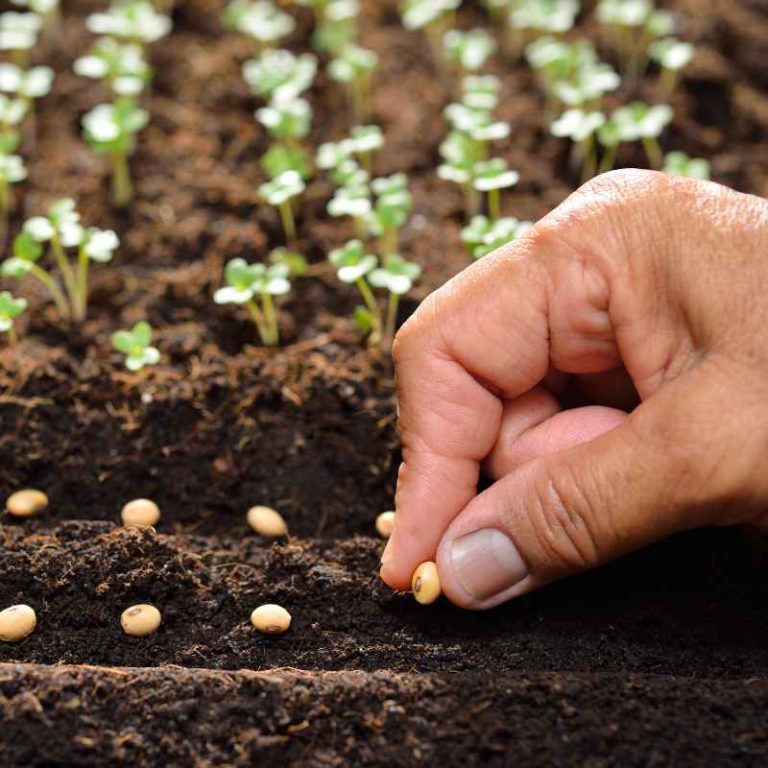
Drop the chosen number of seeds per spot, then cover them with sifted soil or fine compost. Press the surface so the seed meets damp soil. That firm contact helps the seed take up moisture without burying it too deeply.
- Mark spots at the spacing you want.
- Place 2–3 standard seeds, or 1 pelleted seed, in each spot.
- Cover to about 1/2 inch deep.
- Label rows if more than one variety is going in the bed.
Step 3: Keep the bed damp until sprouts appear
Keep the seedbed lightly damp, not soggy, until the carrots emerge. The first few weeks are critical because crusting can stop seedlings before they break through. Water lightly and often enough to prevent the surface from drying into a hard skin.
- Use a fine rose or mist setting.
- Water before the surface turns pale or powdery.
- Check the bed daily in warm weather.
- Shield the surface from heavy splash that can crust it.
Proof asset: quick decision table for per-spot sowing
| Seed type | Setup | Seeds per spot | Thin to afterward |
|---|---|---|---|
| Standard seed | Row | 2–3 | 1 plant at final spacing for the variety |
| Standard seed | 2-inch band | 2–3, spread along the band | 1 plant every 2–4 inches, depending on root size |
| Standard seed | Container | 2–3 | 1 plant per final growing spot |
| Pelleted seed | Row | 1 | 1 plant at final spacing for the variety |
| Pelleted seed | Band | 1 | 1 plant every 2–4 inches, depending on root size |
| Pelleted seed | Container | 1 | 1 plant per final growing spot |
| Insurance sowing | Poor-germination bed | 4–5 | 1 strongest seedling per spot after emergence |
Common mistakes
Most failures come from shallow soil prep, dry crusting, or skipping thinning. Carrot seed is unforgiving about the first few days after sowing. If too many seedlings stay packed together, the roots stay small or forked, and the bed wastes space.
Sowing too deep
Do not bury seed much deeper than 1/2 inch. Deep sowing slows or stops emergence, especially in heavy soil. If the bed dries at the same time, the seed can fail before it reaches the surface.
Letting the surface dry out
Dry topsoil is a common reason for patchy stands. Keep the top layer evenly moist during germination, and rewet it before it hardens. Crusting is just as bad as drought here because seedlings cannot push through a seal.
Skipping thinning after germination
Carrots need space after sprouting. Thin crowded seedlings early so the strongest plant keeps the room it needs. If the row is too dense, the roots compete belowground even when the tops still look small.
Overcrowding small containers
Containers magnify spacing mistakes. Use fewer seeds, then thin to one plant in each final spot. Shorter types such as Amsterdam or Paris Market handle containers better, but they still need room.
Using old seed without backup sowing
Old seed can still work, but the stand may be thin. When seed quality is uncertain, use the insurance sowing rate and plan to thin harder later. That is safer than leaving gaps you cannot fill cleanly.
If that didn’t work, try this next
- Resow bare gaps with 2–3 fresh standard seeds at the same 1/2 inch depth.
- Top-dress crusted spots with a thin layer of sifted compost, then mist lightly.
- For repeat failures, switch the bed to a 2-inch band so moisture stays more even across the row.
Prevention
For the next sowing, pre-moisten the top layer, sow shallowly, and keep the bed covered with light moisture until the seedlings are up. That single habit prevents most patchy stands.
Frequently asked questions
How many carrot seeds should I put in one hole?
Use 2–3 standard seeds per hole, or 1 pelleted seed. If the seed is old or the bed has a history of poor germination, place 4–5 seeds and thin to one strong plant after sprouting. That gives backup without turning the spot into a crowded tuft.
Should I sow carrot seeds thickly and thin them later?
Only lightly. Thick sowing creates extra thinning work and raises the chance of weak, forked roots. A small backup cluster is fine when germination is uncertain, but the safer routine is still a small number of seeds per spot and prompt thinning after emergence.
How far apart should carrot seeds be spaced?
For final spacing, plan around the mature root size, not the tiny seed. Rows 16 to 24 inches apart work well for bed layouts, while the plants inside the row need room to thin down to one per spot. Shorter types can stand closer than long storage carrots.
How deep do you plant carrot seeds?
Plant them about 1/2 inch deep. That depth is shallow enough for emergence and deep enough to keep the seed from drying out too fast. Cover with fine soil, then press the surface gently so moisture contacts the seed evenly.
How do you keep carrot seeds from drying out?
Water with a fine mist or gentle rose often enough to keep the top layer lightly damp until sprouts appear. Crusting is the enemy. A thin cover of fine soil or compost helps, but the bed still needs regular checks during the first 1 to 3 weeks.
Can you direct sow carrot seeds in raised beds?
Yes. Raised beds are ideal for carrots, especially in clay soil, because they are easier to keep deep and loose. Direct sowing works best there since carrots do not like being moved after germination. Keep the top layer evenly moist until the seedlings are established.