Best Houseplants for Low Light Rooms in 2026: research shows
Snake plant is the safest first buy for most dim rooms because it handles low light and dry soil better than most common houseplants. If the room is darker still, ZZ plant is the better pick. Both plants usually fail from overwatering, especially where the soil dries slowly.
This guide is part of our Houseplant care guide for healthy indoor plants series.
Quick comparison

| Product | Badge | Best for | Price | ||
|---|---|---|---|---|---|
 | Cast Iron Plant – Live Plant in a 6 Inch Pot – AspidistraWekiva Foliage | Our pick | Cast Iron Plant in 6-inch pot | $47.00 Price as of 1 Oct 2026 | View |
 | Golden Pothos Plant Live Epipremnum Aureum Houseplant, EasyBKQUAN | Budget pick | Golden Pothos in 4-inch pot | $15.50 Price as of 1 Oct 2026 | View |
 | ZZ Plant Live Houseplant – Zamioculcas Zamiifolia in 6-InchTropical Plants of Florida | Also great | ZZ Plant in 6-inch nursery pot | $29.99 Price as of 1 Oct 2026 | View |
 | Monstera Deliciosa Live Plant – 8 Inch Pot – Healthy SwissGeneric | Upgrade pick | Monstera Deliciosa in 8-inch pot | $65.99 Price as of 1 Oct 2026 | View |
 | Live Snake Plant, Sansevieria trifasciata Laurentii, FullyPlants for Pets | Also great | Snake Plant Laurentii in pot | $19.77 Price as of 1 Oct 2026 | View |
Use this first if the room is the main problem, not the plant. A bedroom with a north-facing window can handle more options than a windowless bathroom or a hall with only spillover light.
The table below maps each plant to the room conditions where it usually holds up best, plus the failure mode that trips up beginners.
| Plant | Best room | Light tolerance | Watering frequency | Pet safety | Main failure mode |
|---|---|---|---|---|---|
| Snake Plant | Bedroom, office, hallway floor | Tolerates low light and minimal sunlight | Infrequent; let soil dry fully | No | Overwatering, especially in cool dim rooms |
| ZZ Plant | Windowless bathroom shelf, dark corner, office nook | Best for very dim spots and near-dark stretches | Very infrequent; dry out completely | No | Root and rhizome rot from repeated watering |
| Peace Lily | Dim bedroom corner, office desk | Handles low light, blooms less in dim rooms | Moderate; water when it droops | No | Thirst stress and leaf yellowing if kept soggy |
| Golden Pothos | Shelf edge, cubicle corner, hanging basket | Handles poor lighting | Moderate; let the top layer dry | No | Leggy growth and dull leaves if not rotated |
| Cast Iron Plant | Entryway, hallway, floor pot in a dim room | Suitable for truly dim spaces | Low; avoid wet soil | No | Slow decline from too much water |
| Chinese Evergreen | Bedroom, office, side table | Does quite well in low light | Moderate; keep evenly lightly moist | No | Root stress if the pot stays wet |
| Bird’s Nest Fern | Pet-safe shelf, bathroom counter, bright dim room | Low indirect light; prefers a bit more brightness | Moderate; never let it dry out hard | Yes | Crisped fronds from dry air or dry soil |
| Watermelon Peperomia | Mantel, bookcase, small desktop | Low to medium indirect light | Low to moderate; allow partial drying | Generally yes | Stem and root rot from frequent watering |
How we chose
The ranking is based on four filters: how much light the plant actually tolerates, how fast it fails when overwatered, how well it fits common room types, and whether pet safety should be treated as a hard requirement.
That matters because dim rooms dry more slowly. A plant that looks fine for two weeks can still be rotting below the surface.
The aim is to match the plant to the room you already have.
Snake plant: best for the darkest rooms
Snake plant is the safest first buy for a bedroom, office, or hallway where light is weak and watering is easy to overdo. It tolerates low light and minimal sunlight, and indoors it typically grows 2 to 5 feet tall.
It fits people who want a plant that can sit near a bedroom nightstand, hallway floor, or office corner without asking for constant attention. The main drawback is simple: overwatering kills snake plants fast, especially in dim rooms where the mix stays wet much longer than expected.
ZZ plant: best for near-dark corners
ZZ plant is the stronger choice when the room is even darker than most people mean by “low light.” Its thick underground rhizomes store water, so it can go long stretches dry, and it typically grows 2 to 4 feet tall indoors.
That makes it a fit for a windowless bathroom shelf, a shadowed office corner, or a hallway that only gets spillover light from another room. The tradeoff is the same one that sinks most ZZ plants: repeated watering in a dim room leads to rot long before the leaves look truly troubled.
Peace lily: best for bedrooms and offices
Peace lily handles dim corners well and is one of the better choices when you want a plant that tells you when it is thirsty. Its leaves droop when it needs water, and it can reach 1 to 4 feet tall. In low light it still flowers, just less often.
That makes it a strong option for a bedroom dresser, office desk, or side table where you will notice its signal. The drawback is that it is less forgiving of missed watering than snake plant or ZZ plant, and it can sulk if the pot stays wet.
Chinese evergreen: best for beginner offices
Chinese evergreen is a durable indoor plant that does quite well in low light, which is why it works in bedrooms, offices, and living spaces that never get direct sun. It is beginner-friendly in the sense that it handles a wide range of indoor conditions without needing much feeding.
One practical point matters here: it only needs fertilizer about once or twice a year. The downside is that, like most low-light plants, it is vulnerable to overwatering in a dim room, so the potting mix should never stay soggy for long.
Golden pothos: best for shelves and cubicle edges
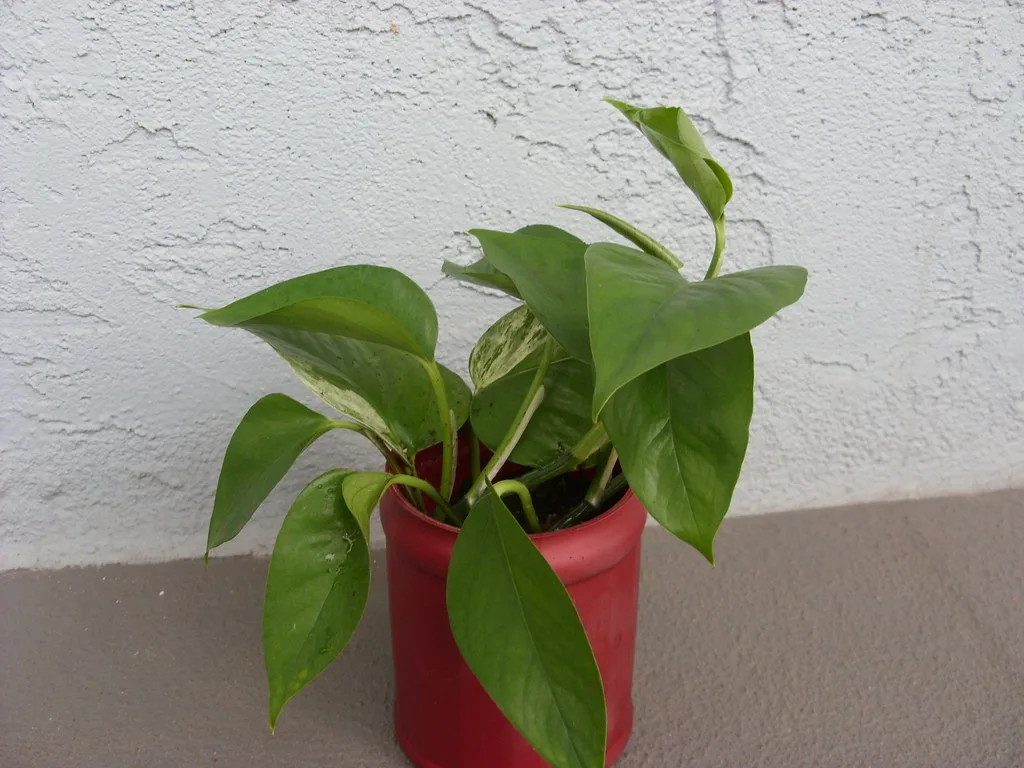
Golden pothos is the trailing plant to choose when the space is poor in light but good for display. It handles poor lighting, and its heart-shaped leaves with yellow or cream streaks look best when the vines are rotated every two weeks so growth does not lean hard in one direction.
It works well on a bookshelf, cubicle corner, or hanging pot where the vines can spill outward instead of crowding a floor space. The drawback is that low light slows growth and can stretch the vines thin, so it can look sparse if the room is darker than the plant wants.
Cast iron plant: best for hallways and entryways
Cast iron plant is the answer for truly dim entryways and hallways where other houseplants decline in stages. It has deep green arching leaves and a reputation for handling difficult shade better than most common indoor plants.
It suits a floor pot near a front door, a hallway that gets only ambient light, or a corner that never sees direct sun. The drawback is that it is slow, so if you want fast visual change, this is the wrong plant; it also dislikes frequent watering in dark spaces.
Bird’s nest fern: best for pet-safe dim spots
Bird’s nest fern is a useful pet-safe option for low indirect light, especially in a bathroom counter setup or on a shelf near a north-facing window. It tolerates low light, but it still prefers a bit more brightness than the toughest plants on this list.
That makes it better for a room that is dim rather than gloomy. The drawback is that it is less tolerant of drying out than snake plant, ZZ plant, or cast iron plant, so it can decline quickly if the soil is allowed to go hard and dry.
Watermelon peperomia: best for mantels and bookcases
Watermelon peperomia is a small-space plant that fits a mantel, bookcase, or desktop where you want something compact and low fuss. It does not need constant watering, and it is a better match for a spot with some ambient light than for a truly dark room.
The drawback is that it has less reserve than the tougher low-light plants, so repeated overwatering is a common failure mode. In dim rooms, that problem gets worse because the soil dries slowly and roots stay wet longer than many beginners expect.
Which one should you buy?
Start with the room, then the risk. If the space is the darkest one in the house, choose ZZ plant or snake plant. If it is a bedroom or office with some indirect light, peace lily or Chinese evergreen usually fit better. For a hallway or shelf, choose cast iron plant or pothos.
If you are bad at watering, snake plant and ZZ plant are the safest bets. If you want a plant that signals thirst clearly, pick peace lily. If you want a trailing plant for a bookshelf or cubicle edge, pothos is the cleanest fit. For pet-safe placement, bird’s nest fern is the better low-light choice, but it needs a little more light than the hardest-wearing plants.
Artificial light can rescue a room that is too dark for most plants. A bathroom without windows, for example, is often better suited to a tough plant under a lamp than to a leafy plant left in a corner and hoped for the best.
What counts as low light indoors?
Low light indoors usually means no direct sun, often several feet from a window, or light coming mainly from an adjoining room or a fixture. It is not the same as no light at all. If you can read comfortably in the space by day, tough low-light plants may work; if the room stays gloomy, use artificial light or pick the most tolerant options.
This is where many guides go too broad. A plant that survives in medium indirect light for a while is not the same as a plant that can hold steady in a north-facing room, hallway, or windowless bathroom.
What are the best houseplants for dark rooms?
The best houseplants for dark rooms are the ones that tolerate the least light and still fail predictably when something goes wrong. Snake plant and ZZ plant sit at the top, with cast iron plant close behind. Peace lily, pothos, and Chinese evergreen can work, but they do better when the room has some indirect light.
For truly dim spaces, the room matters more than the plant label. A hallway with spillover light is not the same as a bathroom with no window, and that difference should drive the choice.
Which low light houseplants are easiest for beginners?
For beginners, the easiest low-light houseplants are the ones that tolerate dry soil and tell you when they are unhappy without collapsing immediately. Snake plant, ZZ plant, and cast iron plant are the strongest choices. Chinese evergreen is also a good fit if the room is low light but not dark.
Beginner success usually comes down to avoiding the common trap: watering too often in a room that dries slowly. If the plant sits in low light and the pot stays wet, roots can rot long before the leaves look obviously damaged.
Which houseplants tolerate windowless rooms?
Windowless rooms are the hardest case, and even then the answer is not “anything goes.” ZZ plant and snake plant are the best options if the room gets some ambient light or a nearby fixture. A cast iron plant can also hold up in a dim entryway or hall with spillover light.
If the room is truly shut off from daylight for long stretches, artificial light matters. A plant that survives near darkness is still a plant, not a decoration that can run on nothing.
Are there low light houseplants that are pet-friendly?
Yes. Bird’s nest fern is the clearest pet-safe option on this list for low indirect light, and it is a better fit for pet homes than snake plant, ZZ plant, pothos, peace lily, or Chinese evergreen, which all raise pet-safety concerns. Pet safety should be treated as a filter, not a side note.
If animals can reach the plant, choose the plant first and the pot second. A pet-safe plant in the wrong room is still a bad choice if it dries out too fast or sits in a spot that is darker than it can handle.
Which plants are best for bedrooms with low light?
For bedrooms with low light, snake plant is the most reliable first choice, followed by ZZ plant, peace lily, and Chinese evergreen depending on how dim the room is. Snake plants are commonly recommended for bedrooms and offices because they tolerate weak light and do not need frequent watering.
Bedrooms are good places for low-light plants because people usually notice changes there. Drooping, yellowing, or a dry pot is easier to spot beside a bed than in a hallway you pass through quickly.
Which low light houseplants need the least watering?
The lowest-watering choices are ZZ plant, snake plant, and cast iron plant. All three tolerate dry soil better than the others here, and all three are more likely to fail from overwatering than from being left alone too long. That makes them especially useful in dim rooms.
Peace lily, pothos, and bird’s nest fern need more attention. They are still workable in low light, but they are not the best pick if you tend to water on a fixed schedule regardless of what the pot feels like.
Frequently asked questions
What indoor plants do well with low light?
Snake plant, ZZ plant, peace lily, golden pothos, cast iron plant, Chinese evergreen, bird’s nest fern, and watermelon peperomia all do reasonably well in low light. The best fit depends on whether the room is dim, very dim, or nearly windowless, and whether the plant needs to be pet-safe.
What are good indoor low light plants?
Good indoor low light plants are the ones that tolerate indirect light for long periods without collapsing from missed watering. Snake plant and ZZ plant are best for the darkest spots. Peace lily, pothos, and Chinese evergreen work better when the room still has some ambient light.
How much light do low light houseplants actually need?
Low-light houseplants still need light; they just need less than sun-loving plants. Most do best with no direct sun, several feet from a window, or light from a nearby room or lamp. If a space stays gloomy all day, artificial light becomes part of the plan.